
Housen Dou Honten places Kyoto wagashi in its quieter northern register: take-out focused, modestly priced, and tied to the city’s long habit of treating sweets as seasonal craft rather than dessert alone. Its 2023 selection for Tabelog 100 Japanese traditional sweets / Japanese sweets cafe WEST gives it a useful trust signal in a category where reputation often travels by local habit rather than dining-room spectacle.
Pearl is the En Primeur Club membership app — saves, bookings, and concierge access live there. Same editors, same standards.
- Address
- 21 Shimogamo Kashiwabecho, Sakyo Ward, Kyoto, 606-0815, Japan
- Phone
- +81 75-781-1051
- Website
- housendo.com
 Saves & bookings on Pearl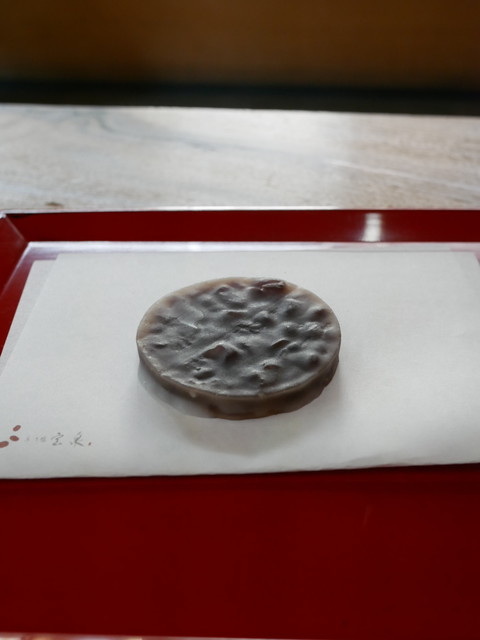
Shimogamo changes the tempo of Kyoto sweets. North of the commercial grid, the city feels less like a restaurant crawl than a sequence of residential lanes, shrine approaches, tea rooms, and small counters where wagashi is bought for a specific hour. Housen Dou Honten belongs to that register: a Japanese traditional sweets address in Sakyo Ward, take-out rather than seated café ritual, with appeal rooted in Kyoto’s discipline of season, gift-giving, and restraint.
That matters because wagashi in Kyoto is not an after-lunch extra. It grew around tea culture, temple calendars, household entertaining, and formal exchanges of seasonal objects. The city’s sweets shops read almost like micro-regions: some serve the tourist axis around major shrines, some operate as tea salons, and others function as neighbourhood purveyors for residents who know what they came to collect. Housen Dou Honten sits closer to the latter tradition, with a low price band and take-out model that keep focus on purchase, timing, and occasion rather than dining-room theatre.
Shimogamo's wagashi culture rewards precision over spectacle
Kyoto’s northern districts correct the idea that the city’s food culture is concentrated in kaiseki rooms and counter sushi. Wagashi carries equal cultural weight in a smaller frame. The craft depends on proportion, seasonality, and the relationship between sweetness and bitter tea; the setting can be modest while expectations are exacting. A shop selected for the 2023 Tabelog 100 Japanese traditional sweets / Japanese sweets cafe WEST list is being measured inside that specialist field, not against restaurants with wine lists, multi-course pacing, or chef-led tasting menus.
The category also sits apart from Kyoto’s casual dining map. Visitors might compare noodles, curry, yakitori, and cafés by meal function; wagashi works differently. It is often a planned stop between shrine visits, a domestic purchase, or a gift chosen for timing and presentation. That makes the take-out-only detail more than logistics. It places the experience in the older rhythm of Kyoto food shopping, where a counter transaction can carry as much cultural meaning as a table reservation.
Within EP Club’s Kyoto coverage, this is a different lens from contemporary dining rooms such as 3TOKU6MI Shijo karasuma ten, city-centre crowd pleasers like 551蓬莱, or more design-led formats such as [ki:] and Abbesses. Those addresses answer where to eat; a wagashi counter answers when and why to buy. For a related Kyoto sweets tradition with shrine-side identity, Aburi Mochi Honke Nemoto Kazariya shows how deeply one sweet can attach itself to place and ritual.
The take-out format keeps the focus on season and use
Housen Dou Honten’s practical strength is its narrowness. The listed category is Japanese traditional sweets, the service format is take-out, and spend sits in the lowest published band, under JPY 999. In a city where premium dining can require advance planning and serious budget, this specialist stop offers different access: not casual in craft, but low-friction in use. It suits travellers who know Kyoto’s food culture is built as much from small, repeated customs as from formal meals.
The house-restaurant setting and family-friendly note point to a local pattern: wagashi shops serve multiple audiences at once. Customers may be buying for tea, children, a host, or the simple pleasure of a seasonal sweet taken elsewhere. That range is part of the category’s durability. The product can be ceremonial without making every purchase feel ceremonial.
Comparisons calibrate expectations. Cafe Verdi occupies Kyoto’s low-priced café register, Mitama Ya sits in a slightly higher published band, and Saryo Housen shares the Housen name in the broader Kyoto sweets conversation, but the target here is not a long café sit. It is a compact specialist stop in the wagashi field. Against wider Kyoto dining, CLIMA’s Spanish identity belongs to another genre entirely; placing them side by side underlines how plural the city’s eating map has become.
For travellers building a broader itinerary, pair a sweets stop with neighbourhood pacing rather than force it into a dinner plan. Our full Kyoto restaurants guide maps the city’s dining range, while Our full Kyoto hotels guide, Our full Kyoto bars guide, Our full Kyoto wineries guide, and Our full Kyoto experiences guide place that stop inside a fuller day rather than an isolated detour.
How to read its place in a wider Japan itinerary
The value of a Kyoto wagashi address sharpens against Japan’s other casual formats. A sukiyaki specialist such as -Grilled beef Sukiyaki- KAMAKURA TANUKIAN 鎌倉 たぬき庵 in Kamakura anchors appetite around beef and heat; 鮪と炭火焼き うお炭 秋葉原店 in Tokyo points to seafood and grill culture;.cafe in Osaka and.know in Kumamoto occupy café and contemporary casual territory. Kyoto wagashi sits on another axis: smaller, older, and more bound to season and presentation than to appetite alone.
That contrast extends beyond Japan. (Shoku) Vietnam in Kawasaki frames regional food through migration and everyday dining; [Curry Senmon Ten] Maruyama Kyoju. in Sapporo turns attention to a single comfort-food category; Jōdo Saké Bar in Los Angeles and Onigiri Time in Pasadena show how Japanese forms travel into overseas dining contexts. Housen Dou Honten is useful because it remains anchored in Kyoto’s terms: small-format, culturally legible, and recognized within a specialist sweets category rather than amplified into a destination restaurant narrative.
The editorial read is simple. Kyoto rewards visitors who leave space for categories that do not behave like restaurants. Wagashi is one. Here, the signal is not a chef biography, tasting counter, or dramatic room; it is a sweets tradition compact enough for a short stop, yet deep enough to explain why Kyoto’s food culture cannot be understood through dinner reservations alone.
Price and Positioning
Comparable venues in the metro at similar price points.
| Venue | Cuisine | Price | Awards | Notes |
|---|---|---|---|---|
| Housen Dou HontenThis venue — the venue you are viewing | $ | , | ||
| Ramen Jiro Kyoto ten | Sakyō, Jiro-style ramen | $ | , | |
| GOKKEI Ichijouji honten | Sakyō, Ultra-rich chicken paitan ramen | $ | , | |
| Onkashi Tsukasa Shioyoshiken | $ | , | Kamigyō, Traditional Kyoto Wagashi (Japanese confectionery) | |
| Shinjuku Menya Fuuka | Shimogyō, Kyoto ramen and tsukemen | $ | , | |
| Men Dokoro Toritani | Ukyō, Kyoto chicken ramen | $ | , |
Continue exploring
More in Kyoto
Restaurants in Kyoto
Browse all →
Bars in Kyoto
Browse all →

Hotels in Kyoto
Browse all →


Wineries in Kyoto
Browse all →
At a Glance
- Quiet
- Classic
- Cozy
- Hidden Gem
- Solo
- Family
- Casual Hangout
- Standalone
- Historic Building
- Local Sourcing
- Garden
A traditional Japanese sweets shop with a calm, refined Kyoto atmosphere focused on ingredient quality and handcrafted wagashi.