Šadrvan
Šadrvan sits in Mostar's Stari Grad, a few steps from the Neretva on a street where Ottoman-era dining traditions have persisted for generations. The kitchen draws on the agricultural produce and livestock of the Herzegovinian hinterland, translating local ingredients into the grilled meat, stew, and slow-cooked formats that define the region's table. For visitors working through Mostar's Old Town, it represents the direct route into the city's culinary bedrock.
Pearl is the En Primeur Club membership app — saves, bookings, and concierge access live there. Same editors, same standards.
- Address
- Jusovina 11 (Stari grad), 88000 Mostar
- Directions
- Get directions
 Saves & bookings on Pearl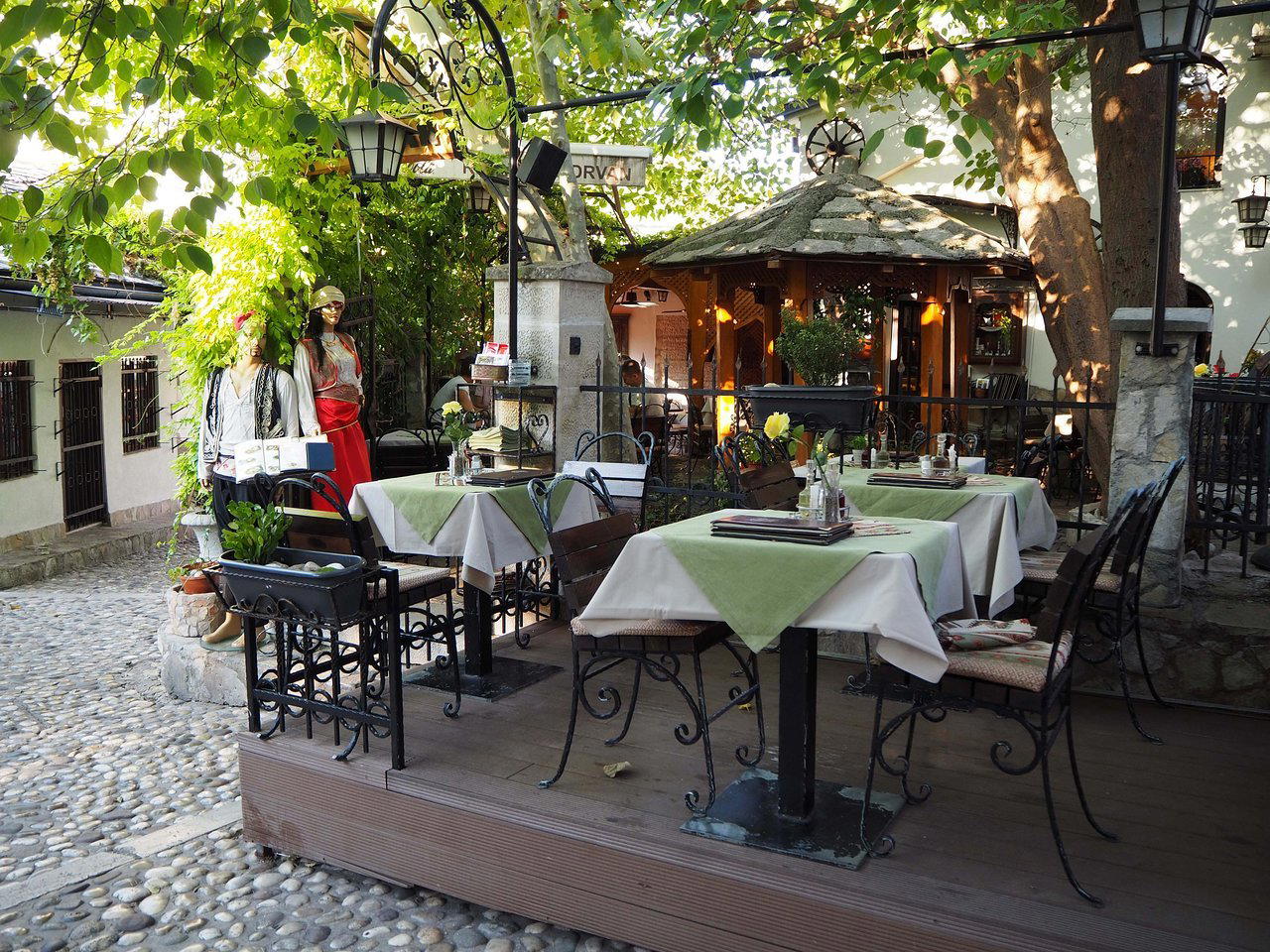
Where the Old Town Feeds Itself
Arriving at Jusovina 11 in Mostar's Stari Grad, the approach tells you something before the food does. The cobblestones narrow, the sound of the Neretva carries from a block away, and the street-level architecture shifts from souvenir-facing commerce into something older and less performative. Šadrvan occupies this zone, a casual Traditional Bosnian restaurant at Jusovina 11 in Mostar's Stari Grad. The terrace opens onto a courtyard that reads as an extension of the street rather than a designed destination, which is precisely the point.
Mostar's Stari Grad sits at one of the more compressed culinary intersections in the Western Balkans: Ottoman cooking traditions layered over centuries of agricultural specificity, with Herzegovinian livestock farming and river valley produce defining what ends up on the plate. Šadrvan sits within that tradition without apology. It is a useful first reference point for understanding what the city actually eats when it is feeding itself, as distinct from what it serves to visitors who arrived by tour bus at noon.
The Source Logic Behind Herzegovinian Cooking
The editorial angle that matters most in Stari Grad restaurants is ingredient provenance, and Herzegovina gives cooks a specific geography to work from. The region sits in a dry karst basin with long summer heat, conditions that produce lamb and goat of a particular leanness and flavour concentration, spring-fed river fish from the Neretva system, and garden vegetables that reflect a Mediterranean influence softened by Balkan altitude. These are not romantic abstractions. They are the structural reason why grilled meats and slow-cooked stews taste different here than in cities two hundred kilometres north.
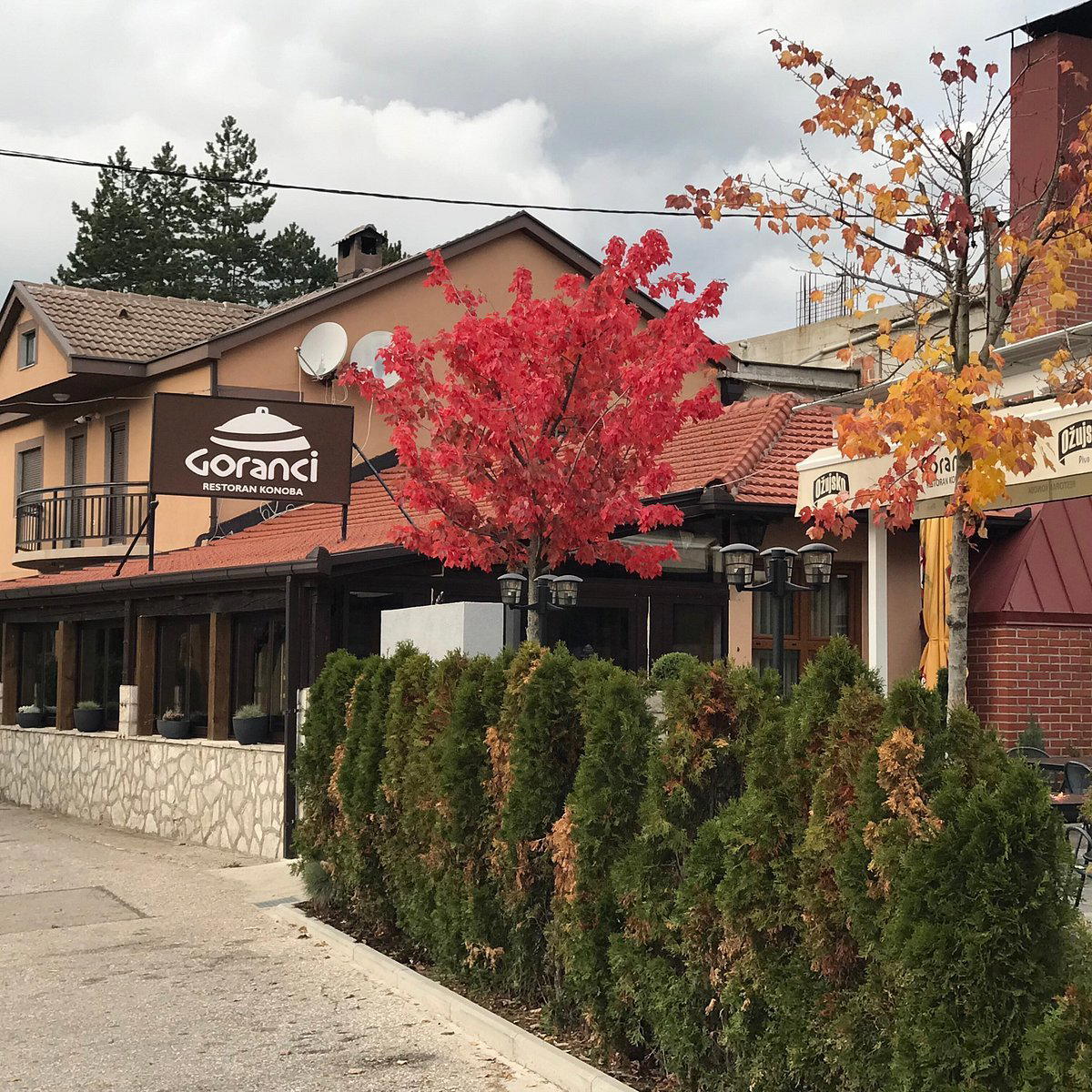
Restaurants in this tier of the Old Town, including Šadrvan and its near neighbours such as Restaurant Konoba Kod Marinka and Restaurant Goranci, tend to operate from a shared sourcing logic: short supply chains, regional producers, and a menu architecture that follows what the season and the land provide rather than what a standardised supplier catalogue offers. This is not a marketing posture in Mostar the way it might be in a Western European capital. It is simply how the kitchen has always been restocked.
The specific preparations that emerge from this sourcing model are worth understanding before you arrive. Ćevapi in Mostar are smaller and denser than the Sarajevo version, made from a blend of beef and lamb and served with somun flatbread and raw onion with no further negotiation. Grilled lamb, when sourced from the karst interior, arrives with a flavour that aged or feedlot product cannot replicate. Burek, though more associated with Sarajevo's specialist buregdžinice, also appears in the repertoire of Old Town restaurants and reflects the same pastry traditions that Ottoman-era Mostar inherited and localised. For comparison, the Sarajevo approach to the same ingredient base can be read through venues like Cakum-Pakum in Sarajevo, where the cooking tradition diverges in format if not in sourcing philosophy.
Reading Šadrvan Against Its comparable set
Old Town dining in Mostar divides broadly into two tiers. The first is tourist-facing operations that occupy prime bridge-view real estate and price against foot traffic rather than against culinary value. The second is a smaller group of courtyard and side-street establishments where the clientele is more mixed, the menu is more fixed, and the kitchen is making decisions about the food rather than about the view. Šadrvan belongs to the second category, which does not make it precious or hard to find, but does mean the experience is calibrated differently.
Across Bosnia and Herzegovina, the same sourcing logic that underpins Stari Grad cooking in Mostar appears in regional variants: Kazamat in Banja Luka, Konoba Rogić in Trn, and Nešković in Foča all reflect the same structural commitment to regional produce prepared without significant mediation. The difference in Mostar is the Ottoman overlay, which shapes the spicing and the format of service in ways that set the city's table apart from the predominantly Slavic cooking of the north and east. Further afield, venues like Grill Kostro in Posušje demonstrate how the same Herzegovinian ingredient base takes on a more Croatian-adjacent character when the geography shifts slightly west.
For context outside the region entirely, the distance between what Šadrvan represents and what a venue like Le Bernardin in New York City or Atomix in New York City is doing is not simply one of scale or awards recognition. It is a fundamental difference in culinary grammar: one built around codification and refinement, the other around continuity and place. Neither framework is superior, but understanding which you are inside helps you read the meal correctly.
Planning Your Visit
Šadrvan is located at Jusovina 11 in the Stari Grad, within walking distance of the Stari Most bridge and the main Old Town pedestrian axis. The Stari Grad is navigable on foot from most of Mostar's central accommodation, and the street-level entry makes the restaurant accessible without advance coordination. Mostar's Old Town restaurants operate under significant seasonal pressure during the summer months, when the city absorbs large volumes of day visitors from the Adriatic coast. Arriving outside the midday peak, or visiting in the shoulder season of April to May or September to October, generally produces a more considered experience at venues in this part of the city.
Reservations are recommended. The pricing structure at this level of Old Town dining in Mostar reflects local purchasing power more than tourist premium, which makes the value proposition direct for visitors arriving from higher-cost markets. For a broader orientation to the city's dining options before you commit to a specific table, our full Mostar restaurants guide maps the full range across neighbourhoods and formats.
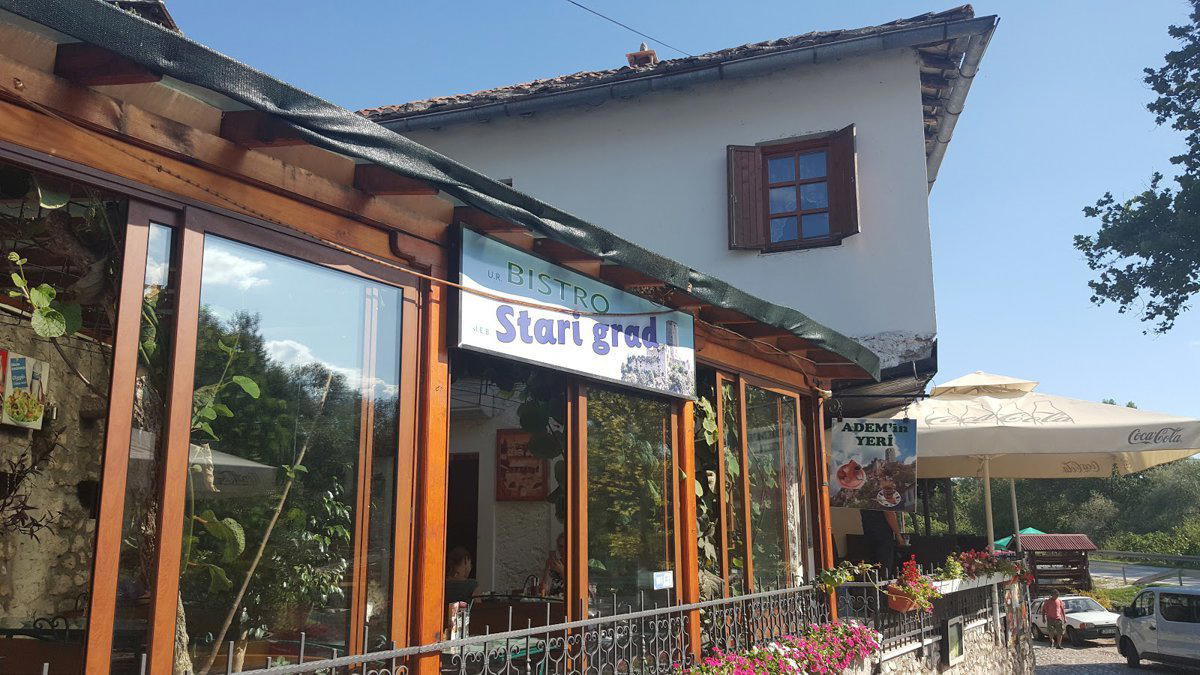
Travellers moving through the region with time to explore beyond Mostar might also note that the ingredient sourcing traditions visible in Stari Grad cooking connect directly to what you find in establishments like "Garden" Restaurant in Mokro and Bistro Stari Grad in Metkovic, where the Herzegovinian and Dalmatian hinterlands converge at the table. For completeness, Coffee Zone in Tuzla, Zeks Doner in Konjic, and Caffe Restaurant Soho in Istocno Sarajevo offer further reference points for understanding how the broader Bosnian dining spectrum functions at different price points and formats. Further afield, Lazy Bear in San Francisco and Emeril's in New Orleans represent the kind of format-driven, chef-led dining that operates in an entirely different register, useful as contrast when calibrating expectations before a trip to the Western Balkans.
Side-by-Side Snapshot
Comparable venues nearby, for context on price, style, and recognition.
| Venue | Cuisine | Price | Notes |
|---|---|---|---|
| ŠadrvanThis venue — the venue you are viewing | Traditional Bosnian | $$ | Not listed |
| Restaurant Goranci | Traditional Herzegovinian Mediterranean | $$ | Goranci |
| Restaurant Konoba Kod Marinka | Traditional Bosnian Grill | $$ | Goranci |
| Bistro Stari Grad | Grill and Eastern European | $ | Metkovic |
| Arigato | Japanese Sushi Bar | $$ | Čobanija |
| Buregdžinica ASDŽ | Traditional Bosnian Pita & Specialties | $ | Baščaršija |


At a Glance
- Rustic
- Cozy
- Classic
- Casual Hangout
- Family
- Courtyard
- Historic Building
- Local Sourcing
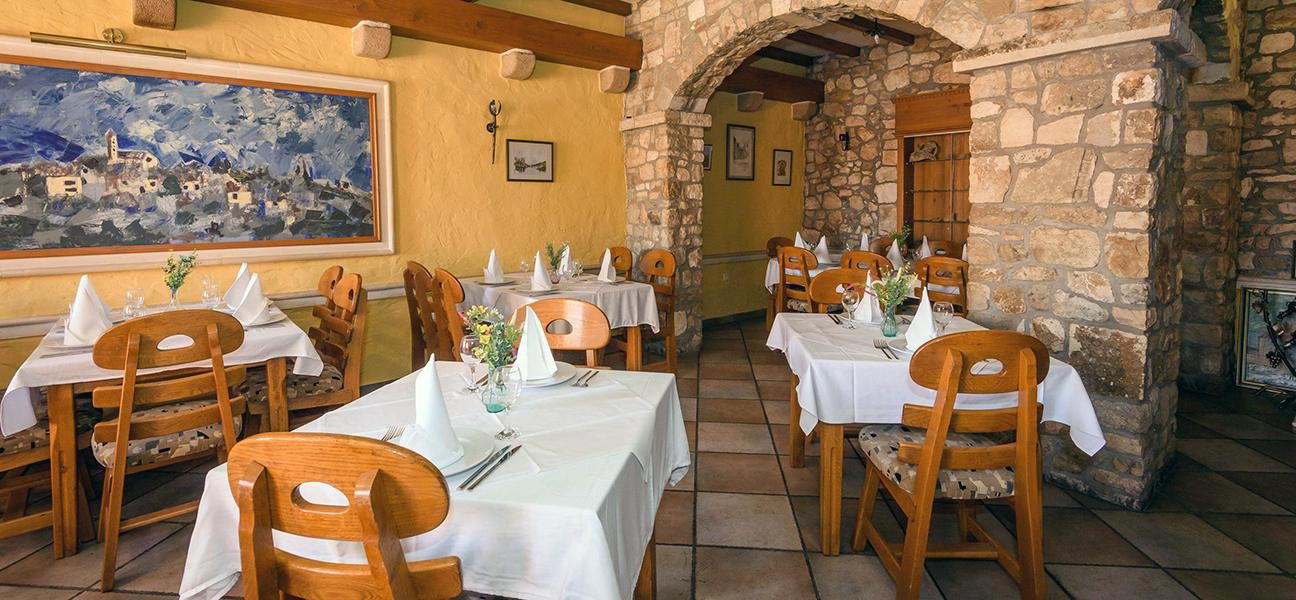
Rustic and local atmosphere with traditional decor, old furniture, and a green garden splash amid the historic setting.