Kazamat
Kazamat occupies one of Banja Luka's most storied addresses, drawing on the region's agricultural hinterland for a dining experience rooted in Bosnian Krajina tradition. The setting alone earns a visit, but the kitchen's relationship with locally sourced produce is the real through-line. A reference point for anyone tracing northern Bosnia's food culture.
 Discover on Pearl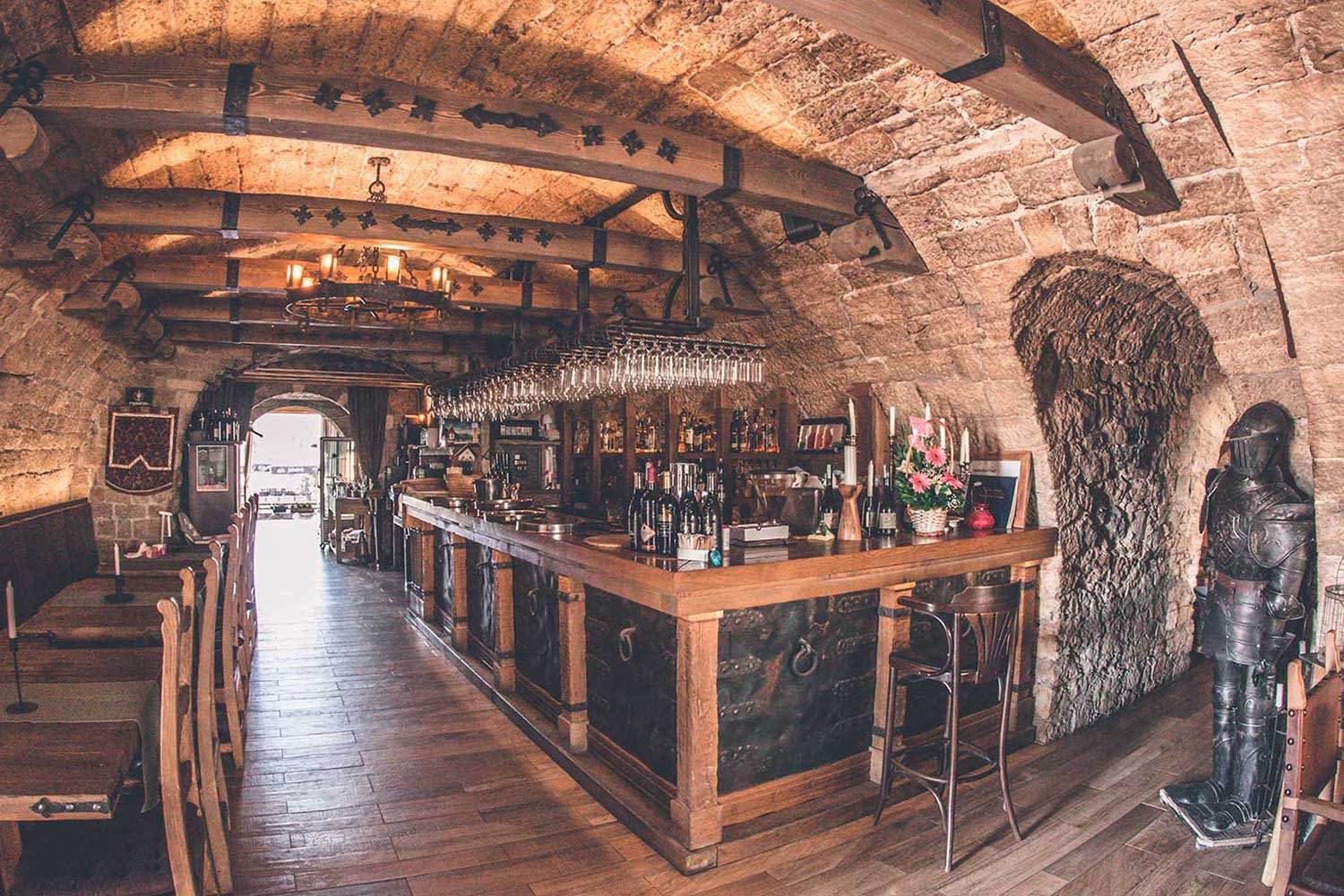
Stone Walls and a Supply Chain That Predates the Menu
There is a particular quality to dining inside a fortified structure: the walls do not simply frame the room, they assert a context. Kazamat, on Teodora Kolokotronisa in central Banja Luka, operates within the historic Kastel fortress complex, and that setting is not decorative. It is load-bearing, in the architectural and editorial sense. The approach from the street deposits you into a city that has rebuilt its identity across successive centuries, and the restaurant sits within that longer arc rather than apart from it.
Banja Luka occupies a specific position in Bosnia and Herzegovina's dining map. As the country's second city and the administrative centre of Republika Srpska, it draws on an agricultural hinterland — the Krajina plateau, the Una and Sana river valleys — that has fed this part of the Balkans for generations. Restaurants that engage seriously with that supply chain are doing something different from venues that simply import the language of local sourcing. The question for any kitchen in this city is how directly it connects to the farms, rivers, and livestock traditions that define the region's larder.
The shortlist, unlocked.
Hard-to-book tables, cellar releases, and concierge-planned trips.
Get Exclusive Access →What the Krajina Larder Puts on the Table
Bosnian Krajina cuisine belongs to the broader South Slavic tradition of slow-cooked meats, fermented dairy, and wood-fire preparation, but it carries specific regional signatures. Lamb from the highland pastures around Glamoc and Livno tends to be leaner and more aromatic than coastal equivalents. Freshwater fish from the Una , particularly trout , has sustained a distinct preparation culture across the region. Kajmak, the clotted cream cheese produced across the western Balkans, reaches its most pronounced forms in the Krajina variant, where fat content and aging time vary by producer.
These are not abstract ethnographic notes. They are the ingredient categories that a restaurant positioned inside a fortress on the Vrbas river either engages with or sidesteps. Venues across Bosnia that take this supply chain seriously tend to work with named local producers and seasonal availability rather than a fixed, year-round menu. That approach aligns Kazamat with a broader pattern visible in kitchens from Konoba ROGIĆ in Trn to Restaurant Goranci in Mostar: the idea that Bosnian cooking is most coherent when it is most specific about geography.
Where Kazamat Sits in the Banja Luka Scene
Banja Luka's restaurant scene is less catalogued than Sarajevo's, which means its better venues operate below the threshold of international food media attention while serving a loyal local clientele with consistent expectations. That dynamic shapes pricing, format, and the rhythm of service in ways that matter to a visiting diner. Venues here are not calibrating their offer to international tourist flows in the way that Sarajevo's old city restaurants often do.
The address on Teodora Kolokotronisa places Kazamat within walking distance of the Kastel fortress and the Vrbas riverbank, an area that has become one of the more active parts of the city for food and leisure. Compared to the range visible across Bosnia at venues like Caffe Restaurant Soho in Istocno Sarajevo or the more casual register of burgrs Sarajevo, Kazamat's fortress context signals a more formal proposition, though Banja Luka's dining culture tends toward the convivial rather than the ceremonial regardless of setting. For a broader picture of where this fits in the city's overall food offer, our full Banja Luka restaurants guide maps the competitive field.
Internationally, the gap between a venue like Kazamat and heavily decorated rooms such as Le Bernardin in New York City or Alain Ducasse at Louis XV in Monte Carlo is not simply one of awards or price. It is a difference in what the kitchen is trying to argue. In the Balkans, the argument is overwhelmingly about place , about the specific valley, the specific breed, the specific aging vessel. That is a form of culinary intelligence that does not always convert into Michelin stars but does produce cooking that is difficult to replicate elsewhere. Venues as different as Lazy Bear in San Francisco and Atomix in New York City have built international reputations on versions of exactly that argument.
Planning Your Visit
Banja Luka is accessible by road and bus from Sarajevo (approximately three hours) and by road from Zagreb to the north. The Kastel area is central and walkable from most city accommodation. Without confirmed booking details in our current data, the most reliable approach for reservations is direct contact via the address on Teodora Kolokotronisa or through local concierge services. Timing matters in the Krajina: spring and autumn bring the most interesting seasonal produce into Bosnian kitchens, while summer has the advantage of riverside dining culture along the Vrbas. Visitors exploring the wider Bosnian dining circuit might pair a Banja Luka stop with Nešković in Foca or Grill Kostro in Posusje for a cross-regional comparison. On the Dalmatian side, Bistro Stari Grad in Metkovic offers a coastal counterpoint to the Krajina interior tradition.
Frequently Asked Questions
- Does Kazamat work for a family meal?
- Banja Luka's dining culture is broadly family-oriented, and venues in the Kastel area typically accommodate mixed-age groups without issue. Without confirmed pricing data, it is difficult to specify whether Kazamat sits at a casual or occasion-dinner price point, but the fortress setting and central location make it a reasonable choice for a group meal. Checking directly with the venue on group capacity is advisable before arriving with a large party.
- What is the vibe at Kazamat?
- The Kastel fortress context gives Kazamat a more atmospheric physical setting than most restaurants in Banja Luka. The city's general dining register leans convivial and unhurried rather than formal, so expect a room that takes the setting seriously without demanding ceremonial behaviour from guests. It sits closer to the character of historic-building dining in the Balkans than to the performance-oriented formats seen in awarded European capital restaurants.
- What do people recommend at Kazamat?
- Without confirmed menu or dish data in our current record, we are not able to specify individual recommendations. The broader Krajina tradition suggests grilled meats, regional dairy preparations, and freshwater fish as the categories most likely to reflect local sourcing. Venues across Bosnia that take this supply chain seriously tend to produce their most distinctive work in these categories rather than in adapted international formats. Cross-reference with the Bosnian regional entries in our full Banja Luka restaurants guide for additional context.
- What is the leading way to book Kazamat?
- Confirmed booking channels are not available in our current data. For a venue at this address in Banja Luka's Kastel district, arriving in person to enquire or asking your accommodation to assist with contact is a practical fallback. Banja Luka does not yet have the same density of online reservation infrastructure as Sarajevo, so direct outreach remains the most reliable route, particularly for weekend evenings when the riverside area draws higher foot traffic.
- Is Kazamat connected to the Kastel fortress historically, and does that affect the dining experience?
- The Kastel fortress in Banja Luka is one of the city's oldest surviving structures, with origins tracing back to Roman-era fortifications and significant Ottoman-period construction. Dining within or adjacent to that complex puts the meal inside a specific historical frame that few restaurants in Bosnia can claim. Whether the kitchen actively engages with that context through its sourcing and menu choices determines whether the setting is merely atmospheric or genuinely informative. For a city with Banja Luka's layered history, that distinction matters. See also "Garden" Restaurant in Mokro and Coffee Zone in Tuzla for other Bosnian venues where setting and concept intersect.
Quick Comparison
These are the closest comparables we have in our database for quick context.
| Venue | Cuisine | Price | Awards | Notes |
|---|---|---|---|---|
| Kazamat | This venue | |||
| Bistro Stari Grad | ||||
| "Garden" Restaurant | ||||
| Caffe Restaurant Soho | ||||
| burgrs Sarajevo | ||||
| Arigato |
Need a table?
Our members enjoy priority alerts and concierge-led booking support for the world's most difficult tables.
Get Exclusive AccessThe shortlist, unlocked.
Hard-to-book tables, cellar releases, and concierge-planned trips.
Get Exclusive Access →