On Aachener Strasse in Cologne's Belgisches Viertel, Adieu Paris occupies a stretch of the city where French culinary influence and German dining pragmatism have long coexisted. The name itself signals a deliberate reckoning with that inheritance: an acknowledgement of French tradition and, a quiet departure from it. For Cologne's fine dining circuit, that tension is the point.
Pearl is the En Primeur Club membership app — saves, bookings, and concierge access live there. Same editors, same standards.
- Address
- Aachener Str. 38, 50674 Köln, Germany
- Phone
- +4915785147538
- Website
- adieuparis.de
- Directions
- Get directions
 Saves & bookings on Pearl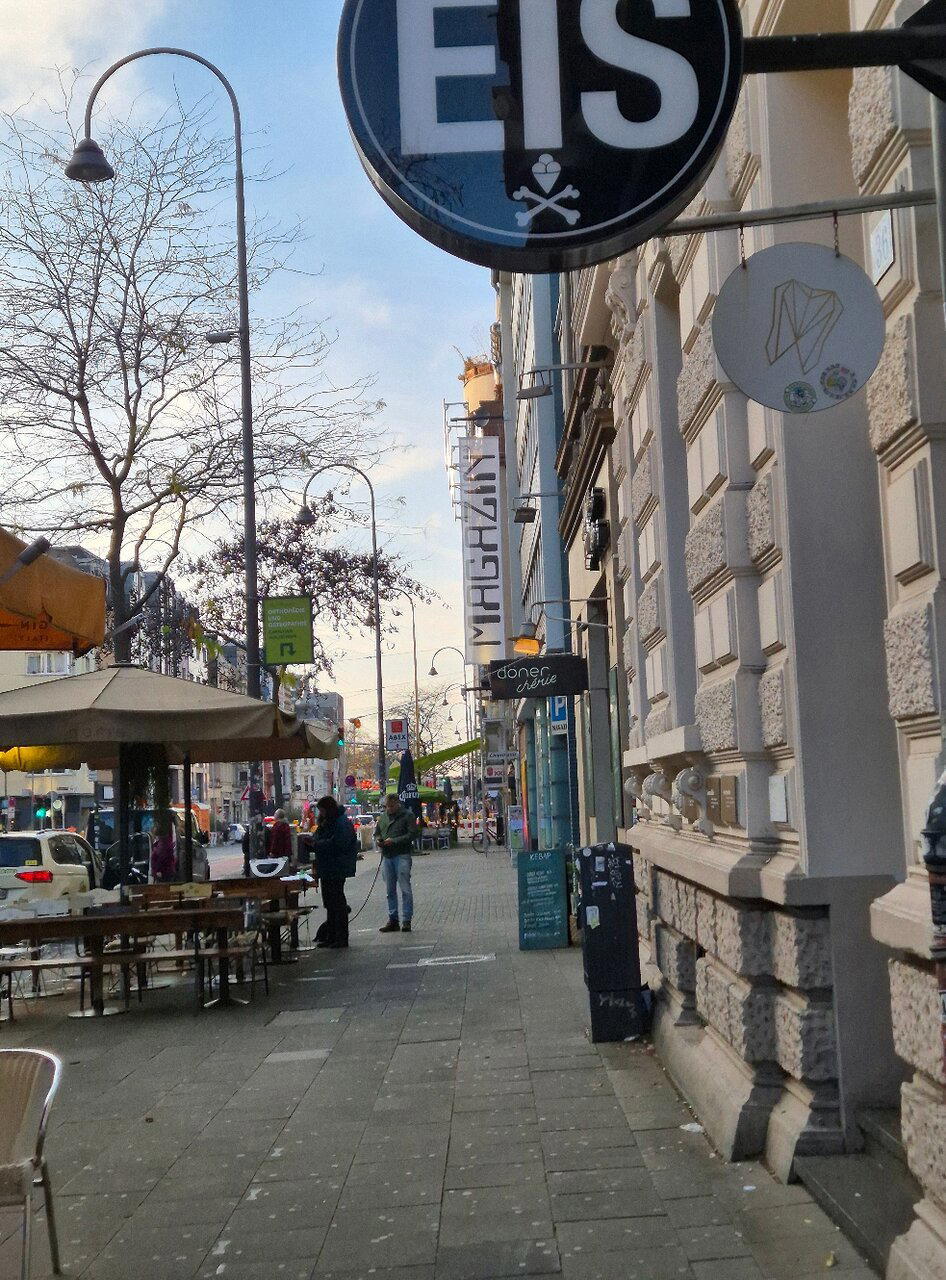
A Street Where Two Dining Cultures Meet
Aachener Strasse runs west from the inner ring road through some of Cologne's most food-serious neighbourhoods, and number 38 sits in a corridor where the city's appetite for French-influenced cooking has been quietly reshaping itself for years. The broader shift across Cologne's upper dining tier has moved away from formal Gallic orthodoxy toward something more hybrid: kitchens that absorbed the technique, discarded the ceremony, and rebuilt from local instinct. Adieu Paris is a vegan Turkish döner restaurant at Aachener Str.
The restaurant sits in the Belgisches Viertel, a district whose compact grid of early twentieth-century buildings and independent businesses has made it one of the more culturally active parts of the city. The neighbourhood draws a crowd that skews younger and more internationally minded than the old-money dining rooms of the inner city, which shapes both the competitive environment and the expectations a restaurant like this has to satisfy.
The Evolution: From Deference to Dialogue
For much of the twentieth century, serious dining in Germany's major cities operated in deliberate deference to French tradition. Menus arrived in French, service followed French codes, and technical credibility was measured by proximity to classical French cuisine. That model has been under sustained pressure since roughly the early 2010s, as a generation of German chefs returned from international stages with broader references and less interest in maintaining the hierarchy. The result, across cities like Cologne, Hamburg, and Munich, has been a wave of restaurants that treat French technique as a foundation rather than a destination.
Adieu Paris carries that trajectory in its name. The phrase works as both farewell and tribute, which is an accurate description of where much of Cologne's more interesting dining now sits. Venues like La Cuisine Rademacher and Le Moissonnier Bistro represent different points on that same arc, the former working within modern French idiom, the latter anchored more firmly in bistro tradition. What distinguishes the current moment is that none of these restaurants need to position themselves against Paris anymore. The conversation has moved on.
Across Germany more broadly, this evolution has produced some of the country's most technically precise cooking. Restaurants like Schwarzwaldstube in Baiersbronn and Vendôme in Bergisch Gladbach demonstrate how completely French classical training can be absorbed and redirected toward something with a distinct regional character. Aqua in Wolfsburg and Victor's Fine Dining by Christian Bau in Perl operate at the extreme precision end of that spectrum. Adieu Paris, on Aachener Strasse, belongs to a more accessible register of the same broader movement.
Cologne's Fine Dining Tier: Where Adieu Paris Fits
Cologne is not a Michelin-dense city in the way that Hamburg or Munich are, but it sustains a serious upper-middle dining tier that has grown more confident in the past decade. At the leading end, Ox & Klee operates at a level of technical ambition that invites comparison with Germany's starred houses. La Société and maiBeck represent the modern cuisine strand that has become the defining format of the city's mid-to-upper tier. The competition within that bracket is genuine, and a restaurant with a French-referencing name on a busy artery like Aachener Strasse is making a specific claim about where it sits in that hierarchy.
The Belgisches Viertel location adds another layer of context. It is not a destination dining neighbourhood in the way that certain Hamburg or Berlin districts have become, but it functions as a reliable catchment for an audience that eats out regularly and makes considered choices. For that demographic, the name the restaurant carries enough cultural legibility to function as a positioning statement without requiring elaboration.
Elsewhere in Germany, the format of French-influenced cooking at accessible price points has proven durable. JAN in Munich and Restaurant Haerlin in Hamburg occupy the formal end of that spectrum. At the more experimental edge, CODA Dessert Dining in Berlin and ES:SENZ in Grassau demonstrate how far the format can be pushed. The point is that the French inheritance in German fine dining is now a starting point for a wide range of creative positions, not a fixed endpoint.
The Name as Editorial Statement
Restaurant names in the premium tier increasingly function as condensed brand arguments. A name like Adieu Paris does specific work: it signals French fluency, suggests a degree of ironic self-awareness, and positions the kitchen as post-classical rather than neo-classical. That distinction matters to the audience it is recruiting. Diners who read a menu in that register are not looking for a faithful recreation of a Parisian brasserie experience. They want the literacy without the deference, which is precisely the sensibility that has defined Cologne's better new openings over the past several years.
For international reference, the broader move away from French classical authority in favour of something more locally inflected has parallels in cities like New York, where Le Bernardin represents the apex of the old model, and San Francisco, where Lazy Bear demonstrates how completely the frame can be rebuilt. The German iteration of this shift has its own character, shaped by different regional ingredients, different hospitality codes, and a dining culture that has historically been less interested in theatrical service than in what arrives on the plate.
Practical Details
The restaurant is located at Aachener Strasse 38, 50674 Cologne, in the Belgisches Viertel. The address is accessible from the inner ring road and sits within walking distance of several tram and bus connections along Aachener Strasse. Given the neighbourhood's density and the restaurant's positioning in a competitive local tier, booking ahead is advisable, particularly for weekend evenings when the Belgisches Viertel draws significant foot traffic.
Reputation First
Comparable venues nearby, for context on price, style, and recognition.
| Venue | Cuisine | Price | Notes |
|---|---|---|---|
| Adieu ParisThis venue — the venue you are viewing | Vegan Turkish Döner | $$ | Not listed |
| Lezizel Manti | Turkish Manti Dumplings | $$ | Ehrenfeld |
| District 10 | Vietnamese Street Food & Asian Fusion | $$ | Neustadt/Nord |
| Jim & June | New York-Style Tapas | $$ | Neustadt/Süd |
| Crusty Slices | Croissant Pizza | $$ | Altstadt/Nord |
| Deli Sülz | Mediterranean Deli | $$ | Sülz |
Continue exploring
More in Cologne
Restaurants in Cologne
Browse all →
Bars in Cologne
Browse all →
Hotels in Cologne
Browse all →


At a Glance
- Trendy
- Lively
- Casual Hangout
- Late Night
Current opening hours
- Monday
- 11 AM–1 AM
- Tuesday
- 11 AM–1 AM
- Wednesday
- 11 AM–1 AM
- Thursday
- 11 AM–3 AM
- Friday
- 11 AM–4:30 AM
- Saturday
- 11 AM–4:30 AM
- Sunday
- 11 AM–1 AM
Hours can change for holidays and private events. Last verified .
Lively street-side spot with indoor and outdoor seating in a lively pub and bar area.