筑馨居 occupies a historic address on Xinyi Street in Tainan's West Central District, placing it squarely within the city's densest concentration of traditional eating culture. The venue draws on Tainan's layered culinary heritage, where centuries of trade, migration, and local produce have shaped a distinct regional table. For visitors tracing the deeper currents of southern Taiwanese food, it represents a considered point of entry.
Pearl is the En Primeur Club membership app — saves, bookings, and concierge access live there. Same editors, same standards.
- Address
- No. 69號, Xinyi St, West Central District, Tainan City, Taiwan 70053
- Phone
- +886927307890
- Website
- facebook.com
- Directions
- Get directions
 Saves & bookings on Pearl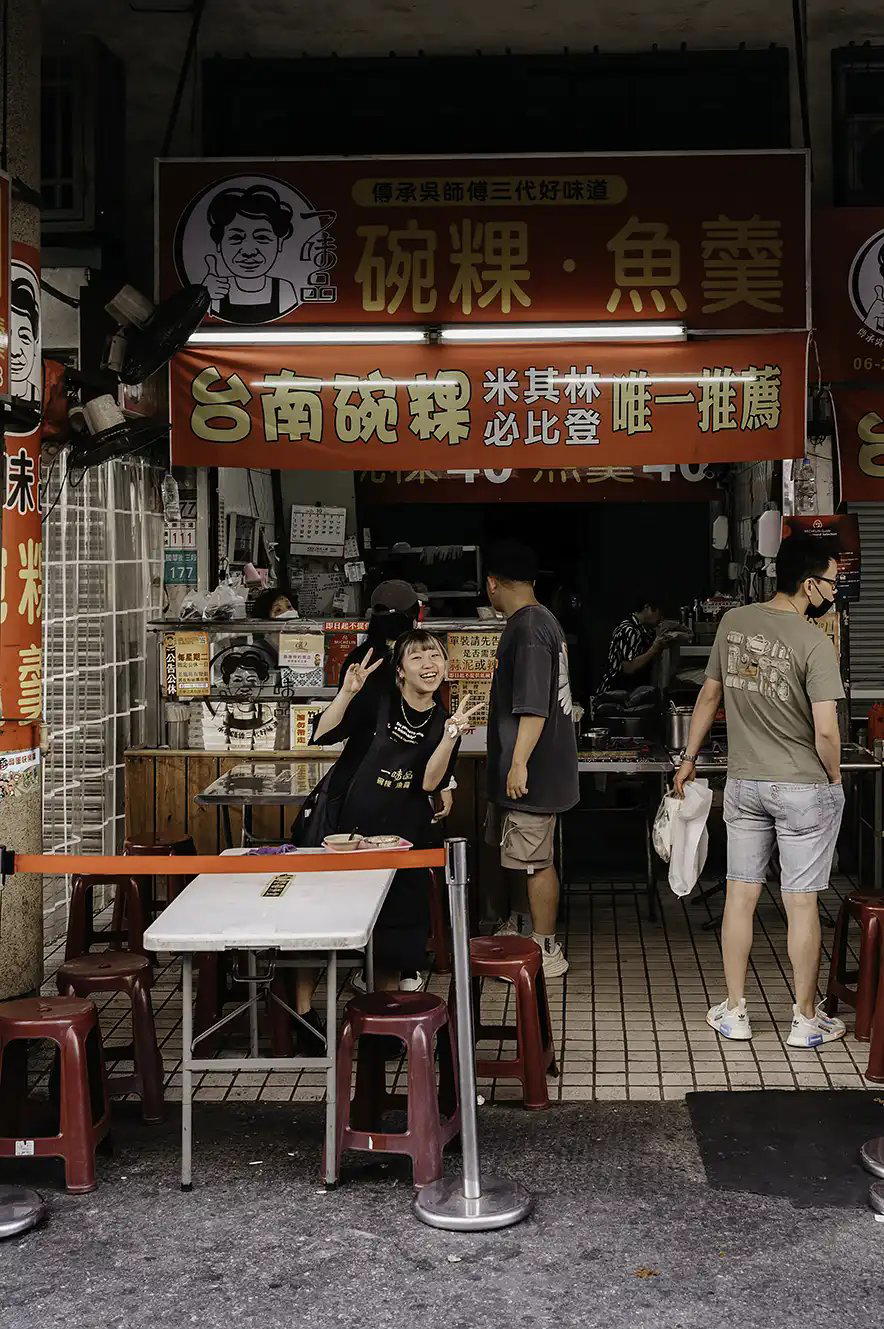
Xinyi Street and the Weight of Tainan's Food Culture
Tainan's West Central District does not announce itself the way newer dining districts in Taipei or Taichung do. The streets are narrower, the shopfront signage older, and the rhythm of eating tied to routines that predate contemporary food media by several generations. Xinyi Street, where 筑馨居 sits at No. 69, belongs to this older Tainan: a part of the city where the significance of a food address is measured in decades of neighbourhood trust rather than in recent press coverage or social media reach. Understanding what 筑馨居 represents requires first understanding what Tainan means within Taiwan's food hierarchy.
Among Taiwanese cities, Tainan holds a particular authority. It was the island's capital under successive administrations for roughly two centuries, and that political and commercial centrality generated a food culture of unusual density and specificity. The local repertoire runs from oyster vermicelli and milkfish congee to dan zai noodles and coffin bread, each dish traceable to particular historical moments: Japanese colonial influence, Fujian migration patterns, the post-1945 influx from mainland China. What distinguishes Tainan's eating culture from the more cosmopolitan tables of Taipei or the ambitious contemporary restaurants of Taichung is precisely this rootedness. The city's most respected eating addresses are not chasing international benchmarks; they are refining local ones.
The Neighbourhood as Context
West Central District functions as something close to Tainan's institutional core. Within walking distance of 筑馨居, the eating options span the full range of the city's traditional food culture: the slow-simmered beef soups of A Cun Beef Soup on Baoan Road, the Taiwanese oden tradition kept at A Hai Taiwanese Oden, and the congee formats that have sustained working Tainan for generations at A Hsing Congee. The small-eats tradition, which in Tainan means something more precise than snacking, is represented nearby at A Ming Zhu Xing on Baoan Road. This density is not accidental. West Central has been a commercial and residential hub long enough that its food culture has had time to stratify: certain addresses accumulate meaning that newer districts simply cannot replicate.
Against this backdrop, 筑馨居 operates in territory where reputation is earned slowly. Tainan diners are not easily impressed by novelty; the city's food criticism, such as it is, tends to be conducted through years of return visits rather than single-meal verdicts. That dynamic sets Tainan apart from the faster-moving food scenes in the north, and it shapes the kind of establishment that earns sustained local credibility here.
Where 筑馨居 Sits in Tainan's Dining Hierarchy
Tainan's restaurant scene does not sort neatly into the price tiers that govern dining in Taipei. The city's highest-regarded eating addresses frequently operate at modest price points, because the local food culture places a premium on craft and consistency over format and occasion. At the European-influenced end of the Tainan spectrum, L'herbe represents the $$$ bracket with a contemporary approach. The majority of the city's most trusted tables, however, occupy the $ and $$ range, where technique is expressed through repetition and ingredient sourcing rather than theatrical presentation.
For comparison across Taiwan's broader fine and serious-dining conversation, addresses like GEN in Kaohsiung and Akame in Wutai Township show how regional identity can anchor ambitious cooking without deferring to metropolitan templates.
Tainan's Food Traditions and What They Demand of a Visitor
Eating seriously in Tainan requires a different approach from dining in cities where restaurants are open late and menus are designed for extended multi-course meals. Tainan's traditional eating culture is structured around specific windows: early-morning congee and soup, midday noodle and rice formats, and small-plates eating that often finishes before most international visitors have started thinking about dinner. The city rewards planning, and it rewards the willingness to eat on local schedules rather than tourist ones.
This temporal specificity matters when considering any Tainan address. Visitors who arrive expecting the dining conventions of a destination tasting-menu restaurant or the service cadence of a formal Western table will need to recalibrate. Tainan's food culture is not designed around those conventions, and its leading addresses make no concession toward them. That directness is, for many serious food travellers, precisely the attraction.
The wider Taiwan dining circuit offers useful orientation: Shen Yen in Yilan, Chi Yuan in New Taipei, and Bebu in Hsinchu County each demonstrate how regional Taiwanese cooking traditions sustain serious dining practices outside the capital. Dongmen Rice Noodle Soup in Hsinchu City shows how a single-dish format can generate sustained culinary authority. Tainan's ecosystem operates on similar principles, scaled across a city with a much deeper historical food record.
Planning a Visit to 筑馨居
筑馨居 is addressed at No. 69, Xinyi Street, West Central District, Tainan City, 70053. The West Central District is accessible from Tainan HSR Station via local bus or taxi, with journey times typically in the 20 to 30-minute range depending on traffic. The district is also walkable from the central Tainan TRA station, which sits closer to the historic core. For visitors structuring a broader Tainan eating itinerary, the neighbourhood concentration of traditional addresses means that a single afternoon or morning can cover multiple significant stops. For visitors whose Taiwan itinerary extends to resort dining, Volando Urai Spring Spa and Resort in Wulai District and Gui Tian Hotel Capitalists Japanese Garden Restaurant in Tainan itself represent the higher-end hotel-dining bracket. For those focused on Tainan's traditional table, the Xinyi Street address of 筑馨居 places it at the geographic and cultural centre of that conversation. Phone, hours, and booking details should be confirmed directly before visiting. Abura Yakiniku in Taichung City provides a useful contrast for visitors moving between Taiwan's central and southern food circuits.
Pricing, Compared
Comparable venues nearby, for context on price, style, and recognition.
| Venue | Cuisine | Price | Awards | Notes |
|---|---|---|---|---|
| ç馨å±This venue — the venue you are viewing | Not listed | Not listed | Not listed | Not listed |
| 沙淘宮廟海產 | Tainan, Seafood Restaurant | Not listed | Not listed | Not listed |
| å³çæ串çå± é å±-å°ååº | Not listed | $ | Not listed | West Central District, Taiwanese Hand-Skewered BBQ |
| A Xia | Not listed | $$ | Not listed | West Central District, Traditional Tainan Seafood |
| The Han-jia | Not listed | $$$ | Not listed | South District, Modern Cocktail Pairing with European Tapas |
| Feng No Seafood | Not listed | $$ | Michelin Plate | Jiangjun District, Fresh Taiwanese Seafood |


At a Glance
Current opening hours
- Monday
- Closed
- Tuesday
- 6 AM–12:50 PM
- Wednesday
- 6 AM–12:50 PM
- Thursday
- 6 AM–12:50 PM
- Friday
- 6 AM–12:50 PM
- Saturday
- 6 AM–12:50 PM
- Sunday
- 6 AM–12:50 PM
Hours can change for holidays and private events. Last verified .