
In Wujie Township on Taiwan's northeast coast, Shen Yen Interactive Teppanyaki has built a reputation around a direct sourcing model that connects the Yilan coastline to the teppan counter daily. The format sits within Taiwan's growing tier of destination teppanyaki restaurants where the sourcing story is as central as the cooking. For travelers moving through Yilan's food circuit, it is among the county's most discussed live-fire addresses.
Pearl is the En Primeur Club membership app — saves, bookings, and concierge access live there. Same editors, same standards.
- Address
- No. 263, Section 2, Xibin Rd, Wujie Township, Yilan County, Taiwan 268
- Phone
- +886 3 960 1777
- Website
- lin.ee
- Directions
- Get directions
 Saves & bookings on Pearl
Where the Coast Meets the Counter
Yilan County occupies a stretch of Taiwan's northeast coastline that has quietly become one of the island's most compelling food destinations. The Su-hua Highway on one side and the Central Mountain Range on the other create a natural enclosure that keeps the county's agricultural and marine produce unusually local. Rice, dairy, seafood, and river ingredients move short distances from field or water to kitchen, and that geographic fact shapes how restaurants here frame their offering. Shen Yen is a restaurant in Wujie Township, Yilan County, serving Taiwanese-Inspired Interactive Teppanyaki Omakase at about US$60 per person. It operates squarely within that context.
The approach at this address is defined by a sourcing philosophy that the restaurant describes as "from sea to table", a phrase that in Yilan carries practical rather than rhetorical weight. Taiwan's northeast coast produces a consistent daily catch, and teppanyaki as a format is unusually well-suited to showcasing that: the open iron griddle demands ingredients with inherent quality rather than complexity added in a sauce pot. What arrives on the plate is largely a function of what was sourced that morning, which gives the menu a seasonal elasticity that prix-fixe European formats or more scripted omakase counters do not always share.
Taiwan's Teppanyaki Tier
To understand where Shen Yen sits in Taiwan's dining scene, it helps to understand what has happened to the country's teppanyaki category over the past decade. Teppanyaki in Taiwan was long associated with hotel banquet floors and business-entertainment formats: large rooms, performative knife work, and proteins selected for prestige signaling rather than seasonal precision. That model has not disappeared, but alongside it a smaller cohort of destination teppanyaki restaurants has developed, houses that treat the flat-leading as a precision tool, source narrowly and locally, and position themselves closer to the ingredient-led counter tradition than to the theatrical banquet circuit.
Shen Yen fits the latter description. Its recognition as one of Taiwan's leading teppanyaki restaurants places it in a comparable set that includes the broader shift toward produce-first cooking in the island's formal dining tier. For reference, Taiwan's highest-profile fine dining addresses, including JL Studio in Taichung and logy in Taipei, have built their identities partly around where ingredients come from and what that regional specificity tastes like. Shen Yen operates at a more accessible register than those Michelin-recognized counters, but the underlying logic, source well, let the cooking clarify rather than complicate, belongs to the same current in Taiwanese dining.
The Sourcing Model and Why It Matters Here
The phrase "from sea to table" has become common shorthand in coastal restaurant marketing, but in Yilan's case the geography makes it more than a slogan. The county's coastline, particularly around the Lanyang Plain, supports a fishing economy that feeds local markets and restaurant kitchens with a frequency that landlocked regions cannot replicate. Crab, shrimp, and fish species native to the western Pacific move through Yilan's wholesale infrastructure daily, and a teppanyaki counter format, where proteins are cooked to order at close range on a single heat surface, is one of the more honest ways to present them: nothing masks the starting quality of the ingredient.
This sourcing orientation also distinguishes the restaurant from the larger, more formulaic teppanyaki operations that dominate urban markets in Taipei or Taichung. Where urban teppanyaki often imports premium proteins (wagyu from Japan, lobster from North America) and leans on those imported prestige credentials, a regionally anchored operation like this one makes a different argument: that the marine produce of Taiwan's northeast coastline is worth traveling to eat in the place where it was caught. That is a more specific and more defensible claim, and it is increasingly the kind of claim that draws food-motivated travelers out of the capital.
Elsewhere on the island, GEN in Kaohsiung and Zhu Xin Ju in Tainan represent how southern Taiwan has developed its own ingredient-led formal dining culture, while Akame in Wutai Township shows how remote-location sourcing can become a restaurant's entire premise.
The Interactive Element
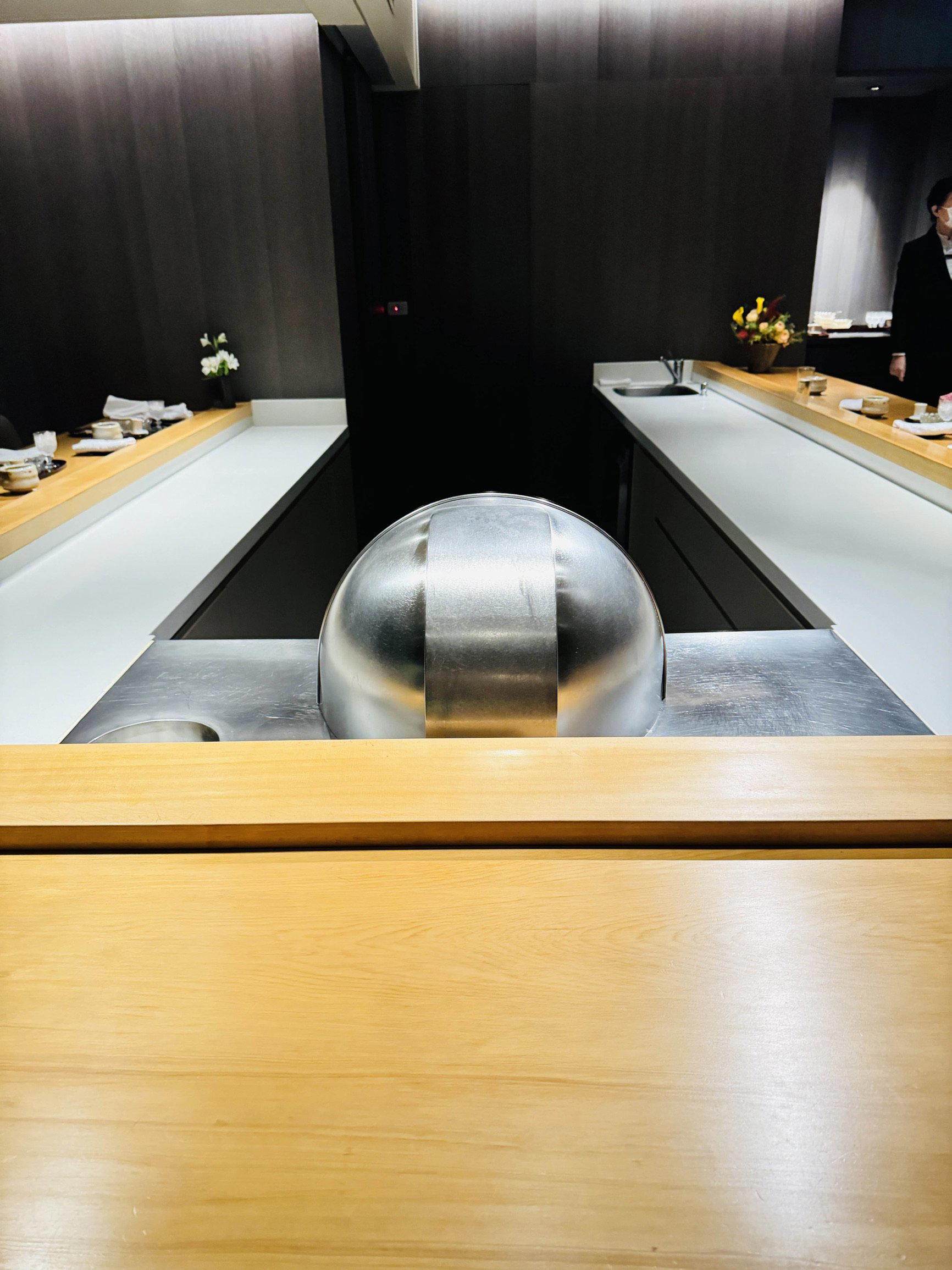
The word "interactive" in the restaurant's full name points to a format decision that matters in practice. At a teppanyaki counter, the cooking surface is visible, the chef works at close range, and the sequence of the meal is partly a function of conversation between kitchen and table. This is structurally different from a closed kitchen sending out plated courses, and it creates a different kind of attentiveness in the diner. You are not reading a menu so much as watching a decision-making process: what came in today, in what condition, and how heat and timing will be applied to it. For diners interested in where food comes from, that transparency is part of the point.
Taiwan's more technically ambitious restaurants, such as those operating within the Volando Urai Spring Spa and Resort model in the broader northern Taiwan region, have developed their own immersive dining formats. The restaurant's version is more elemental: the interaction is between diner, ingredient, and open heat, without theatrical staging or extended narrative programming. That restraint suits the Yilan context, where the surrounding county does much of the storytelling already.
Planning Your Visit
The restaurant is located at No. 263, Section 2, Xibin Road, Wujie Township, Yilan County, a rural township setting that requires a car or arranged transport from central Yilan city. The address is not on a main transit corridor, which means visits here tend to be purposeful rather than incidental. Travelers already spending time in Yilan for the county's broader appeal, its hot springs, rice terraces, and coastline, will find the restaurant fits naturally into a full-day itinerary.
Given its reputation and the daily-catch dependency of the menu, booking ahead is advisable rather than optional. Walk-in availability at a teppanyaki counter of this standing in a destination county is unreliable, particularly on weekends when domestic travel from Taipei to Yilan peaks. The Taipei-Yilan route via the National Freeway No. 5 tunnel takes approximately 40 minutes under normal conditions, making Yilan a realistic same-day trip from the capital, which also means weekend demand at recognized local addresses runs high. Confirm reservations in advance. For comparable teppanyaki and precision-sourcing experiences in different registers internationally, Le Bernardin in New York City and Lazy Bear in San Francisco represent how ingredient transparency and counter-format intimacy operate at the summit of the American market, while 8½ Otto e Mezzo Bombana in Hong Kong illustrates how Asia's premium dining tier handles provenance claims in a different cultural context. Our Yilan wineries guide covers local drink options for those building a longer county itinerary around the table.
At-a-Glance Comparison
Comparable venues nearby, for context on price, style, and recognition.
| Venue | Cuisine | Price | Notes |
|---|---|---|---|
| Shen YenThis venue — the venue you are viewing | Taiwanese-Inspired Interactive Teppanyaki Omakase | $$$ | Not listed |
| Red Lantern | Traditional Chinese with Cherry Valley Roasted Duck Specialties | $$$$ | Yilan City |
| 龍記尚品牛肉麵 | Taiwanese Beef Noodle | $$ | 頭城鎮 |
| Wengyao Roast Chicken | Taiwanese Kiln-Roasted Chicken | $$ | Jiaoxi Township |
| 紅樓中餐廳 Lantern Chinese Cuisine | Traditional Chinese Roast Duck | $$$ | 宜蘭市 |
| Longji Beef Noodle Restaurant | Taiwanese Beef Noodles | $ | Toucheng Township |
Recognition history
Dated appearances from independent guides and award organizations, with the underlying list record or original source where available.
Star Wine List
Star Wine List
Continue exploring
More in Yilan
Restaurants in Yilan
Browse all →
Bars in Yilan
Browse all →
Hotels in Yilan
Browse all →

Wineries in Yilan
Browse all →
At a Glance
- Intimate
- Elegant
- Cozy
- Special Occasion
- Celebration
- Open Kitchen
- Chefs Counter
- Sake Program
- Local Sourcing
Current opening hours
- Monday
- 11 AM–3 PM, 5–10 PM
- Tuesday
- 11 AM–3 PM, 5–10 PM
- Wednesday
- 11 AM–3 PM, 5–10 PM
- Thursday
- 11 AM–3 PM, 5–10 PM
- Friday
- 11 AM–3 PM, 5–10 PM
- Saturday
- 11 AM–3 PM, 5–10 PM
- Sunday
- 11 AM–3 PM, 5–10 PM
Hours can change for holidays and private events. Last verified .
Brightly lit, clean, and comfortable with an old-fashioned feel, centered around interactive teppanyaki counters for an engaging chef's performance.