Our verdict
幸鮨 sits in Shirahama, a coastal town in Wakayama's Nishimuro District where the Kuroshio Current delivers some of the Pacific's most prized fish directly to local fishermen. The restaurant operates within a regional dining tradition that prizes proximity to source above almost everything else. For visitors tracing Japan's less-travelled sushi circuits, the Wakayama coast offers a counterpoint to the metropolitan omakase format.

Pearl is the En Primeur Club membership app — saves, bookings, and concierge access live there. Same editors, same standards.
- Address
- Japan, 〒649-2211 Wakayama, Nishimuro District, Shirahama, 新地1405-15
- Phone
- +81 739-42-4027
- Website
- kouzushi.net
- Directions
- Get directions
- Booking
- Book on the venue's website
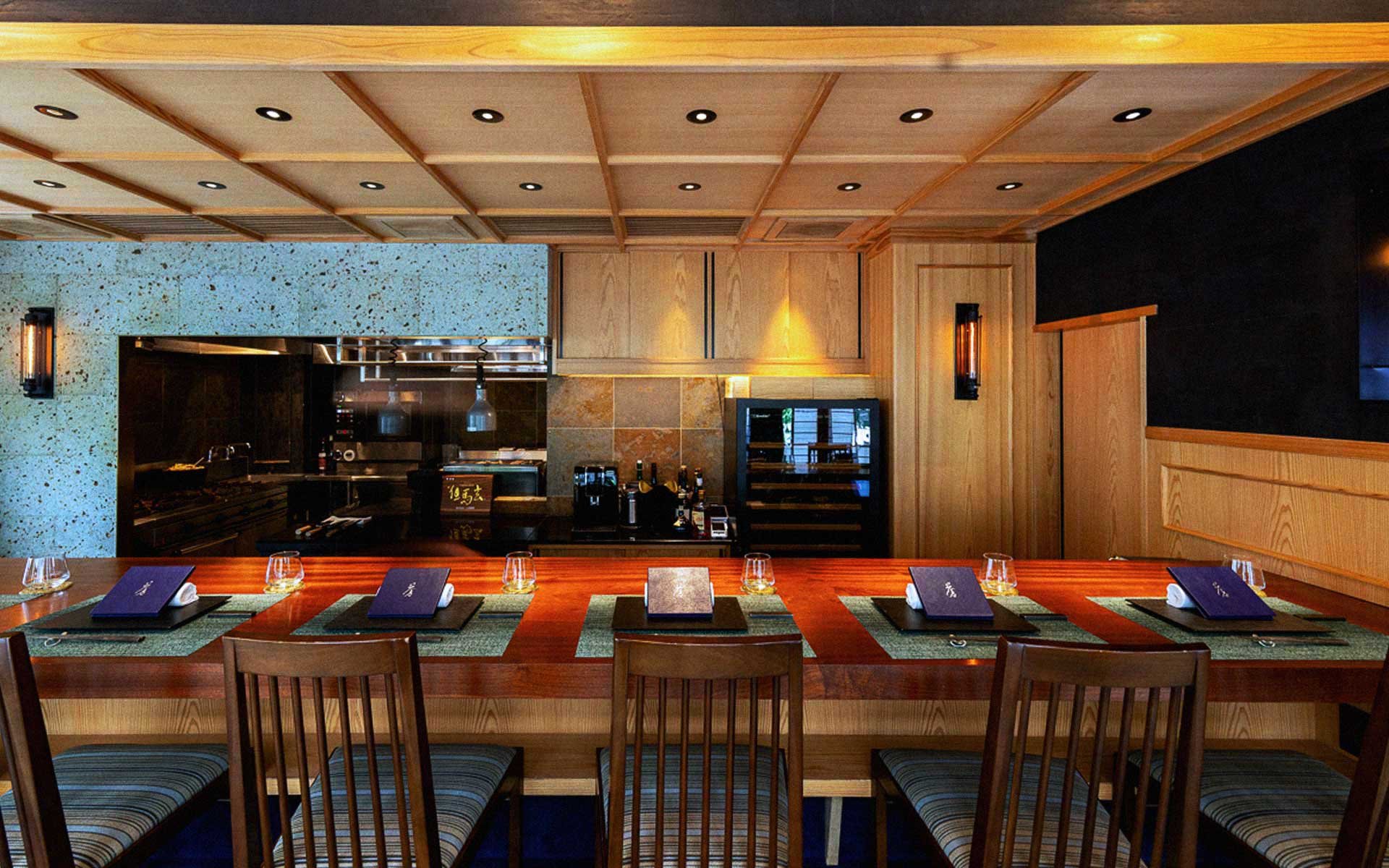
Coastal Wakayama and the Logic of Proximity
Japan's premium sushi conversation tends to collapse into a few postcodes: Ginza, Azabu, Gion. The counters that draw the most international attention, places like Harutaka in Tokyo or Gion Sasaki in Kyoto, operate inside established award ecosystems with deep reservation pipelines and price points that reflect metropolitan demand. What that conversation tends to obscure is the parallel tradition running along Japan's regional coastlines, where the distance between ocean and counter is measured in kilometres rather than supply-chain days. Wakayama's Nishimuro District belongs to the latter category. Shirahama, the small coastal town where 幸鮨 operates, sits directly on the Pacific at a latitude where the Kuroshio Current pushes warm, nutrient-dense water northward, producing fishing conditions that have sustained the region's maritime economy for centuries.
That geographic context is not incidental to how restaurants in this area source and serve their fish. It is the premise. In regional coastal Japan, the argument for eating locally is not aesthetic or ideological in the way it might be framed at a progressive urban restaurant. It is simply logistical: the fish pulled from these waters at dawn can reach a counter twelve kilometres away before lunch service begins. The question any serious visitor should be asking about 幸鮨 is not how it compares to a Michelin-starred counter in Osaka, but rather what it represents within the specific sourcing geography of the Kii Peninsula.
The Kii Peninsula's Sourcing Geography
Wakayama Prefecture occupies the southern portion of the Kii Peninsula, a mountainous landmass that juts into the Pacific between Osaka Bay and the Kumano Sea. The coastline along Nishimuro District faces open ocean, which shapes the character of the local catch in meaningful ways. Bluefin tuna, sea bream, yellowtail, spiny lobster, and abalone all appear in the regional fishing record, with seasonal variation driven by the Kuroshio's temperature fluctuations across the year. This is the same current system that influences the celebrated fishing grounds off Kochi and Mie prefectures, and it gives the southern Wakayama coast access to a quality tier of seafood that rarely travels as far as Tokyo's Tsukiji or Toyosu markets in peak condition.
The regional dining pattern this produces differs structurally from the metropolitan omakase model. Rather than a chef constructing a menu around what arrives at a wholesale market, coastal Wakayama restaurants often work within closer, more direct relationships with local fishing operations. This shortens the decision chain between catch and service and, in practice, means the menu follows the ocean rather than the market. For context on what that sourcing discipline can produce at the highest level, HAJIME in Osaka and akordu in Nara both represent how Kansai-region kitchens handle the relationship between local ingredient supply and tasting menu architecture, though both operate within the urban fine-dining framework rather than the coastal proximity model.
Shirahama as a Dining Destination
Shirahama is leading known internationally for its white sand beach, one of the few genuinely sandy Pacific beaches on Honshu, and for Sandanbeki, the dramatic coastal cliffs that draw visitors to the western edge of the Kii Peninsula. The town has functioned as a resort destination for Kansai residents since the postwar era, which means its restaurant infrastructure developed around a visitor economy rather than a purely local one. That history produces a mixed dining environment: some establishments built around tourist throughput, others that have cultivated a more focused relationship with local product and repeat visitors willing to engage on those terms.
For travellers approaching Nishimuro District from the north, Shirahama is roughly two hours from Osaka by the JR Kinokuni Line from Shin-Osaka, with direct limited express services running throughout the day. The town is compact enough to cover on foot once you arrive, and the concentration of accommodation along the beach strip means most visitors are within reasonable walking distance of the central dining area. Those coming from Kyoto should budget closer to two and a half hours; the connection typically runs through Shin-Osaka. Visiting bodai in nearby 那智勝浦町 on the same trip is feasible for travellers with more than one night in the region, as Nachi Katsuura sits further down the Kii coast on the same rail line.
For broader context on the Nishimuro District dining scene, our full Nishimuro District restaurants guide maps the area's options across price tiers and cuisine types. Elsewhere in the Kansai and Chugoku regions, Denko Sekka in Hiroshima and Goh in Fukuoka represent the kind of regionally anchored fine dining that, like the Wakayama coast tradition, draws its authority from place rather than metropolitan recognition. Further afield, 三本木 川上製 in Nanao and 湖鮮食堂 in Takashima operate within analogous coastal and lakeside sourcing logics in Ishikawa and Shiga prefectures respectively.
What the Regional Format Means for Visitors
Regional sushi outside the major metropolitan circuits operates differently from the omakase format that international visitors typically encounter first. The pacing, communication style, and expectations around reservation lead times all tend to be less formalised than at a Ginza counter with an English-language booking platform and a fixed tasting menu price published in advance. This is not a disadvantage so much as a different set of conditions. The upside is a more direct relationship with the sourcing geography and, often, a price point that reflects regional rather than metropolitan demand. The trade-off is that navigation requires more effort: direct contact, some Japanese-language facility or a local intermediary, and flexibility around timing.
Travellers who have already worked through Japan's major urban dining circuits and are looking to extend their understanding of how the country's seafood culture operates outside the award spotlight will find the Kii Peninsula coast instructive. The comparison set for 幸鮨 is not Le Bernardin in New York or Atomix, nor even the metropolitan Japanese counters operating at comparable price tiers. The relevant frame is what coastal proximity and direct sourcing produce when the distance from water to plate is genuinely short, and what that format means for the rhythm and character of a meal. On the Kii Peninsula, that question has a clearer answer than almost anywhere else in Honshu.
Frequently asked questions
Is 幸鮨 child-friendly?
No specific family policy is documented for 幸鮨. As a sushi counter in Shirahama, Nishimuro District, the format tends toward focused counter dining rather than casual family-style service. Contacting the venue directly before visiting with young children is advisable.
Where is 幸鮨 located?
幸鮨 is located at Japan, ã649-2211 Wakayama, Nishimuro District, Shirahama, æ°å°1405-15, Nishimuro District.
How far ahead should I plan for 幸鮨?
Reservations are recommended for 幸鮨 in Nishimuro District. Confirm current policy via the venue's official channels.
What's 幸鮨 best at?
幸鮨 is best approached by focusing on the core concept and signature offerings.
Quick Comparison
| Venue | Cuisine | Price | Awards | Notes |
|---|---|---|---|---|
| 幸鮨This venue — the venue you are viewing | Japanese Sushi | Not listed | Not listed | Not listed |
| HAJIME | Avant-Garde Japanese Fine Dining | $300–500 | 3 Michelin Stars · World's 50 Best #83 | French, Innovative |
| Harutaka | Edo-Style Omakase Sushi | $200–300 | 3 Michelin Stars · World's 50 Best #76 | Sushi |
| L'Effervescence | Modern French with Japanese Influences | $200–300 | 3 Michelin Stars · World's 50 Best #69 | French |
| RyuGin | Modern Kaiseki | $500+ | 3 Michelin Stars · World's 50 Best #41 | Kaiseki, Japanese |
| Crony | Modern French with Japanese Influences | $150–200 | 2 Michelin Stars · World's 50 Best #34 | Innovative, French |
Continue exploring
More in Nishimuro District
Restaurants in Nishimuro District
Browse all →
Bars in Nishimuro District
Browse all →
Hotels in Nishimuro District
Browse all →
Details
- A La Carte
- Vegetarian Friendly