Our verdict
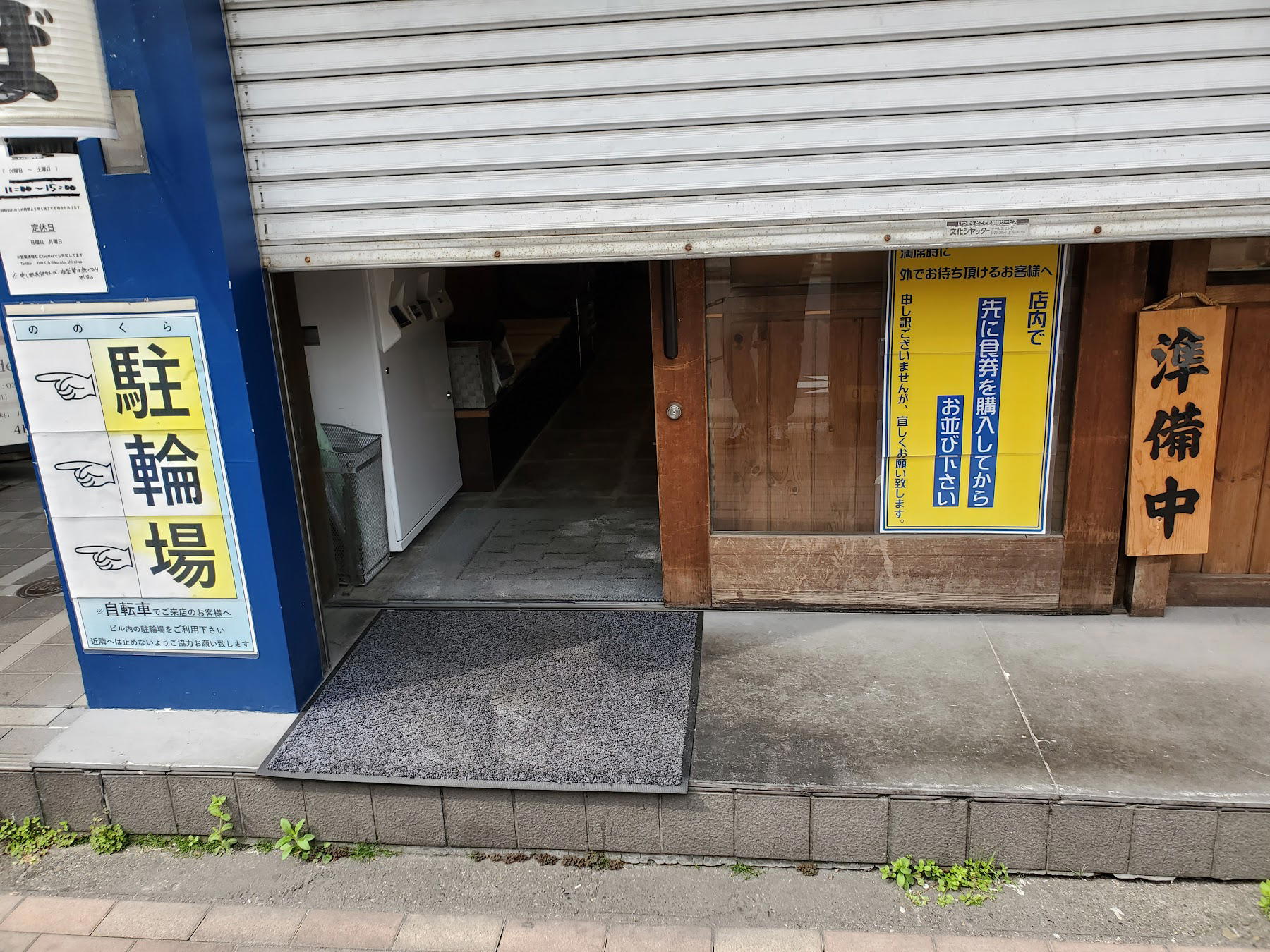
At seven counter seats in a ground-floor unit of a Kameari office building, Nonokura built a following around a single technical obsession: handmade noodles hydrated to 55%, a figure that placed them well above the industry standard and produced the springy, moist texture the shop called "mochi-puru." Owner Shiraiwa Kurato hand-kneaded each portion individually just before boiling, using a blend of domestic wheats including Kochi-kara and Kita-honami, so the irregular curls arrived at the bowl still carrying their own character. Shiraiwa came to Katsushika via Kudan Ikaruga, one of Tokyo's more serious ramen kitchens, where he trained after eating his way through more than 3,000 bowls across all 47 prefectures. That background shaped the approach at Nonokura: the soy sauce ramen ran on a double soup combining animal and seafood bases, brought into focus by a tare blended from multiple soy sauces. Thick chashu cooked at low temperature and house-made wonton completed the bowl. Saturday service operated on a queue-ticket system distributed from the morning, which tells you something about how the shop was received in a neighbourhood not typically associated with destination ramen. Nonokura closed permanently in late 2022. What it represented in the short time it operated was a particular strand of Tokyo ramen thinking: the conviction that noodle craft, not broth spectacle, could anchor a shop's identity. The seven-seat counter and the ticket machine kept the format unadorned. The hydration rate and the sourcing of specific domestic wheat varieties did the talking.

Pearl is the En Primeur Club membership app — saves, bookings, and concierge access live there. Same editors, same standards.
- Address
- 亀有3-11-11 (マーベラス大協ビル 1F), 葛飾区, 東京都, 125-0061
- Directions
- Get directions
The menu
What to order
- 特製中華そば(醤油)
- 特製油そば(醤油)
- 自家製極太麺
At seven counter seats in a ground-floor unit of a Kameari office building, Nonokura built a following around a single technical obsession: handmade noodles hydrated to 55%, a figure that placed them well above the industry standard and produced the springy, moist texture the shop called "mochi-puru." Owner Shiraiwa Kurato hand-kneaded each portion individually just before boiling, using a blend of domestic wheats including Kochi-kara and Kita-honami, so the irregular curls arrived at the bowl still carrying their own character.
Shiraiwa came to Katsushika via Kudan Ikaruga, one of Tokyo's more serious ramen kitchens, where he trained after eating his way through more than 3,000 bowls across all 47 prefectures. That background shaped the approach at Nonokura: the soy sauce ramen ran on a double soup combining animal and seafood bases, brought into focus by a tare blended from multiple soy sauces. Thick chashu cooked at low temperature and house-made wonton completed the bowl. Saturday service operated on a queue-ticket system distributed from the morning, which tells you something about how the shop was received in a neighbourhood not typically associated with destination ramen.
Nonokura closed permanently in late 2022. What it represented in the short time it operated was a particular strand of Tokyo ramen thinking: the conviction that noodle craft, not broth spectacle, could anchor a shop's identity. The seven-seat counter and the ticket machine kept the format unadorned. The hydration rate and the sourcing of specific domestic wheat varieties did the talking.
Reputation & Price
Comparable venues nearby, for context on price, style, and recognition.
| Venue | Cuisine | Price | Notes |
|---|---|---|---|
| Nonokura (手打式超多加水麺 ののくら)This venue — the venue you are viewing | Handmade Ultra-High Hydration Ramen | $10–20 | Not listed |
| Unagi Uomasa (うなぎ魚政) | Traditional Japanese Unagi | $150–200 | Higashiyotsugi, Traditional Japanese Unagi |
| Soba Kiri Anazawa | Not listed | Not listed | /郡山市, Traditional Japanese soba noodle shop |
| Anbai | Kashiwa, Tonkatsu & Beefsteak | Not listed | Not listed |
| Shabushabu Creative Izakaya Butagin Sakae ten | Naka, Lettuce Shabu-Shabu & Pork Izakaya | Not listed | Not listed |
| 神戸焼肉大山 | Japanese Robatayaki Grill | $20–30 | Hakata, Japanese Robatayaki Grill |
Continue exploring
More in 葛飾区



Bars in 葛飾区
Browse all →


Details
- Cozy
- Minimalist
- Solo
- Casual Hangout
- Open Kitchen
- Sake Program
- Counter Dining
- A La Carte
Intimate counter-only setup focused on the noodle-making process, creating a simple and dedicated ramen atmosphere.