Ginza Okuda occupies a basement address on Ginza 5-chome, within the tighter cluster of Tokyo's most formally structured Japanese dining rooms. The restaurant operates in a tradition where seasonal kaiseki progression and booking scarcity define the experience as much as the food itself. Planning a visit requires understanding where it sits in the Ginza fine-dining hierarchy before committing to a reservation.
Pearl is the En Primeur Club membership app — saves, bookings, and concierge access live there. Same editors, same standards.
- Address
- Japan, 〒104-0061 Tokyo, Chuo City, Ginza, 5 Chome−4−8 銀座カリオカビル B1
- Phone
- +81355373338
- Website
- ginzaokuda.com
 Saves & bookings on Pearl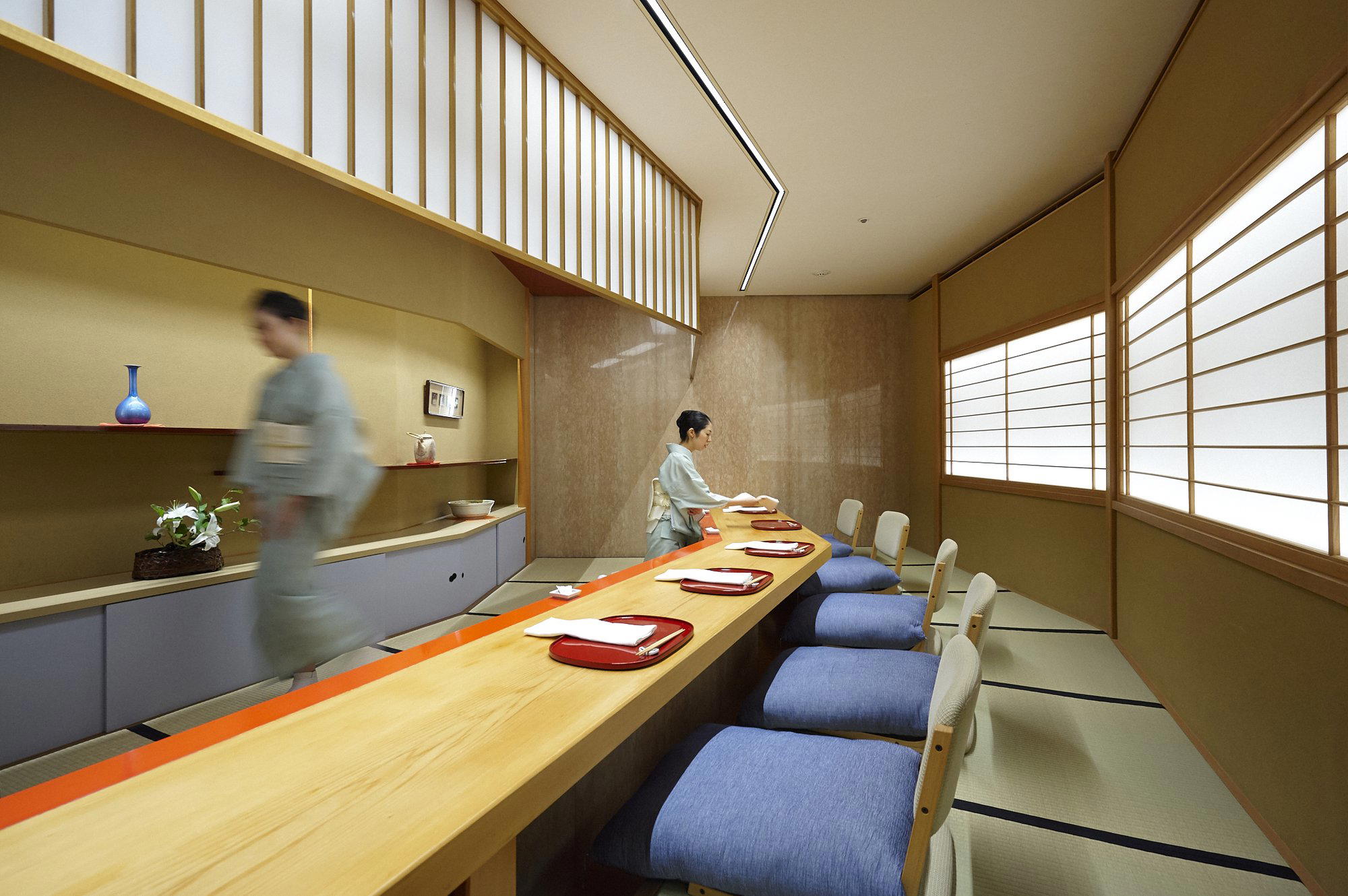
What the Address Tells You
Basement-level dining in Ginza carries a specific set of signals. The neighbourhood's upper-floor and sub-street restaurants tend to operate with smaller seat counts, higher per-cover prices, and reservation systems that reward persistence over spontaneity. Ginza Okuda, located in the basement of the Ginza Carré building on 5-chome, fits that pattern. The address puts it within a few minutes of some of Tokyo's most structurally demanding kaiseki and sushi counters, a density that tells you something useful about the expectations built into the booking process before you ever arrive.
Ginza's dining character has shifted considerably over the past decade. Where mid-range French and hybrid Japanese rooms once dominated the 5-chome corridor, a tighter tier of formally structured Japanese restaurants has claimed more of the premium end. Okuda sits inside that tier, which means the planning requirements are more similar to peer kaiseki counters in Ginza than to the more accessible contemporary Japanese rooms you'd find two districts north in Ginza's outer blocks.
The Booking Reality
This is the operative fact for anyone considering a visit: reservations at restaurants operating in this segment of Ginza kaiseki are not spontaneous decisions. The combination of limited seating, a mostly regular clientele, and proximity to peer counters that pull from the same international visitor pool means that availability compresses quickly. Booking months in advance is the standard expectation, not an edge case.
Ginza's upper tier kaiseki counters generally work through one of three access routes: direct contact via phone or web form, concierge intermediaries at the district's luxury hotels, or third-party reservation platforms with Japan access. For Ginza Okuda specifically, hotel concierge contact at one of the Ginza-adjacent five-star properties is often the most reliable approach for non-Japanese speakers, partly because communication in English through direct channels can be inconsistent at this format of restaurant.
Format, Atmosphere, and What to Expect on Arrival
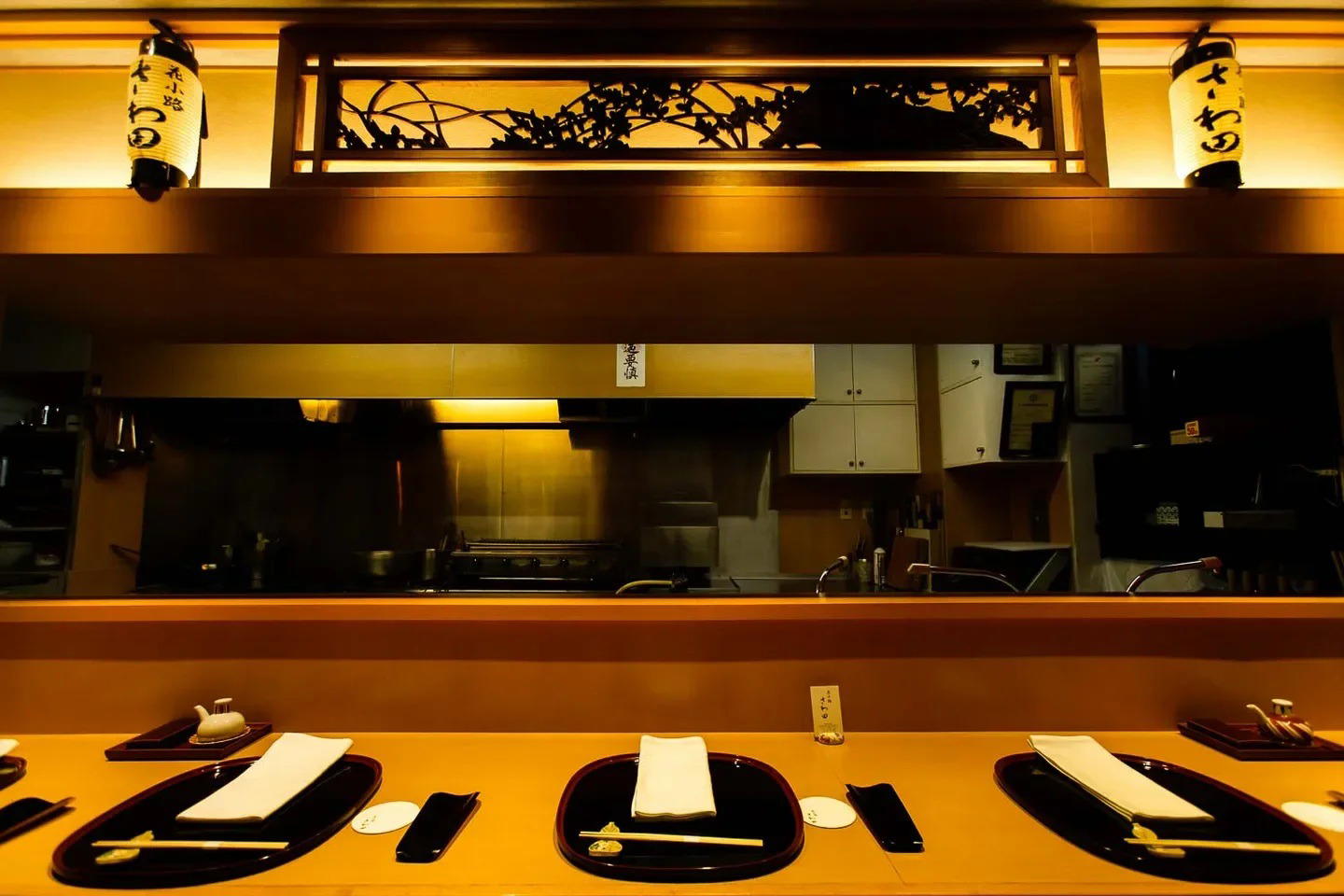
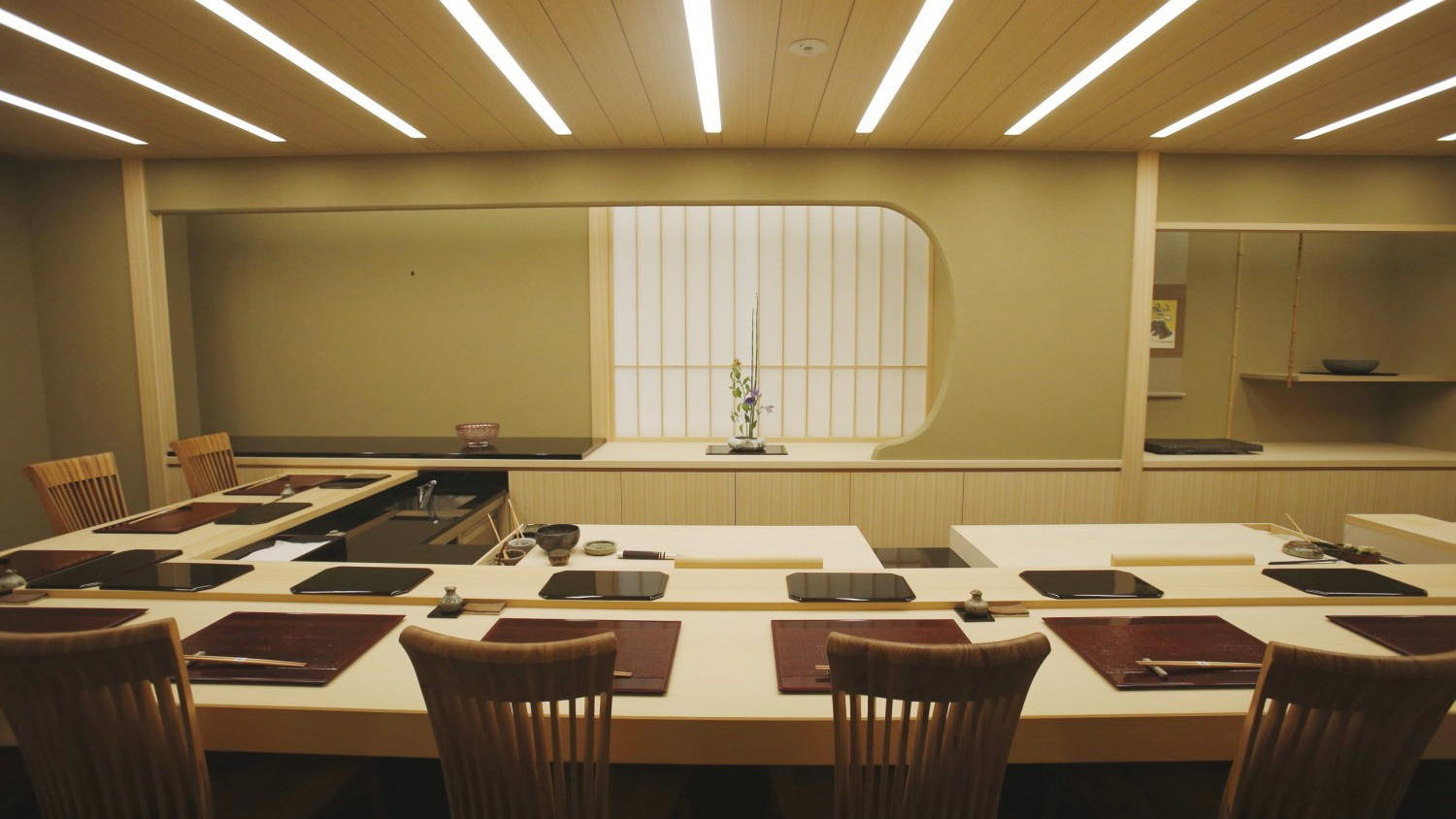
Descending to a basement dining room in this district produces a particular kind of quiet. The street noise of Chuo-dori drops away; the spatial compression that comes with below-ground rooms in central Tokyo creates an enforced intimacy that suits the kaiseki format well. These rooms are designed for attention, not spectacle, and Okuda operates within that logic.
Kaiseki in this tier is a seasonally driven, multi-course progression rooted in the traditional Japanese aesthetic of expressing the specific moment in the culinary calendar. What arrives on the table is not static from season to season. Summer courses reflect the logic of lightness and cooling; autumn shifts toward earthy, richer preparations; winter brings a different register again. Visitors arriving at different times of year are, in a real sense, visiting different menus, which is one reason regulars return on a seasonal cycle rather than returning for a single signature dish.
The formal tone in rooms like this means dress code expectations are implicit rather than posted. Smart, subdued dress is the practical guidance. The dining room at this address is not a space that rewards casual interpretation of the setting.
Where Okuda Sits in the Broader Kaiseki Conversation
Tokyo's kaiseki offerings now span a wider range than a decade ago. The format has filtered into accessible lunch formats, hotel dining programs, and contemporary hybrids. But the basement kaiseki counter in Ginza, operating with a small number of seats, a seasonally rotated menu, and a reservation system that functions as a filter, represents something closer to the original logic of the format: a disciplined, unhurried meal calibrated to a particular moment and a particular room.
For comparison across Japan's kaiseki spectrum: Gion Sasaki in Kyoto operates with the seasonal rigour associated with Kyoto kaiseki tradition, where the format originates. HAJIME in Osaka represents the more avant-garde end of kaiseki-informed cuisine, using contemporary technique while retaining the progression structure. Ginza Okuda operates in a middle position: rooted in classical form, Tokyo in its urban precision, and firmly at the premium end of the city's Japanese dining tier.
Those coming from other high-end Japanese experiences in the region, whether Goh in Fukuoka, akordu in Nara, or the quieter rooms of Abon in Ashiya, will recognise a similar discipline in service pacing and course structure, even as the regional character shifts.
Contextualising the Price Tier
Peer Comparison at a Glance
| Venue | Format | Price Tier | Booking Difficulty |
|---|---|---|---|
| Ginza Okuda | Kaiseki | ¥¥¥¥ | High, advance booking essential |
| Harutaka | Sushi | ¥¥¥¥ | High, counter seats limited |
| RyuGin | Kaiseki, Japanese | ¥¥¥¥ | High, international booking available |
| L'Effervescence | French | ¥¥¥¥ | Moderate to high |
| Crony | Innovative, French | ¥¥¥¥ | Moderate |
Planning Checklist Before You Book
- Contact at least two to three months ahead for dinner; more for peak autumn and cherry blossom seasons, when international demand for Tokyo's leading tables spikes.
- Use hotel concierge services at a Ginza or Marunouchi property if direct contact proves difficult.
- Confirm dietary restrictions at time of booking, kaiseki courses are constructed as integrated sequences, and last-minute changes are harder to accommodate here than at à la carte restaurants.
- Allow a full evening: kaiseki at this tier typically runs two hours or longer, and the format does not reward rushing.
- Check whether the restaurant is operating on a particular seasonal menu during your intended visit,
Comparable Options
Comparable venues nearby, for context on price, style, and recognition.
| Venue | Cuisine | Price | Notes |
|---|---|---|---|
| 銀座奥田This venue — the venue you are viewing | Chinese | $$ | |
| ShunDe DongHai Restaurant | Chinese Restaurant | $$ | Tokyo |
| Nanxiang Steamed Bun Restaurant (南翔饅頭店) | Shanghai Xiaolongbao | $$ | Roppongi |
| CHEF'S | Traditional Shanghai Chinese with a “subtractive” philosophy | $$$ | Shinjuku |
| Sichuan Hashoku | Traditional Sichuan Chinese | $$ | Taitō |
| Chinese Bed | Modern Chinese | $$$ | Shibuya |









At a Glance
- Family
- Casual Hangout
- Sake Program
Welcoming family-friendly atmosphere with table service.