泫米食堂 sits in Taipei's Da'an District, where a growing number of restaurants are rethinking what responsible cooking looks like in a city still dominated by volume-first dining. Positioned outside the Michelin fine-dining circuit, the restaurant draws attention through its ethical sourcing approach and grain-forward cooking in a neighbourhood better known for its café culture and mainstream Taiwanese fare.
Pearl is the En Primeur Club membership app — saves, bookings, and concierge access live there. Same editors, same standards.
- Address
- No. 12號, Lane 175, Section 2, Heping E Rd, Da’an District, Taipei City, Taiwan 106
- Phone
- +886905244754
- Website
- facebook.com
- Directions
- Get directions
 Saves & bookings on Pearl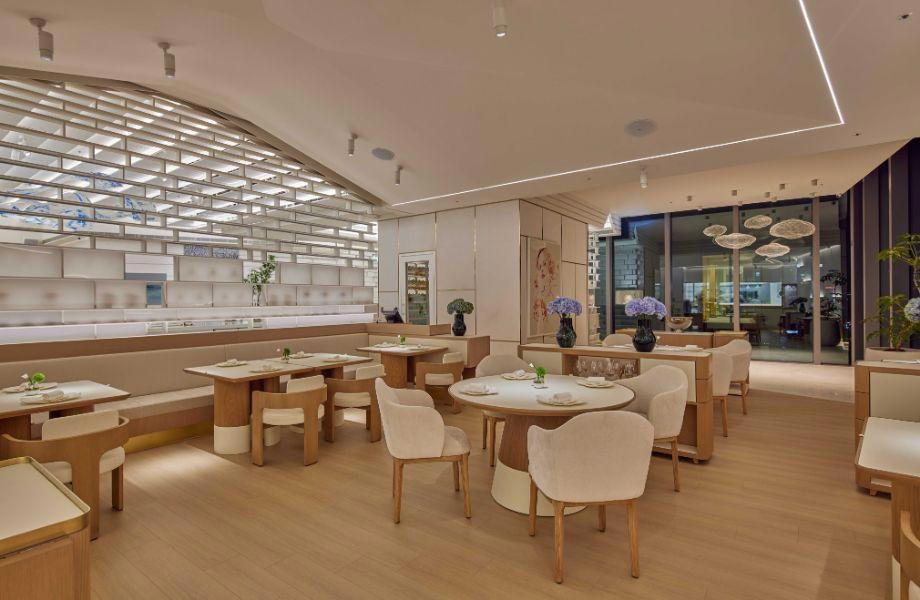
Da'an's Quieter Argument for Grain-Centred Cooking
Taipei's Da'an District is better understood as a residential and café neighbourhood than a destination dining corridor. Heping East Road, in particular, runs through blocks of apartment buildings, independent tea shops, and the kind of lunch counters that serve office workers rather than food tourists. That context matters when placing 泫米食堂, which occupies a low-profile address on Lane 175 off Section 2 of that road. In a city where the restaurant conversation tends to orbit around notable counters in Zhongshan or the dense dining density of Xinyi, a grain-focused neighbourhood operation in Da'an occupies a deliberately different position, one that is less about spectacle and more about the daily practice of considered eating.
Across Taiwan's restaurant scene, sustainability has moved from a marginal talking point to a structuring principle for a specific cohort of serious kitchens. Places like Akame in Wutai Township have built their entire identity around indigenous sourcing and land ethics. Amei in Tainan roots its menu in what the surrounding agricultural region actually produces. 泫米食堂 sits within that broader shift but at a neighbourhood scale rather than a destination-dining scale, which is its own kind of editorial statement about where ethical eating should happen and for whom.
The Grain Question in a Rice-Culture City
Taiwan's relationship with rice is foundational rather than decorative. The island's agricultural identity has long been shaped by its paddy geography, and rice remains a daily staple across every economic tier of eating. What has changed in the past decade, across the better neighbourhood kitchens of Taipei and in the more ambitious regional restaurants of the south and east, is a renewed attention to rice variety, provenance, and preparation, moving away from the commodity white rice that dominates volume dining toward heritage grains, single-origin varieties, and fermented applications that treat the ingredient as a carrier of place rather than a neutral filler.
This is the conversation 泫米食堂 enters. The name itself, 泫米 (xuàn mǐ), foregrounds rice as both identity and intention. In a city where Taïrroir has spent years building a case for Taiwanese ingredients at fine-dining price points, and where logy integrates regional producers into a Modern European framework, 泫米食堂 makes a more accessible, less formal version of the same argument: that what grows here, prepared with attention, is enough. The sustainability logic follows naturally from that premise. Grain-centred cooking that draws on local agricultural networks produces less long-haul freight, shorter supply chains, and menus that shift with what Taiwan's farms actually yield season to season.
Positioning and Peer Context
Within Taipei's restaurant taxonomy, 泫米食堂 does not compete in the same tier as Le Palais or L'Atelier de Joël Robuchon, both of which operate at the formal end of the market with price structures and production values to match. Nor does it sit alongside Molino de Urdániz, which imports a specific Spanish contemporary framework into the city. 泫米食堂 is closer in spirit to the neighbourhood-scale ethical kitchen, a category that has growing international precedent. In the United States, Lazy Bear in San Francisco built a following on community-format dining that foregrounds sourcing transparency. Le Bernardin in New York City has spent decades demonstrating that ingredient sourcing, not culinary spectacle, can be the primary editorial point of a serious restaurant. 泫米食堂 operates at a different scale and price point than either of those, but the underlying logic, that the origin and treatment of ingredients is the story, is shared.
Across Taiwan more broadly, that logic is finding traction in multiple regions. JL Studio in Taichung applies Southeast Asian sourcing frameworks to fine dining. Bebu in Hsinchu County and Shen Yen in Yilan represent a coastal and agricultural strand of the same movement. Chi Yuan in New Taipei and Dongmen Rice Noodle Soup in Hsinchu City show how grain-based staples travel across format and price tier. GEN in Kaohsiung and Volando Urai Spring Spa and Resort in Wulai District extend the conversation into hospitality contexts where environment and sourcing are designed as one integrated experience. Abura Yakiniku in Taichung City approaches protein and provenance from a Japanese-influenced angle. Taken together, these venues map a Taiwan food movement that 泫米食堂 participates in at a neighbourhood, daily-dining register.
What Ethical Sourcing Looks Like at Street Level
The sustainability story in premium Taiwanese dining often gets told at the level of the tasting menu, where sourcing notes appear on printed cards and provenance is part of the theatrical apparatus. 泫米食堂's Da'an address suggests a different register entirely: the kind of operation where the ethical sourcing is structural rather than performative, baked into the economics of a neighbourhood kitchen that cannot absorb the waste that larger, higher-margin restaurants routinely accept. That constraint, when treated as a discipline rather than a limitation, tends to produce cooking that uses whole ingredients, builds menus around what is available rather than what is wished for, and treats the daily market relationship as the foundation of the cooking program. It is the grain-at-street-level version of what Taïrroir argues at tasting-menu price points.
Planning a Visit
泫米食堂 is located at No. 12巷, Lane 175, Section 2, Heping East Road, Da'an District, a quiet residential side street that is best reached on foot from Da'an or Technology Building MRT stations, both within comfortable walking distance. Da'an is a walkable neighbourhood with enough cafés and tea shops nearby to make the trip worthwhile even if the kitchen is closed for a private booking.
A Minimal comparable set
Comparable venues nearby, for context on price, style, and recognition.
| Venue | Cuisine | Price | Notes |
|---|---|---|---|
| æ³ ç±³é£å This venue — the venue you are viewing | Longyuan, Modern Taiwanese | $$$ | Not listed |
| 鮨 嘉仁 | Zhongji, Hong Kong Chinese | $$$ | Not listed |
| Mu: Taipei | Not listed | $$$ | Sinsing District, Innovative Taiwanese Fine Dining |
| 合. Shabu | Not listed | $$$$ | Xinyi District, Luxury Shabu-Shabu Hot Pot |
| 香港波記茶餐廳 | 東區, Hong Kong-Style Cha Chaan Teng | $$ | Not listed |
| Beef Noodle Soup at Regent Hotel Taipei | Not listed | $$$ | Zhongshan District, Taiwanese Beef Noodle Soup |
Continue exploring
More in Taipei
Restaurants in Taipei
Browse all →
Bars in Taipei
Browse all →
Hotels in Taipei
Browse all →
Wineries in Taipei
Browse all →
At a Glance
- Elegant
- Modern
- Sophisticated
- Date Night
- Business Dinner
- Group Dining
- Celebration
- Open Kitchen
- Craft Cocktails
- Beer Program
- Local Sourcing
Current opening hours
- Monday
- Closed
- Tuesday
- Closed
- Wednesday
- 12–3 PM, 6–10:30 PM
- Thursday
- 12–3 PM, 6–10:30 PM
- Friday
- 12–3 PM, 6–10:30 PM
- Saturday
- 12–3 PM, 6–10:30 PM
- Sunday
- 12–3 PM, 6–10:30 PM
Hours can change for holidays and private events. Last verified .
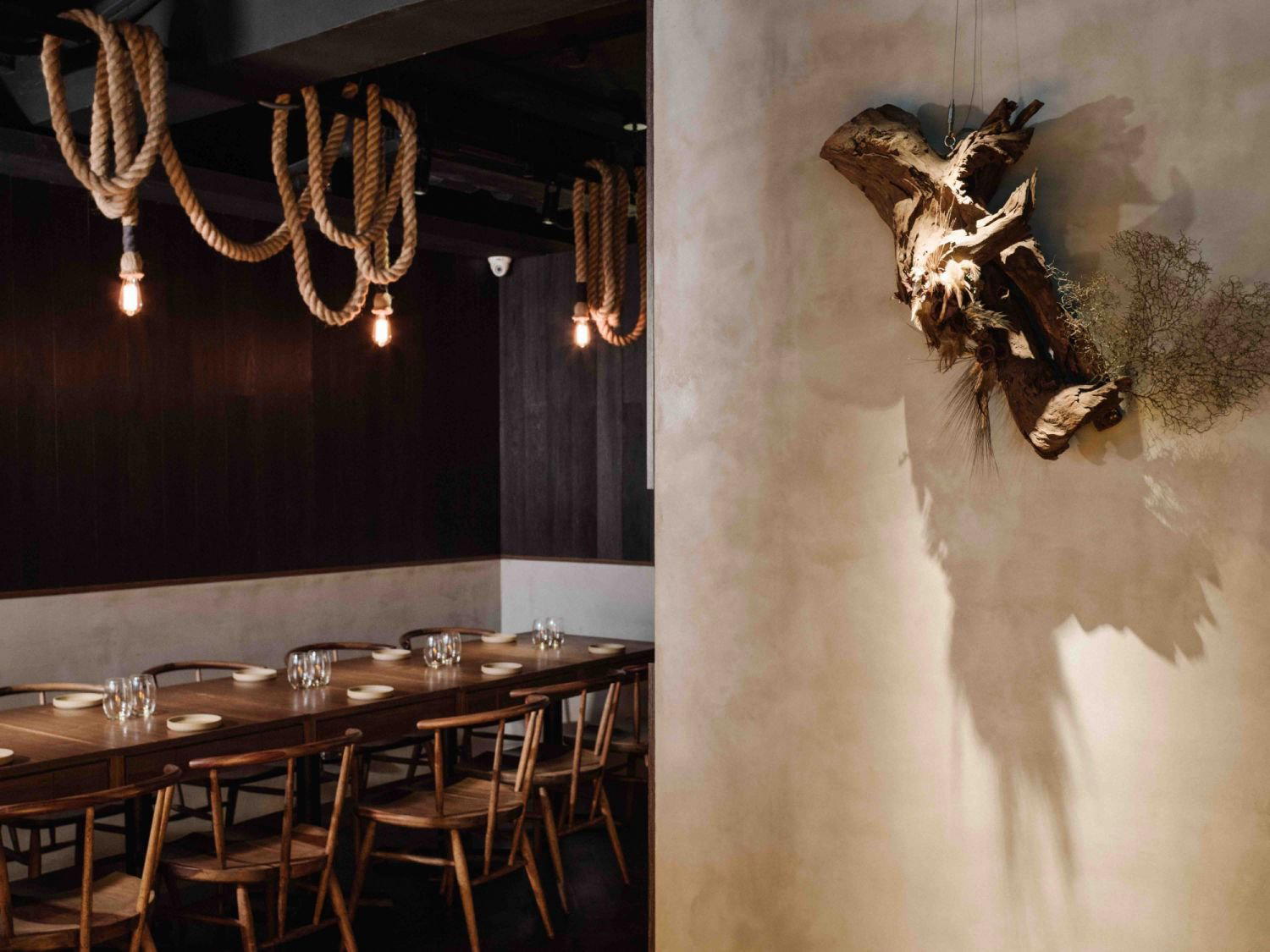
Modern minimalist interior with warm lighting and an open kitchen concept that creates an engaging dining atmosphere