Tabelog 100 #12
Our verdict
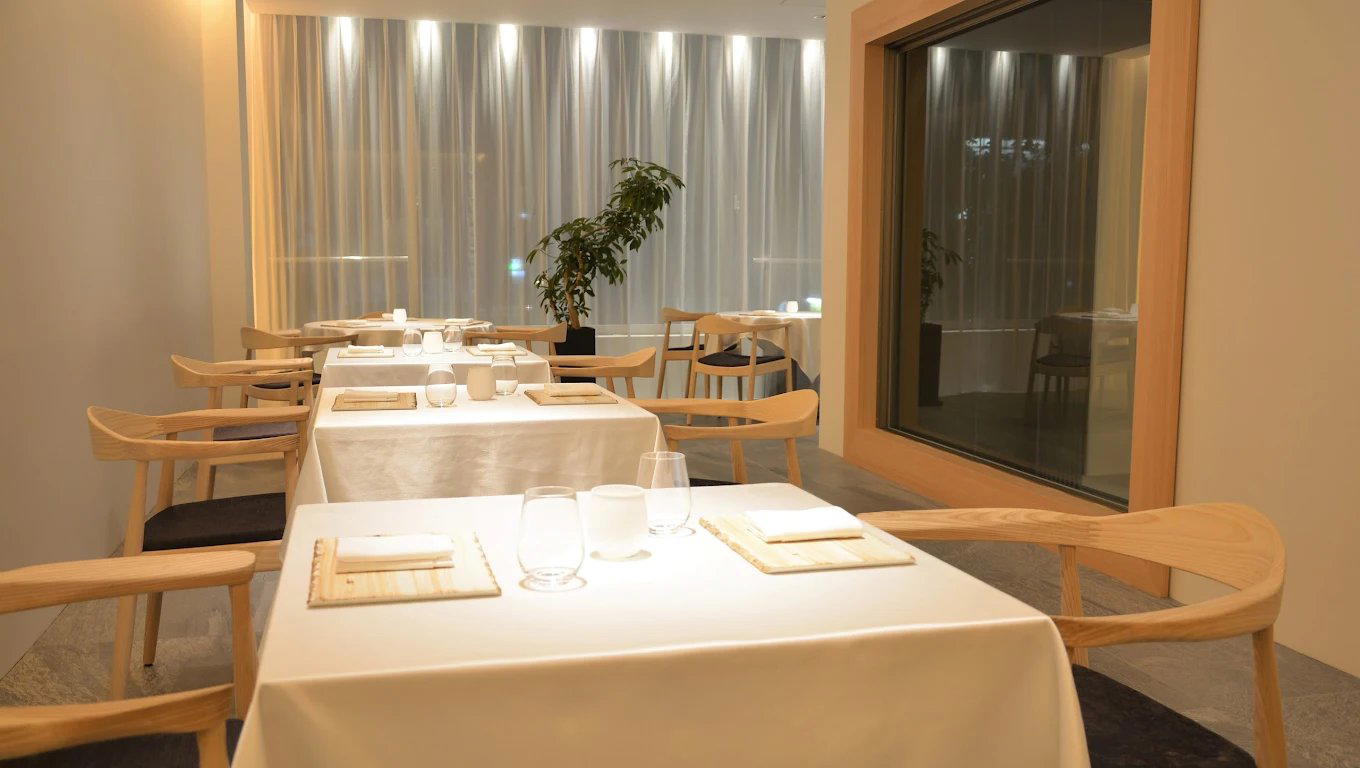
オステリア リュウ is a Northern Italian osteria in Nagoya with an open kitchen, sommelier-led extensive wine list, and a leisurely pace suited to dinner.

Pearl is the En Primeur Club membership app, where members save venues, book tables and use the concierge.
The menu
What to order
- Uni pasta
- Lobster linguine
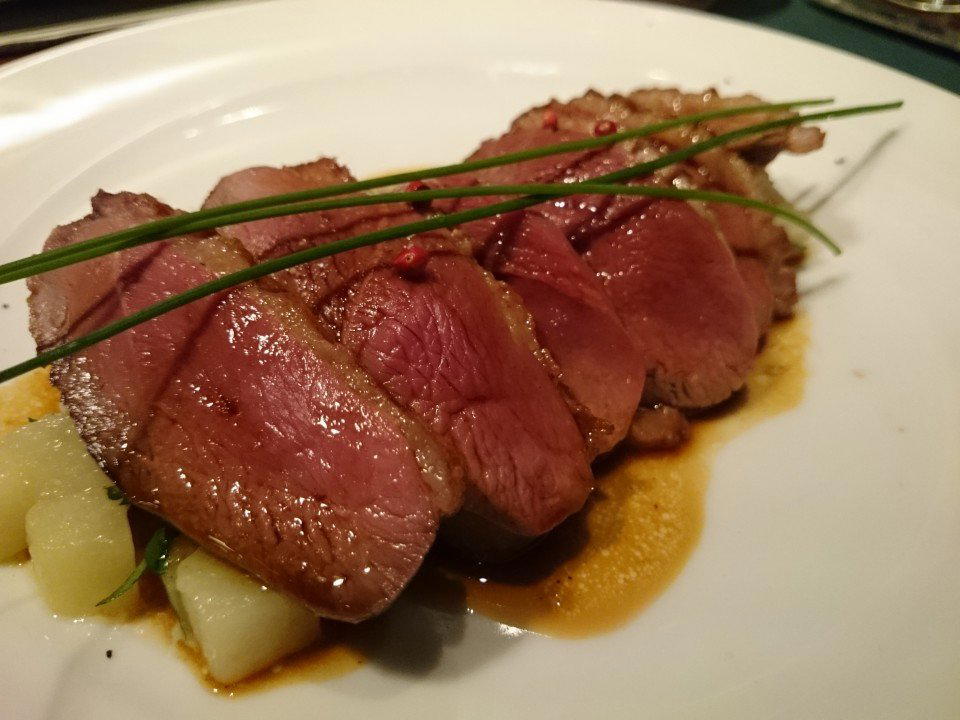
- Miyazaki beef roast
- Horse meat tartare with truffle
Italian Cooking in Chikusa Ward: A Quieter Frequency
Chikusa Ward sits at a remove from the dense restaurant corridors around Nagoya Station and Sakae. The streets around Koyo are residential in character, lined with low-rise buildings and the kind of neighbourhood commerce that does not announce itself. Walking toward Osteria Ryu, the surroundings do more to set expectations than any signage: this is not a room built for theatre or spectacle, but for the kind of eating that rewards attention. In Japanese cities, that spatial logic, a serious kitchen in a quiet residential pocket, tends to correlate with a particular kind of restaurant, one oriented toward the regular diner rather than the passing tourist.
Nagoya's Italian dining scene occupies a distinctive position within Japan's broader Italian restaurant culture. The city's dining identity has historically been defined by regional cuisines like miso-braised eel and chicken wings, but its Italian restaurants have quietly developed their own character, shaped by the same precision-cooking instincts that define the city's manufacturing culture. Venues like Bacio, cucina Wada, and Cucina Italiana Gallura each represent a strand of that tradition. Osteria Ryu reads, from its address and format, as belonging to the neighbourhood-trattoria end of this spectrum rather than the showpiece-dining end, a format that in Italy and in Japan alike tends to be where the most considered, ingredient-led cooking concentrates.
Sustainability as Operating Logic
The osteria model, wherever it appears in Japan, tends to carry a specific relationship with ingredients: shorter supply chains, seasonal discipline, and a structural preference for using whole animals and whole vegetables rather than trimmed, portion-ready product. This is not altruism, it is how a small kitchen with a tight reservation count keeps food costs in check while maintaining quality. The result, almost by necessity, is a cooking approach that modern diners describe as sustainable, though in practice it predates the language of sustainability by several centuries.
In Nagoya specifically, the sourcing logic for a neighbourhood Italian kitchen has interesting regional material to draw from. Aichi Prefecture produces Nagoya Cochin chicken, a breed with a protected regional designation and a distinctive fat-to-muscle ratio that rewards slow cooking. The prefecture also sits close enough to Mikawa Bay and the Chita Peninsula to access shellfish and fish with supply chains far shorter than those serving equivalent restaurants in Tokyo or Osaka. A kitchen in Chikusa Ward that prioritises local provenance is not making a difficult or expensive choice, it is making the obvious one.
Waste reduction in the osteria format typically expresses itself through technique rather than marketing: broths made from carcasses and vegetable trim, pasta folded from flour with no surplus, portion sizes calibrated to what the kitchen can source that week rather than what a printed menu promises. This is the kind of sustainability that does not require a dedicated section on the menu to operate. It shows up instead in the coherence of the cooking and in the absence of ingredient redundancy across courses.
Where Osteria Ryu Sits in Nagoya's Italian Tier
Nagoya's Italian restaurants currently divide into two broad tiers. The first is the formal Italian-kaiseki hybrid, where Italian technique meets Japanese multi-course structure to match each course. The second is the neighbourhood osteria, where the format is more relaxed, the menu shorter, and the cooking less mediated by ceremony. Chez Kobe and similar venues occupy the formal end. Osteria Ryu, on the basis of its address, name, and residential setting, reads as the latter, a category that in Nagoya is less crowded and arguably more useful for the regular diner who wants serious cooking without the apparatus of a set-menu occasion.
For comparison, the osteria model elsewhere in Japan's mid-tier cities has produced some of the country's most interesting Italian cooking precisely because the kitchen is not performing for awards committees or tourist traffic. HAJIME in Osaka and akordu in Nara show that the Kansai and Tokai regions have developed genuinely distinctive approaches to European cooking in Japanese residential contexts. Nagoya's version of that tendency is less publicised than Osaka's or Kyoto's, which is partly a function of the city's general reluctance to market itself to outside diners, but that same reluctance keeps the room filled with locals, which is usually the better indicator of a kitchen worth tracking.
Compared with the celebrated kaiseki and sushi counters that draw international attention, venues like Harutaka in Tokyo or Gion Sasaki in Kyoto, a neighbourhood osteria in Chikusa Ward operates in a completely different register. The comparison is less useful than placing it alongside Japan's other residential-Italian kitchens, where cooking quality is sustained not by prestige but by the discipline required to keep a regular clientele returning. That mechanism tends to produce more consistent cooking over time than the incentive structure of award-chasing.
Planning Your Visit
Chikusa Ward is accessible from central Nagoya via the Higashiyama subway line, with Koyo's immediate area sitting within a short walk of residential station exits rather than commercial hubs. For diners coming from outside the city, the natural entry point is Nagoya Station, from which the subway connection is direct. The neighbourhood character means the restaurant operates on a different rhythm from Sakae venues: walk-in availability is unpredictable, and a restaurant of this format and setting typically relies on a local reservation base. Contacting the venue directly before visiting is advisable, particularly for weekend evenings or party bookings. Given the address and osteria format, the room is likely compact, which reinforces the reservation logic. For a fuller picture of the city's dining options at different price points and formats, our full Nagoya restaurants guide covers the range from historic eel specialists like Atsuta Horaiken to the city's quieter neighbourhood Italian rooms.
Frequently asked questions
What's the address for オステリア リュウ?
オステリア リュウ is located at 1 Chome-11-14 Koyo, Chikusa Ward, Nagoya, Aichi 464-0061, Japan, Nagoya.
Is オステリア リュウ a good option for Italian dining away from central Nagoya?
For those willing to travel to Chikusa Ward, the restaurant offers an alternative to the Italian restaurants concentrated around Nagoya Station and Sakae. Koyo's residential character means the setting is quieter and the operation smaller in scale than city-centre competitors. The Higashiyama subway line connects the area to central Nagoya, making the location practical despite sitting at a remove from the main dining corridors.
What's the best thing to order at オステリア リュウ?
Without a confirmed current menu in circulation, the osteria format that defines the restaurant in Chikusa Ward points toward seasonal, ingredient-led dishes rather than a fixed house speciality. The model favours what is available rather than a standing signature, so the most reliable approach is to ask staff what has arrived that week. Visiting with an open brief tends to serve guests better here than arriving with a specific dish in mind.
Should I book オステリア リュウ in advance?
Reservations are advisable. Small-format osteria operations in residential Nagoya neighbourhoods like Koyo tend to run with limited covers, and walk-in availability is rarely guaranteed. The restaurant sits in Chikusa Ward at 1 Chome-11-14 Koyo, away from the high-footfall corridors of Sakae and Nagoya Station, but that quieter location does not translate to open seatings on short notice. Contacting the venue directly ahead of your visit is the safest course.
What's the signature at オステリア リュウ?
The defining characteristic of オステリア リュウ is the osteria operating model itself: a format rooted in shorter supply chains, seasonal discipline, and a kitchen that responds to ingredients rather than imposing a fixed menu over them. In Japan, osterie that maintain this discipline are a specific and relatively small category within the country's Italian restaurant tier. That commitment to the model, applied in a residential Nagoya context, is what distinguishes the restaurant from higher-volume Italian operations in the city.
How does オステリア リュウ handle allergies?
No allergy policy is documented in publicly available information about the restaurant. Given the seasonal and ingredient-led nature of osteria cooking, dishes and their components can shift week to week, which makes direct communication with the venue before your visit especially important. Contacting the restaurant in advance to discuss specific dietary requirements is the recommended approach.
Cuisine and Recognition
Comparable venues nearby, for context on price, style, and recognition.
| Venue | Cuisine | Price | Awards | Notes |
|---|---|---|---|---|
| オステリア リュウThis venue (the venue you are viewing) | Northern Italian Osteria | $50–100 | Tabelog 100 #12 | Not listed |
| Osteria Orcadoro | Seasonal Italian Osteria with Extensive Wine List | $50–100 | Tabelog 100 #36 | Nishi |
| Shokudo chisan | Modern local-sourcing Italian (pasta & steak) | $50–100 | Tabelog 100 #54 | Nakamura |
| ガイーナ | Teppanyaki Italian | $50–100 | Not listed | Nakamura |
| Japan no Italian Ryori Ten sai | Japanese Italian Cuisine | $100–150 | Tabelog Bronze #380 | Naka |
| Bottegon | Innovative Italian with a fish-focused tasting menu | $100–150 | Tabelog 100 #65 | Higashi |
Recognition history
Dated appearances from independent guides and award organizations, with the underlying list record or original source where available.
Tabelog 100 #12 · No. 12
Tabelog · Tabelog 100 - Italian - EAST - 2025