Sitting on the Dotonbori strip in Osaka's Chuo Ward, 本湯葉 occupies a district where competitive pressure has historically forced restaurants to sharpen their identity or disappear. The address places it inside one of Japan's most densely scrutinised dining corridors, where Osaka's appetite for precise, ingredient-led cooking sets the standard against which every kitchen is measured.
Pearl is the En Primeur Club membership app — saves, bookings, and concierge access live there. Same editors, same standards.
- Address
- 1 Chome-7-11 Dotonbori, Chuo Ward, Osaka, 542-0071, Japan
- Phone
- +81 6-6211-0201
- Website
- kb6h500.gorp.jp
- Directions
- Get directions
 Saves & bookings on Pearl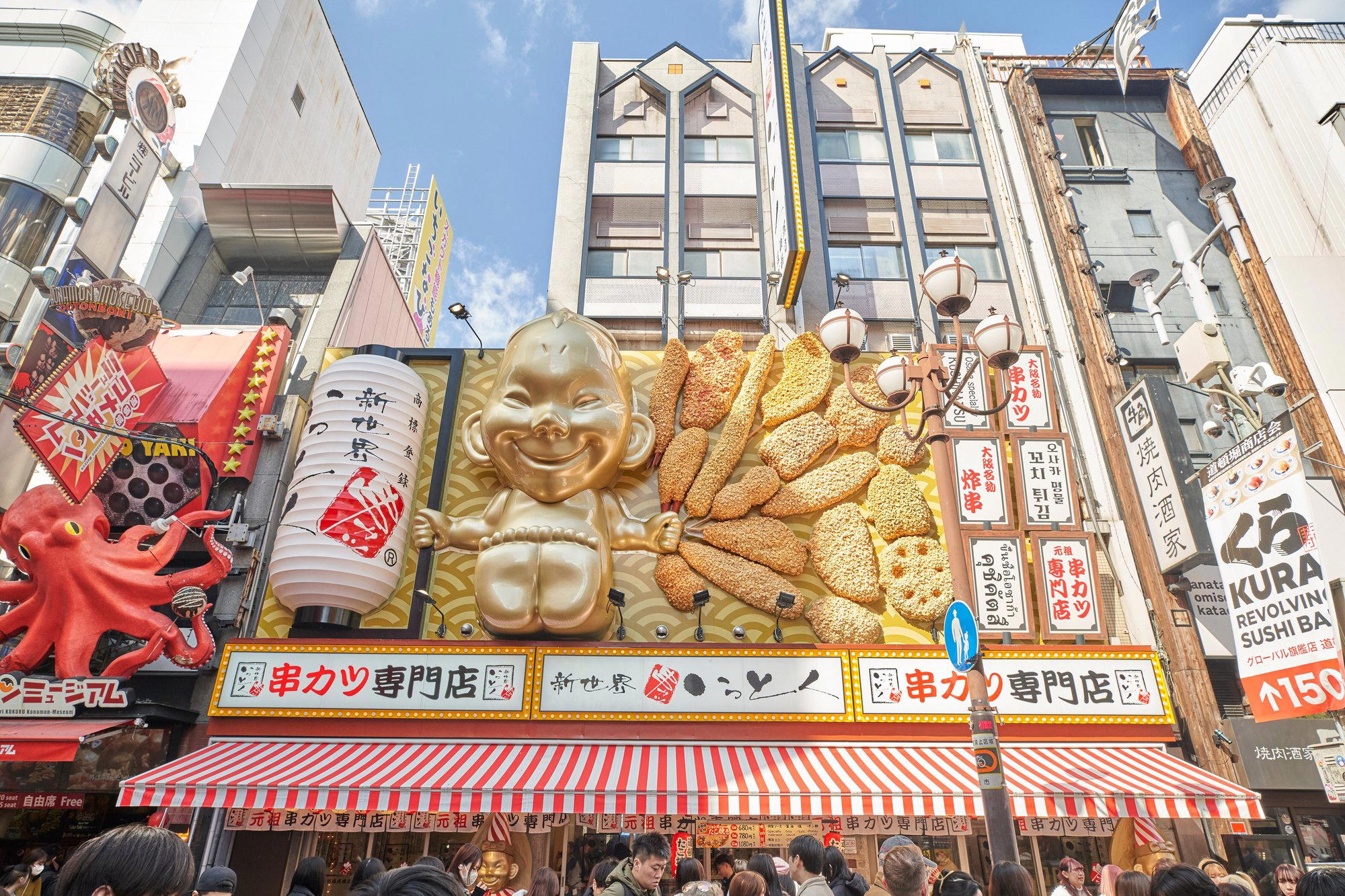
Dotonbori as a Culinary Pressure Test
Few addresses in Japan concentrate as much dining competition per square metre as Dotonbori. The strip running through Chuo Ward has long functioned less like a neighbourhood and more like a sustained audit: restaurants that lack a clear point of distinction tend to rotate out quickly, while those that hold a specific position in the local ecosystem accumulate the kind of repeat clientele that sustains a kitchen over years, sometimes decades. 本湯葉 sits at 1 Chome-7-11 Dotonbori inside that pressure system, which means the venue's continued presence is itself a signal worth reading.
Osaka's dining culture differs from Tokyo's in ways that matter to how restaurants here position themselves. Where Tokyo's top tier often performs restraint for an international audience primed by Michelin expectations, Osaka eaters tend to reward flavour density and ingredient honesty in roughly equal measure. The city's kappo tradition, its takoyaki street logic, and its long-running love of kushikatsu all point toward a culture that values execution over concept. A restaurant that survives Dotonbori does so by satisfying that calculus, not by marketing around it.
The Evolution Frame: What Changes in a Dotonbori Kitchen
Restaurants in high-traffic Osaka corridors tend to evolve along one of two trajectories. The first is format drift: a kitchen that began with a focused menu gradually expands toward tourist-facing accessibility, broadening its offer to capture volume at the cost of depth. The second is consolidation: a kitchen that survives long enough on a specific idea tightens its range, doubles down on sourcing discipline, and migrates upward in perceived quality without necessarily moving in price. The distinction between these two paths is usually legible within the first few dishes.
Dotonbori has seen both patterns play out across its modern history. Venues like Aka to Shiro and Az in Osaka represent kitchens that have staked out defined positions rather than chasing volume. The kappo format available nearby at Ajihei Sonezaki and the kaiseki rigour at Ajikitcho Bunbuan both illustrate the consolidation path taken by Osaka restaurants that have committed to ingredient specificity over time.
Reading the Name: Yuba and the Ingredient-Centred Kitchen
The name 本湯葉 anchors itself directly to an ingredient: yuba, the skin that forms on the surface of heated soy milk during tofu production. In Kyoto and Osaka, yuba has a long culinary history as both a standalone preparation and a component in kaiseki and shojin ryori, the Buddhist vegetarian cooking tradition. A restaurant built around or named for this ingredient is making a specific editorial claim about what it values: precision at the ingredient level, a preference for subtle transformation over aggressive technique, and a degree of alignment with the quieter registers of Japanese cuisine.
That positioning places 本湯葉 in a different competitive conversation from Dotonbori's higher-volume street food operators. It is closer in spirit to the kind of restrained, ingredient-focused kitchens that have found audiences in Kyoto, such as Gion Sasaki, than to the performative energy of the district's neon-lit takoyaki counters. Across Japan's western region, this style of ingredient-led focus appears in different forms: akordu in Nara applies a European lens to local produce, while Abon in Ashiya works within a similarly focused format. At the higher end of Osaka's own spectrum, HAJIME in Osaka demonstrates what sustained ingredient discipline at the three-Michelin-star level looks like in this city.
The Dotonbori Context for the Visiting Reader
For a reader planning time in Osaka, the Dotonbori address matters. The area around 1 Chome-7-11 is walkable from Namba Station and sits within the dense dining corridor that most visitors to central Osaka will pass through. That accessibility means the restaurant is not a destination that requires significant logistical planning to reach; it is a decision made on the ground, or one that fits naturally into an evening itinerary anchored by the Dotonbori canal.
Reservations are recommended, and off-peak timing is the easier approach. For readers who want to extend an Osaka dining itinerary beyond the central corridor, Calendrier in Osaka offers a contrasting experience in a quieter setting.
Planning Your Visit
The restaurant is located at 1 Chome-7-11 Dotonbori, Chuo Ward, Osaka 542-0071, placing it within easy reach of central Namba. Given the Dotonbori strip's concentration of foot traffic, arriving with a reservation or during off-peak hours is advisable. Reservations are recommended.
Awards and Standing
Comparable venues nearby, for context on price, style, and recognition.
| Venue | Cuisine | Price | Notes |
|---|---|---|---|
| 本湖月This venue — the venue you are viewing | japanese | Not listed | Not listed |
| 青地 | japanese | Not listed | Nishi |
| Feu 北新地 | japanese | Not listed | Kita |
| 食堂たのし | Modern Japanese Izakaya | $$ | Kita |
| Moeyo Mensuke Ramen | Duck & Shellfish Ramen | $$ | Fukushima |
| 月泉 | Japanese Izakaya | Not listed | Kita |
Continue exploring