
Tabelog 100 #77
Our verdict
In the Ageya district of Nagano City, 蕎麦 ふじおか occupies the quieter register of Japan's soba tradition, where buckwheat sourced from the alpine interior meets restrained preparation. The restaurant draws on Shinshu's reputation as one of Japan's foremost soba-producing regions, positioning it within a broader conversation about mountain-grown grains and the techniques that honour them.

Pearl is the En Primeur Club membership app, where members save venues, book tables and use the concierge.
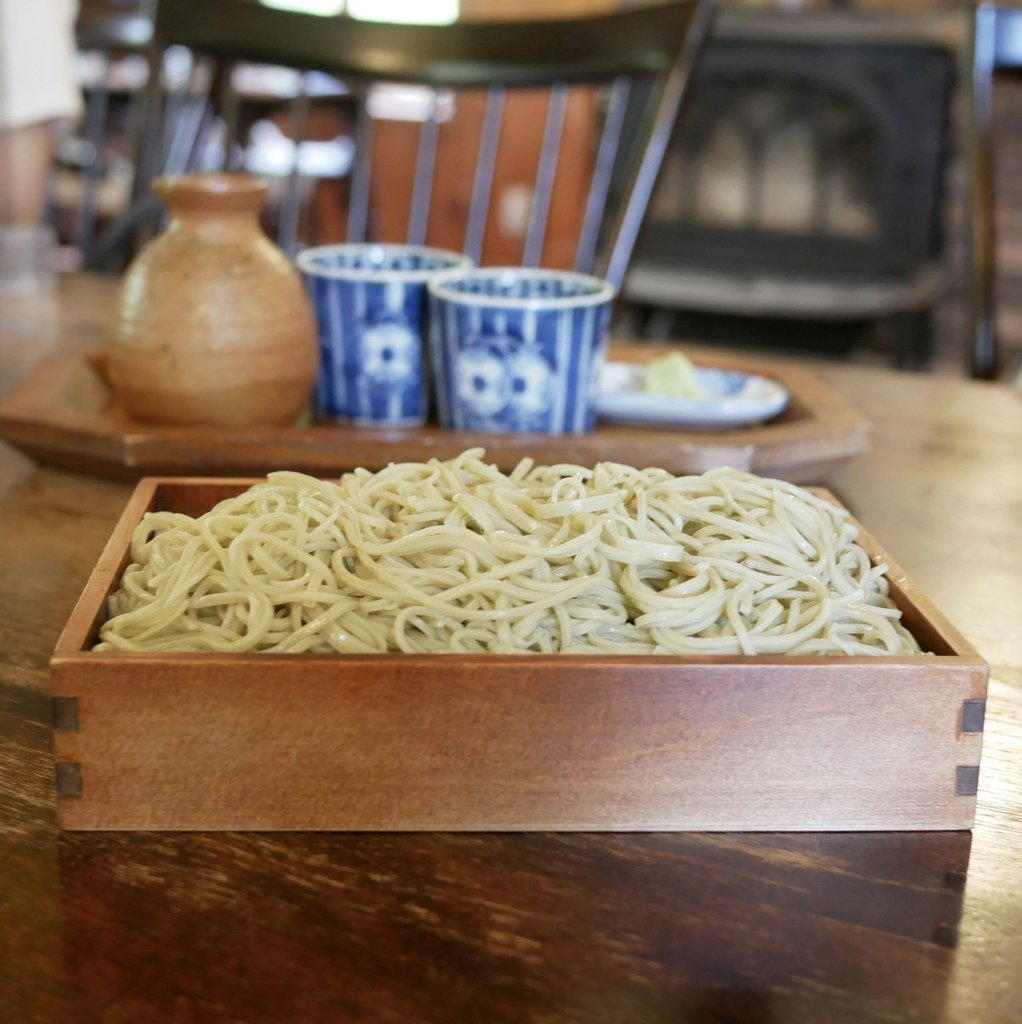
The menu
What to order
- Seiro soba
- Seasonal vegetable dishes
Buckwheat in the Alpine Belt
There is a particular quality of silence that precedes a bowl of serious soba in Nagano Prefecture. The city sits at the intersection of mountain agriculture and centuries of milling practice, and the restaurants that take buckwheat seriously here operate with a different logic than their counterparts in Tokyo or Osaka. In the Ageya district, 蕎麦 ふじおか belongs to a local tradition that treats the grain not as a backdrop to broth but as the central argument of the meal. Shinshu soba, as the regional style is known, commands attention across Japan precisely because the altitude, cool temperatures, and short growing season of the Nagano highlands produce buckwheat with a pronounced nuttiness and structural firmness that lower-elevation grain cannot replicate.
That regional identity is not incidental to how a restaurant like this functions. Across the mountain prefectures of Honshu, the relationship between sourcing geography and technique is the primary editorial frame through which serious soba establishments should be read. The flour may come from within Nagano Prefecture itself, where producers in areas like Togakushi and Obuse have built identifiable profiles over generations. How a kitchen handles that raw material, the ratio of buckwheat to binder flour, the temperature of the water, the resting time, the cutting thickness, positions each establishment within a competitive conversation that visitors often miss if they arrive thinking primarily about dipping sauces or tempura accompaniments.
The Shinshu Soba Tradition and Where Fujioka Sits in It
Nagano Prefecture accounts for a disproportionate share of Japan's premium soba identity. The Togakushi area alone has produced a distinct sub-style, typically cut slightly thicker and served in smaller portions that emphasize the grain's own flavor over the subtleties of the dipping broth. The broader Shinshu category, however, encompasses a wider range of approaches: some kitchens work with freshly milled flour on a daily or weekly cycle, others source from specific farms under named agreements, and the most dedicated operations stone-grind in-house. These distinctions produce measurable differences in aroma and texture that experienced diners can track across visits.
蕎麦 ふじおか operates in the Ageya neighbourhood, one of the older commercial and civic zones of Nagano City, which carries a different character from the tourist-dense lanes around Zenkoji Temple. That positioning matters. Restaurants in Ageya tend to draw a local clientele who return with regularity rather than a single-visit tourist flow, and the menu logic at a serious soba-ya reflects that: tightly edited, seasonal in its composition, built around what the kitchen executes with conviction rather than what photographs well for foreign visitors. For the traveller arriving from outside Japan, the comparison venues in Nagano's broader dining scene, including Bleston Court Yukawatan and ca'enne, represent very different tiers and formats, Western fine dining oriented toward international credentials. A soba specialist like ふじおか operates in an entirely separate register, one defined by craft repetition and grain-level sourcing decisions rather than tasting menu architecture.
Technique as Editorial Subject
The editorial angle that most illuminates this restaurant is the intersection of indigenous product and applied technique. Japanese soba-making has absorbed influence from outside its own tradition over the past two decades, not in ways that are loudly visible on the plate, but in the precision with which kitchens now discuss hydration ratios, stone-grinding speed, and flour particle size. That vocabulary comes partly from the influence of French milling tradition and the broader global grain conversation. Where HAJIME in Osaka applies that cross-disciplinary rigour to kaiseki, and where Atomix in New York City frames Korean technique through a global fine dining lens, the soba specialist in a mountain city like Nagano applies analogous discipline at a more compressed, ingredient-specific scale. The ambition is narrower in scope but no less exacting in execution.
Within Japan, the comparison set for this kind of establishment runs through other single-grain specialists across the country's mountain regions. 丸本ä¿å·å¶ in Nanao and å¤ä»å±±ä¹ in Sapporo represent the pattern of regional grain culture finding its own institutional form in smaller cities, each shaped by its local agricultural context. In that frame, ふじおか is readable as part of a broader national conversation about what a serious, place-specific grain restaurant looks like when it commits to a single technique without the safety net of a diversified menu.
Seasonal Timing and What It Means for Visitors
Shinshu buckwheat harvest runs through late September into October, and the weeks immediately following the harvest are when freshly milled new-crop flour, known as shincha soba in seasonal parlance, reaches kitchens. At that point in the calendar, the aroma difference between new-crop and stored flour is audible in the room: kitchens that work with fresh-milled grain operate with a visible intensity in the milling and prep stages that affects the entire service rhythm. For travellers planning a visit to Nagano with soba as a serious priority, the October-to-December window is when the prefecture's kitchens are working at the sharpest point of their annual cycle. Winter visits remain rewarding, particularly because cold-weather service allows for warm soba formats that showcase broth quality alongside the noodle's structural character.
The practical question of when to go connects directly to Nagano's broader seasonal rhythm. The city's ski infrastructure drives heavy visitor volume from December through March, and restaurants in residential and civic neighbourhoods like Ageya absorb a different pattern of that traffic than the resort-adjacent dining rooms further north. For the full context of Nagano's dining scene, our full Nagano restaurants guide maps the city's range from the Italian credentials of Fogliolina della Porta Fortuna to the Sichuan-inflected heat of Chinese Sai Muen, which prices its lunch sets in the JPY 3,000 to JPY 4,999 range. Aoitou rounds out the local picture with its own distinct approach. Against that range, a soba specialist represents the most locally rooted option in the city's serious dining inventory.
Planning a Visit
For restaurants of this type in Nagano, the practical approach is to verify hours and reservation requirements directly upon arrival or through a hotel concierge, as small soba specialists often operate limited daily services tied to their flour preparation cycle rather than fixed restaurant hours. The Ageya district is accessible from Nagano Station on foot or by short taxi, placing it within easy range of the city's main accommodation cluster. Visitors combining a soba visit with broader Nagano dining should cross-reference the timing against Zenkoji Temple crowds, which shift the pedestrian and transport dynamics of the central city noticeably during major pilgrimage periods.
Frequently asked questions
Where exactly is 蕎麦 ふじおか?
蕎麦 ふじおか is located at Ageya, Nagano, 380-0888, Japan, Nagano.
What makes 蕎麦 ふじおか distinct from other soba restaurants in Nagano city?
The Ageya address places 蕎麦 ふじおか within Nagano city proper rather than in the more frequently cited Togakushi or Zenkoji temple precincts, where soba tourism concentrates. That positioning means the kitchen serves a local customer base alongside visitors, which in Japan's soba culture often correlates with a more technique-focused, less performative approach. Nagano Prefecture as a whole accounts for a disproportionate share of Japan's premium buckwheat identity, and a city-based specialist draws from that regional supply chain while operating outside the more traffic-heavy destination corridors.
What should I order at 蕎麦 ふじおか?
Soba is the editorial subject here, and at a Nagano specialist of this type, the plain cold seiro or mori presentation is the standard by which the kitchen is judged, it strips away accompaniment and isolates the buckwheat quality. Nagano Prefecture, particularly around the Ageya district, sources from high-altitude fields that produce a nutty, mineral-forward grain. If the menu runs seasonal, the weeks immediately after the October harvest are when new-crop flour is milled fresh, producing noticeably different texture and aroma than stored stock.
Comparable Spots
Comparable venues nearby, for context on price, style, and recognition.
| Venue | Cuisine | Price | Awards | Notes |
|---|---|---|---|---|
| 蕎麦 ふじおかThis venue (the venue you are viewing) | Handmade Soba with Seasonal Vegetables | $30–50 | Tabelog 100 #77 | Not listed |
| Grill The Butcher Nagano (グリル ザ ブッチャー 長野) | Shinshu Beef Steakhouse | $20–30 | Not listed | Nagano Station |
| 松栄寿司東口店 | 本格握り寿司 | $30–50 | Not listed | 栗田 |
| Mendo Kirinji | Ramen shop | $10–20 | Tabelog 100 #18 | Nagano |
| Nagano Meijitei (明治亭) | Nagano Sauce Katsudon | $10–20 | Not listed | Nagano Station |
| いろは堂 | Nagano Oyaki (Stuffed Dumplings) | $10–20 | Not listed | Oniyari |
Recognition history
Dated appearances from independent guides and award organizations, with the underlying list record or original source where available.
Tabelog 100 #77 · No. 77
Tabelog · Tabelog 100 - Soba - EAST - 2025
Continue exploring
More in Nagano
Restaurants in Nagano
All restaurants in Nagano →


Details
- Quiet
- Rustic
- Cozy
- Scenic
- Solo
- Special Occasion
- Standalone
- Historic Building
- Sake Program
- Local Sourcing
- Mountain
- A La Carte
- Sake
- Vegetarian Friendly
Current opening hours
- Monday
- 11:30 AM–1:30 PM
- Tuesday
- Closed
- Wednesday
- Closed
- Thursday
- Closed
- Friday
- 11:30 AM–1 PM
- Saturday
- 11:30 AM–1 PM
- Sunday
- 11:30 AM–1 PM
Hours can change for holidays and private events. Hours as of .
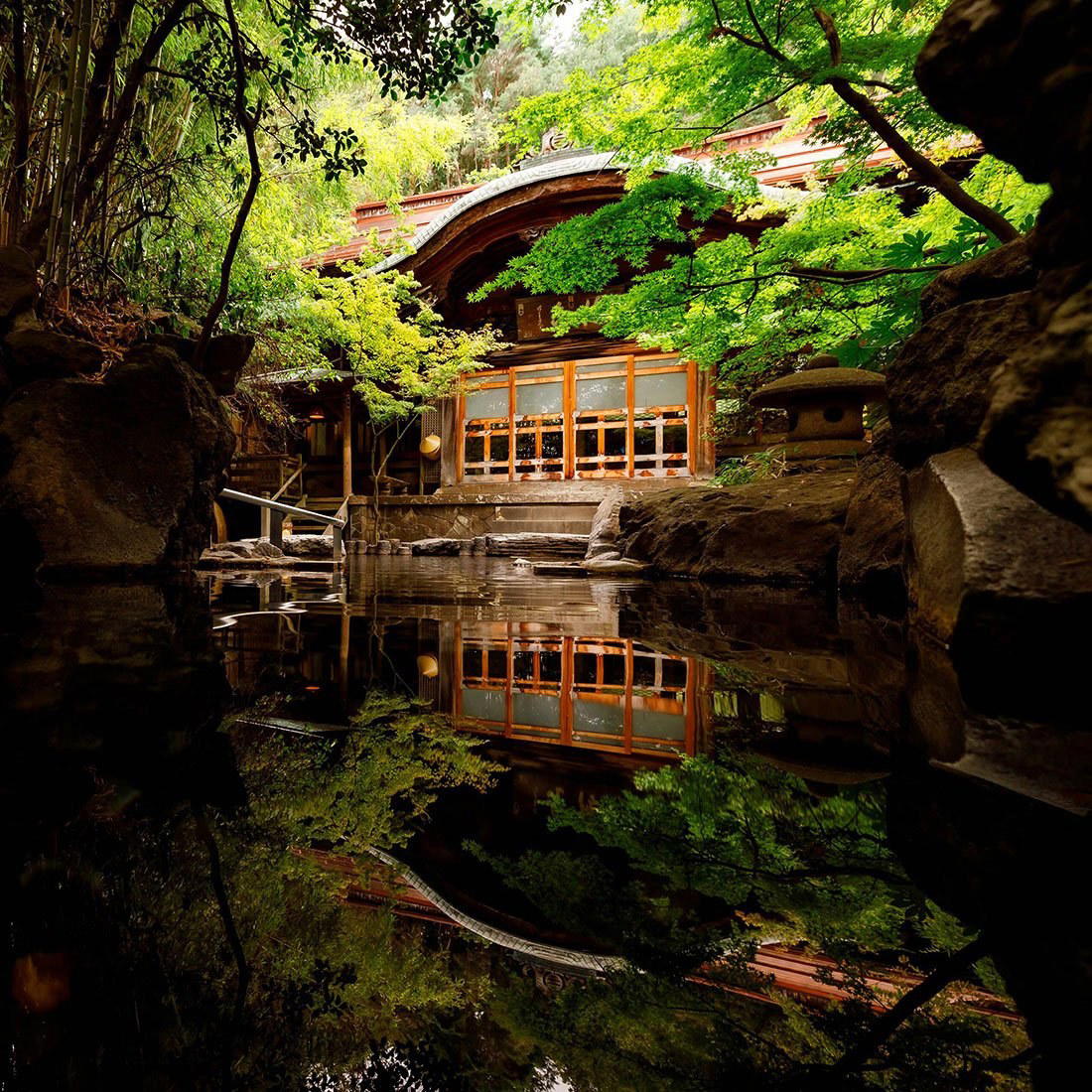
Wood-scented space with classic music and a quiet piano in a rustic lodge surrounded by forest.