Our verdict
Details in this issue.

Pearl is the En Primeur Club membership app — saves, bookings, and concierge access live there. Same editors, same standards.
- Address
- 9 Bancho-1407 Higashiboridori, Chuo Ward, Niigata, 951-8065, Japan
- Phone
- +81252222120
- Website
- common-niigata.com
- Directions
- Get directions
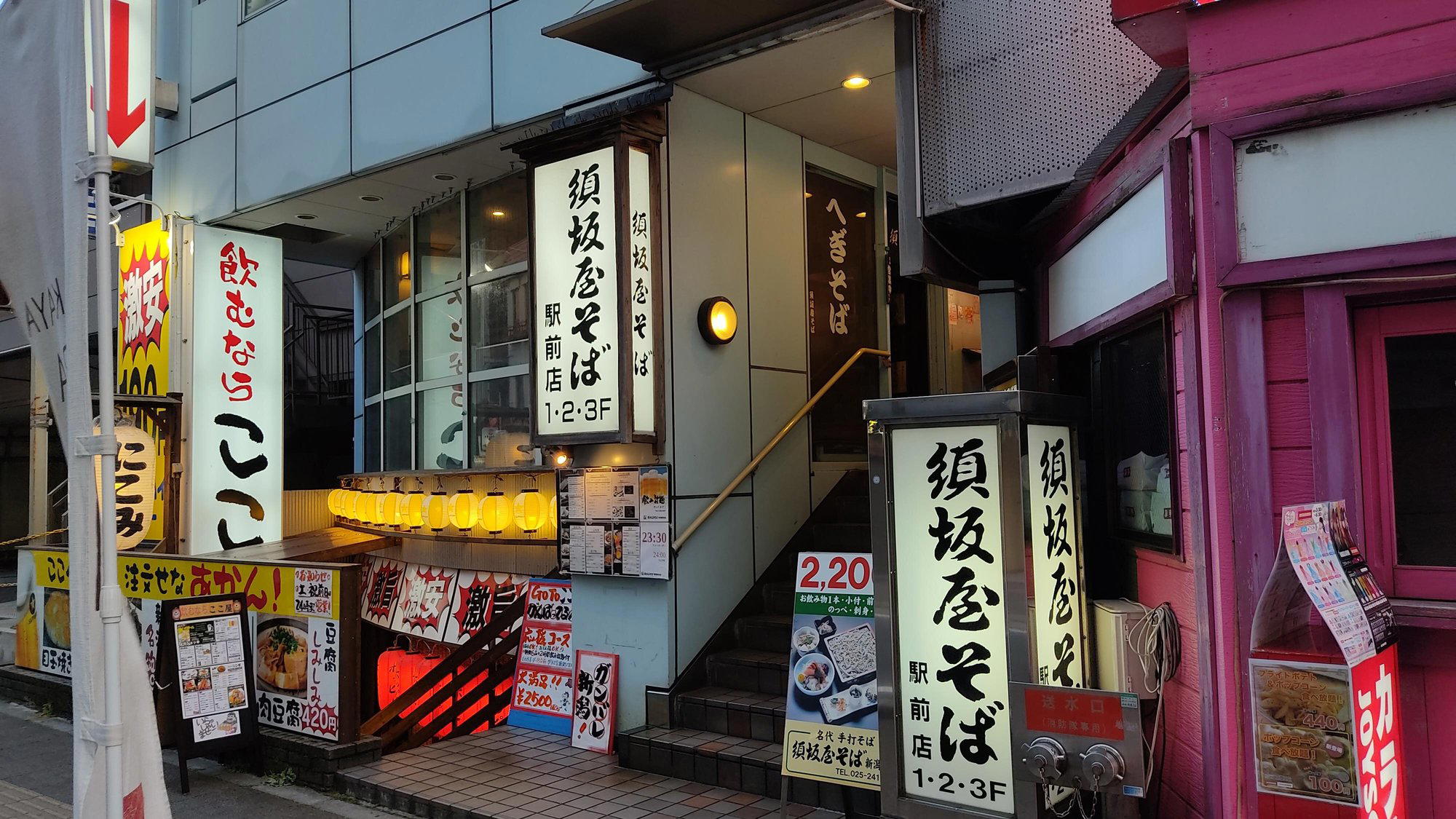
Where Niigata's Ingredient Culture Reaches the Table
Higashiboridori, the canal-side street running through Chuo Ward, carries a quieter register than central Niigata's busier dining corridors. The neighbourhood holds a mix of long-established Japanese restaurants and newer formats, and the address at 9 Bancho places 夕é in a building where the approach to the meal is communicated before you sit down: this is not a space built around spectacle. The physical environment, understated by the standards of premium dining in larger Japanese cities, directs attention toward what arrives on the plate.
Niigata's position as a sourcing city is what gives any serious restaurant here a structural advantage over comparable operations in Tokyo or Osaka. The prefecture produces Koshihikari rice considered among the most precisely cultivated in Japan, operates some of the country's most active Sea of Japan fishing grounds, and maintains vegetable traditions rooted in cold-climate agriculture. For a restaurant operating in this context, ingredient provenance is not a marketing decision but a geographical given. The question that separates Niigata's better tables from their peers is how much of that regional specificity actually arrives intact at the counter.
The Sourcing Logic Behind Regional Japanese Dining
Japan's premium restaurant tier has, over the past decade, shifted meaningfully toward hyper-regional sourcing narratives. What was once the exclusive posture of a few kaiseki houses in Kyoto has spread to mid-sized cities with strong agricultural or coastal identities. Niigata belongs firmly in the latter group. The Sea of Japan delivers snow crab, yellowtail, and buri in winter months; flounder and sea bass through spring and summer. Local sake breweries, concentrated in the prefecture at a density unmatched elsewhere in Japan, create a natural pairing ecosystem that Tokyo restaurants can only approximate through supply chains.
This is the context in which 夕é operates. The address on Higashiboridori connects it to a neighbourhood with a long association with traditional Japanese hospitality formats, where the relationship between kitchen and local supplier tends to be built across years rather than through wholesale intermediaries. For visitors comparing options across Niigata's dining scene, the contrast with venues like Kyodaizushi (Sushi) or the French-influenced approach at Restaurant UOZEN is instructive: different format disciplines, but the same underlying dependence on Niigata's ingredient geography.
How 夕é Sits Within Niigata's Dining Tier
Niigata's restaurant scene operates at a different price and recognition scale than Kyoto or Tokyo, which creates an interesting dynamic for visitors accustomed to Michelin-weighted markets. Comparable Japanese cuisine formats in cities like Tokyo, where venues such as Harutaka operate at the upper omakase tier, or Kyoto, where Gion Sasaki anchors the kaiseki tradition, command substantially higher price points and international booking competition. Niigata's equivalent venues, operating with access to comparable or superior local sourcing, do so at a scale that still rewards early research but not the months-ahead booking discipline required in larger markets.
Within Niigata specifically, 夕é occupies a position alongside a cohort that includes KOKAJIYA and Mûrir. Each takes a different approach to the same underlying question: how do you translate a prefecture with exceptional raw material into a coherent dining format? The comparison with Menya Agosuke, a ramen format working in a completely different register, also clarifies something important about how seriously Niigata takes craft across price tiers. The city does not confine ingredient seriousness to its highest-ticket tables.
For a broader view of where 夕é fits within the city's dining options, our full Niigata restaurants guide maps the scene across formats and price ranges.
Regional Comparisons Worth Making
Niigata's approach to ingredient-led dining has parallels in other Japanese prefectures with strong geographic identities. Fukuoka's seafood-anchored tables, including Goh, operate on a similar logic: proximity to supply chains that metropolitan restaurants cannot replicate. Akordu in Nara demonstrates how a non-capital city can build a serious international reputation when the sourcing environment is coherent and the format discipline is there. Venues like HAJIME in Osaka show what happens when a regional city develops a restaurant culture confident enough to compete on its own terms rather than mirror Tokyo's preferences.
Further afield, the sourcing-first ethos in Japanese regional dining has an interesting echo in international formats. Le Bernardin in New York City built its reputation on treating sourcing as the central discipline, not the decoration. Atomix in New York City demonstrates how Korean ingredient tradition can translate into a format legible to a global audience without losing its sourcing logic. The principle transfers: restaurants that treat supply relationships as the foundation of the format tend to hold their quality more consistently than those treating sourcing as a branding layer.
Other regional Japanese venues worth understanding for context include 一本杉 川島 in Nanao, working with Noto Peninsula ingredients; 夕仙山乃 in Sapporo, operating in Hokkaido's distinct cold-climate sourcing environment; and 湖畔荘 in Takashima and 翁羽屋 in Nishikawa Machi, each working within defined regional ingredient parameters. Birdland in Sakai rounds out a sense of how Japan's non-Tokyo dining geography sustains serious culinary formats across very different ingredient contexts.
Planning a Visit
The Higashiboridori address in Chuo Ward puts 夕é within reasonable distance of central Niigata's transport links, with Niigata Station accessible by local bus or taxi. Niigata is connected to Tokyo via the Joetsu Shinkansen, with journey times typically under two hours, making it a viable day-trip or short-stay destination from the capital. Given the sparse publicly available data on current booking methods, website, and hours, the most reliable approach for planning is to treat this as a venue requiring direct contact or local concierge assistance, particularly during peak winter seafood months when demand at Niigata's better tables tends to concentrate. Visitors arriving in late autumn or winter to coincide with snow crab season will find Niigata's sourcing calendar at its most compelling.
Frequently asked questions
Where is å¤é located?
å¤é is located at 9 Bancho-1407 Higashiboridori, Chuo Ward, Niigata, 951-8065, Japan, Niigata.
What is 夕佳 known for?
夕佳 is associated with Niigata's ingredient-led dining culture, drawing on the prefecture's strong agricultural and seafood sourcing identity. Its address on Higashiboridori in Chuo Ward places it within a quieter, more considered stretch of the city's dining scene rather than its busier commercial corridors. Niigata's proximity to premium rice, river fish, and Sea of Japan seafood gives restaurants here a sourcing foundation that differs meaningfully from metropolitan menus.
What's the best way to book å¤é?
Reservations are recommended for å¤é in Niigata. Confirm current policy via the venue's official channels.
What is å¤é known for?
å¤é is best approached by focusing on the core concept and signature offerings.
Can å¤é adjust for dietary needs?
Dietary accommodations can vary. Flag restrictions in advance via the venue's official channels.
Fast Comparison
| Venue | Cuisine | Price | Awards |
|---|---|---|---|
| å¤éThis venue — the venue you are viewing | This venue | Not listed | Not listed |
| Kyodaizushi | Niigata-style Omakase Sushi | Not listed | Tabelog Silver #66 |
| Shintaku | Traditional Kappo with Murakami Salmon | $30–50 | Tabelog Silver #122 |
| Restaurant UOZEN | Innovative Local French | $150–200 | Tabelog Silver #110 · We're Smart World 1 Radish |
| Tokiwa | Traditional Sushi Omakase | $150–200 | Tabelog Silver #143 |
| Tokiwa Sushi Nigata Ten | Niigata Local Omakase Sushi | $200–300 | Tabelog Bronze #460 |
Details
- A La Carte