
180g Pizzeria Romana has become a reference point in Rome's contemporary pizza conversation, operating out of the Tor de' Schiavi neighbourhood in the eastern reaches of the city. The name signals a precise technical commitment: the weight of dough used per base, a figure that places the kitchen firmly in the Roman-style camp rather than the Neapolitan tradition. For pizza that reads as craft rather than convenience, this address repays the journey across town.
Pearl is the En Primeur Club membership app — saves, bookings, and concierge access live there. Same editors, same standards.
- Address
- Via Tor de' Schiavi, 53, 00172 Roma RM, Italy
- Phone
- +393911446575
- Website
- 180gpizzeriaromana.com
- Directions
- Get directions
 Saves & bookings on Pearl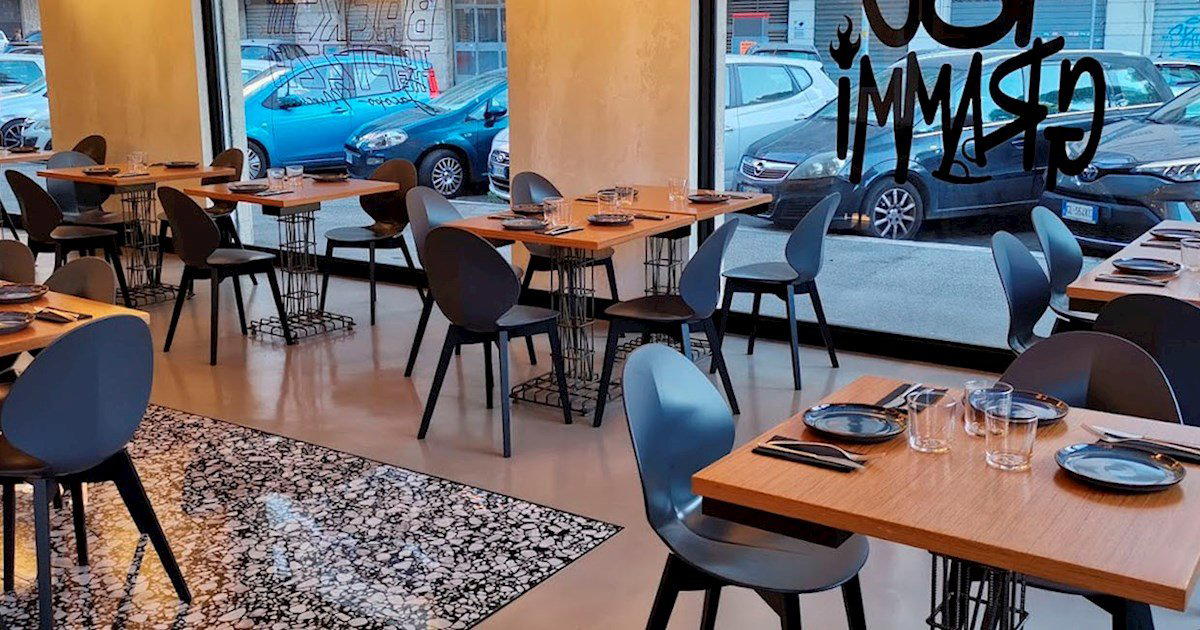
Roman Pizza, Codified by Weight
Rome's pizza identity has long been contested terrain. The city's native tradition, thin, cracker-crisp, baked directly on the stone, occupies a different register from the soft, high-hydration discs that define Neapolitan orthodoxy, and the contemporary moment has produced a third wave: pizzerias that hold the Roman form while applying the same technical rigour that serious Neapolitan houses have practised for decades. 180g Pizzeria Romana, located on Via Tor de' Schiavi in the city's eastern Prenestino district, sits squarely in that third current. Its name is its clearest editorial statement: 180 grams is the precise dough weight per base, a number chosen not for marketing but for the structural outcome it produces, a disc thin enough to stay true to Roman tradition, calibrated tightly enough to ensure consistency across every firing.
The neighbourhood itself is part of the story. Tor de' Schiavi is not a dining destination in the way that Testaccio or Trastevere commands tourist itineraries. It is a residential quarter of post-war palazzi and corner bars, the kind of area where a serious food address survives on local credibility rather than foot traffic. That geography is consequential: a pizzeria that draws a committed clientele to an unfashionable postal code is doing something right by the product, not by the postcode.
What the Menu Architecture Reveals
In Roman pizza culture, the structure of a menu carries as much meaning as the toppings themselves. The standard trap for ambitious pizzerias is to scatter ingredients from across the Italian larder, truffles, burrata from Puglia, nduja from Calabria, in a way that signals premium positioning without a coherent point of view. The better houses in the current Roman scene make different choices: they anchor the menu in a smaller number of combinations, let the dough speak clearly, and use toppings to complement rather than compete with the base.
180g operates according to the second logic. The dough is the architecture that everything else is built on, and the 180-gram specification is the load-bearing element in that structure. Roman-style dough at this weight typically undergoes extended fermentation, the process that develops flavour complexity and the characteristic light texture beneath the crisp surface, so even before toppings arrive, there is something to taste. That technical foundation places 180g in a comparable set that includes a handful of Roman addresses taking similar positions, none of which are in the tourist triangle between the Colosseum and the Pantheon.
For readers planning a Rome dining programme that covers multiple registers, 180g anchors the casual end in a way that still rewards attention. The fine-dining tier of the Roman scene, La Pergola, Il Pagliaccio, Acquolina, Enoteca La Torre, and Achilli al Parlamento, operates in a different price bracket and with different expectations around booking and format.
The Roman Tradition, in Technical Terms
Understanding 180g requires a brief account of what distinguishes Roman pizza as a style. Where Neapolitan pizza is defined by its cornicione, the puffy, charred outer rim, Roman pizza at its purest is uniform in thickness, crispier across the whole surface, and made to be eaten in the hand without the structural sag that wet-topped Neapolitan discs can produce. The fermentation window in serious Roman houses now extends to 48 or 72 hours, shifting the result from a bread vehicle into something with a more complex, slightly sour undertone. At that hydration and fermentation level, the dough requires more careful handling, it is more fragile, more temperature-sensitive, more dependent on the baker's read of the day's conditions.
This is why the weight specification matters as a signal. A kitchen that names itself after a gram measurement is making a claim about process control, not personality. It suggests a systematic approach to dough production in which variables are tracked and outcomes are reproducible. That is a different kind of ambition from the artisan-intuition framing that many pizzerias use, and it places 180g in a growing cohort of Italian pizza addresses, including several outside Rome, that are applying the language of precision fermentation to what was historically an improvisational craft. Comparable precision-led approaches appear at different points in the Italian dining spectrum, from the technical ambition of Osteria Francescana in Modena at the fine-dining extreme to pizza houses in Naples and Rome that have absorbed the same culture of measurement and documentation.
Getting There and Planning Your Visit
Via Tor de' Schiavi, 53 sits in the Prenestino-Labicano zone, reachable by Metro C from the city centre, Mirti or Gardenie stations place you within walking distance, or by bus along Via Prenestina.
Dal Pescatore in Runate, Le Calandre in Rubano, Uliassi in Senigallia, Piazza Duomo in Alba, Reale in Castel di Sangro, Quattro Passi in Marina del Cantone, Enoteca Pinchiorri in Florence, Enrico Bartolini in Milan, and Atelier Moessmer Norbert Niederkofler in Brunico represent the fine-dining and regional-specialist poles of what Italian kitchens are doing at the moment. 180g is not in that register, but it addresses a question those restaurants do not: what does Italian craft look like when the craft in question is a disc of dough, a hot stone, and a specific gram measurement?
Recognition, Side-by-Side
Comparable venues nearby, for context on price, style, and recognition.
| Venue | Cuisine | Price | Notes |
|---|---|---|---|
| 180g Pizzeria RomanaThis venue — the venue you are viewing | Roman-Style Pizza | $$$ | Not listed |
| Il Piccolo Mondo | Traditional Roman Italian with Seafood | $$$ | Ludovisi |
| Enoteca Bellini Roma | Modern Italian Enoteca | $$$ | Ponte |
| Soho House Rome | Modern Roman & Venetian | $$$ | Tiburtino |
| Ristorante Terrazza Ciampini di Marco Ciampini | Traditional Roman-Italian Terrace Dining | $$$ | Campo Marzio |
| Marzapane | Modern Italian Fine Dining | $$$ | Collatino |
Recognition history
Dated appearances from independent guides and award organizations, with the underlying list record or original source where available.
Opinionated About Dining Cheap Eats in Europe Ranked #33
Opinionated About Dining
Continue exploring
More in Rome
Restaurants in Rome
Browse all →
Bars in Rome
Browse all →
Hotels in Rome
Browse all →

At a Glance
- Cozy
- Lively
- Modern
- Rustic
- Casual Hangout
- Group Dining
- Family
- Date Night
- Open Kitchen
- Beer Program
- Natural Wine
- Local Sourcing
Current opening hours
- Monday
- 6:45–10 PM
- Tuesday
- Closed
- Wednesday
- 6:45–10 PM
- Thursday
- 6:45–10 PM
- Friday
- 6:45–10 PM
- Saturday
- 6:45–10 PM
- Sunday
- 6:45–10 PM
Hours can change for holidays and private events. Last verified .
Minimal, tidy, well-lit modern space with an open kitchen that creates an energetic yet intimate dining experience; feels contemporary yet rooted in Roman tradition.