
Our verdict
A counter-format sushi establishment in the residential Heiwacho district of Okayama's Kita Ward, 鮨 粋 operates within the specialist omakase tier that defines serious regional sushi culture in Japan. Its location at a remove from tourist circuits, close to the Seto Inland Sea's exceptional seafood supply chain, positions it for guests who approach counter dining as a structured ritual rather than a casual meal.

Pearl is the En Primeur Club membership app — saves, bookings, and concierge access live there. Same editors, same standards.
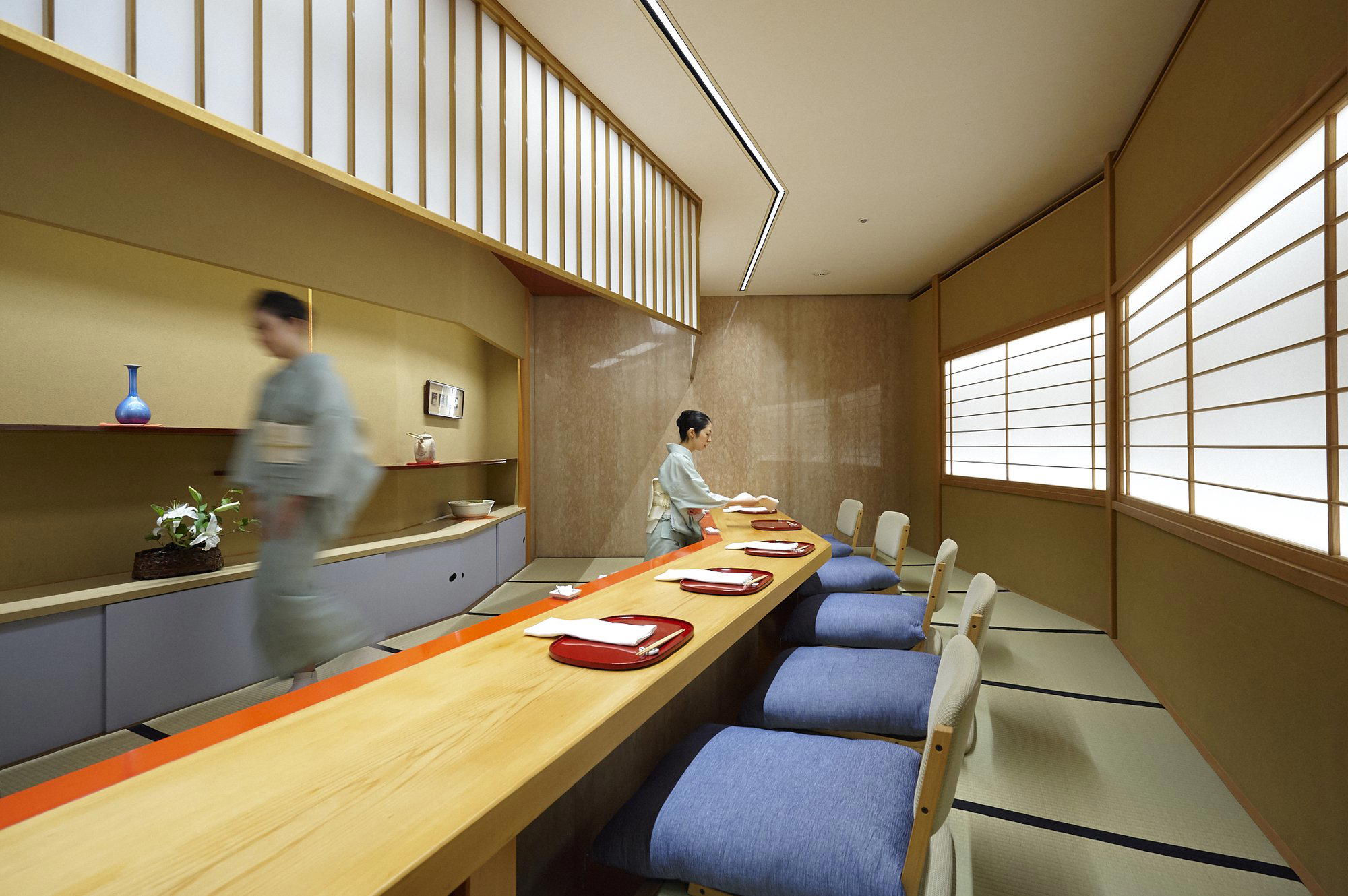
A Quiet Corner of Kita Ward
Heiwacho is one of those residential pockets of Okayama City that visitors rarely reach on a first pass. The address, 3-11 Heiwacho in Kita Ward, places 鮨 粋 at a remove from the central Omotecho shopping arcade and the dense restaurant strips around Okayama Station, which means arriving here already signals a degree of intention. In a city that sits comfortably between Hiroshima and Osaka on the Sanyo Shinkansen corridor, Okayama's dining scene has developed with less international scrutiny than its neighbours, and that relative quiet has allowed certain specialist counters to operate on their own terms rather than for the benefit of the tourist trade.
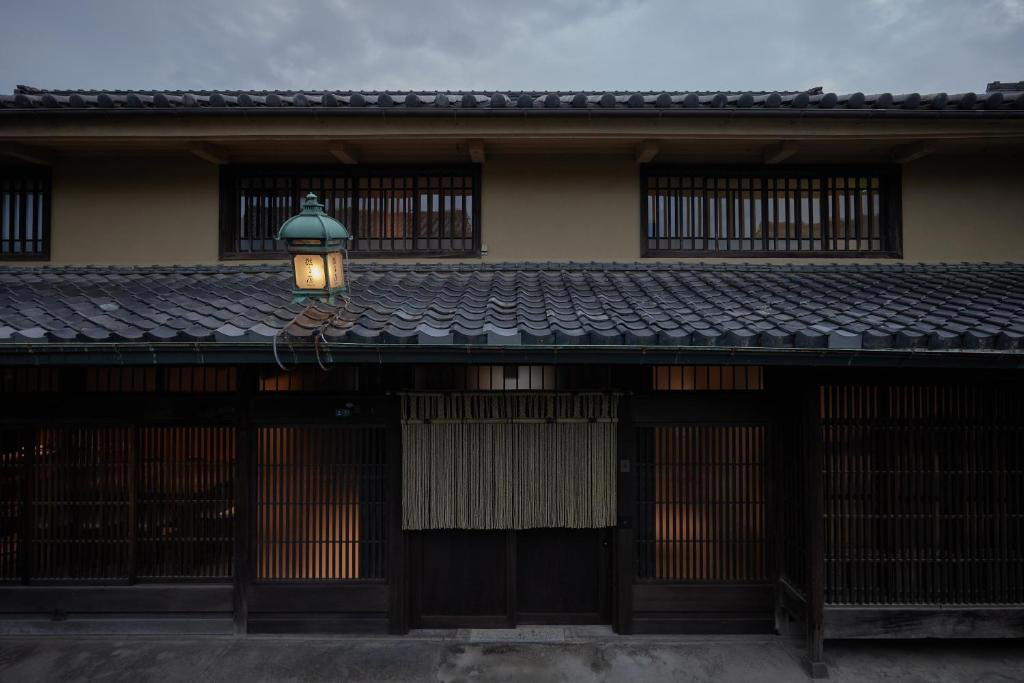
The physical approach through a low-key residential street is consistent with the grammar of serious sushi establishments across Japan, where the absence of signage or spectacle functions as a kind of editorial statement. You are expected to know where you are going.
The Ritual Architecture of a Sushi Counter
Japan's omakase tradition is, at its core, a choreography of restraint. At a sushi counter, the sequence of courses, the pacing between pieces, and the relationship between guest and itamae carry as much meaning as the fish itself. This is a dining form where silence is not awkward, where eating the nigiri the moment it is placed is both practical instruction and social contract, and where a piece held too long loses the temperature differential the chef has engineered into it. Sushi at this level is not simply food service; it is a ritual with its own etiquette and its own tempo.
Okayama Prefecture has particular geographic advantages for this tradition. The Seto Inland Sea, which borders the prefecture to the south, produces some of the most sought-after shellfish and flatfish in Japan. The calm, nutrient-rich waters between Honshu and Shikoku generate species that rarely appear in quantity at metropolitan counters, and proximity to the source matters when the supply chain for top-grade fish is measured in hours rather than days. For sushi at the regional level, that access is a structural advantage that no Tokyo counter can entirely replicate through logistics alone.
Within Okayama's dining scene, 鮨 粋 occupies the kind of address and format associated with counter-first, reservation-focused establishments. Comparable reference points within the city include Hasunomi, Waraku, 松寿司, 祥鱗, and 空浪, each of which positions itself at a different point within the city's specialist dining tier. The broader Okayama context is mapped in our full Okayama restaurants guide.
Pacing, Sequence, and What the Counter Teaches
The etiquette of the omakase counter rewards preparation. Guests at serious sushi establishments in Japan are generally expected to arrive precisely on time, as sessions run on a shared clock: everyone begins together and the tempo is set by the chef. Late arrivals disrupt a sequencing that has been calibrated, not just logistically but aesthetically, for the table as a whole. Drinking pace, the decision to engage in conversation or observe quietly, and even the direction of attention all form part of the unspoken agreement between counter and guest.
This format sits at the opposite end of the spectrum from the high-volume theatrical dining experiences that now compete for attention in major cities globally. Counters like 鮨 粋 belong to the specialist tier, where the value proposition is density of technique and quality of ingredient within a small-seat format, rather than spectacle or branding. For comparative context nationally, this positioning aligns with how establishments like Harutaka in Tokyo and Gion Sasaki in Kyoto operate in their respective cities: counter-focused, pacing-led, and identity-defined by what they do not do as much as by what they do.
The tradition of Edomae sushi, originating in Edo-period Tokyo, has spread and evolved at the regional level across Japan such that many counters outside the capital now run parallel lineages, drawing on local ingredient culture rather than simply replicating Tokyo technique. Okayama's position as a transit point on the Sanyo corridor has historically made it easier for regional chefs to train across multiple cities, which tends to produce hybrid approaches: metropolitan discipline applied to Setouchi material.
The Seto Inland Sea as Culinary Context
Understanding the Seto Inland Sea's role in regional cuisine requires looking at what the waters produce in terms of seasonal variation. Tai (sea bream) from the Seto Inland Sea is among the most prized in Japan, with prefectural branding around Okayama's Hinase area specifically. Seto ohashi madai, a designated brand of sea bream, is farmed under controlled conditions that emphasise texture and fat distribution. Alongside this, species like kuruma prawn, ark shell, and various flatfish move through the region's fishing ports with a freshness that defines what seasonal counter dining here can achieve at its most direct.
This is the material context in which regional sushi operates. At establishments working within the serious omakase format, sourcing decisions made at market level shape the entire session, which means the menu in this format is not printed weeks in advance but determined by what arrived that morning. The absence of a fixed menu is not a concession to spontaneity; it is the operating logic of the form.
Situating 鮨 粋 Within Japan's Regional Dining Map
Japan's fine dining geography has shifted perceptibly over the past decade. Cities like Fukuoka, Kanazawa, and Okayama now sustain serious restaurant cultures that draw from local ingredient networks rather than mirroring metropolitan models. Goh in Fukuoka exemplifies how a regional city can host a counter that competes with national peers on technique and sourcing, while HAJIME in Osaka demonstrates how creative fine dining has moved well beyond Tokyo's gravitational field. In Nara, akordu shows how European influence integrates with regional Japanese ingredient culture. The pattern across these cases is consistent: serious kitchens and counters operating outside the major metropolitan centres increasingly define their identity around access to local produce rather than proximity to critical mass.
For visitors approaching Okayama on a broader Kansai or Chugoku itinerary, the city's sushi scene represents an accessible tier of serious Japanese counter dining that does not require the booking lead times or price thresholds of Tokyo's most sought-after seats. Reference points at the national level for what rigorous sushi counter culture looks and feels like include Harutaka in Tokyo and, for a sense of how Kyoto's kaiseki tradition handles parallel rituals of pacing and sequence, Gion Sasaki. Internationally, the editorial conversation around specialist counter dining sits alongside establishments like Le Bernardin in New York City and Lazy Bear in San Francisco, both of which occupy comparable positions in their own cities as technically focused, counter-or-tasting formats built around restraint rather than scale.
Planning Your Visit
鮨 粋 is located at 3-11 Heiwacho, Kita Ward, Okayama 700-0827. The Kita Ward address places it within a short distance of Okayama Station, which is served by the Sanyo Shinkansen and regional rail lines, making the restaurant reachable from Hiroshima, Kobe, Osaka, and Kyoto within one to two hours depending on origin. For a venue operating in the specialist counter format, confirming reservations directly and in advance is standard practice across this category in Japan; walk-in access at this level of establishment is rarely available. Guests with dietary restrictions should communicate these at the point of booking, as the omakase format is structured around a pre-set sequence that requires advance notice to adjust. Further regional options are covered in Abon in Ashiya, affetto akita in Akita, Aji Arai in Oita, Ajidocoro in Yubari District, and Akakichi in Imabari for those building a wider regional itinerary.
Frequently asked questions
What part of town is 鮨 ç¸ in?
鮨 ç¸ is located at 3-11 Heiwacho, Kita Ward, Okayama, 700-0827, Japan, Okayama.
What dish is 鮨 粋 famous for?
The counter is positioned within Okayama's regional dining scene, where the Seto Inland Sea shapes the seasonal selection. Tai (sea bream), a fish closely associated with these waters, is a reference point for what serious sushi counters in this corridor typically foreground.
Is 鮨 ç¸ reservation-only?
Reservations are recommended for 鮨 ç¸ in Okayama. Confirm current policy via the venue's official channels.
What's 鮨 ç¸ best at?
鮨 ç¸ is best approached by focusing on the core concept and signature offerings.
How does 鮨 ç¸ handle allergies?
Dietary accommodations can vary. Flag restrictions in advance via the venue's official channels.
Cuisine and Recognition
Comparable venues nearby, for context on price, style, and recognition.
| Venue | Cuisine | Price | Awards | Notes |
|---|---|---|---|---|
| 鮨 ç¸This venue (the venue you are viewing) | Traditional Okayama Kibi Dango | Not listed | Not listed | Not listed |
| Waraku | Traditional Japanese Cuisine | Not listed | Not listed | Kenchodori |
| 穂浪 | Traditional Japanese Kaiseki | Not listed | Not listed | Okayama |
| Shuritsu Ooi | Casual Japanese Teppanyaki & Steak | $50–100 | Tabelog 100 #29 | Kita Ward |
| Teppan Cuisine Nagao | Modern Teppanyaki & Wine in Okayama | $100–150 | Tabelog 100 #48 | Marunouchi |
| すし晴 | Edomae Sushi Omakase | $100–150 | Not listed | Yanagawa |
Recognition history
Dated appearances from independent guides and award organizations, with the underlying list record or original source where available.
Opinionated About Dining Top Restaurants in Japan Recommended
Opinionated About Dining
Continue exploring
More in Okayama
Restaurants in Okayama
All restaurants in Okayama →
Bars in Okayama
Browse all →
Details
- Casual Hangout
- Standalone
- A La Carte
Traditional Japanese confectionery atmosphere.