
1 Michelin Key
A former Zen retreat in the forested hills above Yufuin, Yufuin Tamanoyu operates 16 villa-style rooms across a property that still carries the quiet discipline of its monastic origins. Each room combines tatami sitting areas, a separate sleeping space, and a private hot spring tub. Pricing is available on request, and the property sits within easy walking distance of the town's celebrated onsen circuit.

Pearl is the En Primeur Club membership app, where members save venues, book tables and use the concierge.
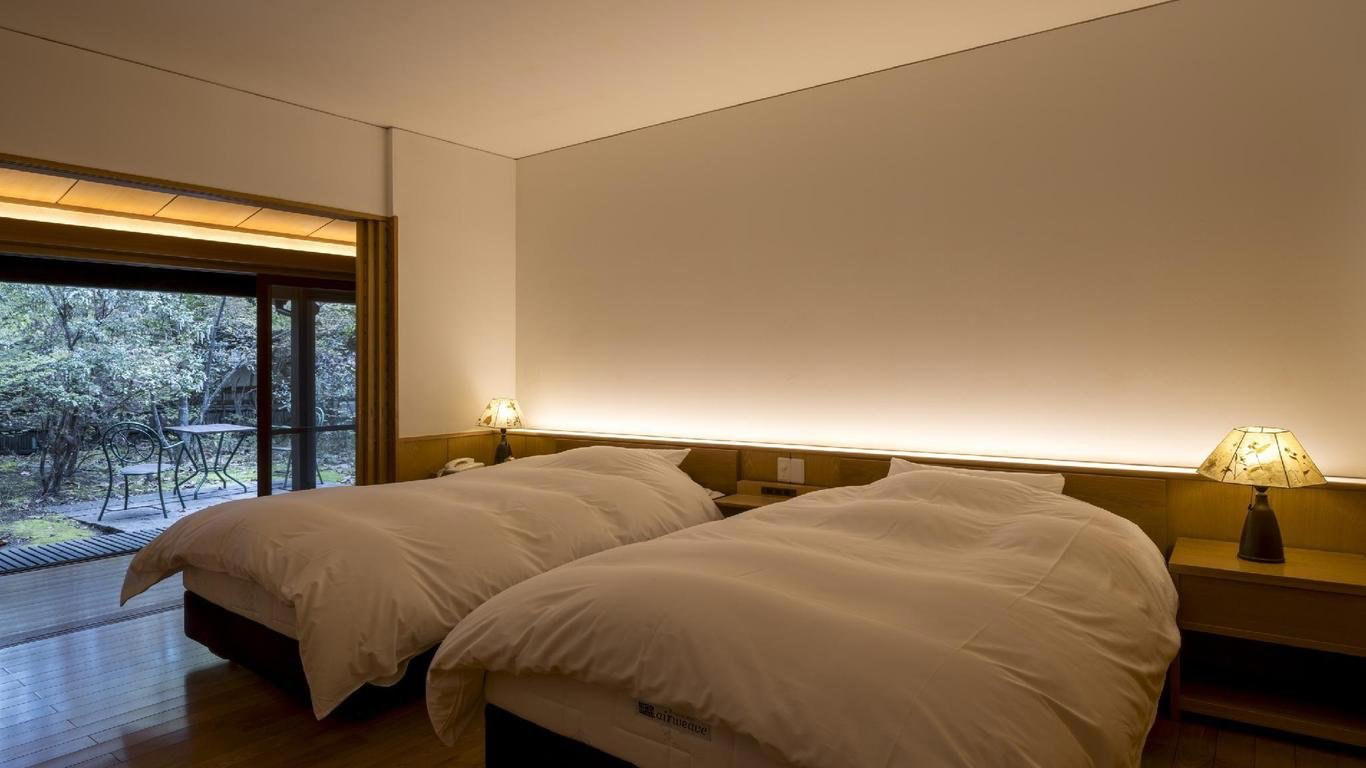
A Forest Address That Shapes Everything
Yufuin occupies an unusual position among Japan's hot spring towns. Where Beppu, just 30 kilometres to the east, has built its identity on volume and spectacle, Yufuin has leaned toward restraint, a resort town whose appeal rests on forested approaches, low-scale architecture, and the ambient hiss of thermal water beneath the valley floor. Within that context, properties near the wooded periphery of the Kawakami district carry a distinct advantage over those positioned along the more commercial central corridor. Yufuin Tamanoyu sits in that quieter register, its 16 rooms distributed across villa-style structures connected by footpaths rather than corridors, in a setting that once served as a retreat for Zen monks.
The monastic history is not incidental. Properties that have held ground through successive generations of tourism tend to absorb a different kind of discipline than those built from scratch for the premium leisure market. That discipline shows here in spatial restraint, in the preference for natural materials, and in a layout that prioritises separation between guests over the efficiency of a conventional floor plan. For reference, Kamenoi Besso represents a comparable tradition-forward approach in the town, while ENOWA Yufu and Gettouan sit further along the design-contemporary axis.
The Rooms and What the Address Provides
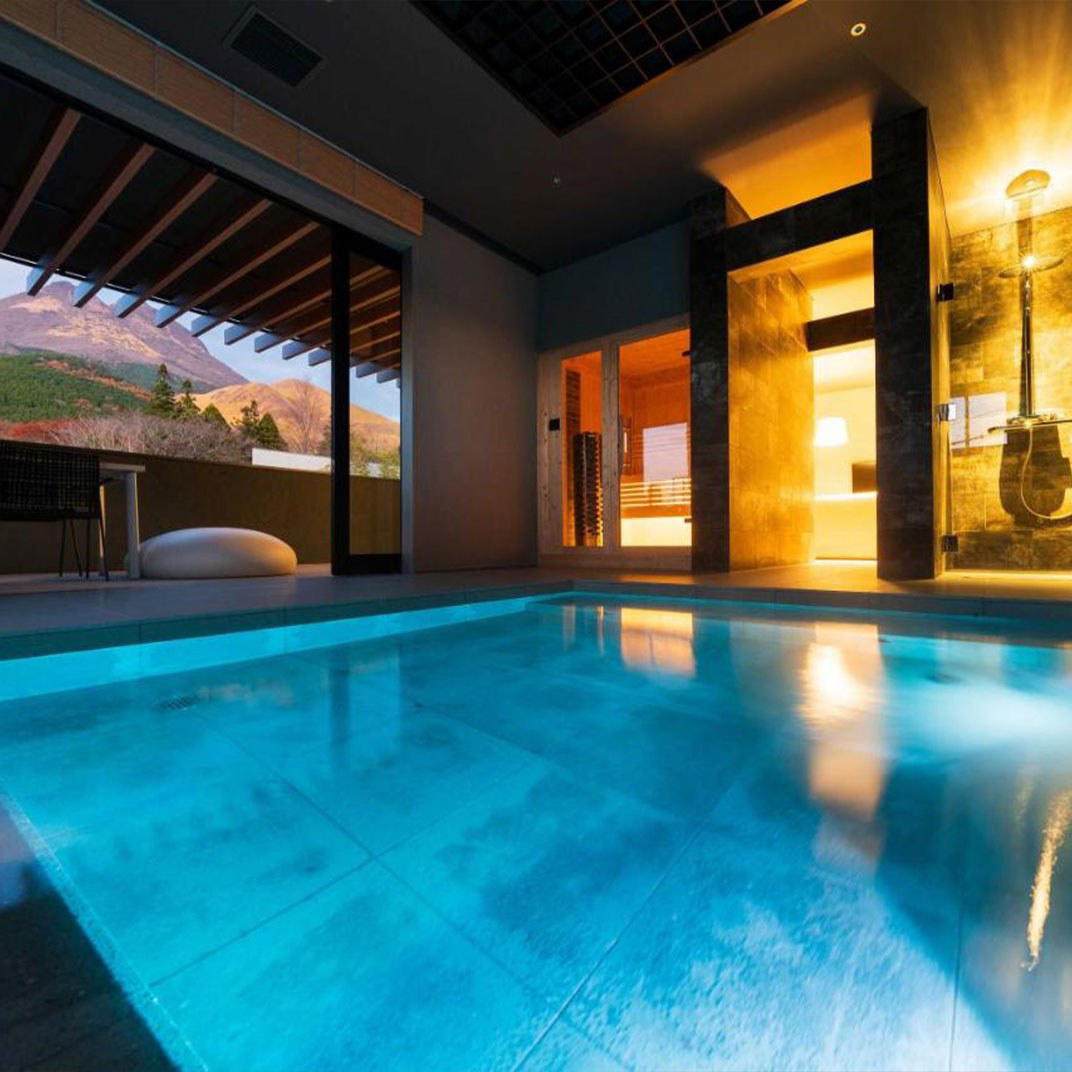
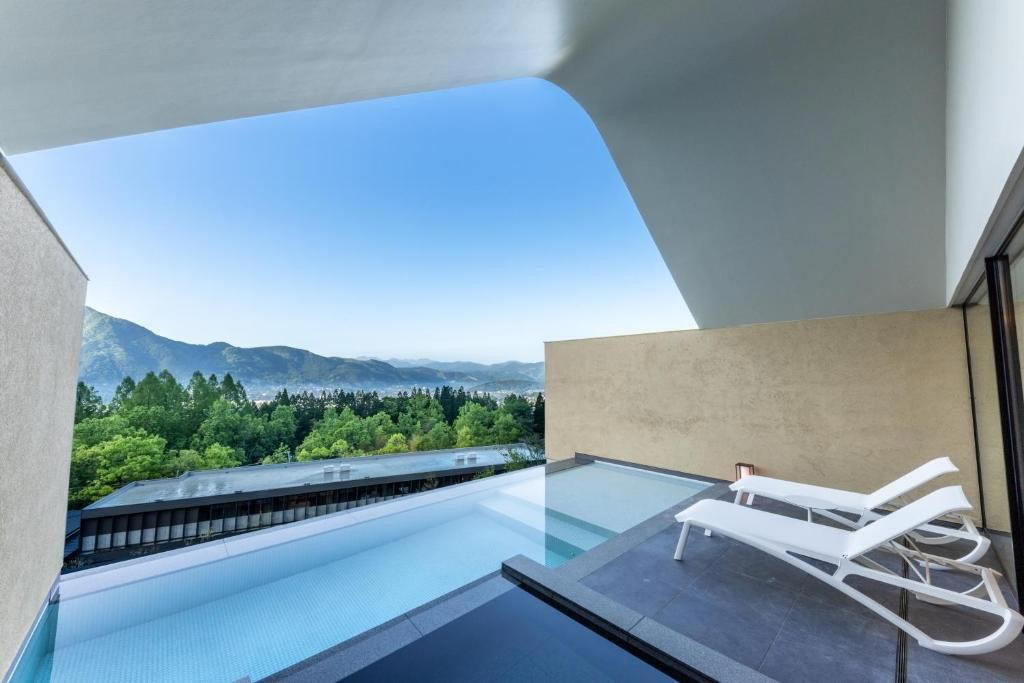
Each of the 16 rooms follows the kaisō pattern of traditional Japanese accommodation: a tatami-floored sitting room for daytime use, a separate bedroom, and a wooden soaking tub fed directly from the property's hot spring source. That last detail matters practically. Yufuin's public onsen facilities are a short walk from the property, but having thermal water drawn into a private wooden tub means access at any hour, without the social dimension of shared bathing. For guests whose primary purpose is therapeutic rather than social, this is a meaningful distinction.
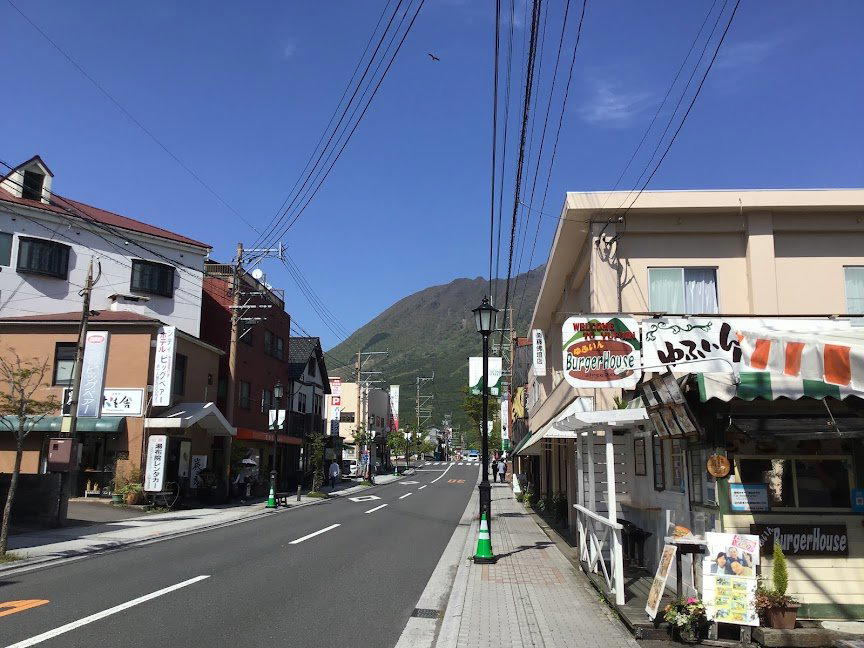
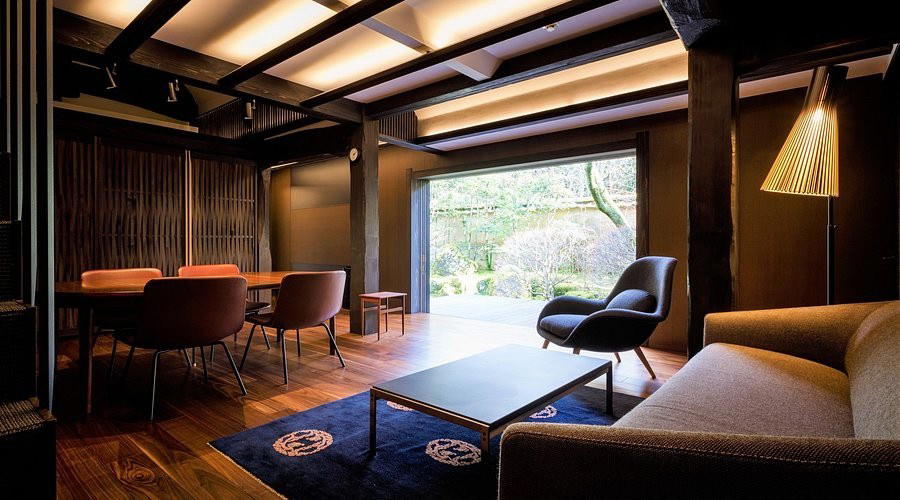
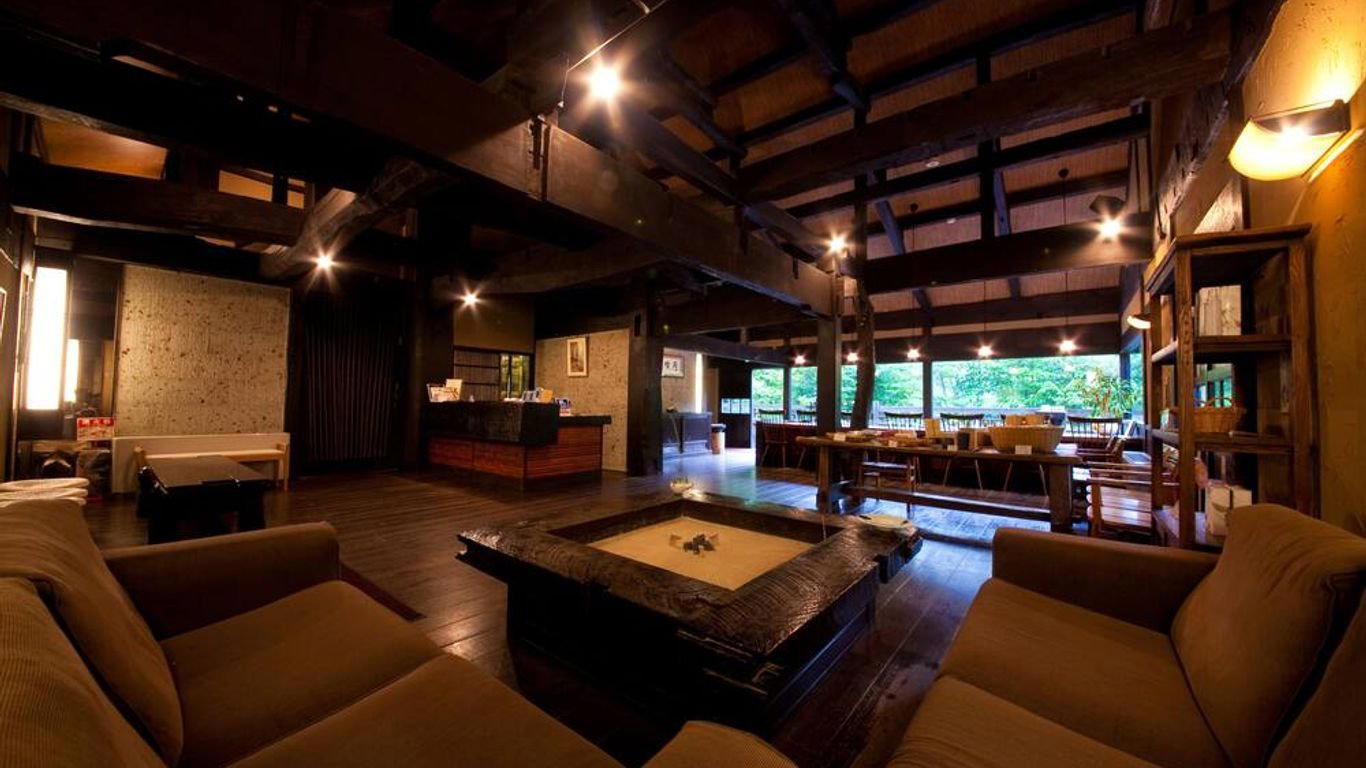
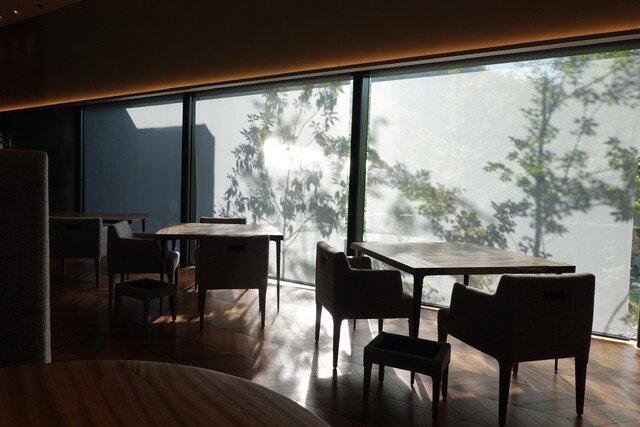
The floor-to-ceiling windows in the tea room and bar are positioned to face the surrounding forest rather than toward the town. This is a deliberate editorial choice in spatial design, the property orients guests away from Yufuin's commercial activity and toward the landscape that preceded it. The result is that the address functions simultaneously as a point of access to the town and as an insulation from it. Guests who want the village's famous onsen strip or its artisan shops are within easy walking distance; those who want to remain in the forest are not required to leave.
Seasonal Cuisine and the Rhythm of Staying In
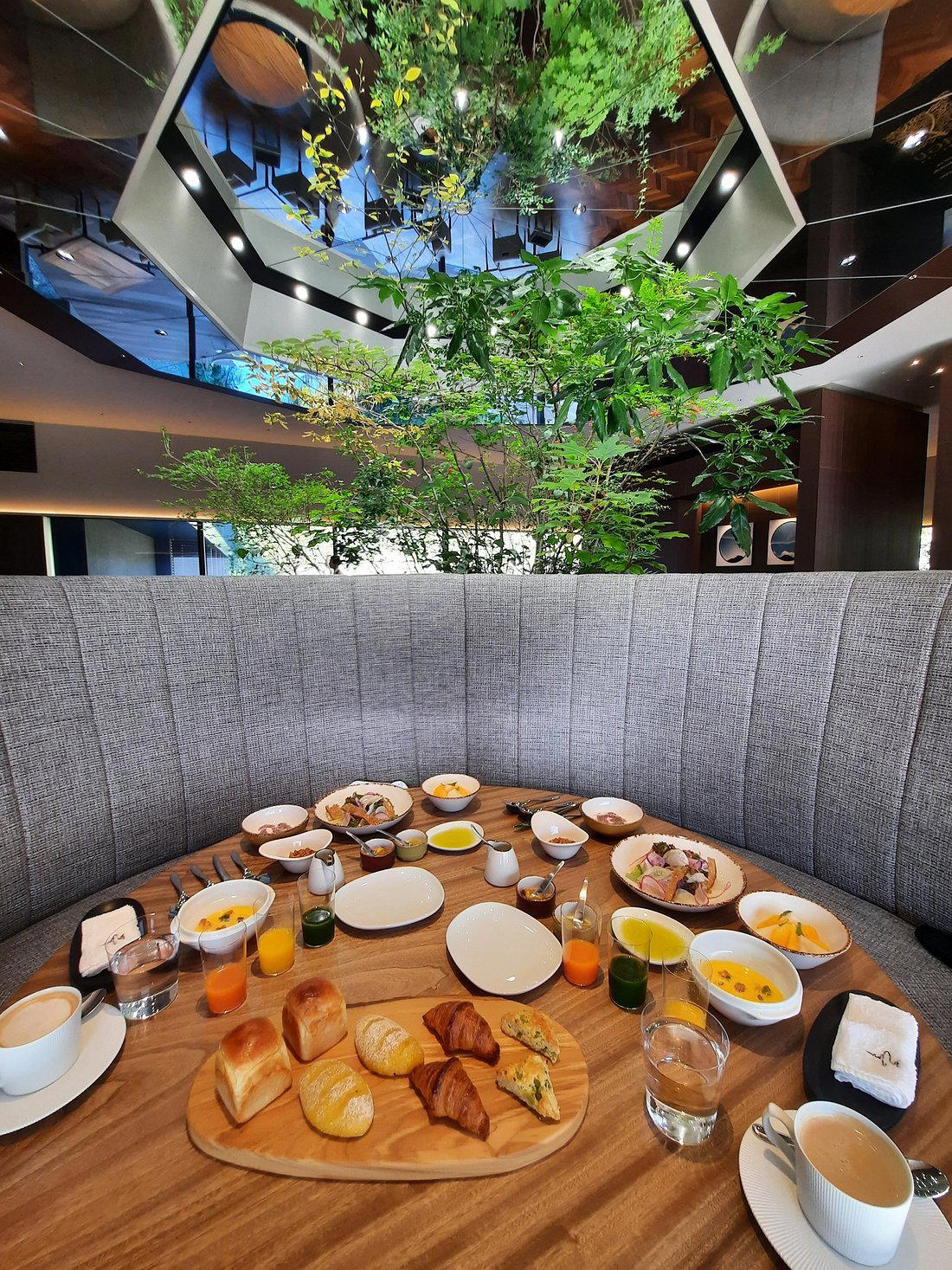
The restaurant at Yufuin Tamanoyu serves seasonal cuisine, a framing that in Japan typically signals kaiseki-adjacent menus built around what Oita Prefecture's agricultural calendar produces at a given moment. Oita is a significant agricultural region, yuzu, shiitake, and wagyu from the Bungo breed are among the prefecture's better-known outputs, and a property kitchen operating with seasonal discipline would have consistent access to premium local supply.
Tea room adds a structural function that a simple lounge would not. In Japan's ryokan tradition, the tea room is less a beverage service point than a pacing device, a space designed to slow arrival and departure, to mark transitions between activities, and to provide a contemplative middle ground between the private room and the communal restaurant. Positioned with forest views, Tamanoyu's tea room extends the property's core spatial logic into one more room type.
How Tamanoyu Sits Within Japan's Premium Ryokan Market
Japan's premium ryokan market has split over the past decade into broadly two cohorts. The first has absorbed international capital and design talent, producing properties whose aesthetic is ryokan-inflected but whose operational model is closer to a boutique hotel, structured check-in times, concierge services, international booking platforms. The second has remained closer to the original form: small room counts, seasonal pricing, meals included or tightly integrated, and rates communicated through direct inquiry rather than public listing.
Yufuin Tamanoyu operates in the second cohort. Pricing on request, 16 rooms, and a property identity built around a specific site history rather than a brand framework all place it within the latter group. For comparison across Japan's ryokan circuit, Gora Kadan in Hakone and Asaba in Izu occupy broadly similar positions in their respective regions, historically significant properties with small room counts and rates that reflect the scarcity of that format. Araya Totoan in Kaga and Nishimuraya Honkan in Kinosaki-cho follow comparable models in other thermal resort towns. Zaborin in Kutchan pushes the format further toward design-contemporary, but shares the small-count, immersive-stay logic.
Within Kyushu specifically, the comparison set shifts. ANA InterContinental Beppu Resort and Spa in Beppu operates at the international chain end of the spectrum. Tamanoyu operates at the opposite end, no group affiliation, no brand framework, and a site history that predates the modern ryokan category entirely.
Planning Your Stay
Yufuin is accessible from Fukuoka by limited express train in approximately two hours, making it a realistic two- or three-night addition to a longer Kyushu itinerary. The Yufuin Station end of town connects quickly to the main shopping and onsen corridor, and the Kawakami district where Tamanoyu sits is accessible from the station on foot, though given luggage and the property's forested setting, most guests arrange transfer. Pricing is available only through direct inquiry, there is no public rack rate, which means booking lead time and rate flexibility are both determined by the property rather than a third-party platform. For comparable properties in this category across Japan, booking three to six months ahead for high-demand periods (autumn foliage season and spring) is standard practice.
Guests looking to anchor a broader Kyushu itinerary can pair Yufuin with Beppu to the east or build a longer route that includes properties further afield. Halekulani Okinawa and Jusandi in Ishigaki represent the southern extension of a Japan properties itinerary; HOTEL THE MITSUI KYOTO in Kyoto and Bvlgari Hotel Tokyo anchor the urban end. For a broader survey of accommodation options in the area, see our full Yufu guide.
The Essentials
Comparable venues nearby, for context on price, style, and recognition.
| Venue | Price | Awards | Notes |
|---|---|---|---|
| Yufuin TamanoyuThis venue (the venue you are viewing) | $750–1,000 | 1 Michelin Key | Not listed |
| GEKKOJU YUFUIN | $500–750 | Michelin Selected | Yufuincho, Luxury all-suite villa with butler service |
| Gettouan | $200–300 | Not listed | Yufuin Onsen, Traditional Japanese ryokan with 300-year-old main building and luxurious private villas |
| Gekkoju Yufuin (月洸樹 由布院) | $500–750 | Michelin Selected | Yufuin Onsen, Ultra-luxury all-suite resort ryokan with modern Western furnishings and Japanese design elements. |
| KAI Yufuin (界 由布院) | $500–750 | Not listed | Yufuin Onsen, Contemporary ryokan blending traditional Japanese farmhouse architecture with modern design |
| Kamenoi Besso | Not listed | 2 Michelin Keys | Yufuin, Historic luxury ryokan with restored traditional cottages and main villa. |
Recognition history
Dated appearances from independent guides and award organizations, with the underlying list record or original source where available.
Michelin 1 Key
Michelin
Full recognition history (2 entries)
Michelin 1 Key
Michelin
Details
- Quiet
- Scenic
- Cozy
- Elegant
- Intimate
- Romantic Getaway
- Wellness Retreat
- Anniversary
- Weekend Escape
- Panoramic View
- Private Villa
- Destination Spa
- Wi Fi
- Room Service
- Restaurant
- Bar
- Parking
- Air Conditioning
- Spa
- Mountain
- Garden
- Step Free Entrance
Peaceful and serene woodland atmosphere with calming forest views through floor-to-ceiling windows, pristine cleanliness, and a quiet, relaxing environment.