



Occupying floors 24 to 34 of the Park Ventures Ecoplex on Bangkok's Embassy Row, The Okura Prestige brings Japanese-influenced luxury to the city's central business district. All 240 rooms sit at the 26th floor or above, with a cantilevered 25th-floor pool that appears to float over the skyline. A La Liste Top Hotels score of 96.5 points and Michelin 2 Keys recognition place it firmly in Bangkok's upper tier of city hotels.
Pearl is the En Primeur Club membership app — saves, bookings, and concierge access live there. Same editors, same standards.
- Address
- 57, Park Ventures Ecoplex 57 Thanon Witthayu, Khwaeng Lumphini, Pathum Wan, Krung Thep Maha Nakhon 10330
- Phone
- +66 2 687 9000
- Website
- okurabangkok.com
- Directions
- Get directions
 Saves & bookings on Pearl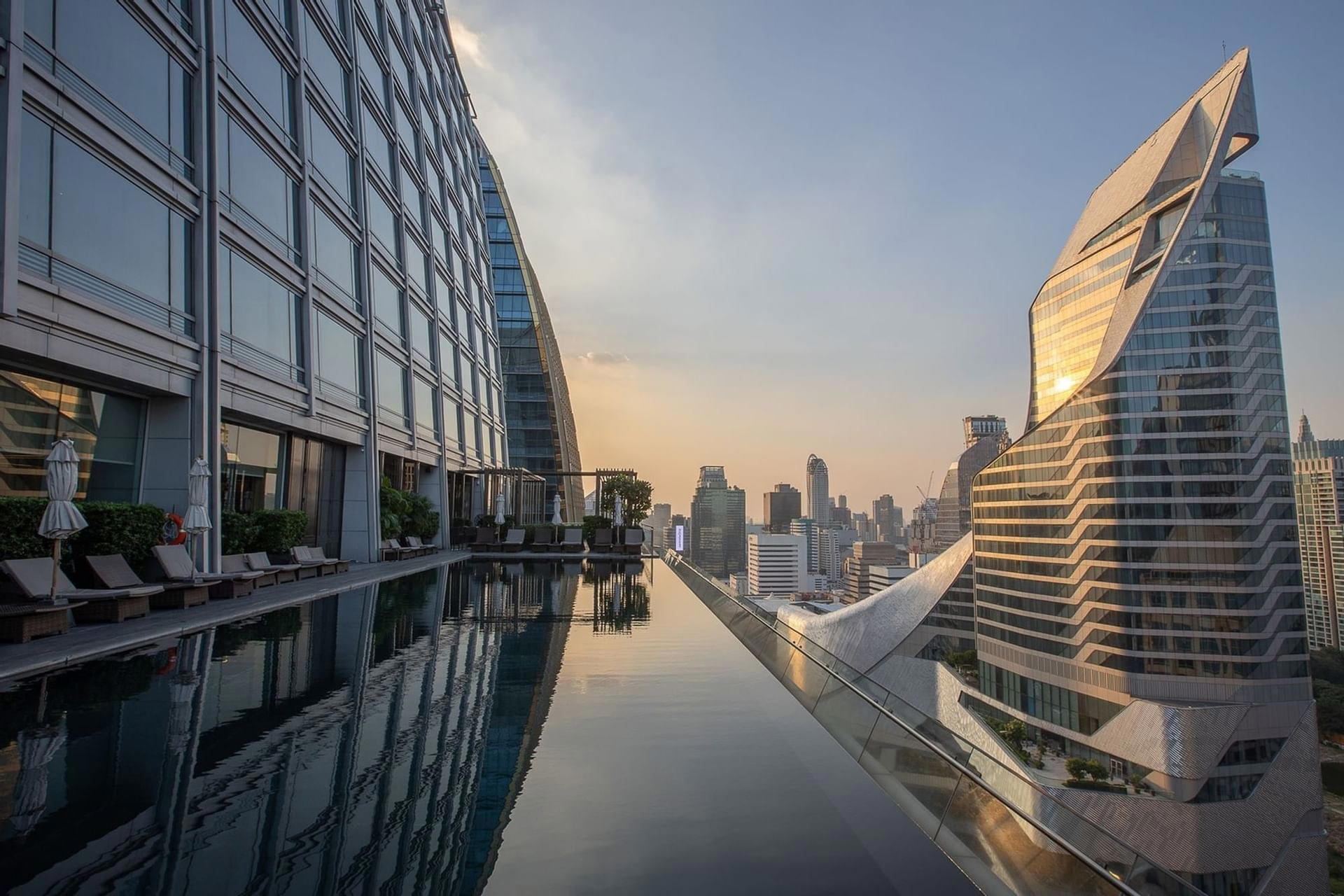
Above the City: Japanese Precision Meets Bangkok's Central Skyline
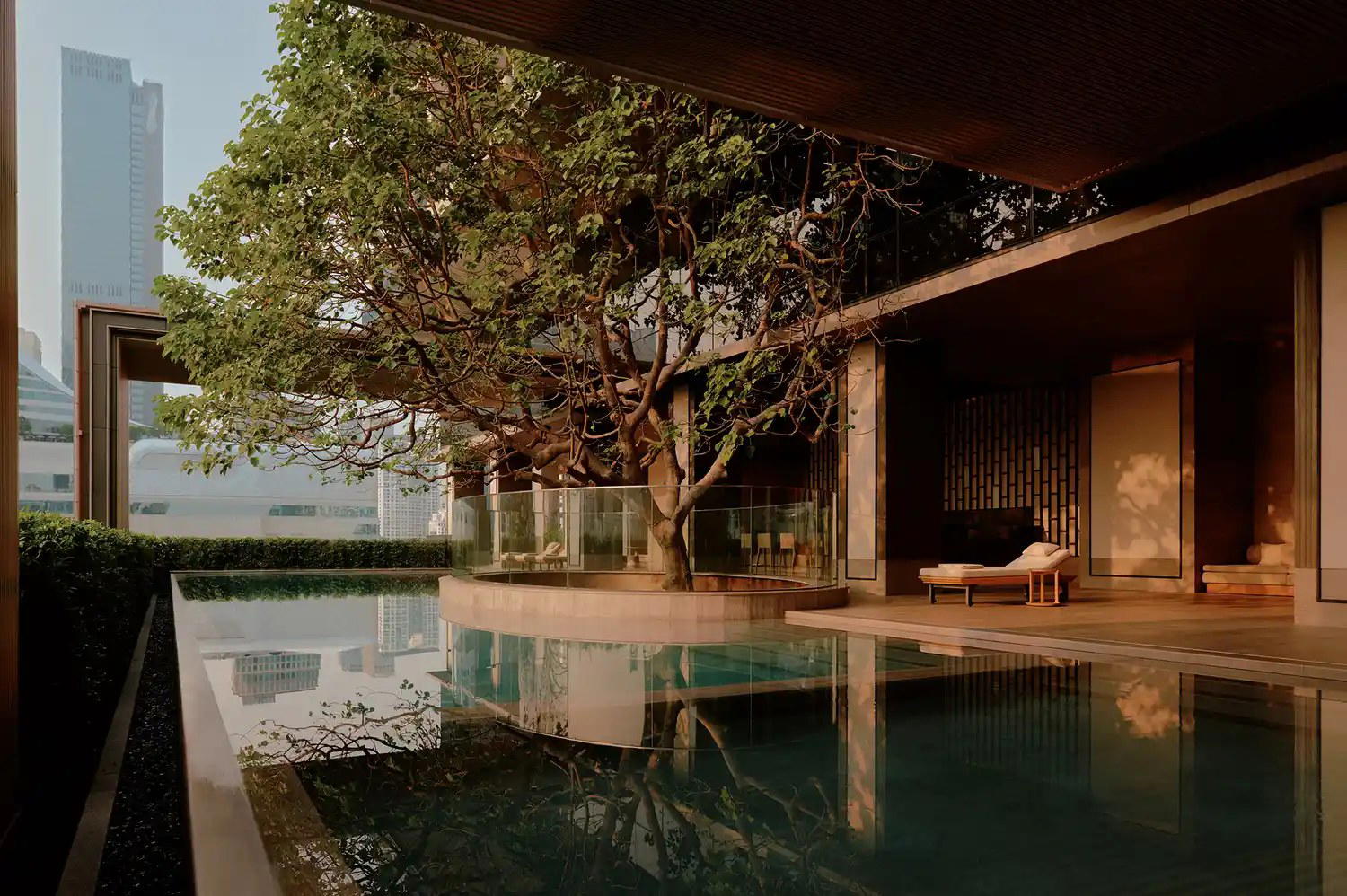
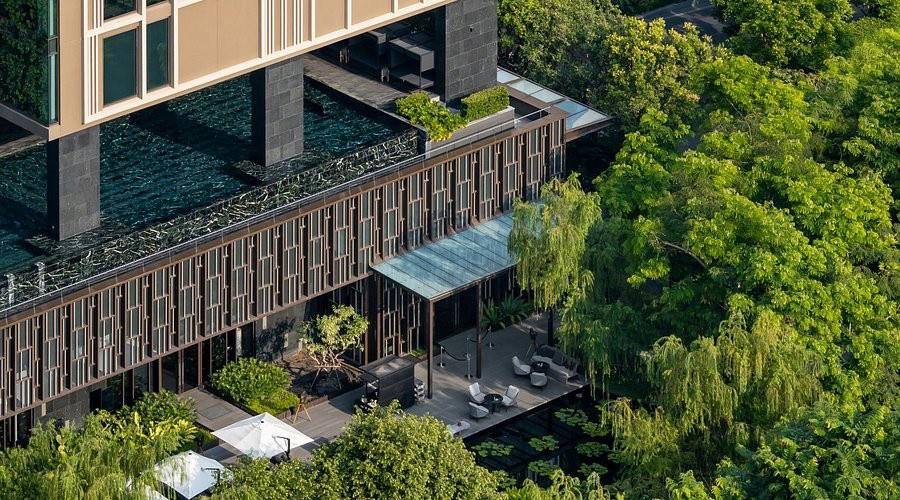
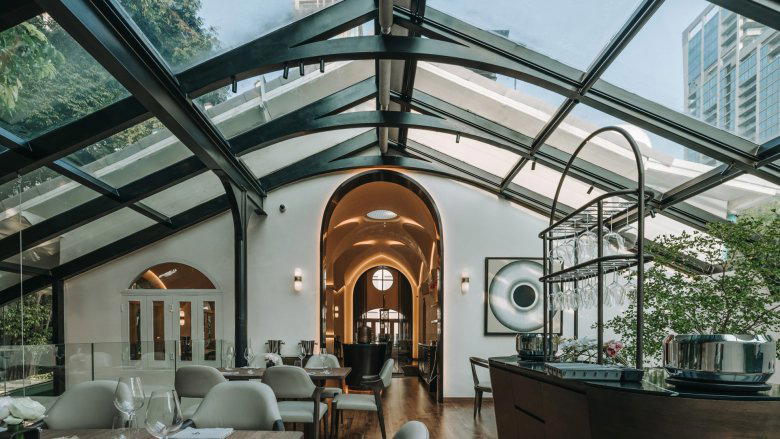
There is a particular quality to arriving at a hotel whose ground floor is, in fact, the 24th. The noise and heat of Ploenchit and Wireless roads, two of Bangkok's most trafficked arteries, dissolve somewhere in the elevator shaft, and what greets you instead is a lobby of floor-to-ceiling glass, a black-sand garden with oversized stones, and a horizon of towers and treetops stretching toward the Chao Phraya. The Okura Prestige Bangkok operates at altitude in every sense: physically, in terms of positioning, and in its approach to the kind of quiet, considered luxury that Japanese hospitality has refined over decades.
Bangkok's premium hotel market has diversified considerably in recent years, splitting between riverside heritage properties, the Mandarin Oriental Bangkok, the Capella Bangkok, the Four Seasons Bangkok at Chao Phraya River, and a newer cohort of vertical luxury towers in the central business district. The Okura belongs firmly to the latter category. Its address on what locals still call Embassy Row places it within walking distance of the Phloen Chit BTS station, which connects via covered walkway directly to the hotel, making it functionally ideal for business travelers and culturally well-positioned for anyone treating Bangkok's Sukhumvit and Silom corridors as a starting point rather than a destination.
The Architecture of Restraint
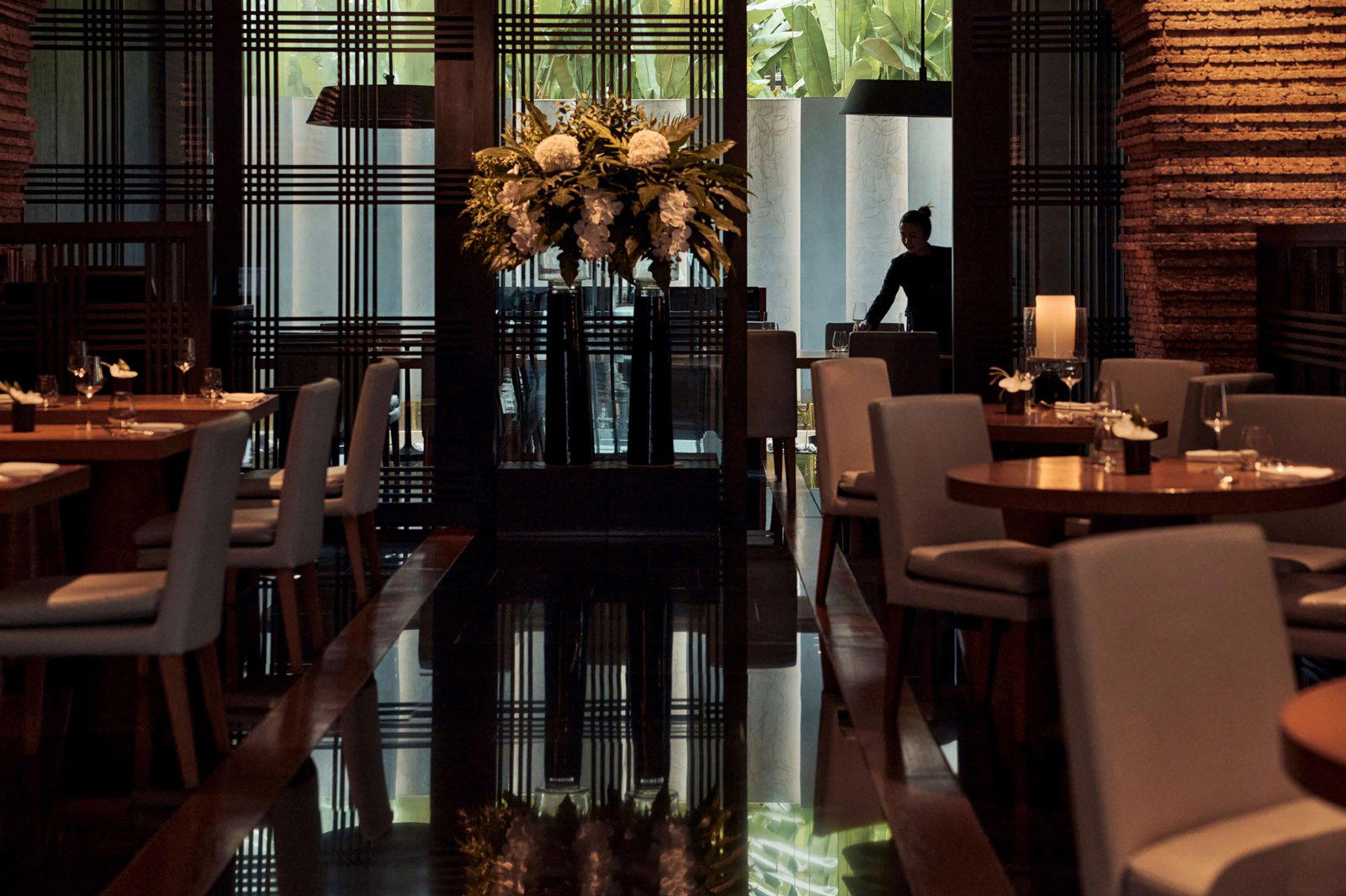
The Park Ventures Ecoplex building itself is worth noting as context. Completed as part of Bangkok's wave of green-certified commercial development, it represents the kind of host structure that shapes a hotel's environmental baseline before any in-house sustainability program begins. The building's design, all angles and slopes, a largely glass exterior that shifts tone with the sky, means the Okura's rooms and public spaces work in dialogue with natural light rather than against it. All 240 guest rooms sit at the 26th floor or higher, meaning that daylight enters these spaces from perspectives unavailable to street-level properties. The light woods, textured wall panels, and neutral cream and taupe palette of the interiors are calibrated to complement rather than compete with the views outside.
This approach to material restraint is consistent with a broader Japanese hospitality ethos that prioritizes considered detail over decorative excess. Japanese-style Buddha prints, a traditional black-sand garden in the lobby, and room-level amenities including Japanese-style bidets and digitally controlled bedside panels for lighting, curtains, and air-conditioning all reinforce a coherent design language. It reads less as theming and more as a set of inherited assumptions about what a room should feel like and how it should function.
Rooms That Earn Their Altitude
The entry-level Deluxe rooms are equipped with walk-in closets, rain showers, detached bathtubs, and a separate powder room, a configuration that signals this is not a hotel where the price differential between room categories is cosmetic. Upgrading to a Deluxe Corner room shifts your vantage point by several floors, while club-level rooms provide access to a lounge offering complimentary beverages throughout the day and cocktails and canapés in the evening. For travelers whose schedules make the club lounge a practical proposition rather than a luxury add-on, the calculus favors booking at that tier.
The suites extend the logic further. The Prestige suite begins at 1,000 square feet, a figure that places it at the larger end of Bangkok's suite inventory at this price point (rates from approximately $215 per night at base). At the summit of the range, the 3,250-square-foot Imperial suite includes a private steam room, sauna, and a deep soaking tub positioned against a window bank, turning what is typically a private act into something closer to a considered architectural experience. The Rosewood Bangkok and Park Hyatt Bangkok occupy a comparable tier in Bangkok's high-rise luxury segment, and suite configurations across this comparable set reflect a shared understanding that square footage and elevation are the primary differentiators at this level.
Three Dining Registers, One Kitchen Philosophy
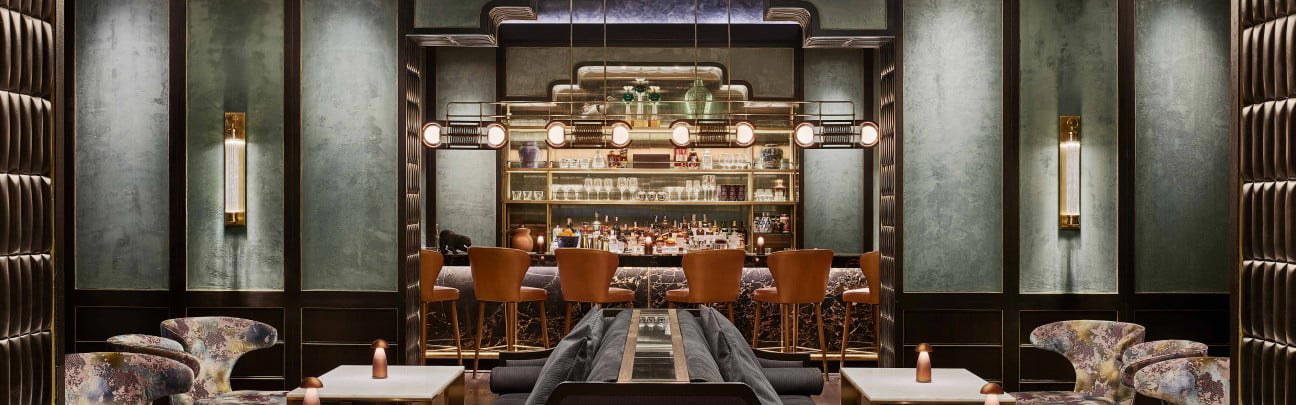
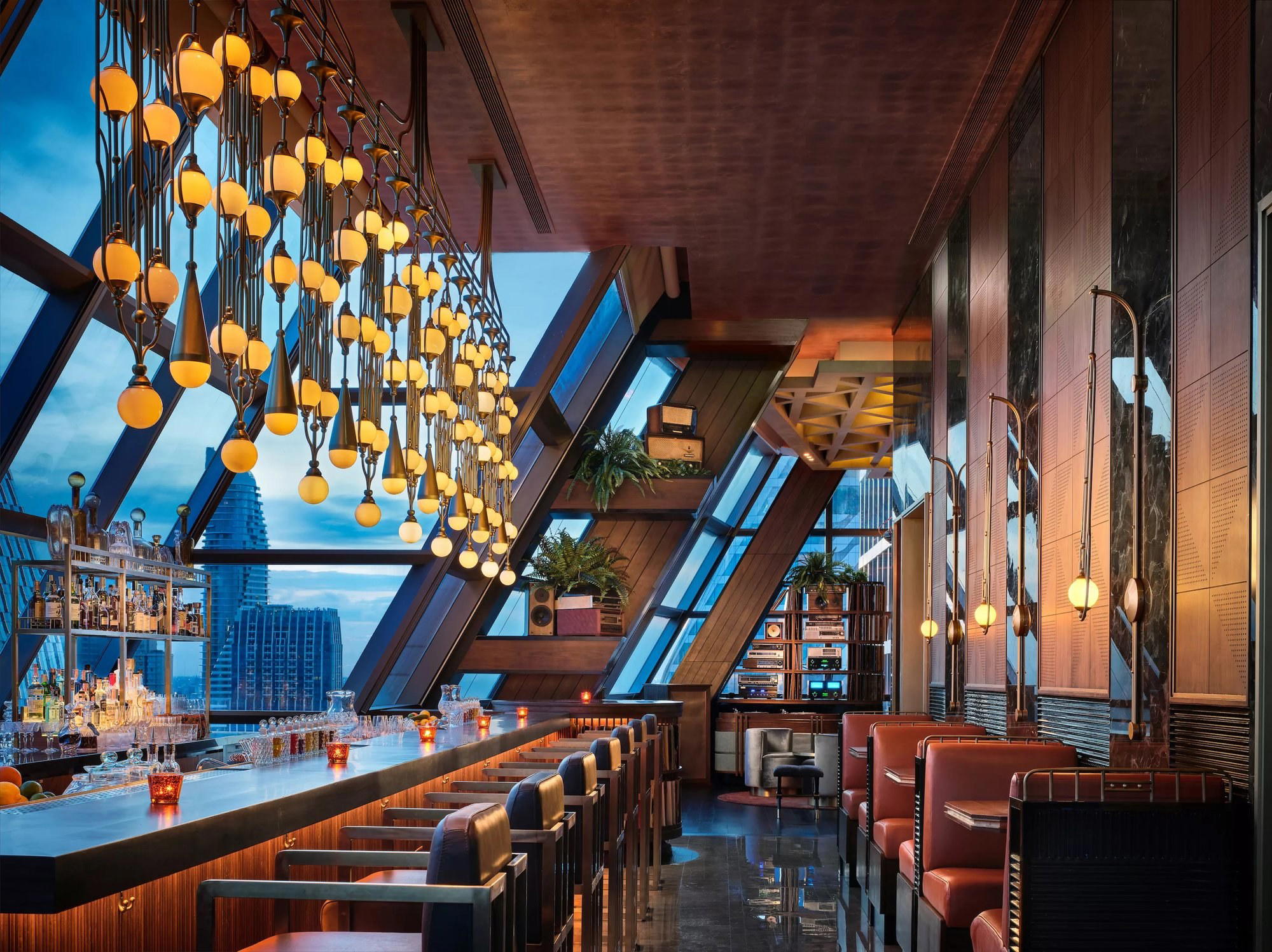
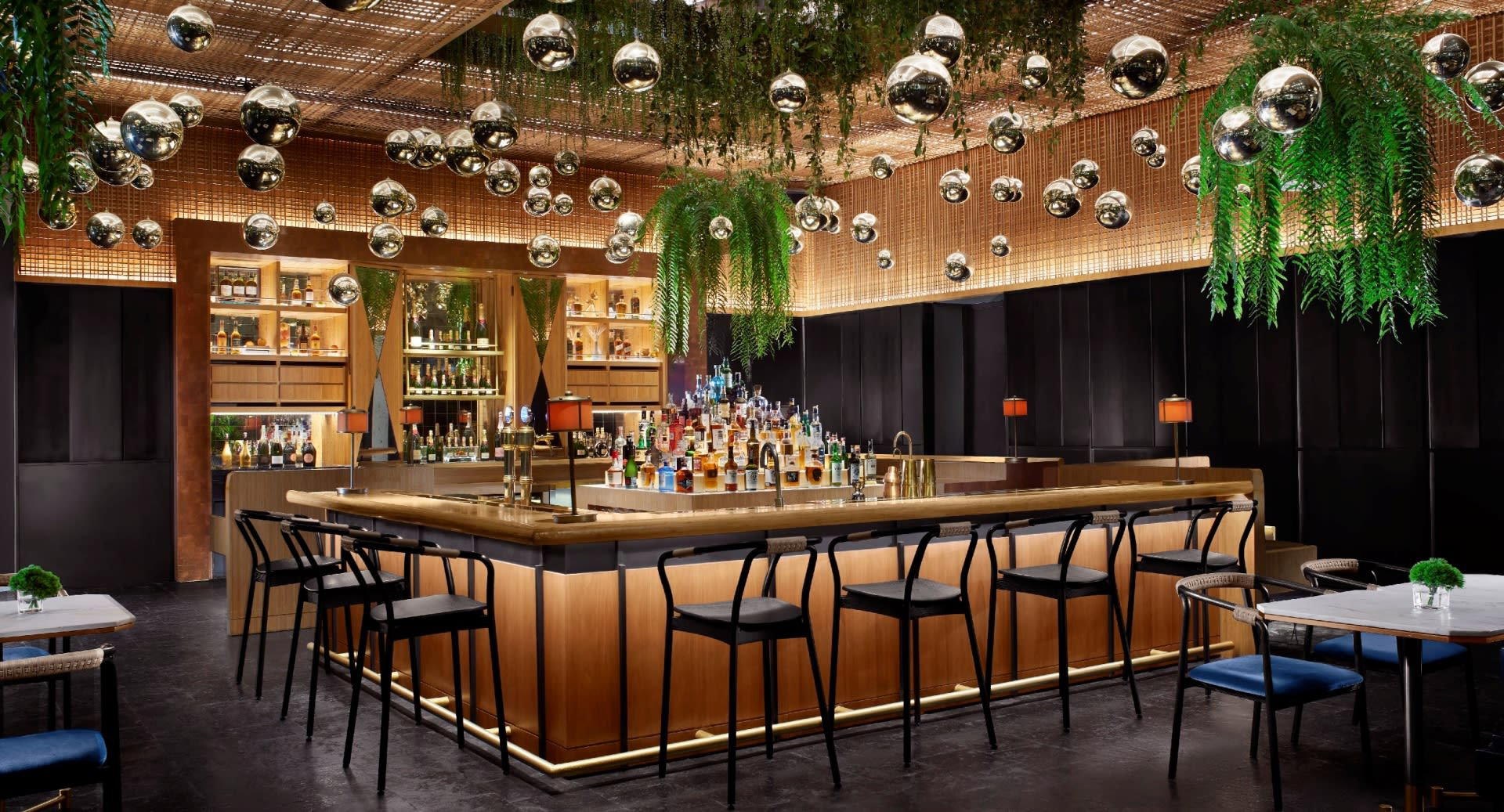
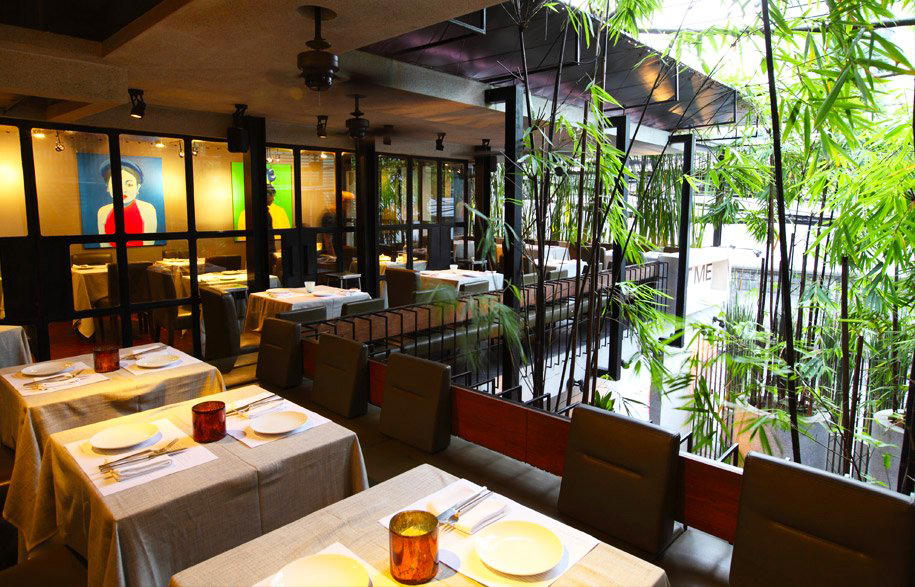
Okura Prestige runs three distinct dining formats across its upper floors, each calibrated to a different register. Yamazato covers Japanese cuisine; Elements applies a Japanese culinary sensibility to French technique; and Up & Above Restaurant and Bar serves an international menu from a 24th-floor terrace that functions as one of the more accessible entry points to the property. For Bangkok's business district lunch crowd and cocktail-hour traffic, the terrace's combination of open-air setting and skyline sightlines has established it as a venue in its own right rather than merely a hotel amenity.
Three-restaurant structure reflects a wider pattern among Japanese-owned luxury hotels, where the flagship property often anchors a full-spectrum dining program rather than outsourcing F&B to independent operators. This model keeps the culinary identity coherent and the quality controls internal, which matters in a city where standalone restaurants at this level face increasingly intense competition from properties like the The Peninsula Bangkok and The Siam.
The Pool as Editorial Statement
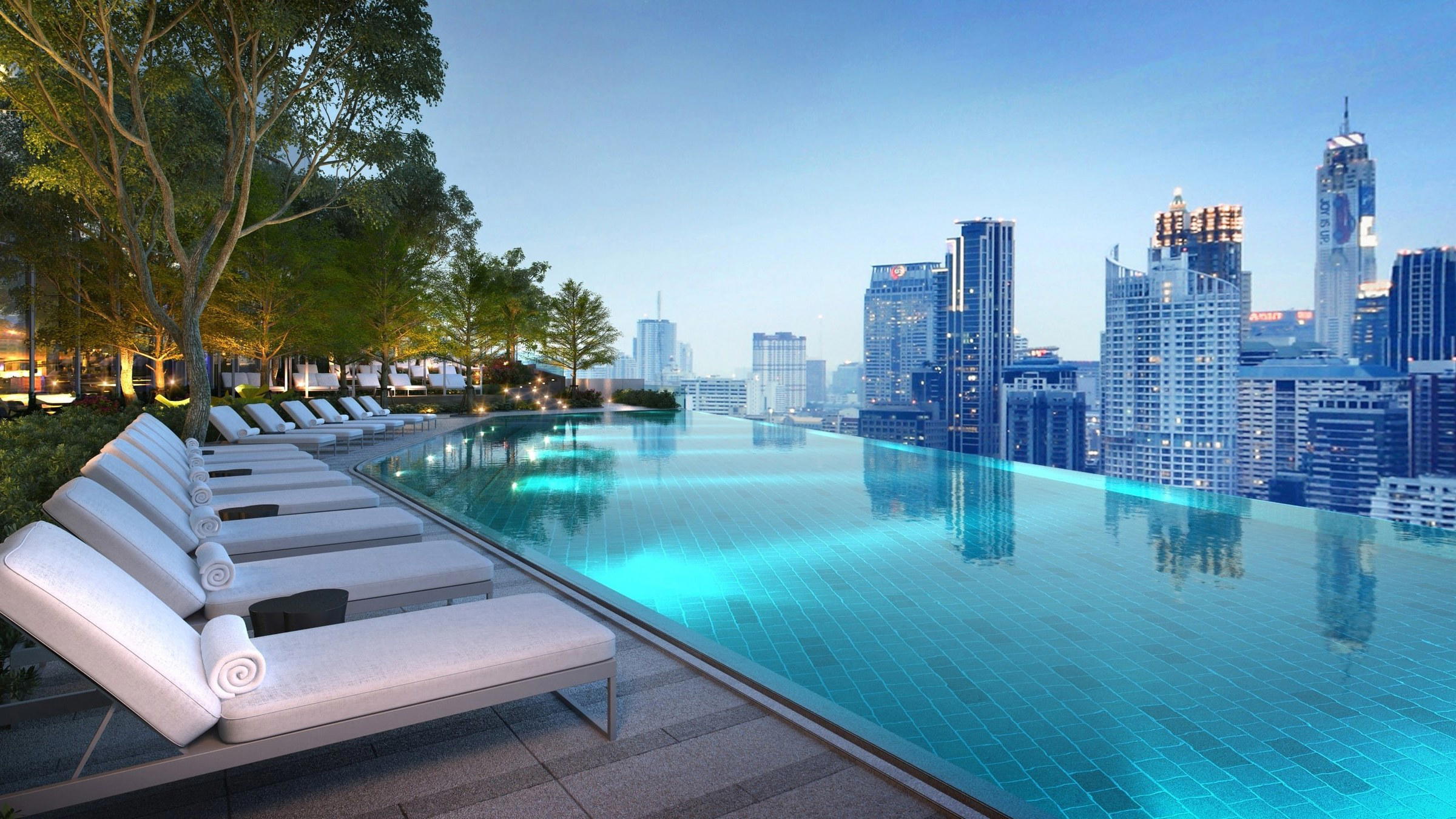
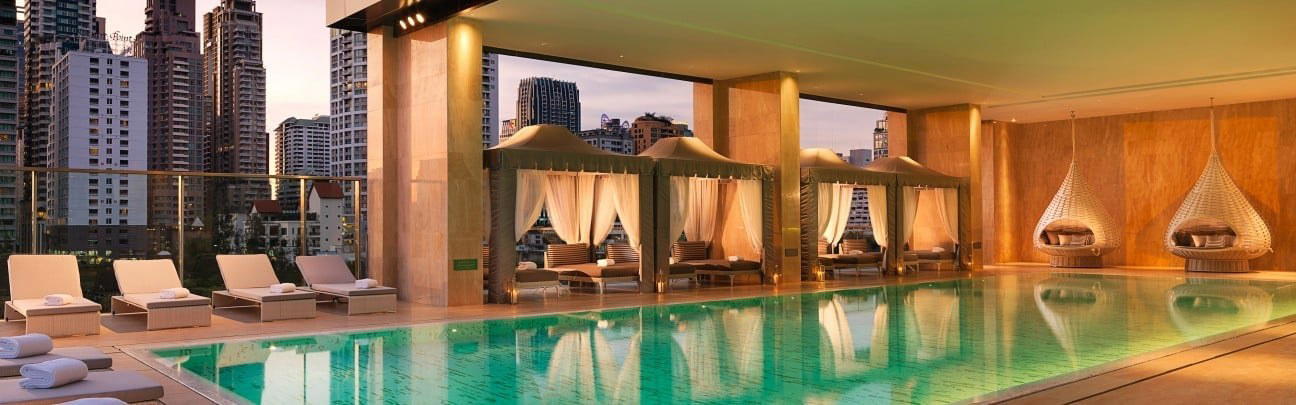
25th-floor infinity pool, 82 feet long, cantilevered from the building's edge, functions as one immediately legible expression of the hotel's architectural confidence. From certain angles the water appears to terminate at nothing, the far edge dissolving into the Bangkok skyline. It is a design move more common in resort contexts, where natural backdrops amplify the effect; here, surrounded by glass towers and refined expressways, it reads differently, as a deliberate act of calm in a city that rarely pauses.
Recognition and Peer Positioning
Okura Prestige Bangkok holds Michelin 2 Keys recognition from the 2024 guide, placing it alongside a select tier of Bangkok hotels that have earned structured critical assessment rather than relying solely on brand reputation.
Within Thailand's broader luxury hotel geography, the Okura's city-center positioning differs substantially from properties like Amanpuri in Phuket, Six Senses Yao Noi in Phang Nga, or Soneva Kiri in Trat, which are oriented around natural settings and ecological programming. The Okura's sustainability proposition operates in a different register: the green-certified host building, the material restraint of the interiors, and an operational philosophy rooted in Japanese principles of efficiency and minimal waste. For travelers comparing urban and resort options across Thailand, the contrast is instructive. See also Four Seasons Resort Chiang Mai, Phulay Bay, A Ritz-Carlton Reserve in Krabi, Pimalai Resort & Spa in Koh Lanta, Anantara Golden Triangle Elephant Camp & Resort in Chiang Rai, Aleenta Resort & Spa, Hua-Hin in Pranburi, Anantara Hua Hin Resort & Spa, Anantara Layan Phuket Resort, Anantara Rasananda Koh Phangan Villas, and Samujana Villas in Koh Samui for the full range of Thailand's premium accommodation options.
Planning Your Stay
The hotel sits at the corner of Ploenchit and Wireless roads in Pathum Wan, with direct covered walkway access to Phloen Chit BTS station, a particularly efficient entry point into Bangkok's broader transit network. Comparable vertical luxury in Bangkok includes Grand Hyatt Erawan Bangkok and the The Sukhothai Bangkok. For those also considering international itinerary extensions, the Okura's Japanese hospitality model has broad reference points: the Aman New York, The Fifth Avenue Hotel in New York City, and Aman Venice each represent comparable levels of design-led, low-key luxury in their respective cities.
Where It Fits
Comparable venues nearby, for context on price, style, and recognition.
| Venue | Cuisine | Price | Awards | Notes |
|---|---|---|---|---|
| The Okura Prestige BangkokThis venue — the venue you are viewing | Luxury urban hotel blending Japanese functionality and contemporary style | $$$$ | Michelin 2 Key | Not listed |
| The Peninsula Bangkok | Riverside luxury with Thai heritage elements | $$$$ | Michelin 2 Key | Khlong Ton Sai |
| Park Hyatt Bangkok | Upscale urban luxury hotel in an well-known skyscraper. | $$$$ | Michelin 2 Key | Makkasan |
| The Sukhothai Bangkok | Urban resort with timeless Thai elegance and modern luxury | $$$$ | Michelin 2 Key | Si Lom |
| Dusit Thani Bangkok | Urban luxury resort with Thai heritage influences | $$$$ | Michelin 1 Key | Si Lom |
| Anantara Siam Bangkok Hotel | Blends traditional Thai and contemporary design with authentic artifacts and teak furnishings | $$$$ | Michelin 1 Key | Siam Square |
Recognition history
Dated appearances from independent guides and award organizations, with the underlying list record or original source where available.
Forbes 4-Star
Forbes
La Liste Top Hotels
La Liste
Forbes 4-Star
Forbes
Leading Hotels of World Member
Leading Hotels of World
Michelin 2 Keys
Michelin
Michelin 2 Keys
Michelin
At a Glance
- Elegant
- Sophisticated
- Modern
- Serene
- Business Trip
- Romantic Getaway
- Weekend Escape
- Rooftop Pool
- Infinity Pool
- Panoramic View
- Wi Fi
- Pool
- Spa
- Fitness Center
- Room Service
- Concierge
- Business Center
- Valet Parking
- Skyline
- Wi Fi
- Pool
- Spa
- Fitness Center
- Room Service
- Concierge
- Business Center
- Valet Parking
Serene oasis of elegance with Japanese aesthetics, modern luxury, immaculate cleanliness, and soundproofed rooms providing tranquil atmosphere amid city bustle.