





Ranked #2 on the World's 50 Best Hotels list in 2025 and named Tatler's Hotel of the Year for Asia-Pacific, the Four Seasons Bangkok at Chao Phraya River sits in the city's Creative District on the Chao Phraya riverfront. Architect Jean-Michel Gathy's mid-rise complex houses 299 rooms, a collection of six restaurants including Sushi Saito Thailand, and a spa drawing on Thai wellness traditions. Starting from $580 per night.
Pearl is the En Primeur Club membership app — saves, bookings, and concierge access live there. Same editors, same standards.
- Address
- 300/1 ถ. เจริญกรุง Khwaeng Yan Nawa, Khet Sathon, Krung Thep Maha Nakhon 10120
- Phone
- +66 2 032 0888
- Website
- fourseasons.com
- Directions
- Get directions
 Saves & bookings on Pearl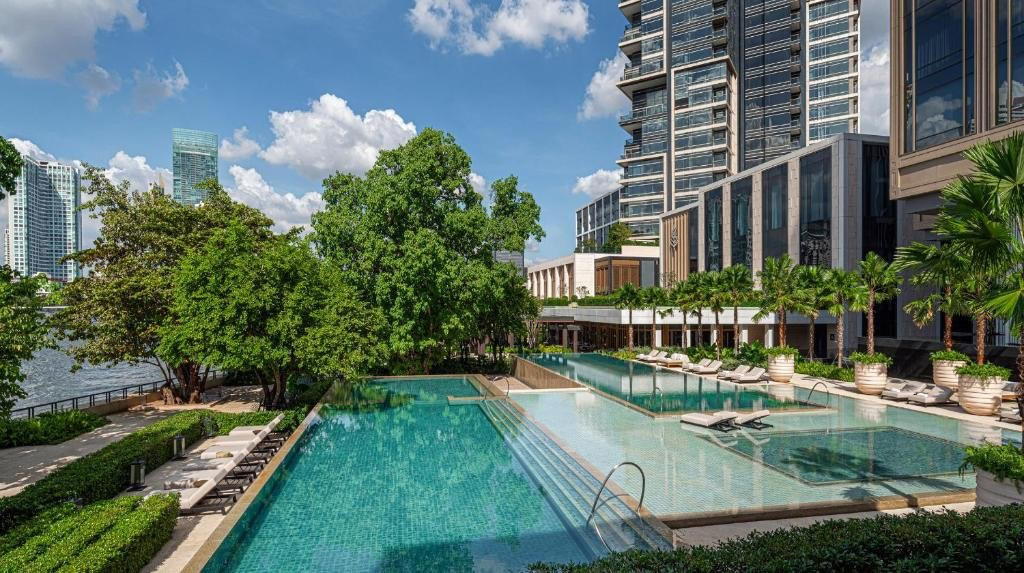
Where Bangkok's River and the Creative District Converge
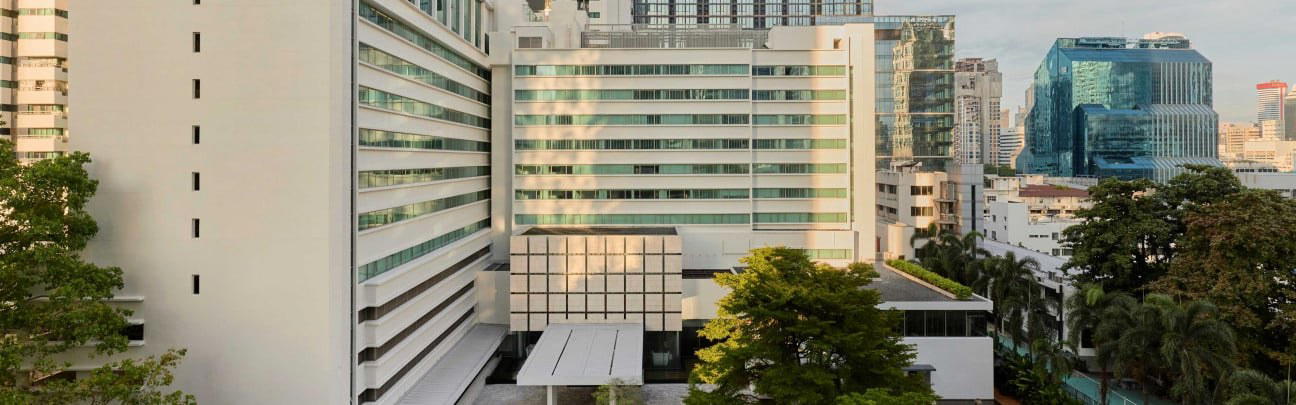
Bangkok's luxury hotel market divides into two broad camps: the historic riverside institutions that trade on decades of accumulated prestige, and a newer generation of properties that treat the river as a design prompt rather than a backdrop. The Four Seasons Bangkok at Chao Phraya River is a 5-star hotel in Bangkok with 2 Michelin Keys and 299 rooms. It belongs firmly to the second camp. Architect Jean-Michel Gathy's mid-rise structure on Charoen Krung Road resists the impulse to build skyward, instead spreading horizontally across gardens, reflection pools, and water features that keep the Chao Phraya River in constant dialogue with the interior. Approaching along the riverbank, the building reads less like a hotel tower and more like a walled estate that happens to contain 299 rooms.
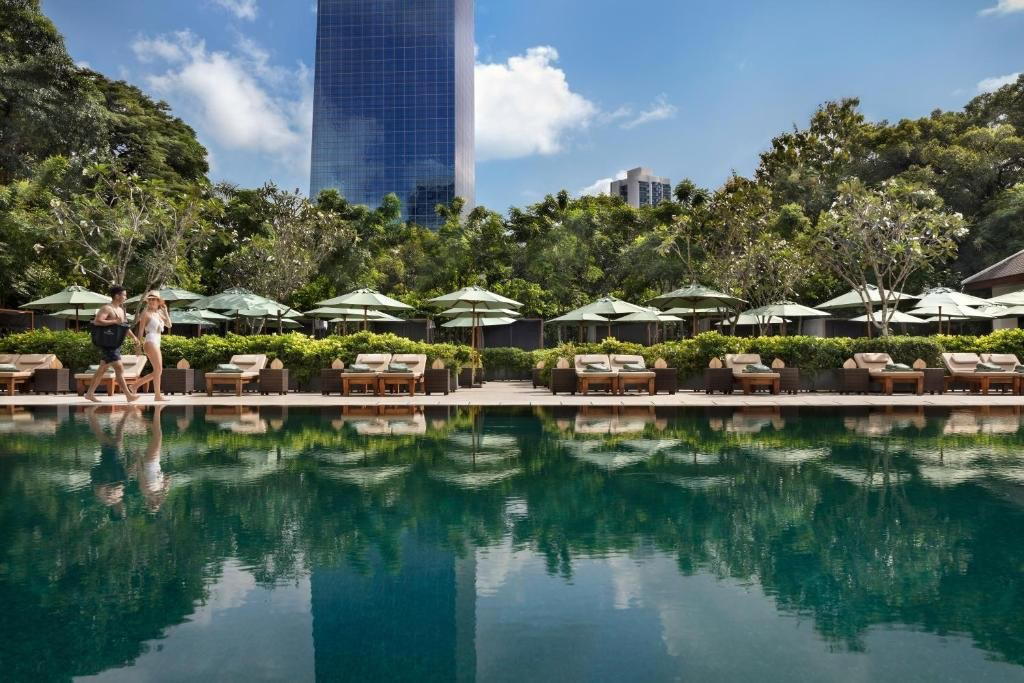
The decision to keep the structure low-rise was consequential for how the property feels at ground level. Shallow reflection pools run through the lobby beneath carved white elephant walls by Thai sculptor Dong Pongsatat, a work that references prosperity in the local iconographic tradition. Outside, lepironia articulata grass rises from the central courtyard pool, planted to evoke the rice fields of Northern Thailand. Floating pathways connect the courtyard to two swimming pools, including an outdoor infinity pool that faces the river directly. The progression from lobby to courtyard to pool to river is unhurried, which is a specific architectural choice in a city that moves at considerable speed.
The Creative District Context
Charoen Krung, the road the hotel addresses, is Bangkok's oldest street and spent much of the last decade repositioning as the city's arts and design corridor. Galleries, independent boutiques, and restaurants now operate in the shophouses and former warehouses between Sathorn and the river. The property absorbed that energy into its programming and art selection. The public spaces carry a substantial collection of contemporary Thai art, not as decoration but as a considered institutional commitment that aligns with the Creative District's broader identity. For guests oriented toward contemporary culture, the positioning matters: the hotel is walkable to gallery programming and independent dining in a way that more isolated riverside properties are not.
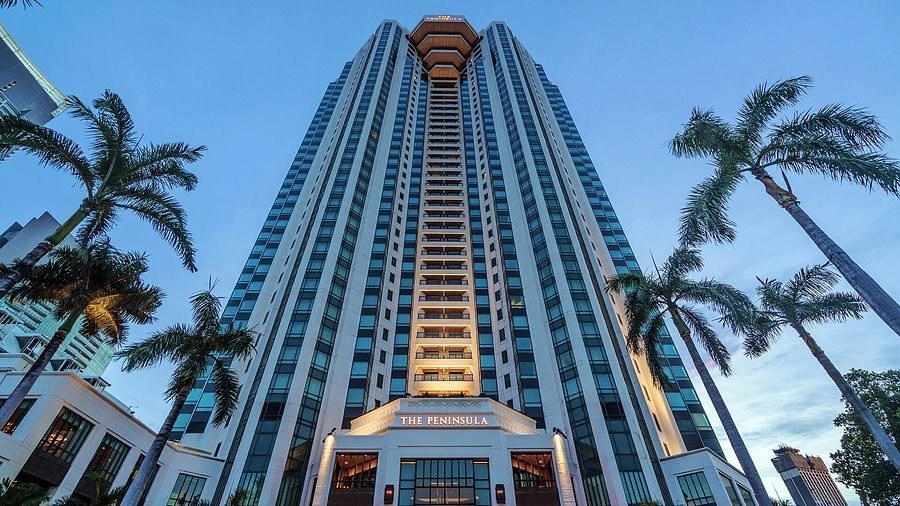
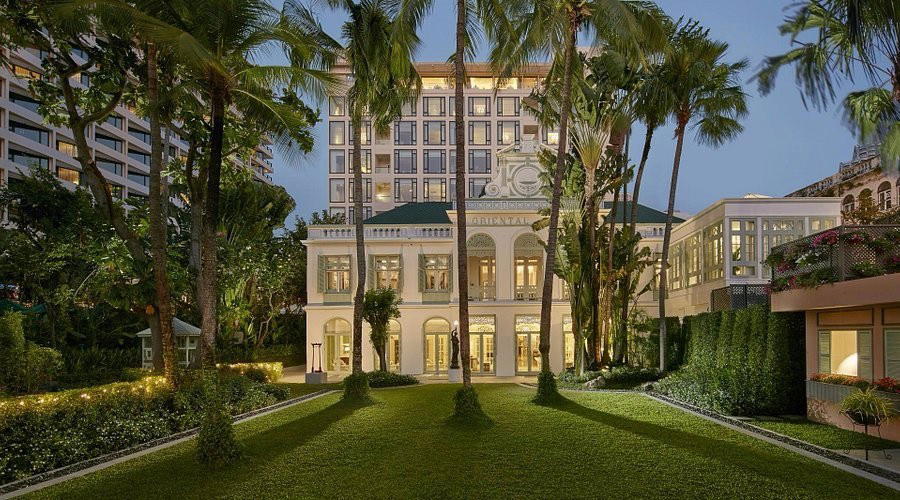
In Bangkok's wider luxury hotel conversation, the Charoen Krung property occupies a distinct position. The Mandarin Oriental Bangkok and The Peninsula Bangkok are the long-established riverside references; Capella Bangkok and Rosewood Bangkok represent the newer wave of design-forward openings further along the river. The Four Seasons sits at the intersection of brand scale and neighbourhood specificity, which is where it draws its competitive position. Properties like Park Hyatt Bangkok and The Okura Prestige Bangkok, operating from central Ploenchit and Wireless Road respectively, compete on urban connectivity rather than river access; the Four Seasons trades that central positioning for something harder to replicate.
A Dining Collection, Not a Single Restaurant
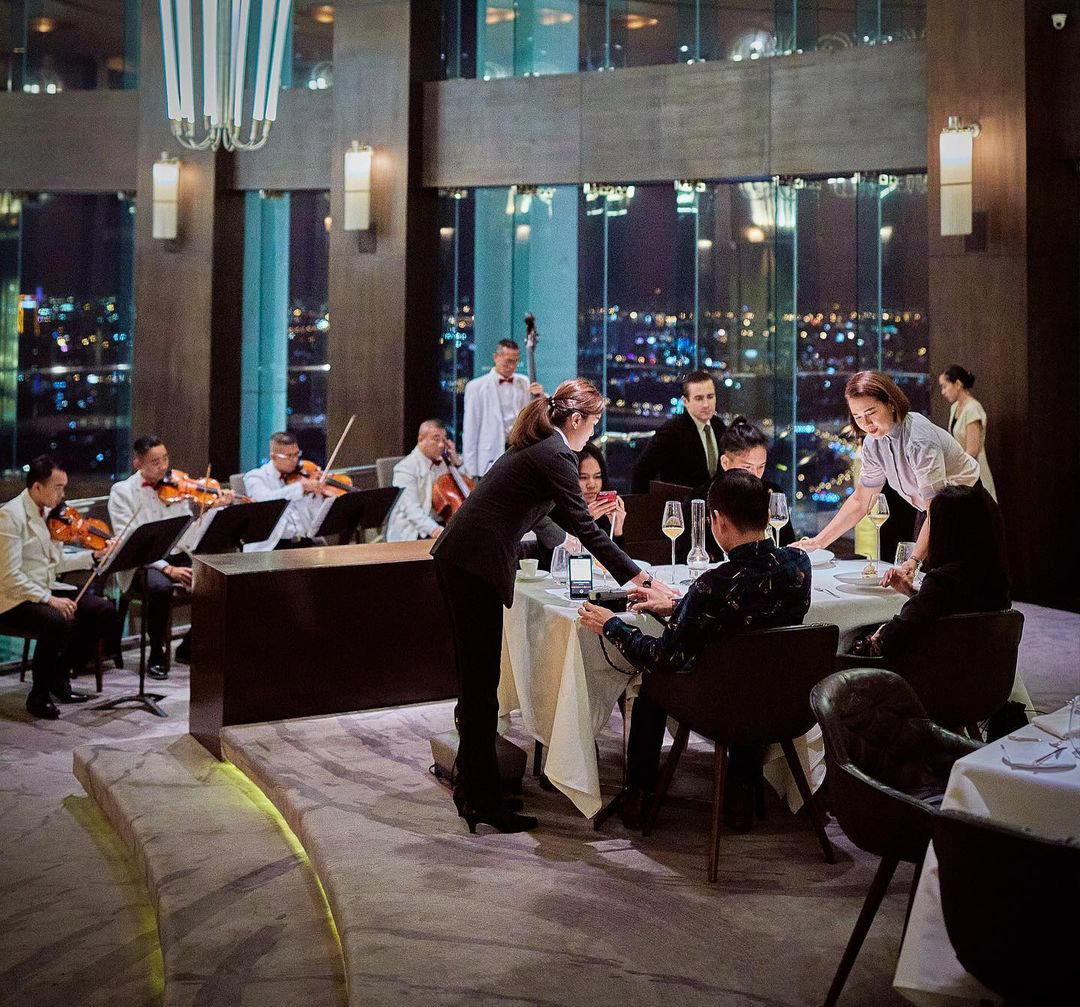
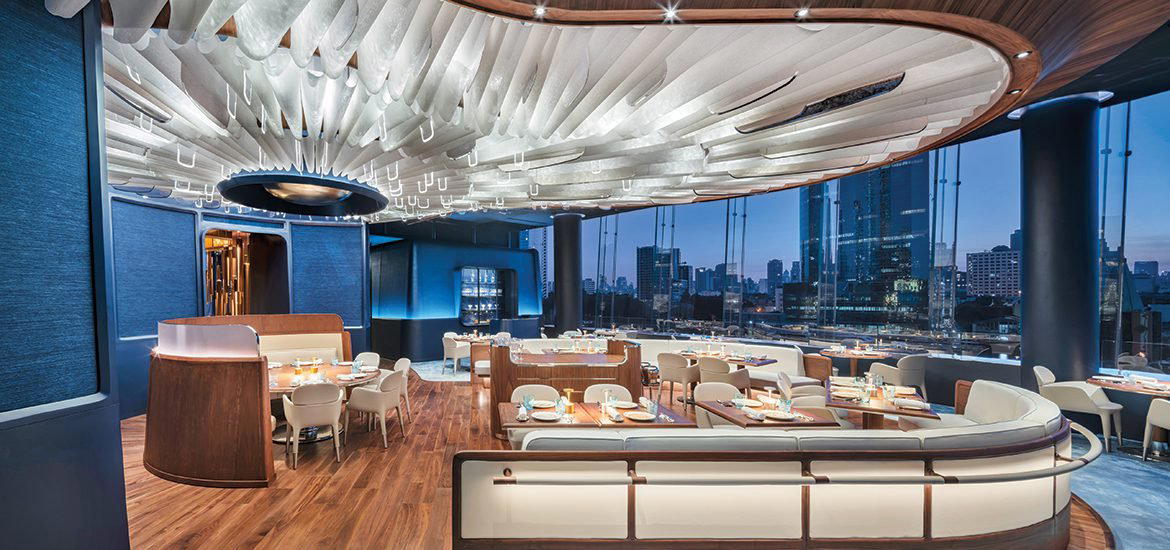
Few city hotels in Southeast Asia support six distinct food and beverage outlets without at least some of them feeling like afterthoughts. The range here is notable not just in number but in specificity. Riva del Fiume, the main restaurant, draws its inspiration from Lake Como but occupies a terrace that faces the Chao Phraya directly, making the Italian menu an exercise in deliberate contrast. The kitchen produces amatriciana ravioli filled with smoked pancetta, piennolo tomato, and burrata alongside Milanese-style veal cutlet and pizza, anchored each morning by an international breakfast spread.
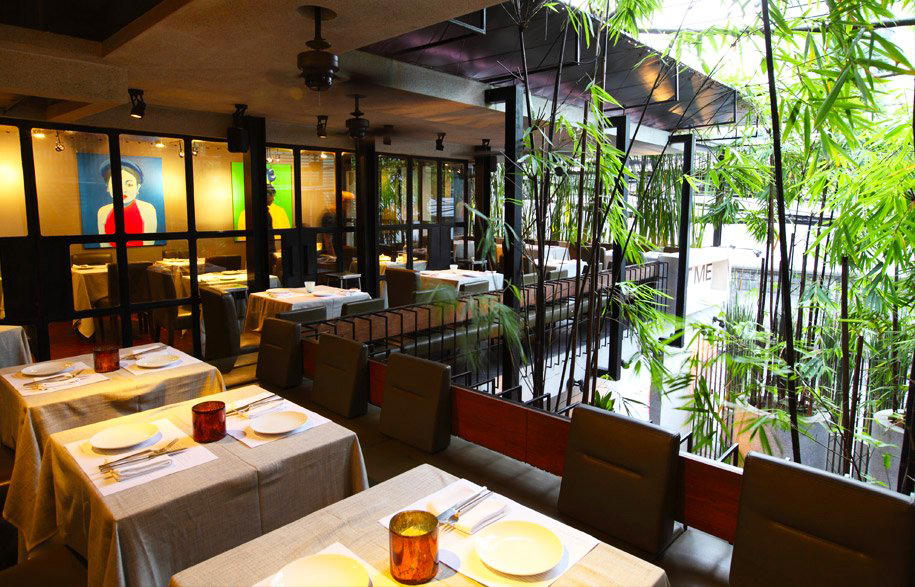
Cantonese fine dining at Yu Ting Yuan occupies a room designed by Gathy with floor-to-ceiling windows facing the reflection pond and an open kitchen in full view. The menu covers crispy roasted pork belly with honey sauce, Peking duck, and a substantial dim sum selection. The French brasserie Palmier by Guillaume Galliot runs a different register, with tartare, bouillabaisse, and roasted whole chicken in a room decorated with tropical greenery.
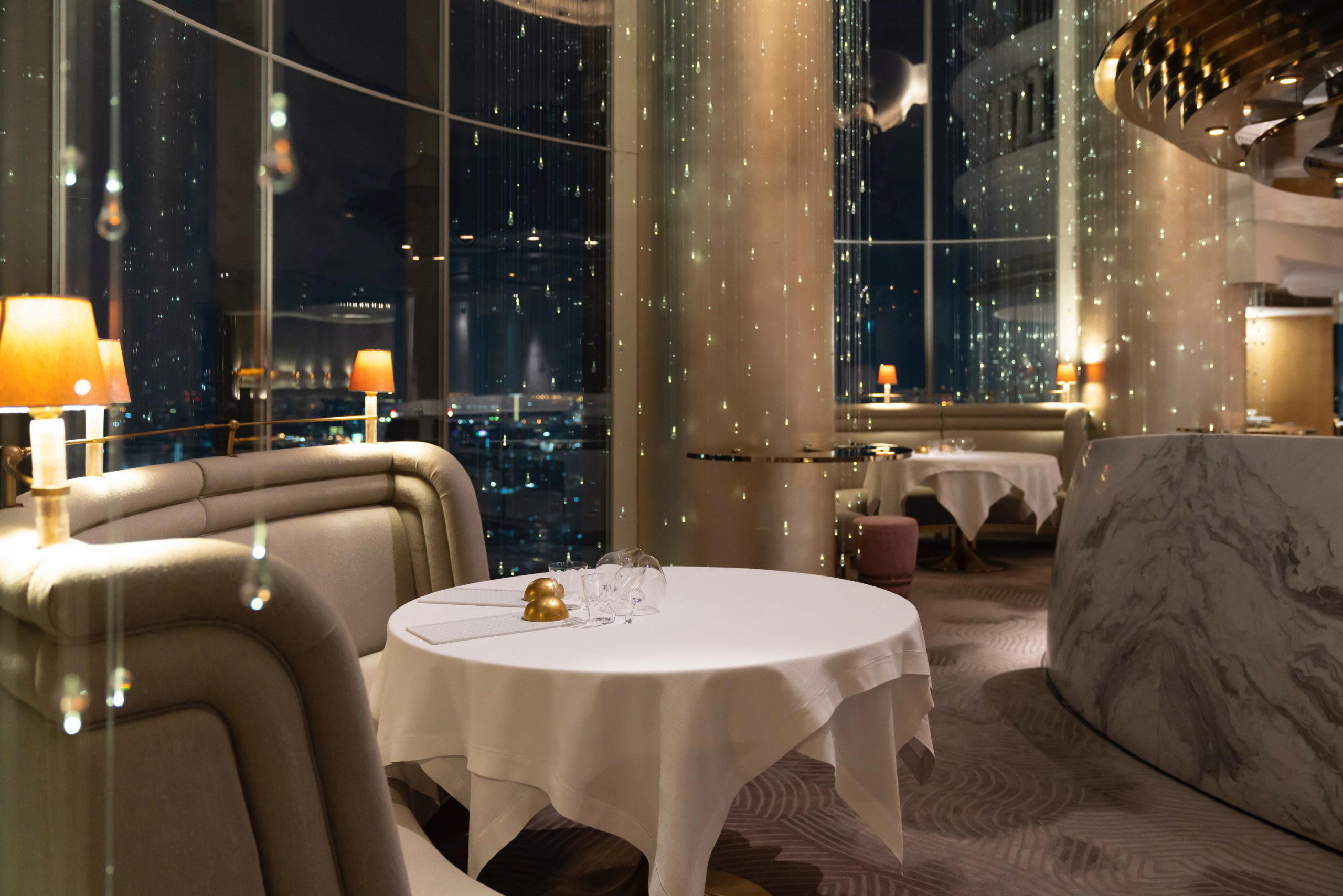
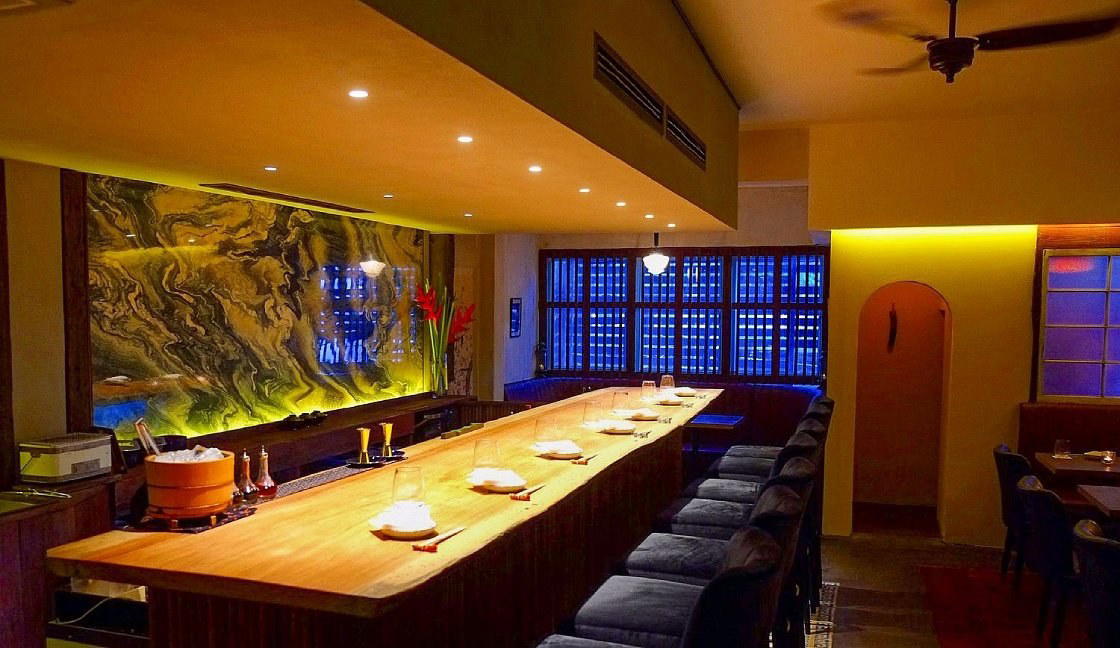
One reservation-sensitive address in the building is Sushi Saito Thailand, the Bangkok outpost of the Tokyo and Hong Kong counters. The format is Edomae-style omakase served at an intimate wooden counter, with seafood flown directly from Tokyo's Toyosu Market. Access to Sushi Saito at any of its locations is a competitive exercise, and the Bangkok counter operates within the same allocation logic as its parent. Café Madeleine handles patisserie from a riverfront space with sage-tiled counters and black stone tabletops. The Lobby Lounge is most relevant at afternoon tea, where local flavors work into savories including a blue belly prawn tart with mango, stracciatella, and makrut lime.
BKK Social Club and the Wellness Offer
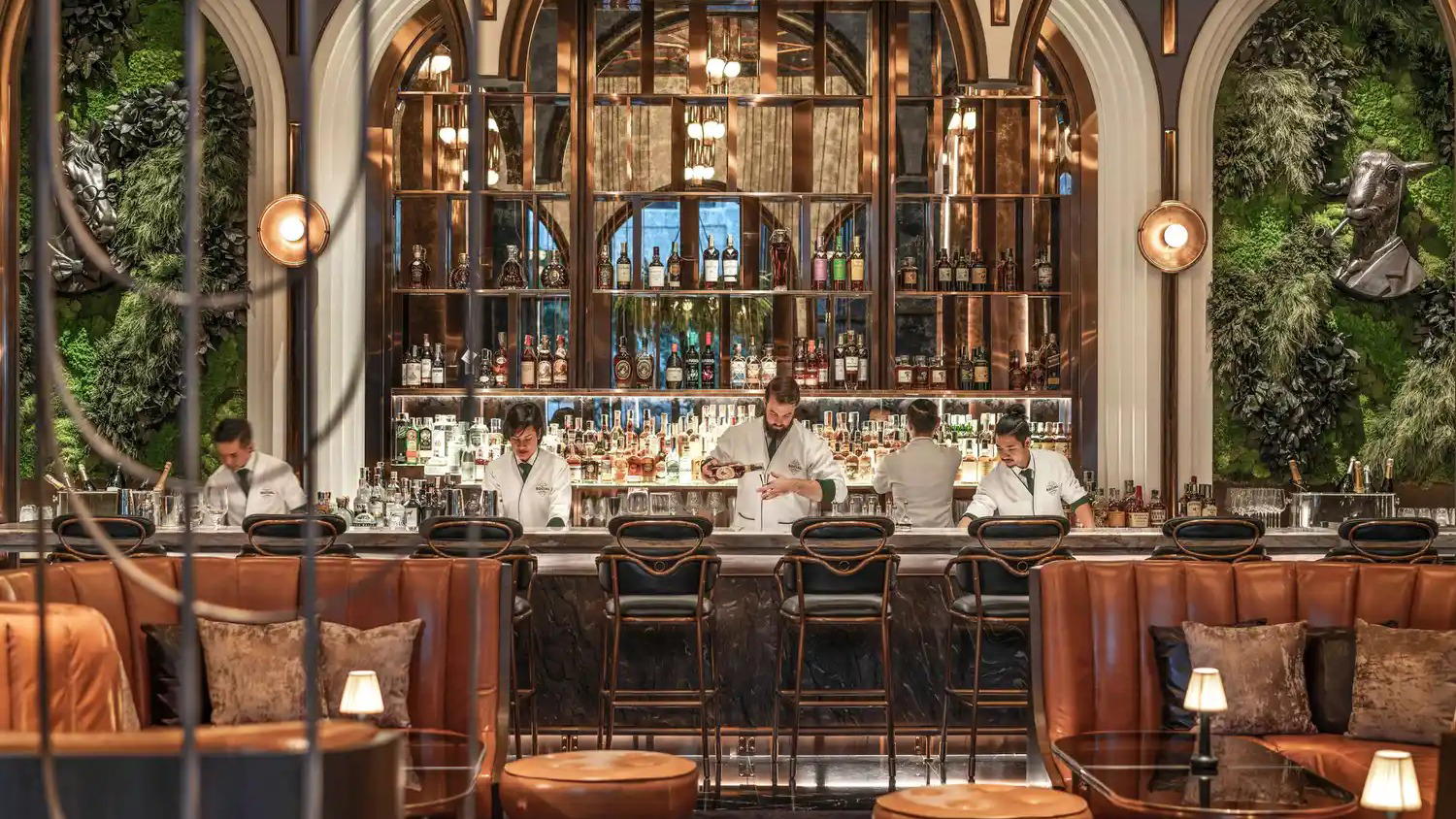
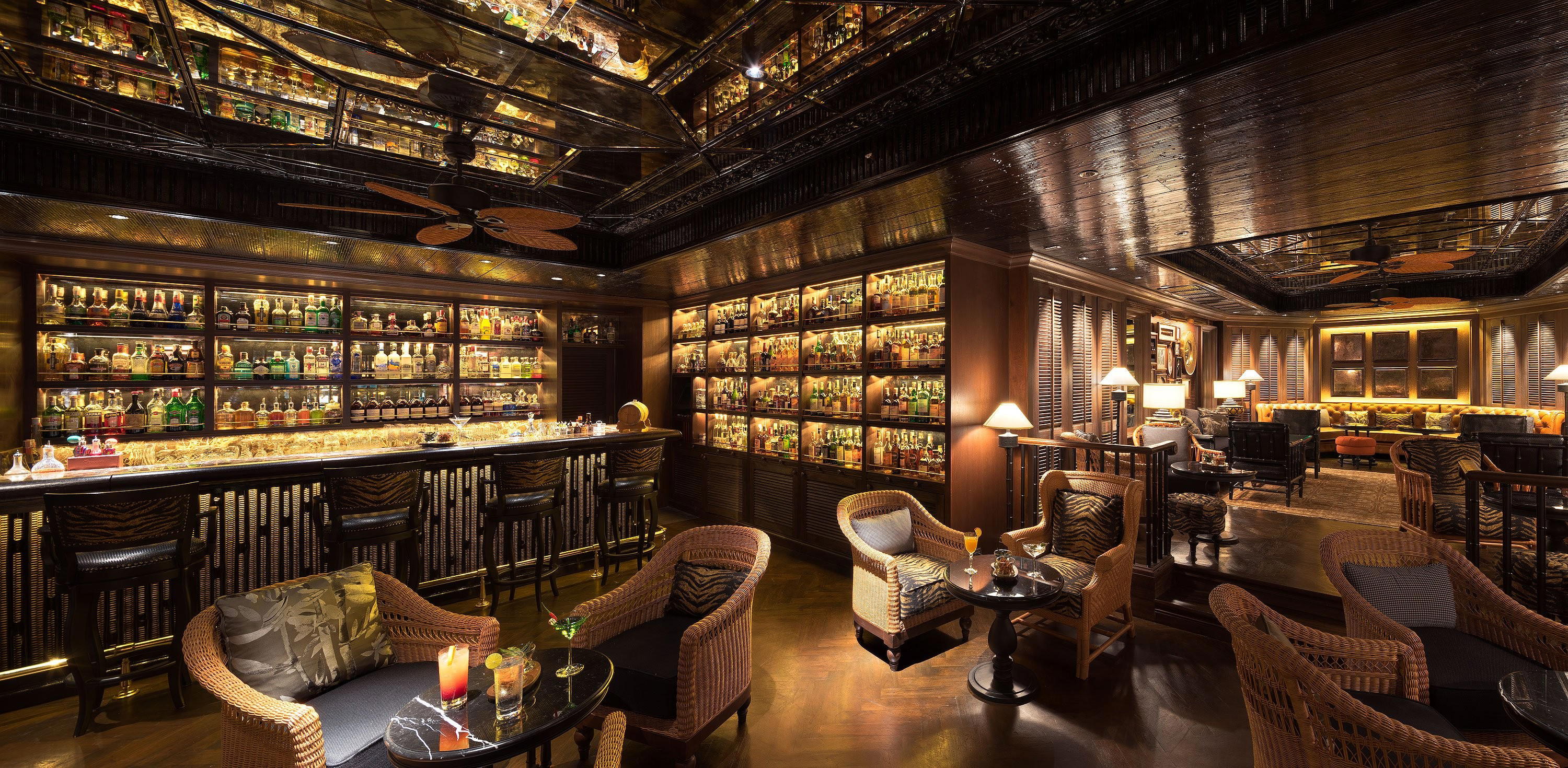
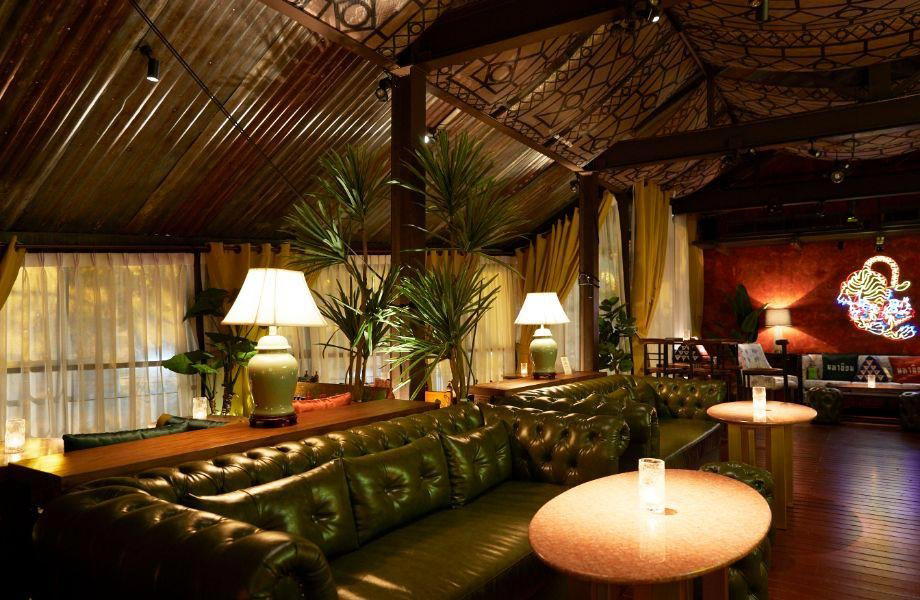
Bangkok's bar scene has matured considerably in recent years, with properties increasingly programming bars as destinations rather than amenities. BKK Social Club occupies high-ceilinged alcove booths and anchors its menu around a creative Mexican cocktail program. The Carretera, built from Los Siete Misterios Doba-Yej mezcal with pineapple Campari, coffee vermouth, and olive saline, represents the kind of technical specificity that places this bar in a different category from a standard hotel lounge.
The spa draws on Thai ritual frameworks for its treatment menu, covering Nuad Pan Buran Thai massage and a traditional facial incorporating luk pra kob herbal compresses. Active wellness extends to muay Thai lessons with a dedicated ring, aerial yoga in a silks room, and paddleboard classes conducted in the lap pool. This range of modalities keeps the spa relevant to guests who want engagement rather than purely passive treatment.
Rooms, Recognition, and the Numbers
The 299 rooms and suites begin at approximately 50 square meters for entry-level categories, with a palette of taupe, grey, and white alongside rich wood and floor-to-ceiling windows. River and pool views are available in higher categories; suites scale to substantial proportions. The room rate starts from $580 per night, positioning the hotel in the upper tier of Bangkok luxury accommodation but below some of the city's most rarefied boutique offerings like The Siam or The Sukhothai Bangkok.
Recognition matters as a signal of how the international hospitality industry has assessed the property. The World's 50 Best Hotels ranked it #2 in 2025. Michelin awarded it 2 Keys in 2024, a designation applied within the guide's hotel evaluation framework. Across Thailand, the comparable set for these award positions includes Amanpuri in Phuket, Four Seasons Resort Chiang Mai, and Six Senses Yao Noi in Phang Nga, properties that compete in a different format category but share the same international evaluation circuits.
For those building a Thailand itinerary beyond Bangkok, the country's riverside and resort properties span a wide range: Phulay Bay, A Ritz-Carlton Reserve in Krabi, Soneva Kiri in Trat, Anantara Golden Triangle in Chiang Rai, Samujana Villas in Koh Samui, Pimalai Resort & Spa in Koh Lanta, Anantara Layan Phuket Resort, Anantara Rasananda Koh Phangan Villas, Aleenta Resort & Spa in Pranburi, and Anantara Hua Hin Resort & Spa. For international comparison in the urban luxury tier, Aman New York, The Fifth Avenue Hotel, and Aman Venice occupy comparable positions in their respective markets. Grand Hyatt Erawan Bangkok provides the CBD alternative for those prioritising Ploenchit access over the river.
Planning a Stay
The hotel sits at 300/1 Charoen Krung Road, Sathorn. That river connection makes the property logistically practical as well as atmospherically coherent. Room rates begin at $600 per night. Lead time matters for both accommodation and restaurant bookings.
A Tight Comparison
Comparable venues nearby, for context on price, style, and recognition.
| Venue | Cuisine | Price | Notes |
|---|---|---|---|
| Four Seasons Bangkok at Chao Phraya RiverThis venue — the venue you are viewing | Not listed | $$$$ | Not listed |
| Capella Bangkok | Klong San, Urban riverside resort | $$$$ | Not listed |
| The Siam | Not listed | $$$$ | Dusit Khwaeng, Urban luxury resort blending Art Deco with Thai antiques on the Chao Phraya River. |
| Rosewood Bangkok | Not listed | $$$$ | Sukhumwit, Residential-style ultra-luxury tower blending contemporary sophistication with Thai heritage. |
| Mandarin Oriental Bangkok | Not listed | $$$$ | Khanna Yao, Well-known luxury palace hotel blending Thai heritage with contemporary five-star service, featuring riverside location and extensive facilities across multiple buildings. |
| Aman Nai Lert Bangkok | Not listed | $$$$ | Makkasan, Contemporary ultra-luxury design by Jean-Michel Gathy blending Thai heritage with modern minimalism, set within a historic seven-acre park sanctuary in central Bangkok. |
Recognition history
Dated appearances from independent guides and award organizations, with the underlying list record or original source where available.
Forbes 4-Star
Forbes
La Liste Top Hotels
La Liste
Virtuoso Luxury Hotel Partner
Virtuoso
Forbes Recommended
Forbes
Michelin 2 Keys
Michelin
Tatler Hotel of The Year
Tatler
Tatler Listed in Best Hotels Asia-Pacific
Tatler
Tatler Best Hotels Thailand - Hotel of the Year
Tatler
World's 50 Best Best Hotels #2
World's 50 Best
Michelin 2 Keys
Michelin
World's 50 Best Best Hotels #14
World's 50 Best
World's 50 Best Best Hotels #3
World's 50 Best
At a Glance
- Elegant
- Sophisticated
- Scenic
- Modern
- Romantic
- Romantic Getaway
- Family Vacation
- Business Trip
- Wellness Retreat
- Destination Wedding
- Anniversary
- Waterfront
- Infinity Pool
- Butler Service
- Destination Spa
- Garden
- Terrace
- Panoramic View
- Private Dining
- Rooftop Pool
- Wi Fi
- Pool
- Spa
- Fitness Center
- Room Service
- Concierge
- Business Center
- Valet Parking
- Kids Club
- Restaurant
- Bar
- Waterfront
- Garden
- Wi Fi
- Pool
- Spa
- Fitness Center
- Room Service
- Concierge
- Business Center
- Valet Parking
- Kids Club
- Restaurant
- Bar
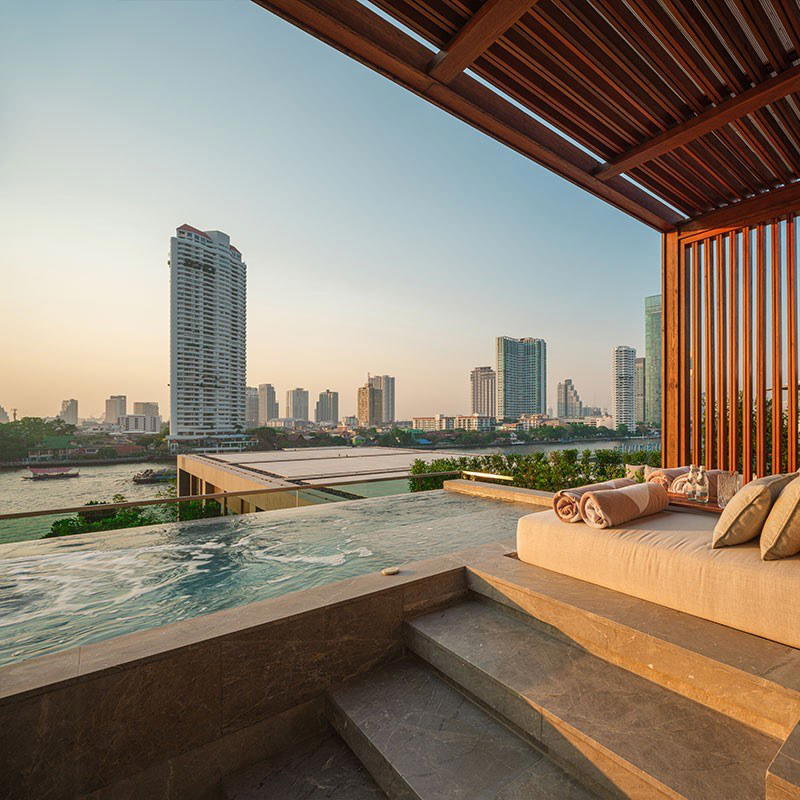
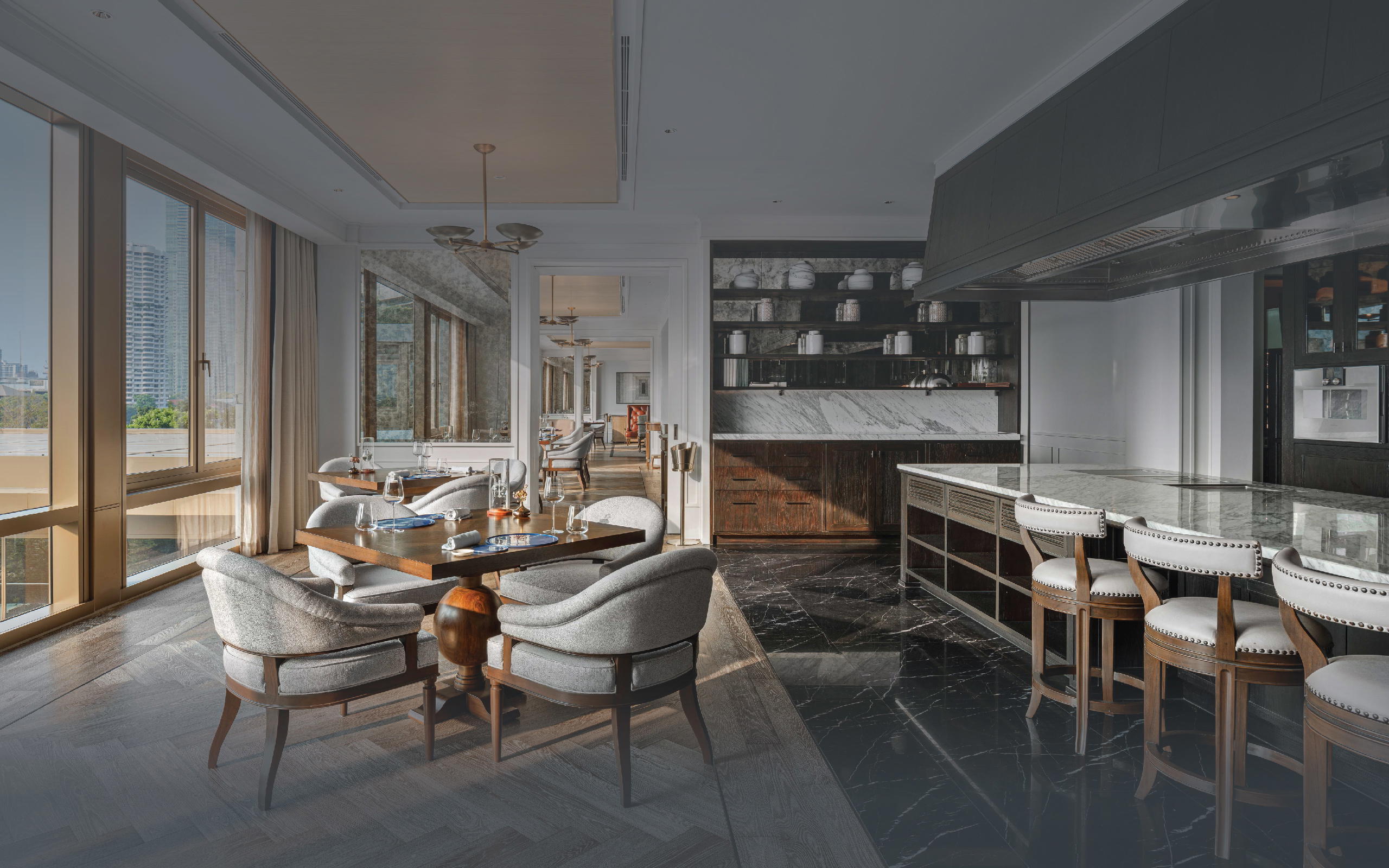
Bright, airy spaces filled with natural light from floor-to-ceiling windows overlooking the Chao Phraya River and manicured gardens; interiors blend contemporary Thai design with warm residential character; evening illumination highlights water features and art installations.