The Malabar House


Michelin Selected · Relais Chateaux Award
A colonial-era Portuguese mansion on Parade Road opposite St. Francis Church, The Malabar House sits at the meeting point of Fort Cochin's heritage architecture and Kerala's living artistic culture. Rates from US$431 per night position it in the upper tier of the peninsula's boutique hotel market, with a collection of Kerala art, Ayurvedic treatments, and an East-meets-West dining approach that reflects the layered trading history of the neighbourhood itself.

Pearl is the En Primeur Club membership app — saves, bookings, and concierge access live there. Same editors, same standards.
- Address
- 1/268 269, Parade Road, Fort Kochi, Kochi, Kerala 682001
- Phone
- +91 98466 69999
- Website
- malabarhouse.com
- Directions
- Get directions
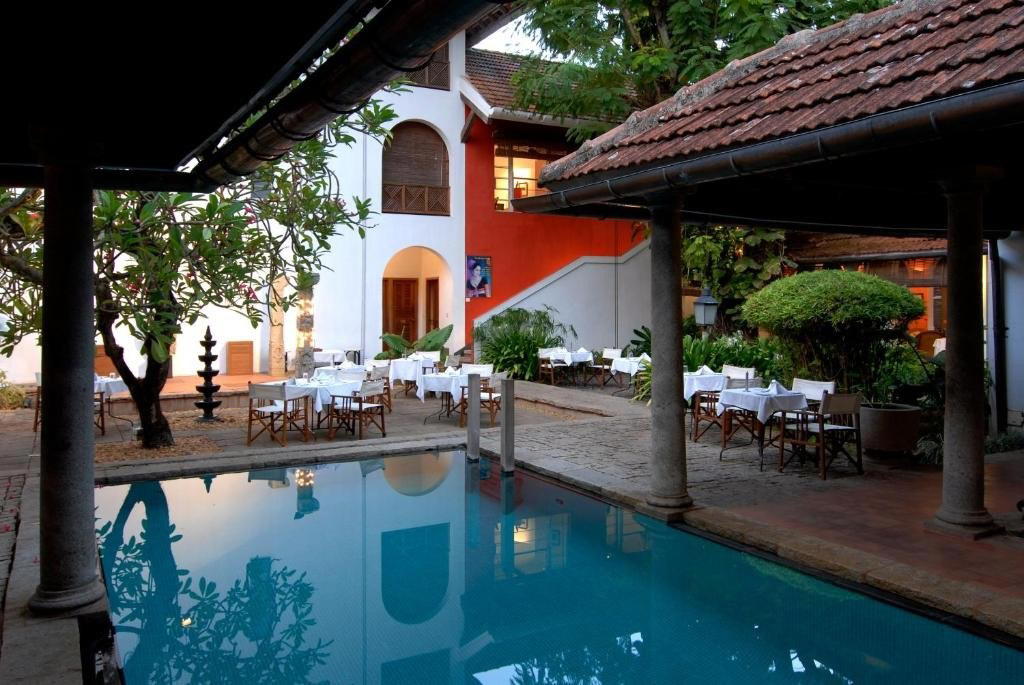
Where Portuguese Stone Meets the Arabian Sea Breeze
Fort Cochin's built environment is unlike anywhere else on the Malabar Coast. The peninsula carries four centuries of layered colonial presence: Portuguese chapels, Dutch administrative buildings, British warehouses, and the older spice-trading infrastructure beneath them all. Walking Parade Road on any given morning, you pass St. Francis Church, the oldest European church in India, and arrive at a Portuguese-period mansion whose thick laterite-stone walls and internal courtyard have been adapted into one of the area's most considered heritage stays. That conversion, rather than any single amenity, is the argument The Malabar House makes to its guests. Fort Cochin's boutique hotel market has grown significantly over the past decade, but the properties that occupy the upper tier tend to be those that found a way to let the architecture speak rather than suppress it behind renovation blandness.
The Architecture as Argument
The formal logic of a Portuguese colonial mansion in Kerala follows a specific spatial grammar: a shaded entrance, thick walls that regulate interior temperature without mechanical intervention, a central courtyard that draws light inward, and rooms that open onto verandahs or garden-facing corridors rather than hallways. The Malabar House preserves enough of this grammar to remain legible as a heritage structure while functioning as a working hotel. In a neighbourhood where some conversions have hollowed out original fabric in favour of boutique-hotel styling, that restraint carries weight.
The design approach here signals something specific about how the property positions itself. Heritage hotels in South Asia split broadly into two camps: those that treat the historical structure as backdrop for contemporary luxury programming, and those where the architecture is understood as the primary experience. The Malabar House falls into the latter category. Guests who arrive expecting the spatial consistency of a large international hotel will need to recalibrate. Rooms differ in layout, proportion, and character, which is not a deficiency but a consequence of working within an original structure rather than building fresh. For visitors who find that kind of spatial variety interesting, the tradeoff is direct.
Property's position on Parade Road is also worth reading architecturally. The street runs along the southern edge of Fort Cochin's colonial core, with St. Francis Church as its dominant landmark. Staying on Parade Road places guests within comfortable walking distance of the Chinese fishing nets on the waterfront, the Mattancherry antique quarter, and the Jewish heritage area around Synagogue Lane. For context, Kochi International Airport sits 45 kilometres away, and Ernakulam Junction railway station, the nearest major rail hub, is approximately 12 kilometres from Parade Road. Both connections are leading made by car via the NH 47 highway into Ernakulam and onwards to the Fort Cochin peninsula.
The Kerala Art Collection
What distinguishes the property from a direct heritage conversion is the integration of Kerala art throughout the interiors. Kerala has a distinct visual tradition, drawing on mural painting conventions from temple and palace settings, on Kathakali performance culture, and on a craft lineage in wood and bronze that runs through the region's workshops. Placing that material inside a Portuguese colonial structure creates a productive tension: the architectural container is European in its formal logic, the contents are Keralite in their reference points. That combination reflects something true about Fort Cochin itself, which has absorbed successive outside influences without losing the specificity of its own culture.
Art collections in hotels occupy a spectrum from decorative wallpaper to genuine curatorial intent. The Malabar House signals placement toward the more considered end of that spectrum. For guests whose interest in Kerala extends beyond the backwaters and spice markets, the collection provides a framework for thinking about the region's visual culture in a context that is more intimate than a museum and more curated than a heritage bungalow rental. If you are travelling through South India and comparing boutique heritage options, properties like Chapslee in Shimla or Haveli Dharampura in Delhi offer analogous heritage-conversion models in different regional settings, each shaped by the specific colonial or princely history of their location.
East Meets West at the Table
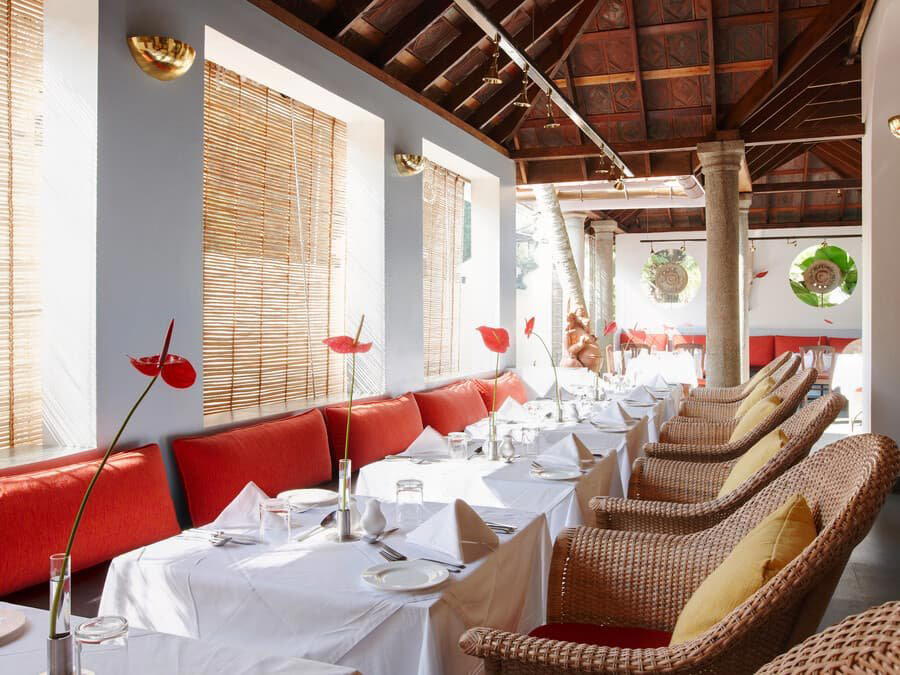
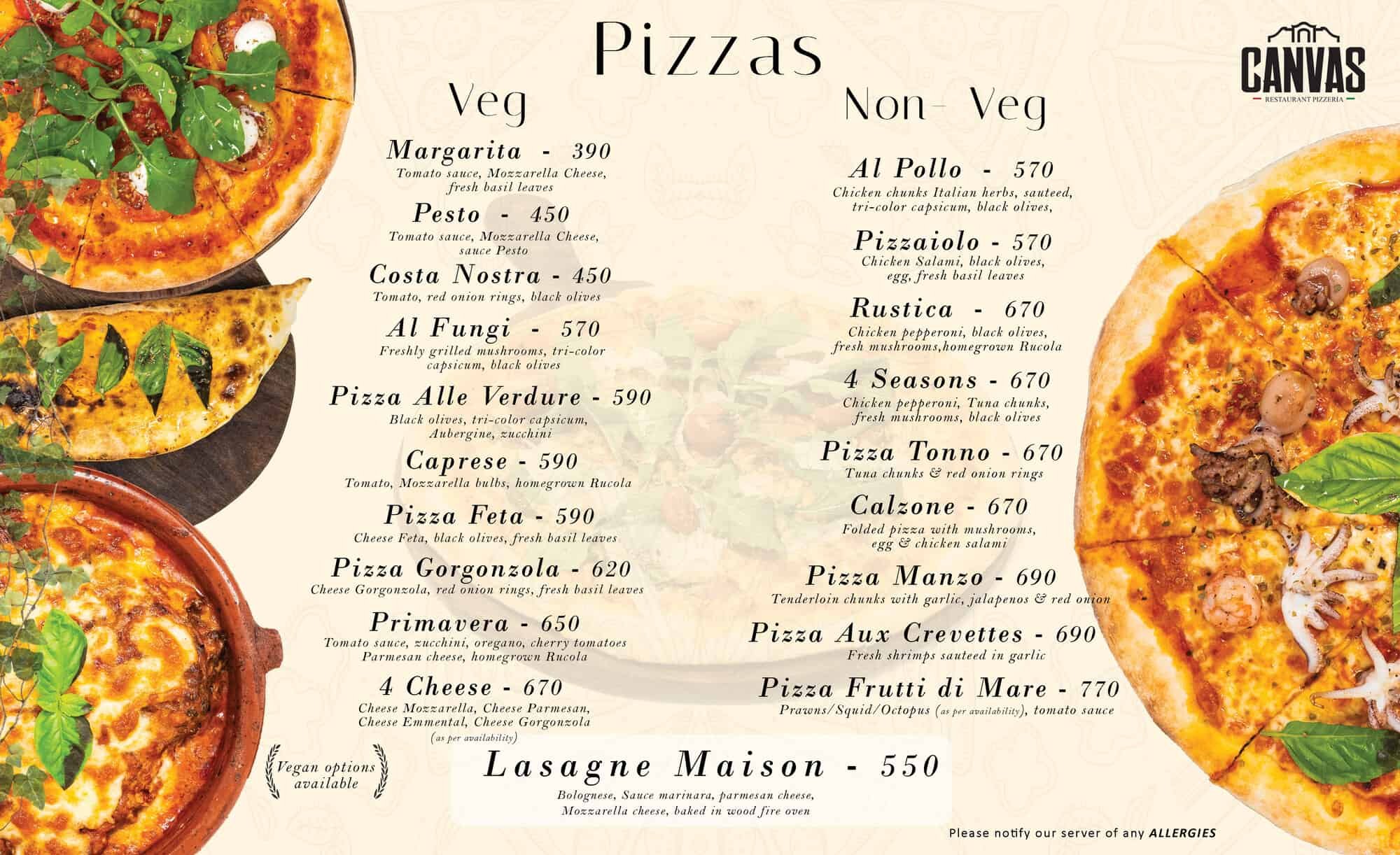
The dining approach at The Malabar House is framed explicitly as East meets West, which in the context of Fort Cochin is less a marketing shorthand and more a description of historical fact. The Malabar Coast's cooking absorbed Portuguese, Arab, Jewish, Dutch, and Chinese influences across centuries of trade, layering coconut milk, tamarind, and black pepper with techniques and ingredients that arrived by ship. The contemporary version of that conversation, at properties like this one, tends to place local Kerala ingredients and cooking logic in dialogue with European plating or preparation methods. This is a genuinely interesting space to cook in, and Fort Cochin is one of the few places in India where that East-meets-West framing has an actual cultural substrate rather than being imposed from outside. For a broader orientation to the dining options in the area, see our full Fort Cochin restaurants guide.
Ayurvedic Treatments in a Heritage Frame
Ayurvedic practice is native to Kerala in a way it is not to most Indian states. The region has maintained lineages of traditional practice, a supply of the necessary plant materials, and a training infrastructure for practitioners. In luxury hotel contexts across South Asia, Ayurveda often appears as a spa add-on with limited depth. At properties positioned closer to the heritage end of the spectrum, the integration tends to be more meaningful, partly because the guest profile skews toward visitors who have sought out Fort Cochin specifically for its cultural density rather than for beach resort infrastructure. The Malabar House offers Ayurvedic massages as a named highlight of the property, placing them alongside the art collection and the architectural identity as one of the three defining experiences of the stay.
For comparison, larger wellness-focused properties elsewhere in India, such as Ananda in the Himalayas, operate at a different scale and clinical depth. The Malabar House is not that kind of wellness destination. What it offers is access to Ayurvedic treatment within a heritage setting that itself has therapeutic qualities of a different kind: the quiet of thick-walled rooms, the filtered light of a courtyard, the pace of a neighbourhood that rewards walking rather than transfers.
Where It Sits in the Market
Rates at The Malabar House begin from US$431 per night, placing it at the upper end of Fort Cochin's boutique hotel market without entering the territory of India's large palace hotels or the internationally branded luxury segment. For context, properties like The Leela Palace Jaipur, The Oberoi Amarvilas in Agra, or The Taj Mahal Palace in Mumbai occupy a different scale and infrastructure tier entirely. Properties like Amanbagh in Ajabgarh, Suján Jawai in Pali, or Alila Fort Bishangarh operate in analogous territory in other states, though each reflects a different regional heritage tradition. Other India options worth considering depending on your routing include Aman-i-Khas in Ranthambore, Anantya By The Lake in Kaliyal, and Baale Resort Goa.
Planning Your Stay
The Malabar House sits at GPS coordinates 9.9644, 76.2393 on Parade Road, directly opposite St. Francis Church in the heart of Fort Cochin's heritage quarter. The leading months to visit are between October and February, when the post-monsoon heat has dropped and humidity is manageable. The monsoon season, which runs roughly June through September, brings heavy rain to Kerala but also a pronounced off-season rate structure and a Fort Cochin that is genuinely quieter. Booking directly through the property is the standard approach for stays at this price point; rates from US$431 per night reflect the entry-level positioning within the heritage tier. The nearest international air connection is Kochi International Airport, 45 kilometres distant by car. Ernakulam Junction, which connects to the main Indian rail network including services from Mumbai, Delhi, and Chennai, sits 12 kilometres from Parade Road. Tuk-tuks and taxis cover the final stretch across the peninsula easily. For broader South India trip planning that combines Kerala with Karnataka, Conrad Bengaluru and Hyatt House Bengaluru Devanahalli serve as practical staging points for the overland or short-haul route between the two states.
Side-by-Side Snapshot
Comparable venues nearby, for context on price, style, and recognition.
| Venue | Cuisine | Price | Awards | Notes |
|---|---|---|---|---|
| The Malabar HouseThis venue — the venue you are viewing | East-meets-west colonial heritage boutique hotel blending 18th-century architecture with contemporary design and curated artworks. | $200–300 | Michelin Selected · Relais Chateaux Award | Not listed |
| Kaav Safari Lodge, Kabini | Intimate eco-friendly jungle villa with luxury tents. | Not listed | Michelin Selected | Begur |
| Purity at Lake Vembanad | Colonial-style boutique villa with contemporary minimalist furnishings | $200–300 | Michelin Selected | Muhamma |
| Taj Aravali Resort & Spa, Udaipur | Contemporary Rajasthani retreat blending tradition and modernity | Not listed | Michelin Selected | Bhujra |
| The Oberoi Rajgarh Palace, Khajuraho | Restored 350-year-old royal Bundelkhand palace with British colonial influences and contemporary elegance. | Not listed | Travel + Leisure It List Hotels · Conde Nast Hot List Hotels | Chandranagar |
| Roswyn | Luxury design hotel with residential-style suites and lifestyle-driven public spaces. | $300–500 | Not listed | Vile Parle East |
Recognition history
Dated appearances from independent guides and award organizations, with the underlying list record or original source where available.
Michelin Selected
Michelin
Relais Chateaux Award
Relais Chateaux
Full recognition history (3 entries)
Relais Chateaux Award
Relais Chateaux
Continue exploring
More in Fort Cochin
Hotels in Fort Cochin
Browse all →
Bars in Fort Cochin
Browse all →
Details
- Romantic
- Quiet
- Elegant
- Intimate
- Classic
- Romantic Getaway
- Wellness Retreat
- Weekend Escape
- Anniversary
- Garden
- Terrace
- Historic Building
- Design Destination
- Destination Spa
- Waterfront
- Wi Fi
- Pool
- Spa
- Room Service
- Concierge
- Restaurant
- Bicycle Rental
- Massage
- Garden
- Wheelchair Accessible
- Accessible Restroom
- Accessible Parking
- Step Free Entrance
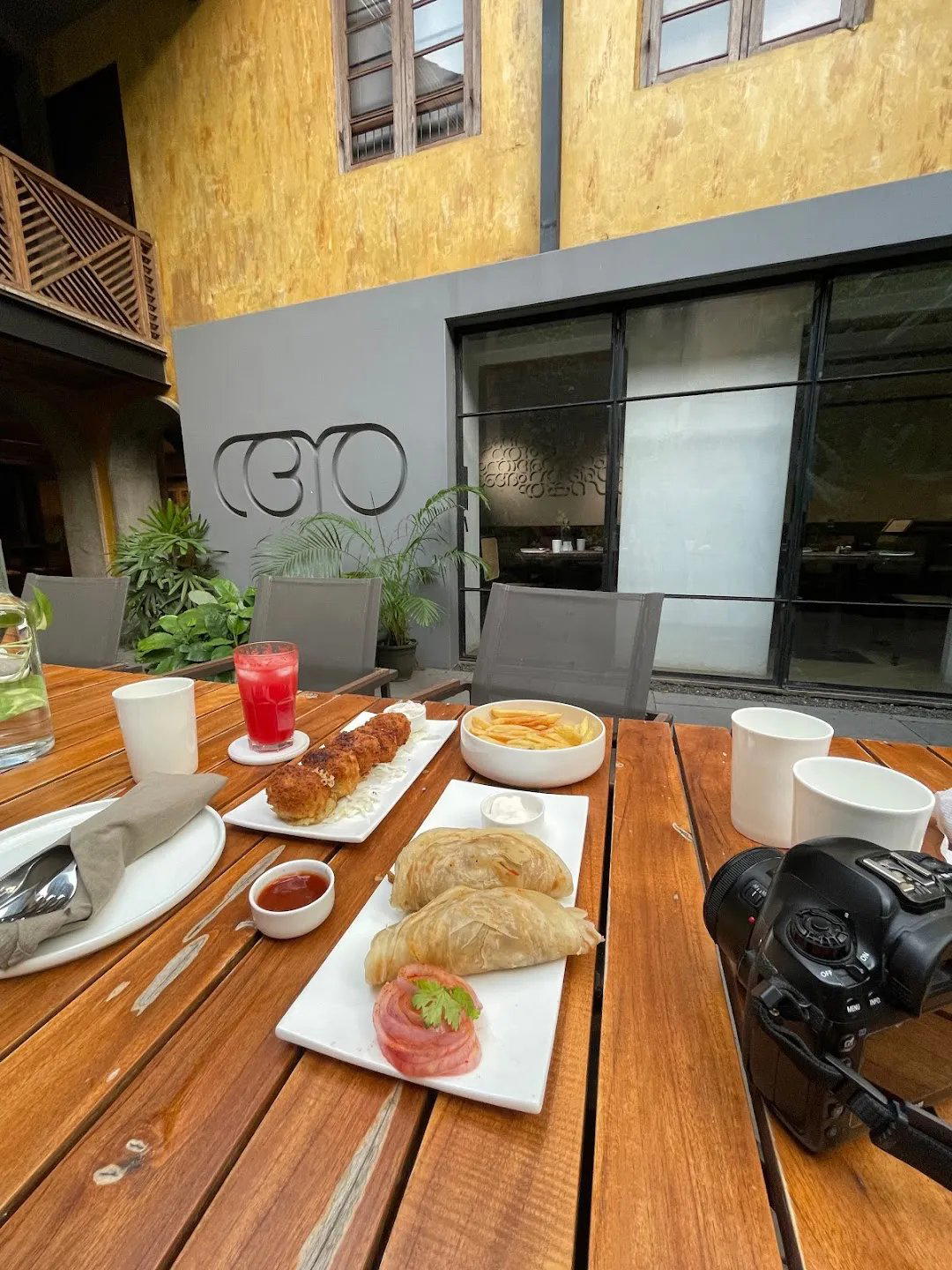
Serene and artistic with cool marble floors, soft natural lighting, and intimate courtyards; described as an oasis of calm with warm, welcoming service throughout.