The Malabar House

Relais Chateaux Award
Our verdict
On Parade Road in Fort Cochin, opposite St. Francis Church, The Malabar House operates at the intersection of Kerala's coastal spice traditions and a considered hospitality sensibility. The property holds an art collection with Kerala provenance, an Ayurvedic wellness programme, and a kitchen rooted in Indian coastal cuisine. For travellers arriving via Kochi International Airport, around 45 km out, it serves as both a place to stay and a serious reason to eat.

Pearl is the En Primeur Club membership app — saves, bookings, and concierge access live there. Same editors, same standards.
- Address
- 1/268 269, Parade Road, Fort Kochi, Kochi, Kerala 682001, India
- Phone
- +91 98466 69999
- Website
- malabarhouse.com
- Directions
- Get directions
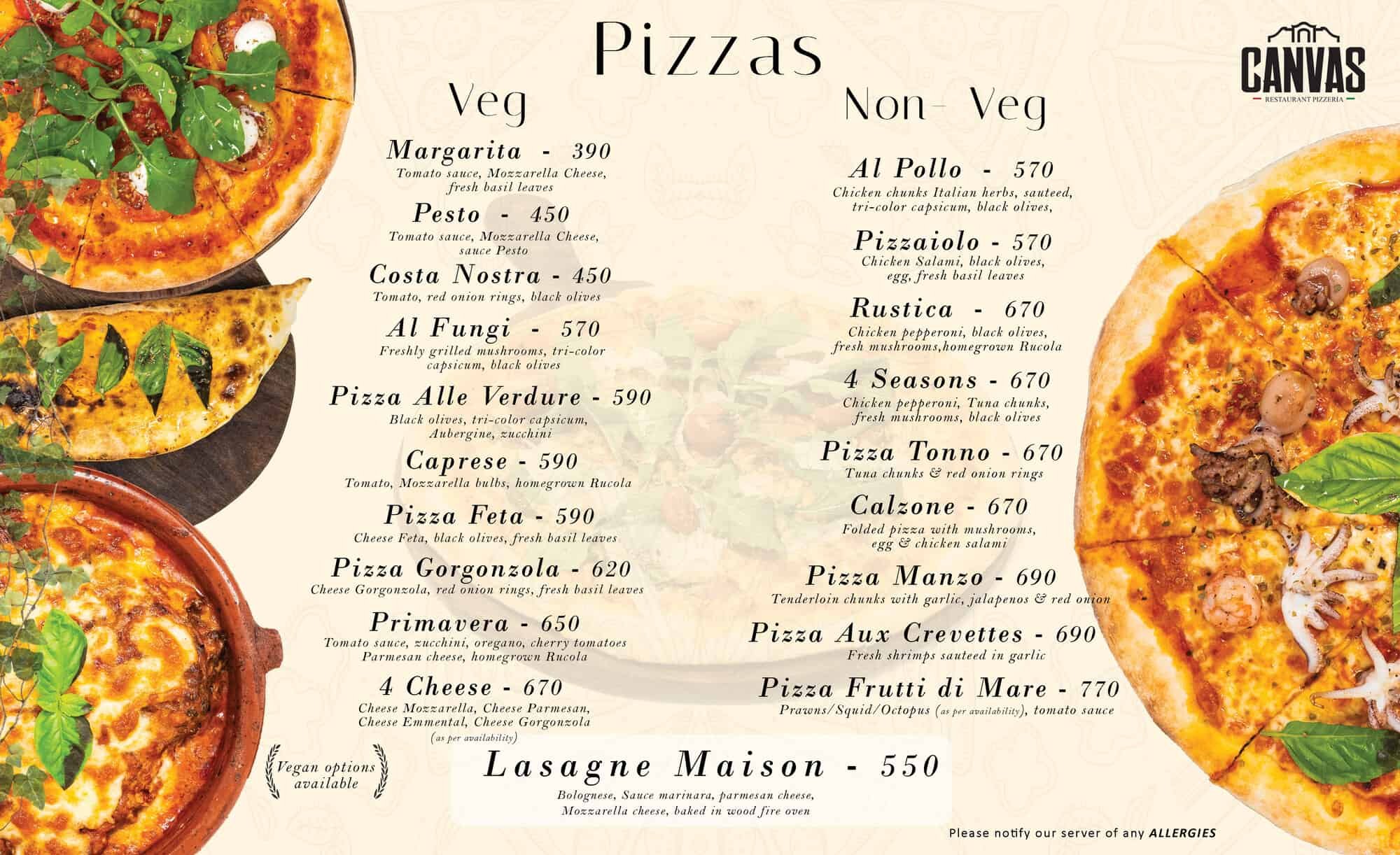
The menu
What to order
- Fish Pollichathu
- Chicken Curry
- Kerala Thali
- Seafood Risotto
Where Parade Road Meets the Spice Coast
Fort Cochin is one of those rare Indian neighbourhoods where the physical architecture of trade is still legible in the streets. Portuguese churches, Dutch warehouses, Chinese fishing nets, and Jewish merchant houses sit within walking distance of each other on a peninsula that once controlled much of the subcontinent's pepper and cardamom commerce. The Malabar House sits on Parade Road, directly opposite St. Francis Church, India's oldest European church, which places it inside one of the most historically dense blocks in the city. For a property rooted in Indian coastal cuisine, the address is not incidental. The spice routes that made this harbour relevant are the same routes that defined what Kerala cooks and how it cooks it.
Fort Cochin's dining scene has developed along two tracks in recent years. The first serves the backpacker and budget traveller trade that moves through the neighbourhood on its way to Kerala's backwaters. The second, smaller tier, serves travellers who arrive with a genuine interest in the region's culinary and artistic heritage and who expect a kitchen that treats coastal Indian cooking with the same seriousness that, say, Dum Pukht in New Delhi applies to Awadhi technique. The Malabar House operates in that second tier, making it a different proposition than the casual seafood shacks along the waterfront, even when the source ingredients may overlap.
The Architecture of Kerala Spice
Kerala coastal cooking is defined less by heat than by layering. The spice architecture here is sequential: whole spices bloomed in coconut oil at the start of a dish to release fat-soluble compounds, ground masalas added mid-cook to build body, and finishing ingredients, often fresh curry leaf, green chilli, or a second pour of coconut oil, applied at the end to preserve volatile aromatics. This is a fundamentally different approach from, say, the dry-heat technique of a tandoor-focused kitchen like Adaa at Falaknuma Palace in Hyderabad, where the spice work happens largely before the protein enters the cooking chamber.
In Kerala's coastal tradition, the sea dictates pace. Fish and shellfish cook fast, which means the spice base has to be built independently and fully before anything aquatic is introduced. A good fish curry in this tradition is not a slow braise; it's a carefully sequenced construction where each aromatic layer has already done its work before the fish sees the pan. This discipline separates rigorous coastal cooking from the tourist-facing approximations that have become common in Fort Cochin's more commercial dining rooms. The Malabar House's positioning within Indian coastal cuisine as a category signals an alignment with the more demanding version of this tradition, where the spice architecture is the craft, not the background noise.
Elsewhere in India's fine-dining conversation, kitchens like Farmlore in Bangalore have built reputations on sourcing specificity and technique transparency. The same current runs through the better Kerala kitchens, where the provenance of black pepper matters as much as how it's used, and where the difference between Malabar pepper and Tellicherry pepper is a kitchen decision, not a marketing detail.
The Property: Art, Wellness, and Colonial Geometry
The Malabar House is also a hotel, and the two functions inform each other in ways that matter to how you experience the restaurant. The property holds a Kerala art collection that gives the dining and common spaces a cultural density that most boutique hotels in this tier cannot match. This is not art-as-decoration in the lobby print sense; it is a considered assemblage of works with regional provenance, which situates every meal inside a broader argument about Kerala's creative and intellectual identity.
The Ayurvedic massage programme adds another layer to what is, in effect, a hospitality experience built around a coherent sense of place. Regional luxury in South India has increasingly split between large international-branded properties with standardised wellness menus and smaller, owner-inflected houses that treat Ayurveda as a living tradition rather than a spa amenity. The Malabar House belongs to the latter cohort. This aligns it more closely with the design-led, culturally specific tier of Indian boutique hospitality than with the chain properties near Kochi's commercial centre.
For those using Fort Cochin as a base for Kerala more broadly, the logistics from The Malabar House are direct. Kochi International Airport sits approximately 45 km from Parade Road, a manageable transfer. Ernakulam Junction railway station is around 12 km away, making day trips to Thrissur or further into the backwater network practical without a long return journey. The GPS coordinates (9.9644, 76.2393) place the property on the western tip of the Fort Cochin peninsula, close enough to the Chinese fishing nets and the waterfront to walk, far enough from the most tourist-trafficked lanes to maintain a degree of quiet. See our full Fort Cochin hotels guide for how this property sits within the broader accommodation tier on the peninsula.
Within Fort Cochin specifically, The Malabar Junction occupies the closest competitive position, with similar heritage property credentials and a kitchen working in the same coastal tradition. Across India's wider restaurant conversation, the relevant comparisons are less geographic than they are about approach: kitchens like The Table in Mumbai or Naar in Kasauli that take regional sourcing seriously and treat the dining room as the primary product rather than an amenity attached to something else.
Outside India, the comparison becomes instructive for understanding what makes coastal Indian cooking a distinct discipline. The precision required to build a Kerala fish curry has more in common with the sauce architecture at Le Bernardin in New York City, where fish is the vehicle for technique, than it does with the decorative spicing found at generic Indian restaurants in major Western cities. The layering logic is the same; the vocabulary is different. For travellers who have eaten at technically serious fish-forward restaurants elsewhere, the leading Kerala kitchens will feel immediately legible in terms of craft, even if the specific flavours are entirely new.
For wider context on eating and drinking in Fort Cochin, see our full Fort Cochin restaurants guide, our full Fort Cochin bars guide, our full Fort Cochin experiences guide, and our full Fort Cochin wineries guide. For travellers building a wider India itinerary around serious regional cooking, reference points include Bomras in Anjuna for Burmese coastal crossover, Chandni in Udaipur for Rajasthani contrast, Dining Tent in Jaisalmer for desert-region cooking, da Susy in Gurugram, Baan Thai in Kolkata, and Atomix in New York City as a benchmark for what tasting-menu discipline looks like when a regional cuisine is expressed at its most rigorous.
Planning Your Visit
The Malabar House is on Parade Road in Fort Cochin, reachable by car via NH 47 to Ernakulam and on to the peninsula. The property's position opposite St. Francis Church makes it easy to locate without relying on navigation once you're in the neighbourhood. March, May, and June represent the peak search and travel window for Fort Cochin, though the pre-monsoon months of March and April offer the clearest weather for exploring the waterfront on foot before or after a meal. Travellers arriving by train should note the 12 km distance from Ernakulam Junction, which makes a hired car or auto-rickshaw the practical transfer option.
Frequently asked questions
Does The Malabar House work for a family meal?
Yes. The heritage property setting on Parade Road, Fort Cochin, provides a structured, calm environment that suits multi-generational groups. The Indian coastal kitchen draws on Kerala's spice tradition, which gives families an accessible entry point into regional cooking without the pressure of a purely tasting-menu format. The art collection on-site adds a layer of visual interest that carries the meal beyond the plate.
Is The Malabar House better for a quiet night or a lively one?
Fort Cochin as a neighbourhood runs at a considered pace, and The Malabar House reflects that. The property's Kerala art collection and Ayurvedic wellness focus signal a place built around unhurried attention rather than high-energy atmosphere. Arrive expecting conversation and space rather than a buzzing room.
Is The Malabar House Michelin-listed?
The Malabar House has received recognition including: HIGHLIGHTS: • EAST MEETS WEST • KERALA ART COLLECTION • AYURVEDIC MASSAGES DIRECTIONS & ACCESS: Directions By car NH 47 highway till Ernakulam and onwards to Fort Cochin. The Malabar House is located on Parade Road opposite St. Francis Chur….
What do regulars order at The Malabar House?
The kitchen's identity is rooted in Indian coastal cuisine, which in Kerala means fish prepared with sequentially layered spicing rather than blunt heat. Follow the kitchen's lead on the day's catch. The property holds a 4.1/5 member rating, which is consistent with a kitchen that performs reliably on its core regional dishes rather than a rotating repertoire of experimental plates.
At-a-Glance Comparison
Comparable venues nearby, for context on price, style, and recognition.
| Venue | Cuisine | Price | Awards | Notes |
|---|---|---|---|---|
| The Malabar HouseThis venue — the venue you are viewing | Innovative Keralan-Mediterranean Fusion | $50–100 | Relais Chateaux Award | Not listed |
| The Malabar Junction | Modern Keralan Fine Dining | $30–50 | Relais Chateaux Award | Fort Cochin |
| Mynt | Pure Vegetarian Indian | Not listed | Not listed | Vrindavan |
| KOVE | Progressive Vegetarian Fine Dining | $20–30 | Not listed | R S Puram |
| Omya | Modern Indian Fine Dining | $100–150 | Not listed | Lodhi Road |
| Cabanas at JW Lounge | Al fresco Mediterranean tapas & cocktails | $20–30 | Not listed | Aerocity |
Recognition history
Dated appearances from independent guides and award organizations, with the underlying list record or original source where available.
Relais Chateaux Award
Relais Chateaux
Continue exploring
More in Fort Cochin
Restaurants in Fort Cochin
Browse all →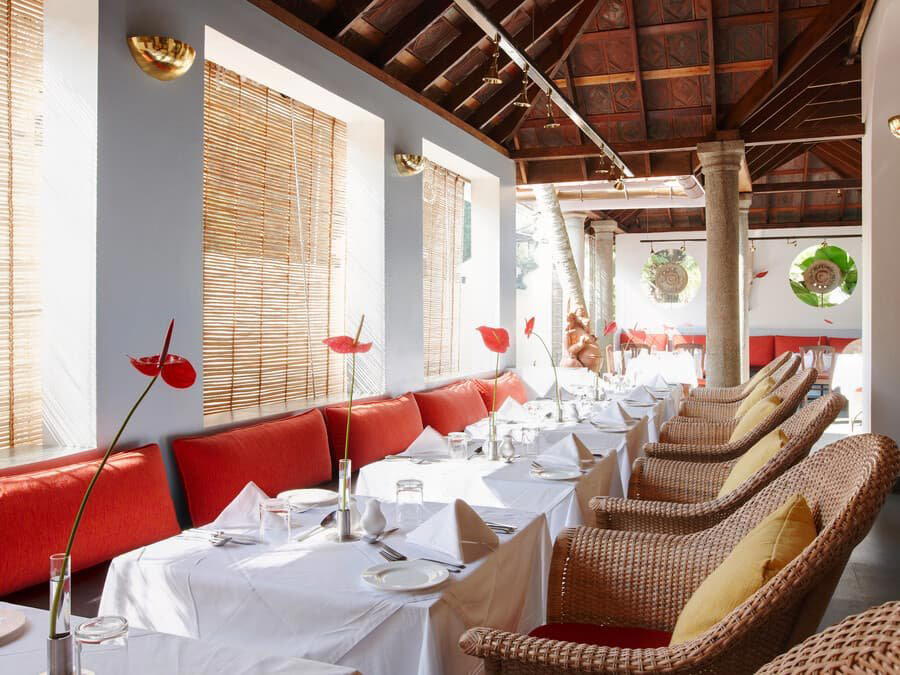
Bars in Fort Cochin
Browse all →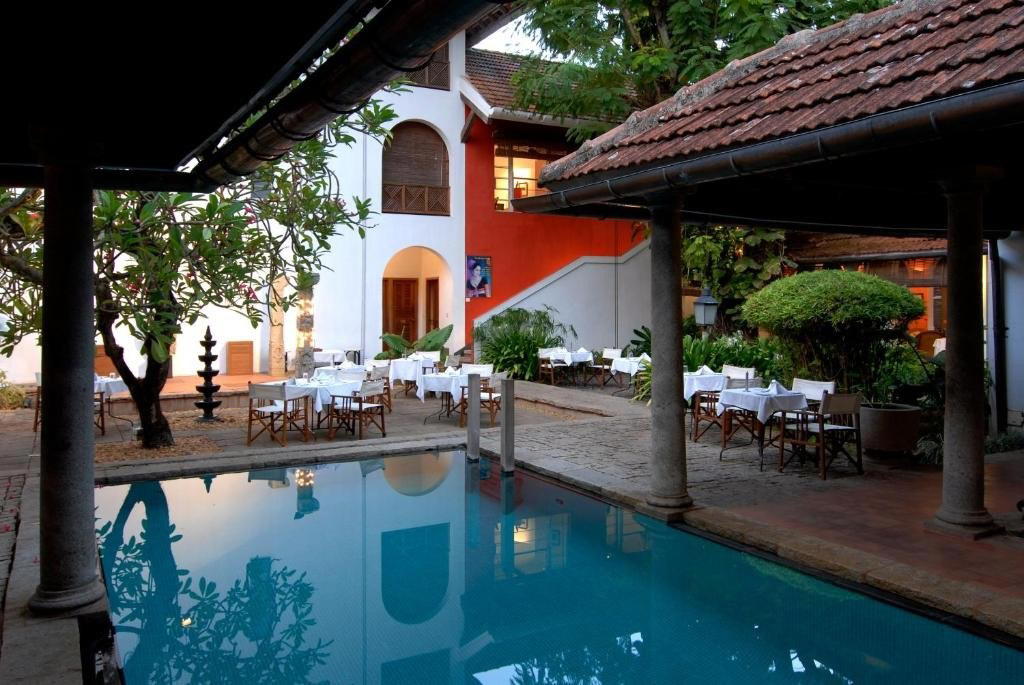
Details
- Romantic
- Elegant
- Intimate
- Sophisticated
- Classic
- Date Night
- Special Occasion
- Celebration
- Group Dining
- Hotel Restaurant
- Courtyard
- Terrace
- Historic Building
- Live Music
- Private Dining
- Extensive Wine List
- Beer Program
- Local Sourcing
- Organic
- Waterfront
- A La Carte
- Set Menu
- Indian Wines
- Craft Cocktails
- Vegetarian Friendly
- Organic Focus
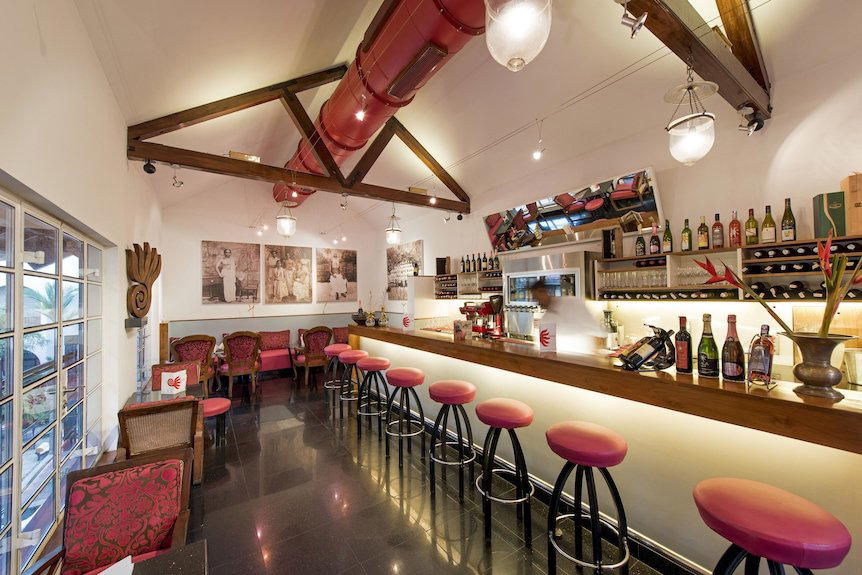
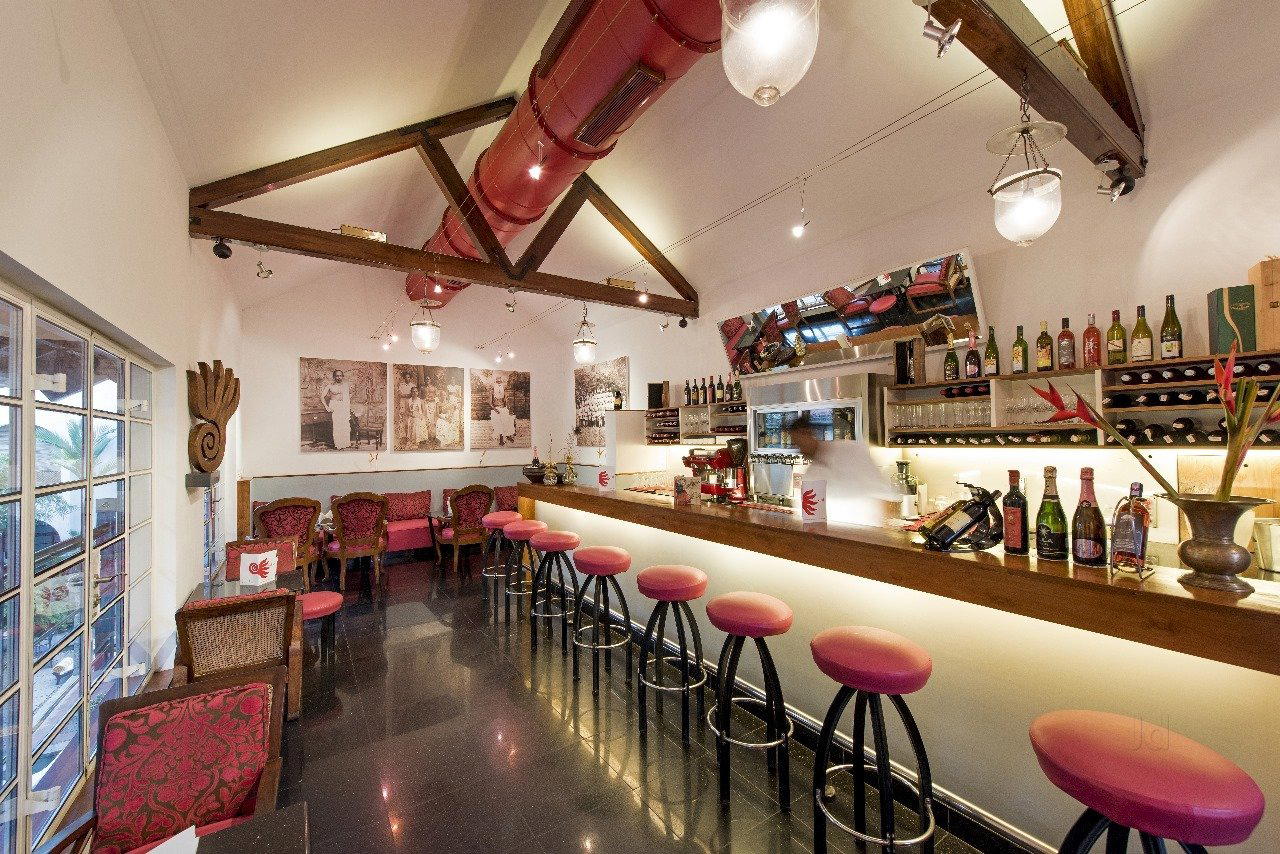
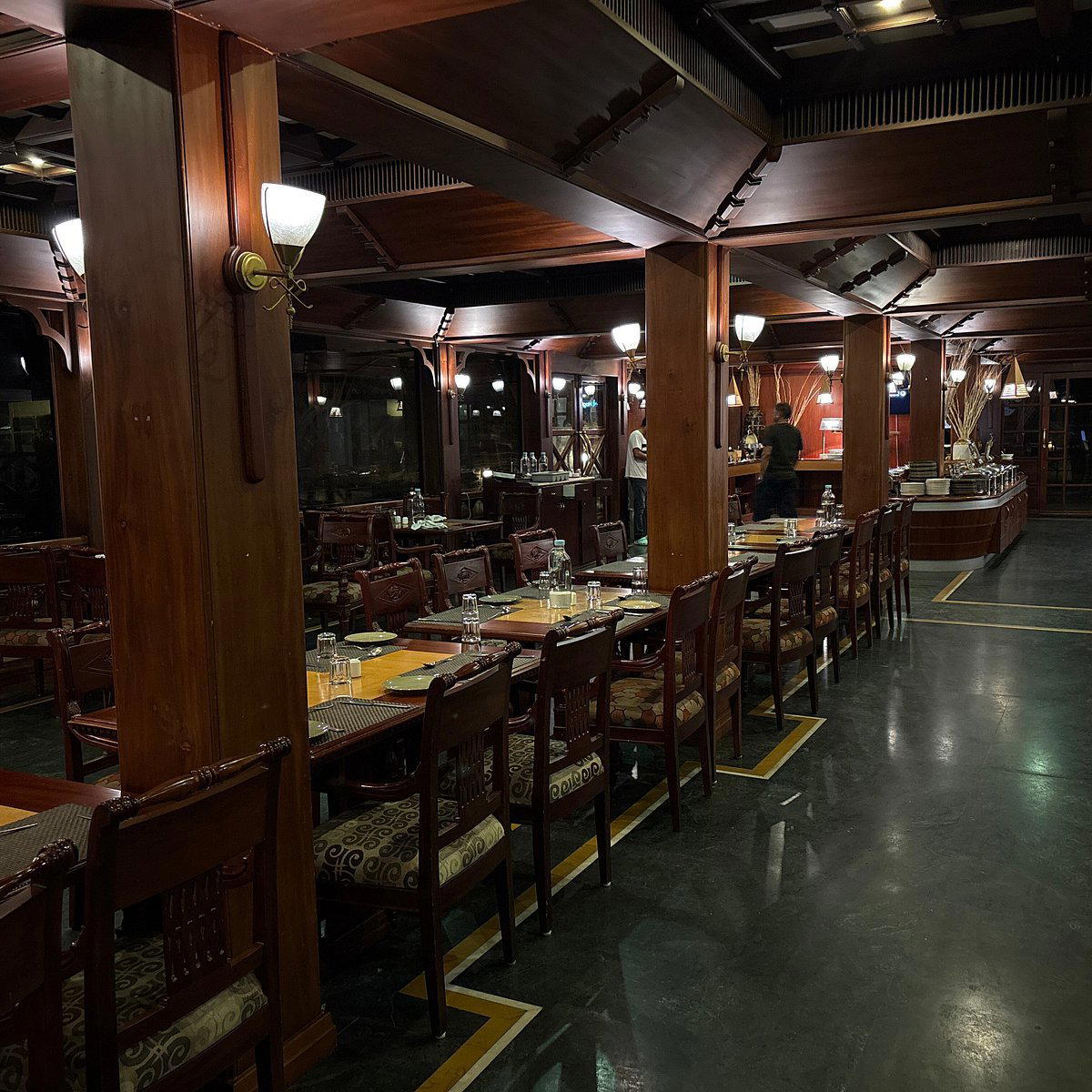
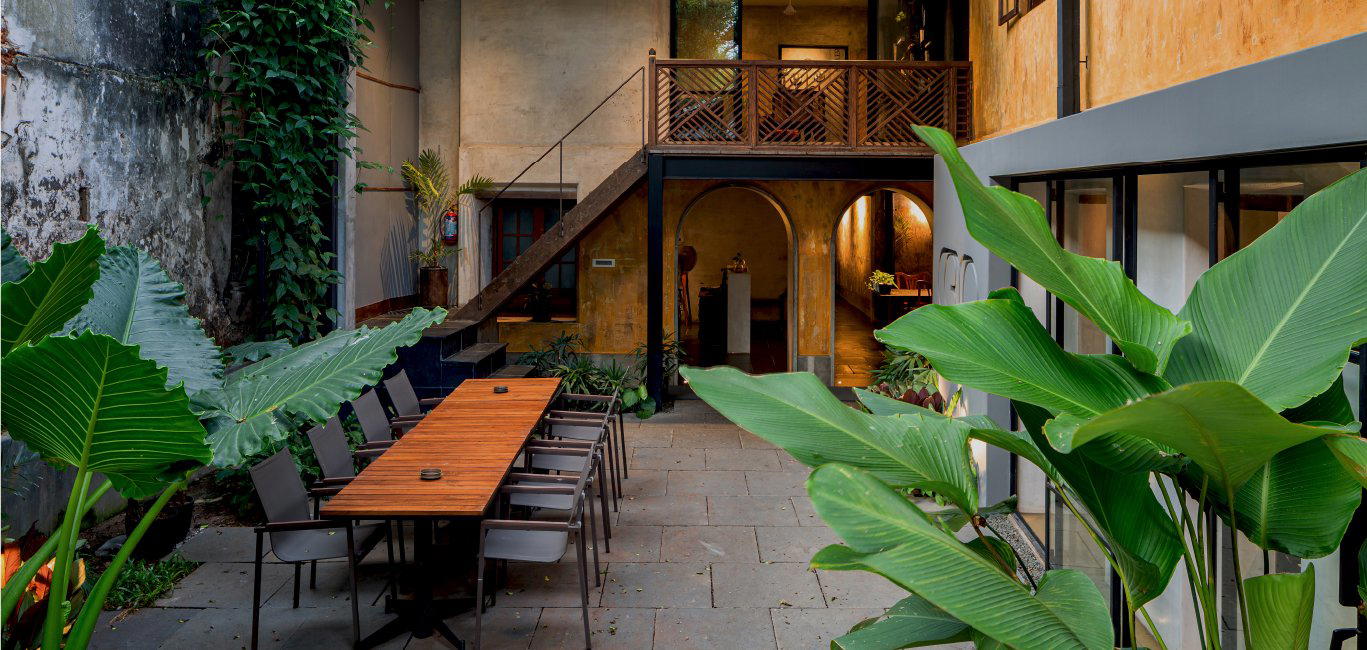
Artistic and atmospheric with cool marble floors, romantic evening courtyard settings under trees, artistic decor, and carefully curated antiques throughout; intimate and refined with soft lighting and authentic heritage charm.