
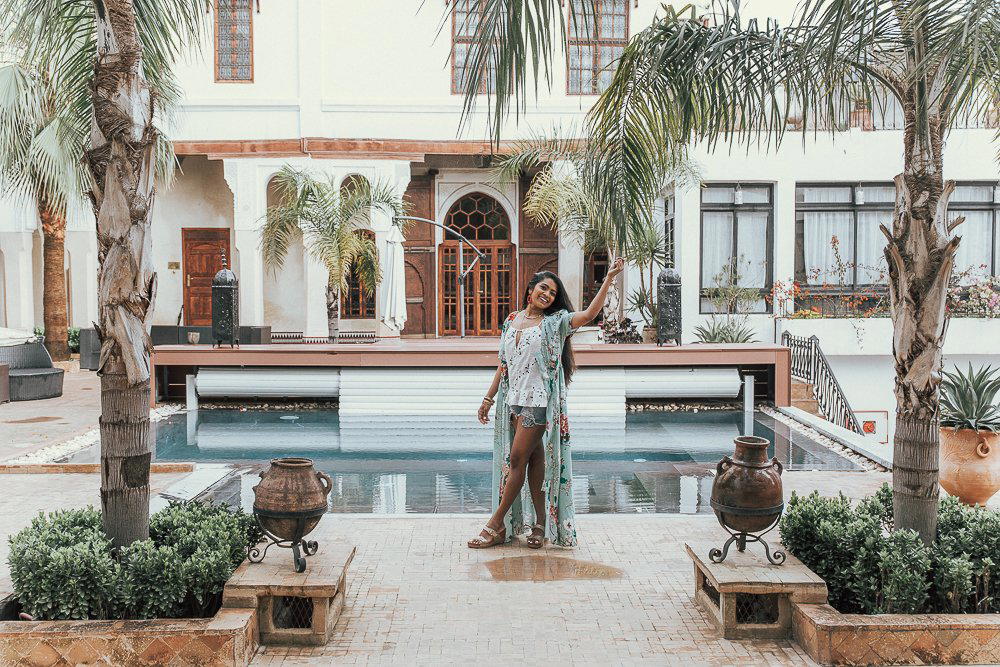
A restored 17th-century palace in Fes el-Bali, Palais AMANI sits inside the medina at 12 Derb El Miter, where Andalusian courtyard architecture meets considered hospitality. The property occupies a tier of riad-style accommodation defined by low room counts, formal service culture, and proximity to the city's historic craft quarters. For Fes, it represents the more deliberate end of the city's heritage accommodation spectrum.
Pearl is the En Primeur Club membership app — saves, bookings, and concierge access live there. Same editors, same standards.
- Address
- 12 Derb El Miter, Fès 30000, Morocco
- Phone
- +212 5356 33209
- Website
- palaisamani.com
- Directions
- Get directions
 Saves & bookings on Pearl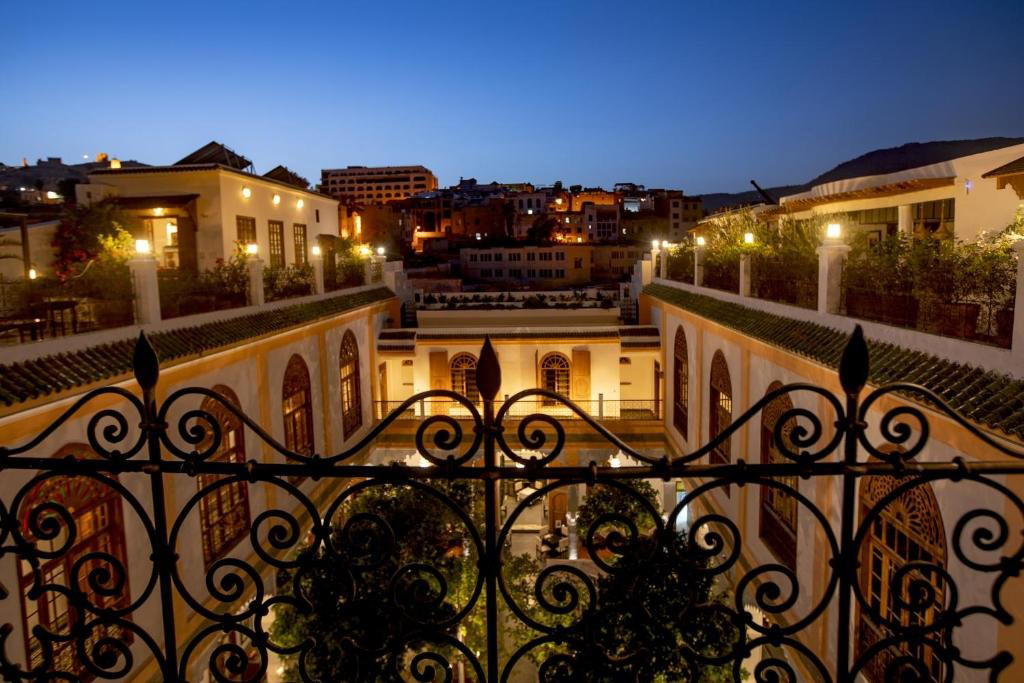
The Medina as Context: What Fes Demands of Its Finest Addresses
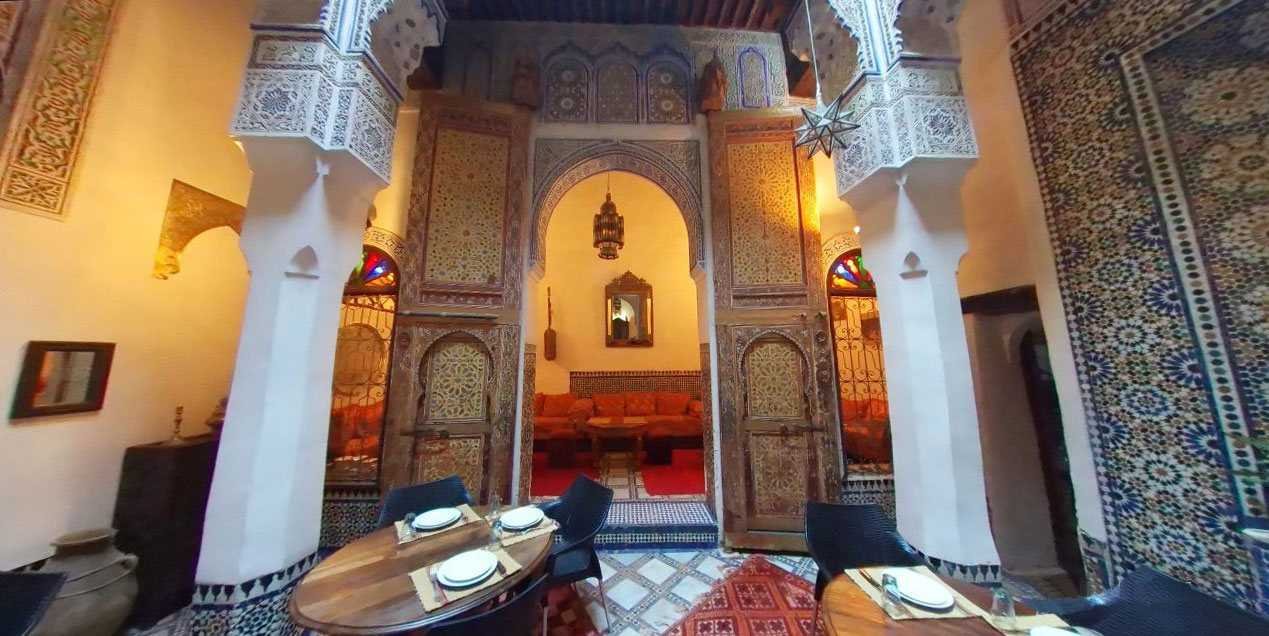
Arriving at a property inside Fes el-Bali requires a particular kind of patience. The medina does not yield easily. Donkeys share lanes with deliverymen; GPS fails somewhere past the third unlabelled turn; the city's logic is spatial and historical, not navigational. It is precisely this friction that makes the choice of where to stay so consequential. A property either absorbs you into that context or holds it at arm's length. Palais AMANI, located at 12 Derb El Miter in the heart of the old city, belongs to the former category. The building's Andalusian courtyard structure, the kind that arrived in Fes with waves of refugees from 13th-century Granada, positions guests inside the medina's living architecture rather than adjacent to it.
Within Fes, heritage accommodation splits between properties that have preserved structure while updating service, and those where the renovation stopped at the aesthetic level. At the upper end of the scale, the Hotel Sahrai, an SLH Hotel offers a different proposition entirely: contemporary architecture on the city's hillside, looking in at the medina rather than existing within it. The choice between these properties is fundamentally a choice about what kind of encounter with Fes you want.
Courtyard Architecture and the Hospitality It Produces
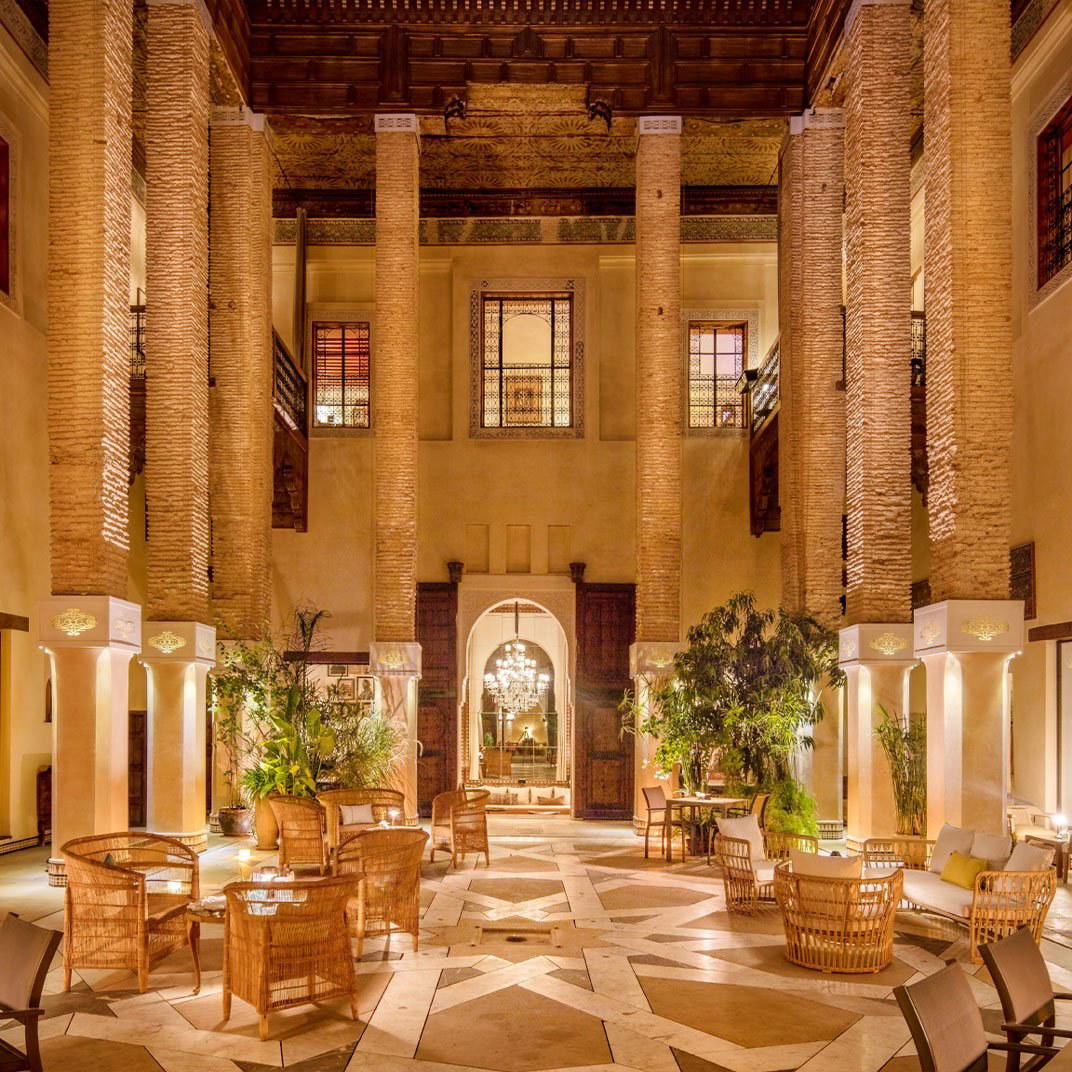
The riad form is not incidental to the experience at properties like Palais AMANI. It is the experience. The inward-facing courtyard, historically designed to provide privacy from the street and regulate heat through the passive cooling of zellige tile and carved plaster, creates a relationship between guest and space that no corridor-and-lift hotel plan can replicate. You hear water before you see it. Light arrives filtered through upper-floor mashrabiya screens. The transition from the medina's compressed lanes into a high-ceilinged courtyard works as a genuine decompression, and that decompression is itself a form of service.
Morocco's most thoughtful heritage properties understand that the architecture does half the hospitality work. This is evident at La Mamounia in Marrakesh at one end of the scale, where architectural grandeur is amplified by a full-service infrastructure, and at smaller addresses like Jnane Tamsna in Marrakech, where intimacy and personal attention define the offer. Palais AMANI operates closer to the intimate end: the low key count that characterises a converted palace means staff-to-guest ratios that larger hotels cannot sustain, and that ratio translates into the kind of anticipatory attention that distinguishes a well-run riad from a hotel that happens to have old walls.
Service Culture Inside the Medina
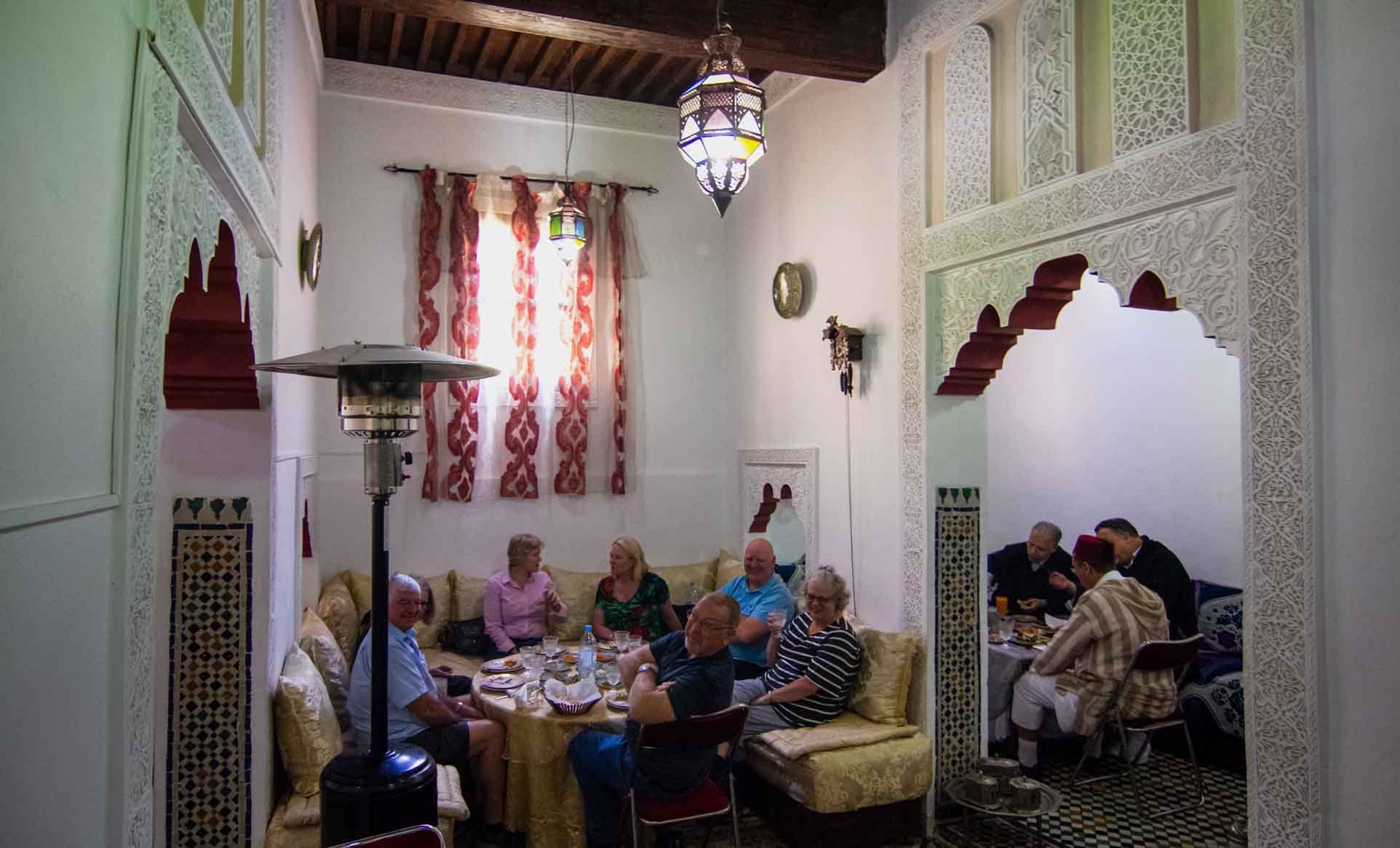
The hospitality traditions of Fes are older than those of most cities in the world. The city's role as a medieval hub for scholarship, trade, and diplomacy produced a culture of formal welcome, the kind encoded in the rituals of tea service, in the precision of Fassi cooking, and in the expectation that a guest's needs are understood before they are stated. Properties that draw on that tradition rather than simply decorating with its aesthetics operate differently from those that import a generic luxury service model.
At a property of Palais AMANI's scale and medina address, the logistics of guest orientation become part of the service proposition. Staff who understand the medina as a navigational puzzle, who can give meaningful guidance on which tannery viewpoint offers the clearest sight line at which time of day, who can distinguish between the fixed-price restaurants worth entering and the tourist-facing facades that surround them, are providing something that cannot be replicated by a concierge desk reading from a laminated sheet. Fes rewards guests who arrive with good intelligence, and properties inside the old city are the primary source of that intelligence.
For broader context on planning your time in the city, our full Fes restaurants guide covers where the city's dining scene is strongest and which neighbourhoods repay extended exploration on foot.
How Palais AMANI Fits Morocco's Premium Heritage Tier
Morocco has developed a stratified hospitality market over the past two decades. At the international chain level, properties like the Hyatt Regency Casablanca in Casablanca, the Fairmont La Marina Rabat Salé Hotel And Residences in Salé, and the Fairmont Tazi Palace Tangier in Tangier deliver consistent infrastructure at scale. Resort formats like Banyan Tree Tamouda Bay in Fnideq and Hilton Taghazout Bay Beach Resort & Spa in Taghazout serve the coastal leisure segment. The more specialist end of the market includes design-led rural properties like Dar Ahlam in Ouarzazate, Kasbah Tamadot in Asni, and the smaller coastal addresses such as Dar Maya in Essaouira, La Sultana Oualidia in Oualidia, and Dar al Hossoun in Taroudant.
Palais AMANI belongs to the medina-palace tier: properties whose value proposition rests on historical fabric, urban immersion, and personalised service rather than pool acreage or meeting room capacity. In Fes specifically, this tier is the one that makes most sense for first-time visitors who intend to engage seriously with the city's craft heritage, its Karaouiyine university quarter, and its tanneries, and for return visitors who already know what the medina contains and want to move through it with the backing of a well-connected address.
The Fes Marriott Jnan Palace offers a point of contrast: larger scale, a garden setting outside the medina walls, and the infrastructure of an international brand. For guests whose priority is the medina experience in its most direct form, the trade-off leans toward a property like Palais AMANI. For those who prefer to visit the old city by day and retreat to a quieter, more navigable address at night, the Marriott's position makes sense on its own terms.
Visitors comparing Palais AMANI against properties in other medina cities should note that the Fes medina is considerably more demanding to navigate than the Marrakesh medina, larger in area and less oriented toward tourism infrastructure. That complexity raises the value of a well-positioned riad address and a staff team that understands the city at the level of its lanes rather than its landmarks. For reference points in other premium intimate-hotel categories, Aman Venice in Venice and Aman New York in New York City represent what the low-key-count, high-service model produces at the extreme upper end of the global market. The Fifth Avenue Hotel in New York City offers another reference in the boutique heritage category. Within the broader Moroccan context, Michlifen Resort & Golf in Ifrane and La Fiermontina Ocean in Larache illustrate how the country's premium accommodation has extended into regions far beyond the traditional medina-and-souks circuit, while Château Roslane in Icr Iqaddar signals Morocco's growing wine estate hospitality category.
Planning Your Stay
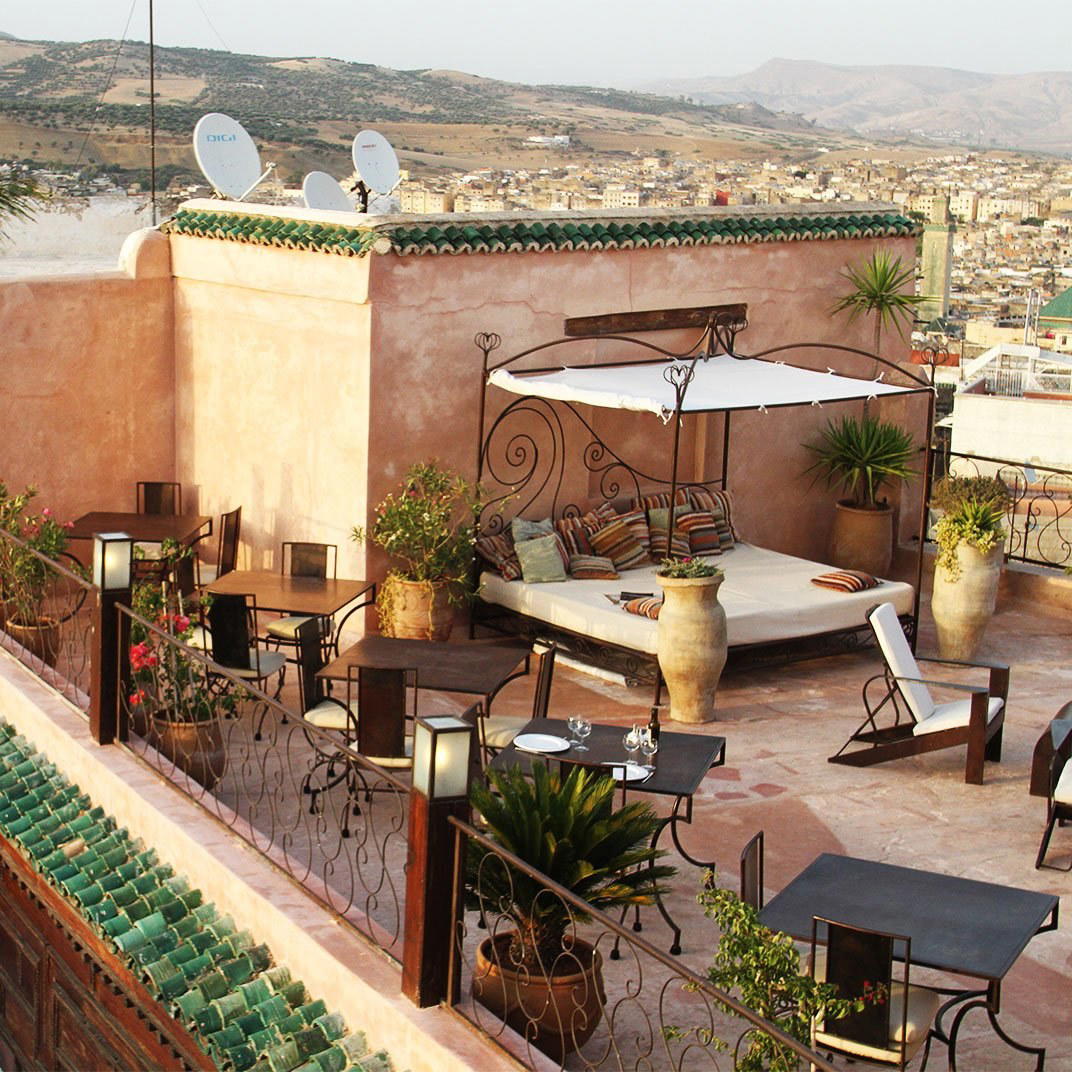
Palais AMANI's address at 12 Derb El Miter in Fès 30000 places it within walking distance of the principal Karaouiyine quarter but, as with all medina properties, the final approach is on foot through lanes inaccessible to vehicles. First-time guests should communicate arrival time in advance so the property can arrange a guide or clear directions from the nearest vehicle access point. The medina rewards early morning and late afternoon movement; midday heat and crowd density in the souks are factors worth planning around. Guests focused on the tanneries should note that morning light from the upper-floor viewpoints gives the clearest colour read on the dyeing vats.
Cuisine and Recognition
| Venue | Cuisine |
|---|---|
| Palais AMANIThis venue — the venue you are viewing | This venue |
Recognition history
Dated appearances from independent guides and award organizations, with the underlying list record or original source where available.
Michelin Selected
Michelin
Continue exploring
More in Fès
Hotels in Fès
Browse all →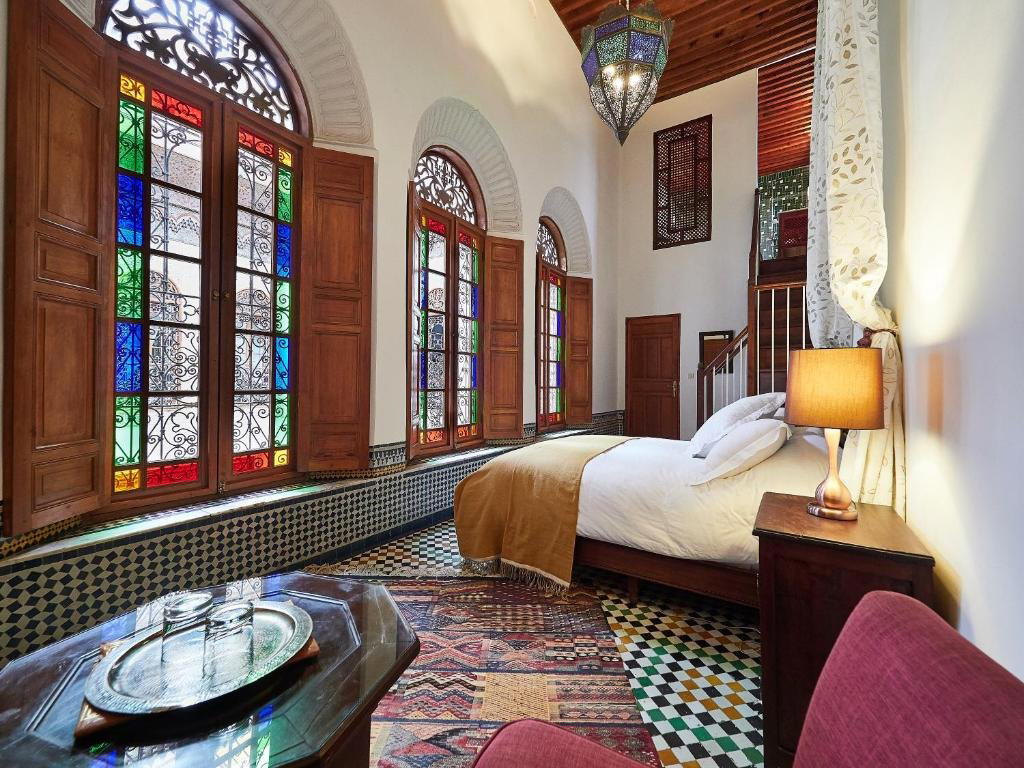
Bars in Fès
Browse all →
Restaurants in Fès
Browse all →
At a Glance
- Elegant
- Romantic
- Intimate
- Sophisticated
- Ornate
- Romantic Getaway
- Honeymoon
- Anniversary
- Historic Building
- Garden
- Terrace
- Wi Fi
- Spa
- Room Service
- Concierge
- Restaurant
- Massage
- Garden
- Wi Fi
- Spa
- Room Service
- Concierge
- Restaurant
- Massage
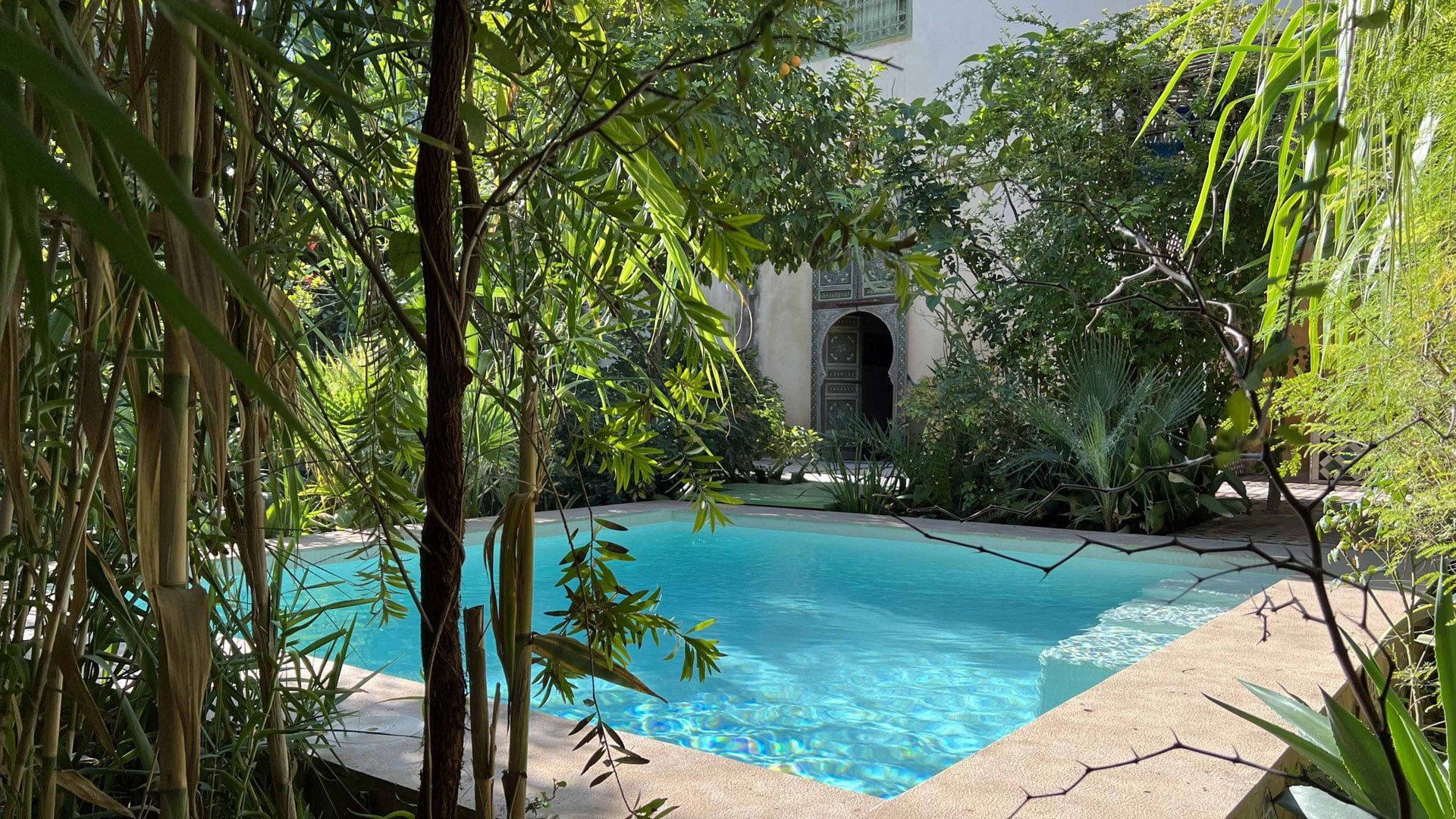
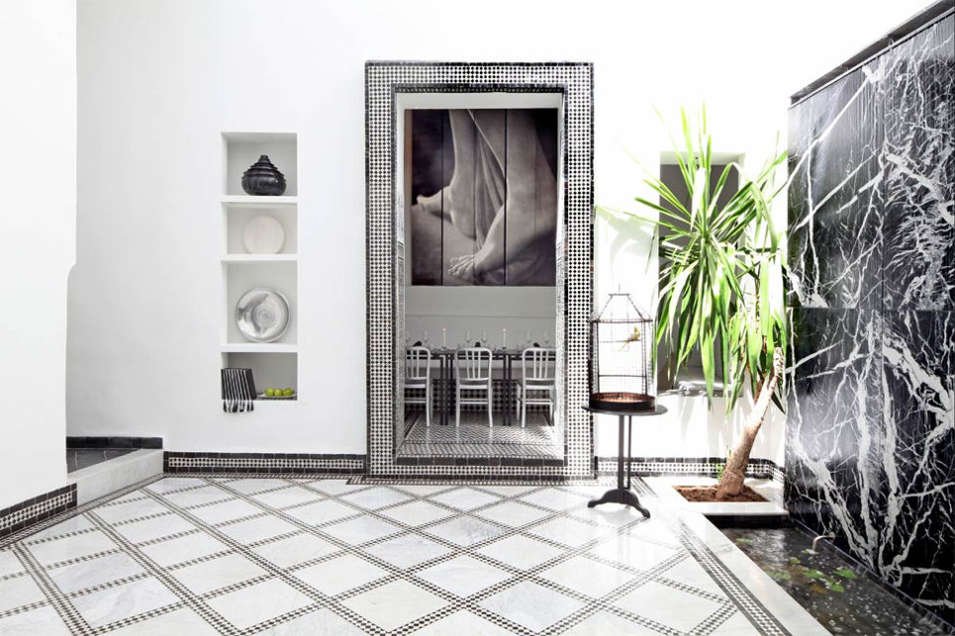
Tranquil haven with serene courtyard shaded by citrus trees, candlelit hammam, and elegant interiors blending traditional Moroccan tilework and stained glass with Art Deco accents.
Know Before You Go
- Getting there
- 12 Derb El Miter, Fès 30000, Morocco