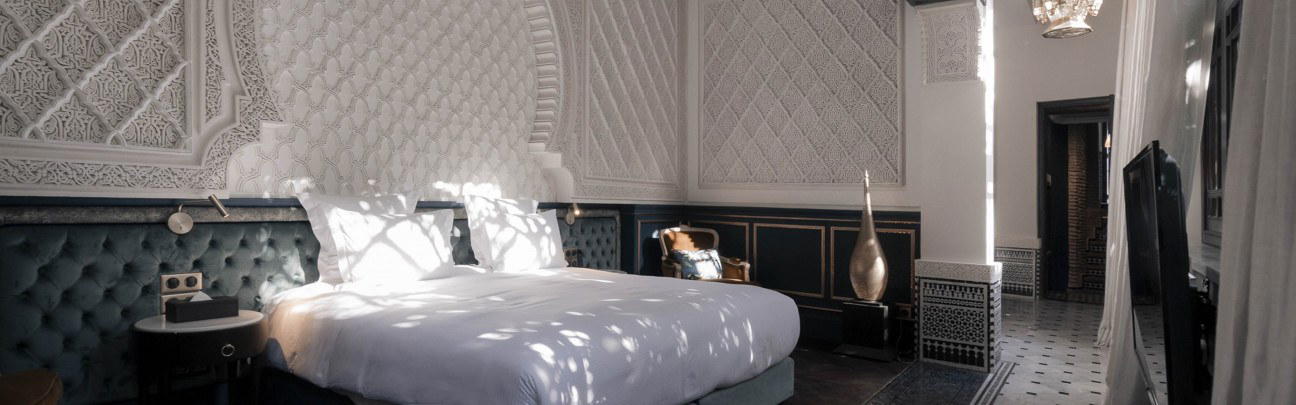
Dar Roumana occupies a restored riad at 30 Derb El Amer in the heart of Fes el-Bali, one of the medina's most architecturally intact residential quarters. The property sits within the riad-hotel category that defines premium accommodation in the old city, where courtyard scale, traditional craftsmanship, and proximity to the medina's historic core set the competitive terms. Guests seeking medina immersion over new-city amenities will find this address useful.
Pearl is the En Primeur Club membership app — saves, bookings, and concierge access live there. Same editors, same standards.
- Address
- 30 Derb El Amer, Zkak Roumane, Fez Medina 30110, Morocco
- Phone
- +212 5357 41637
- Website
- darroumana.com
- Directions
- Get directions
 Saves & bookings on Pearl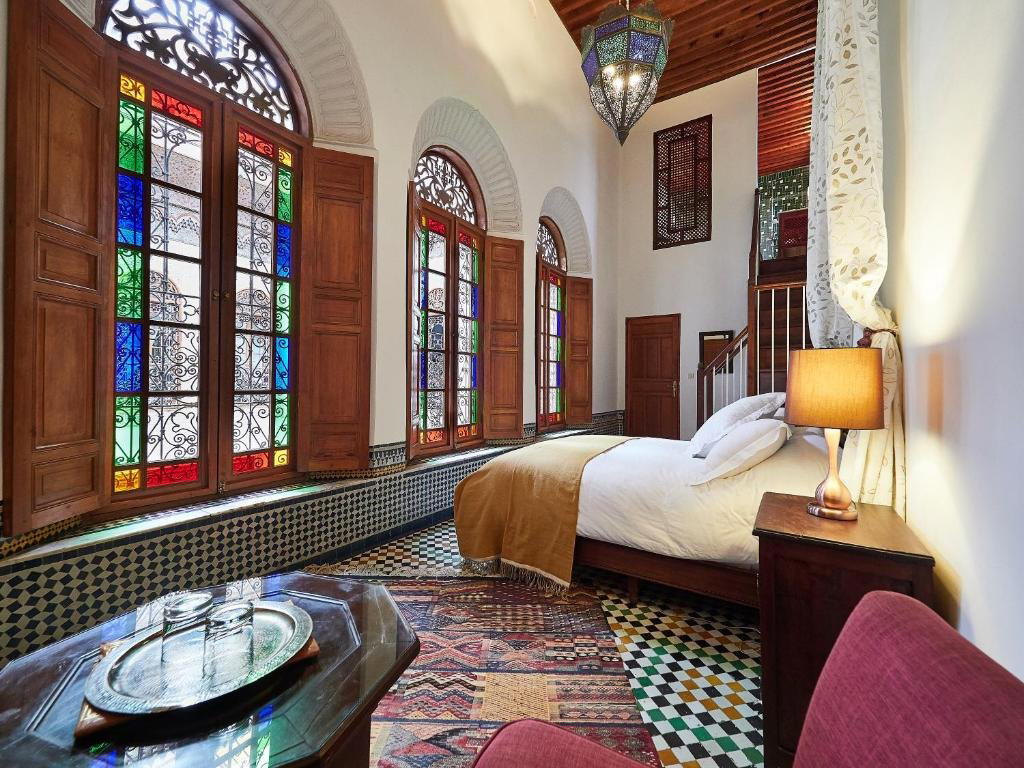
Dining Inside the Medina's Walls
Fes el-Bali has the largest car-free urban centre in the world, a fact that shapes every aspect of staying and eating within it. Access arrives on foot through derbs — the narrow residential lanes that branch off main arteries — and the address at 30 Derb El Amer, Zkak Roumane, places Dar Roumana squarely inside this fabric. The physical approach, past whitewashed walls and the sound of a city that has operated continuously for over a thousand years, is itself a context that few accommodation formats can replicate. Properties in this district compete not on lobby size or pool decks, but on the quality of the courtyard, the calibre of the zellij tilework, and the depth of Moroccan culinary programming offered within their walls.
Morocco's riad-hotel category has matured considerably over the past two decades. Early conversions prioritised atmosphere over service precision; the more considered properties that emerged later learned to combine traditional architectural restoration with a dining programme capable of standing on its own terms. In Fes, that combination is harder to achieve than in Marrakesh, where international visitor volumes sustain a broader hospitality infrastructure. The medina here is denser, more labyrinthine, and the pool of skilled kitchen staff familiar with both classical Fassi technique and international service standards is narrower. Riad dining in Fes, when it works, reflects a more localised and less-toured version of Moroccan cuisine than visitors to the south typically encounter.
The Fassi Table: What Sets the City's Cuisine Apart
Fes occupies a specific position in Moroccan culinary geography. The city's bourgeois cooking tradition, often described as the country's most refined, developed under the influence of Andalusian refugees who arrived in the ninth century and layered Arab, Berber, and Sephardic elements into a cuisine of considerable complexity. Fassi cooking is characterised by longer preparation times, more layered spice use, and a pastry tradition (including the warqa-based bastilla) that sets it apart from the tagine-forward menus that dominate tourist-facing restaurants in other cities. A riad with a serious dining programme in Fes has access to this tradition in a way that properties elsewhere in Morocco do not, the surrounding medina markets, the specialist spice merchants of the Attarine souk, and the multigenerational families who still cook by these methods are all within walking distance.
For travellers comparing Fes against Marrakesh as a base, the dining calculus differs significantly. Marrakesh offers properties like La Mamounia in Marrakesh and Jnane Tamsna in Marrakech, both of which operate at scale with international infrastructure. Fes rewards those willing to trade amenity breadth for culinary and historical depth. The riad format, intimate, courtyard-centred, reliant on in-house cooking, suits that trade-off directly.
Placing Dar Roumana in Fes's Property Set
Within the Fes medina, the riad-hotel category separates broadly into three tiers: large converted palaces with event capacity and multiple dining spaces, mid-scale riads with six to twelve rooms and a single restaurant, and smaller guesthouses where dining is incidental. Dar Roumana's address in the Zkak Roumane quarter, an area associated with older residential fabric rather than commercial frontage, places it in the mid-to-upper segment of the second tier. Comparable properties in this bracket include Palais AMANI, which operates at larger scale with a terrace restaurant that draws both guests and outside reservations, and Riad Jardin des Biehn, known for its garden courtyard and long-standing presence in the medina.
Travellers who want a medina address combined with access to a pool facility have used Pool & Club R.A.D.E.F as a supplement, or opted for the newer build logic of Hotel Sahrai, an SLH Hotel, which sits outside the medina walls on the hillside above Fes el-Bali and trades medina immersion for contemporary design and city views. Hotel Sahrai in Fez and the Fes Marriott Jnan Palace in Fès represent the international-brand segment of the city's accommodation, with full leisure facilities but less proximity to the medina's core. For those whose priority is the medina itself, those properties require either a drive or a long walk to reach the districts where Fassi cooking and craft production still operate at street level.
Elsewhere in Morocco, the luxury riad model scales differently. Dar Ahlam in Ouarzazate operates as a high-end kasbah property with a strong culinary programme in a desert context, while Dar al Hossoun in Taroudant and Dar Maya in Essaouira each demonstrate how the dar format adapts to different Moroccan cities and climates. The category has genuine depth across the country, which makes Fes an important reference point: the cooking tradition here is arguably the most formally developed, and a property that commits to it has access to source material that properties in beach or desert contexts simply do not.
Planning a Stay: Practical Orientation
The address, 30 Derb El Amer, Zkak Roumane, Fez Medina 30110, is navigable with a detailed map, though first-time visitors to the medina almost always require a local guide or hotel escort for the final approach. Luggage transfers within Fes el-Bali are handled by hand cart or porter rather than vehicle, a logistical reality common to all medina properties. Arriving by taxi or transfer, guests are typically dropped at the nearest accessible point on the medina perimeter and walked in from there. Those coming from other parts of Morocco will find Fes well-connected by train from Casablanca and Rabat; the railway station sits outside the medina in the Ville Nouvelle, approximately twenty minutes by taxi. For broader regional context and additional dining options in the city, our full Fes restaurants guide covers the medina and Ville Nouvelle in detail.
Travellers building a longer Moroccan itinerary around properties with serious dining programmes might also consider Château Roslane in Icr Iqaddar for wine-country context, La Sultana Oualidia in Oualidia for coastal seafood positioning, or Banyan Tree Tamouda Bay in Fnideq for the northern coast. For those whose wider travel frames Moroccan riad dining against international small-property formats, the comparison points shift: Aman Venice in Venice and Aman New York in New York City represent what happens when the intimate-property model operates at the top of the global market with full culinary infrastructure. Fes operates in a different register, but the underlying logic of place-rooted dining in a historic architectural setting runs through all of them.
Booking and Cost Snapshot
| Venue | Price |
|---|---|
| Dar RoumanaThis venue — the venue you are viewing | This venue |
Continue exploring
More in Fès
Hotels in Fès
Browse all →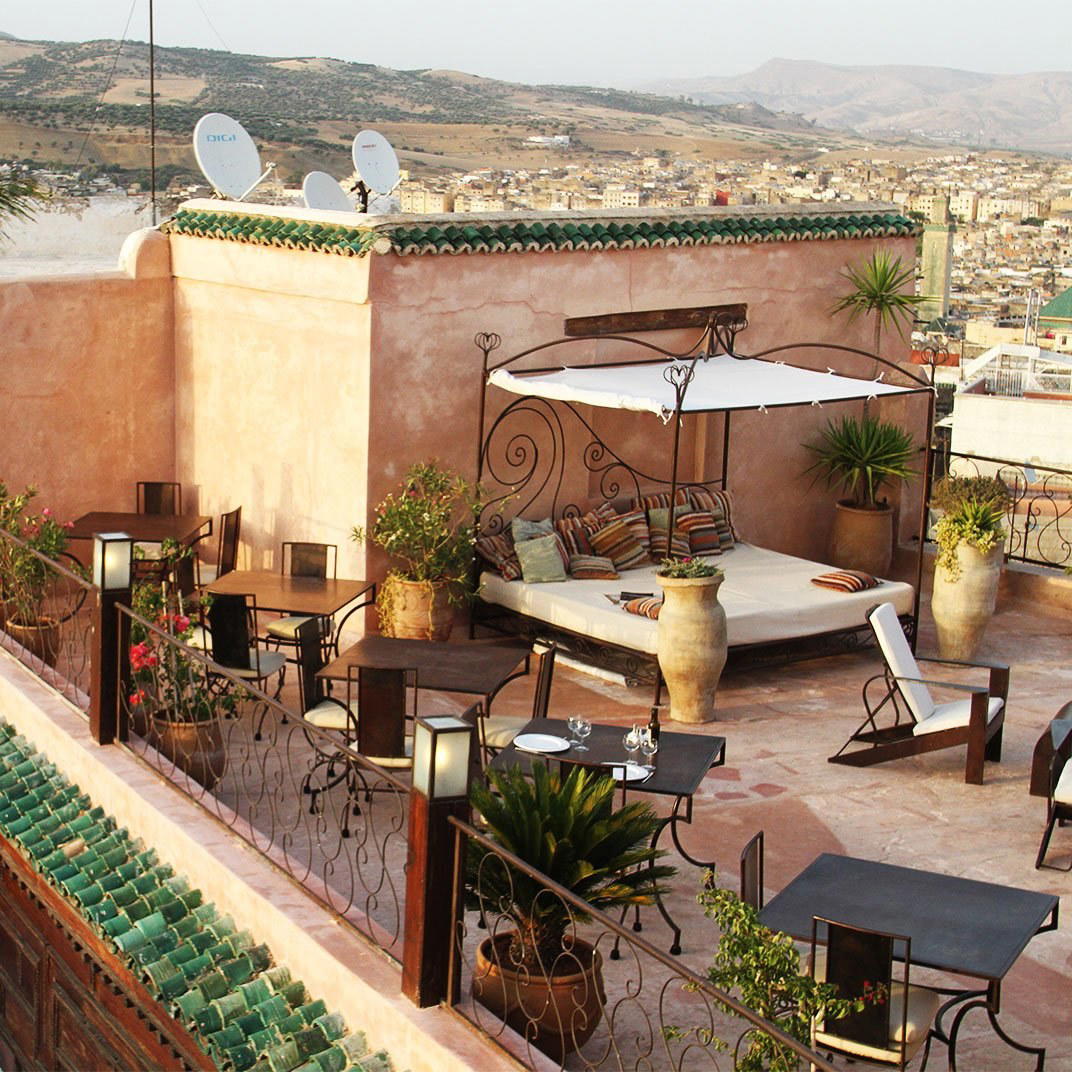
Bars in Fès
Browse all →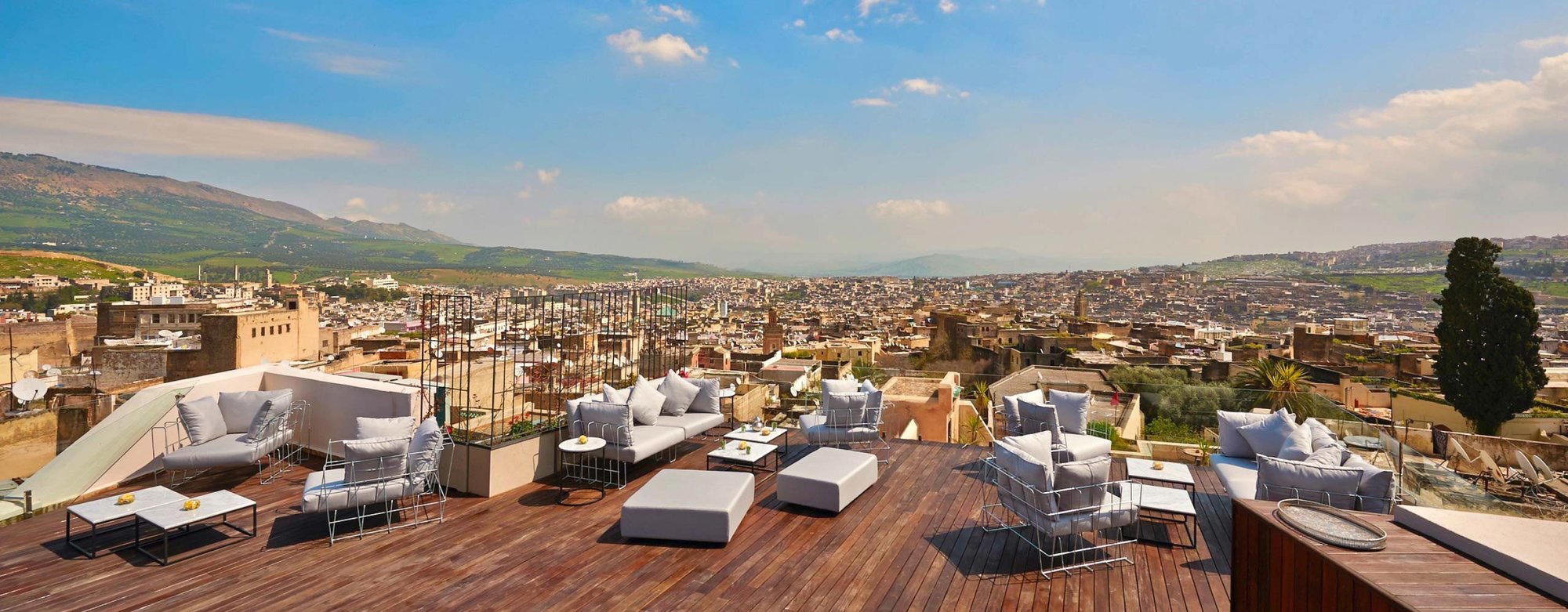
Restaurants in Fès
Browse all →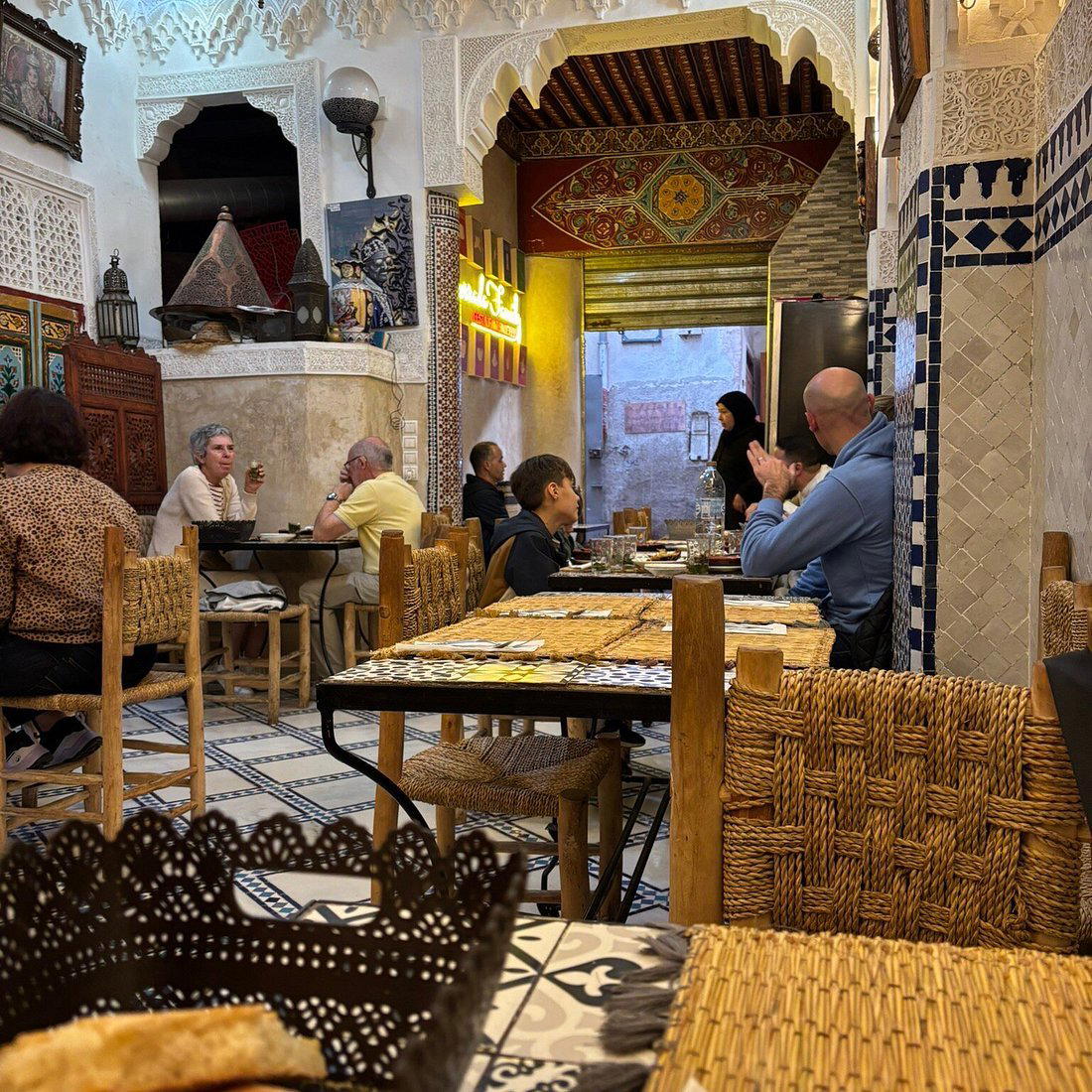
At a Glance
- Romantic
- Elegant
- Intimate
- Classic
- Scenic
- Honeymoon
- Romantic Getaway
- Anniversary
- Weekend Escape
- Historic Building
- Terrace
- Panoramic View
- Garden
- Private Dining
- Destination Spa
- Wi Fi
- Restaurant
- Concierge
- Garden
- Room Service
- Mountain
- Garden
- Street Scene
- Wi Fi
- Restaurant
- Concierge
- Garden
- Room Service
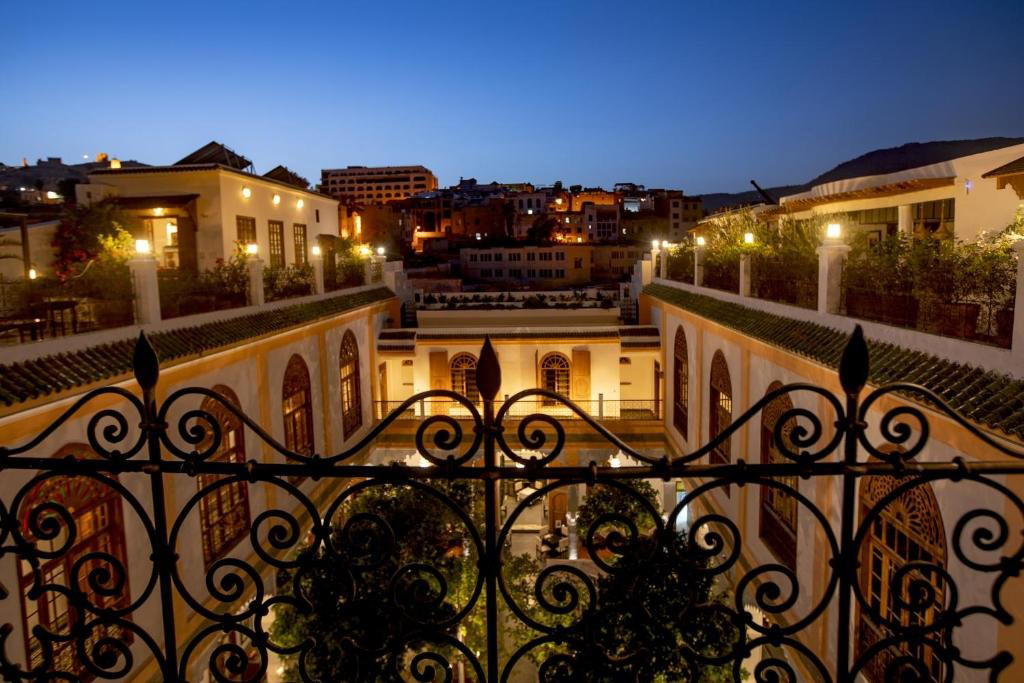
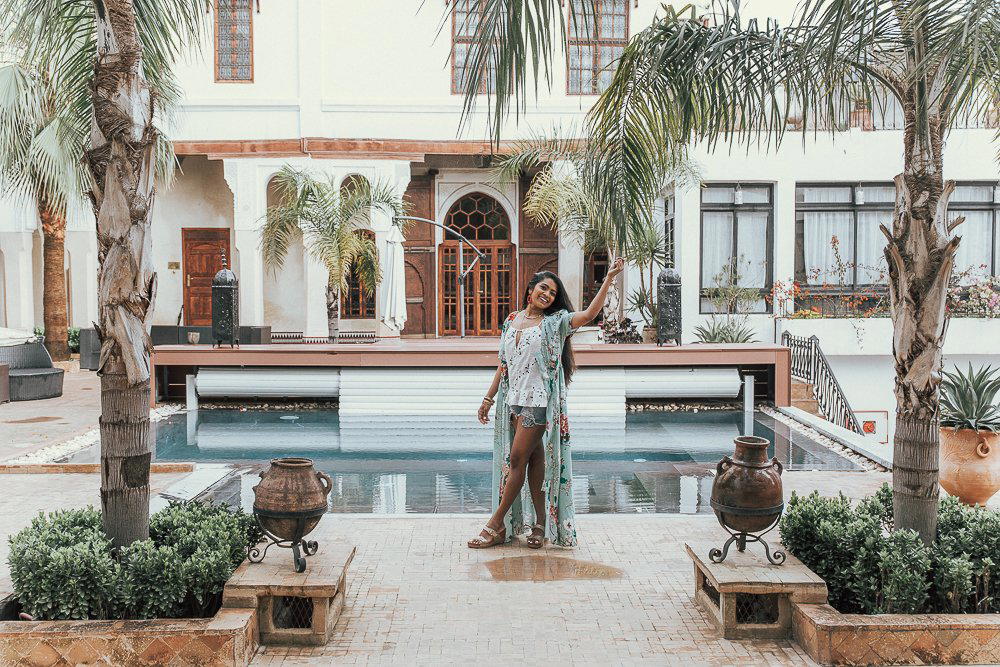
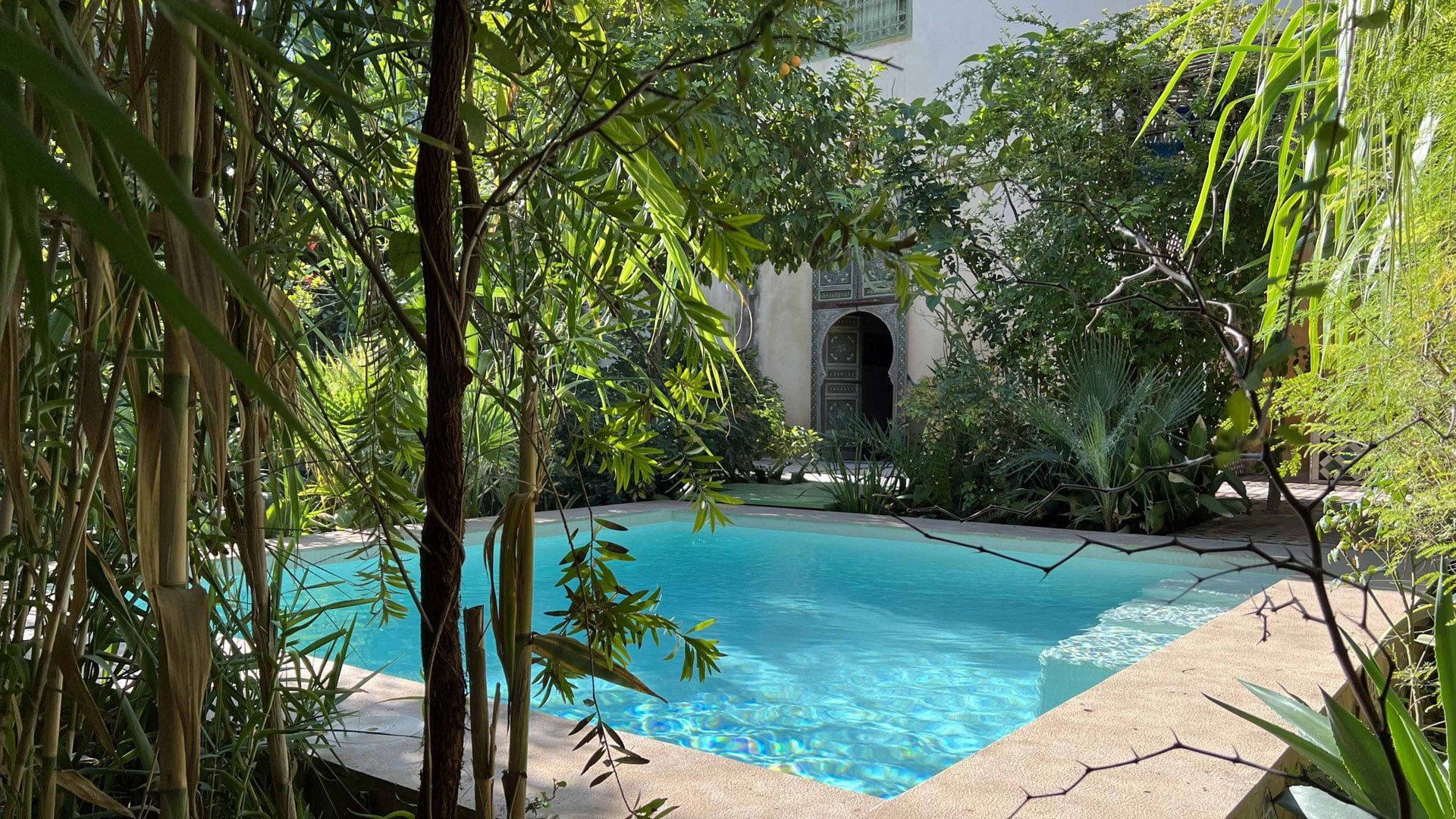
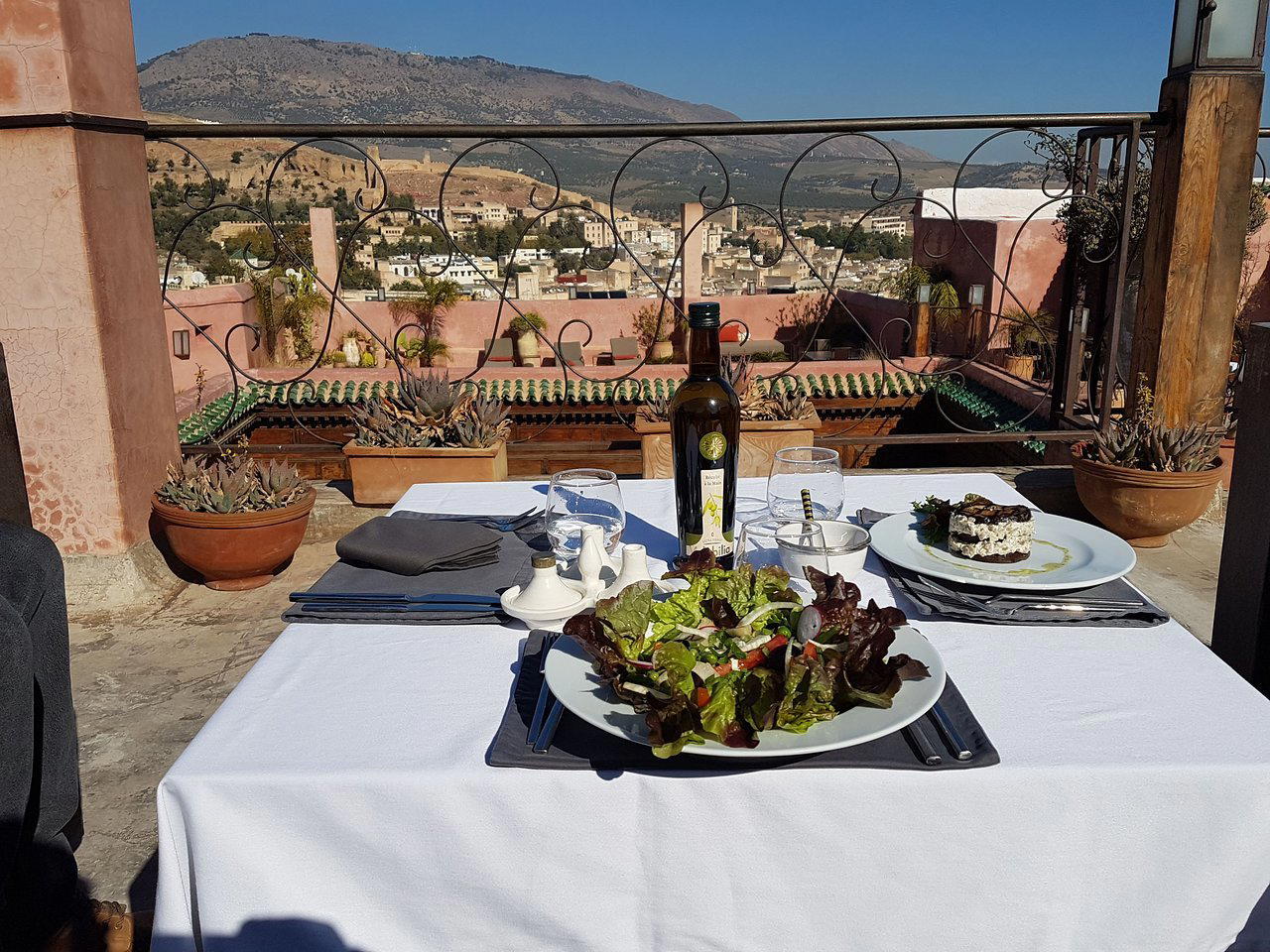
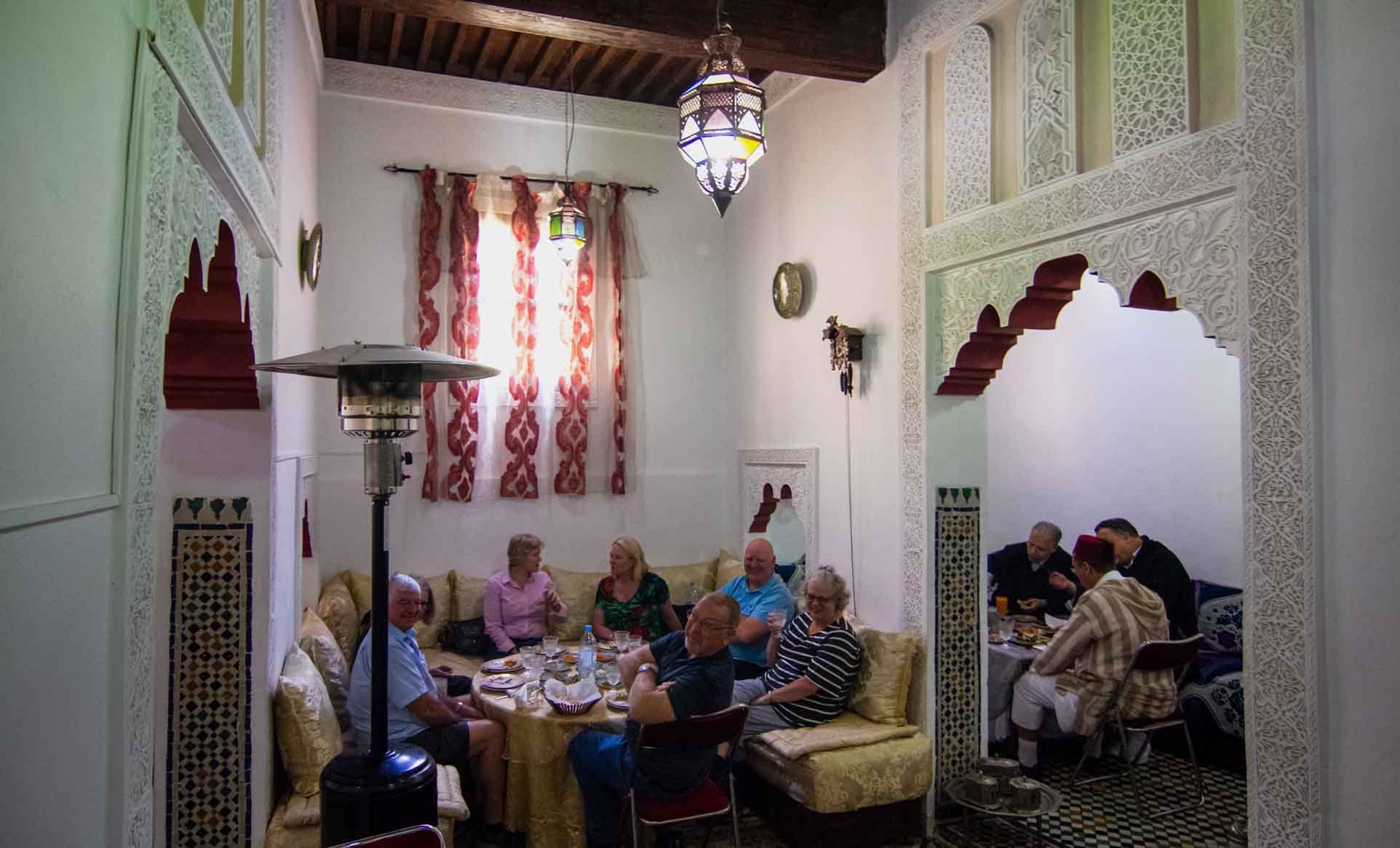
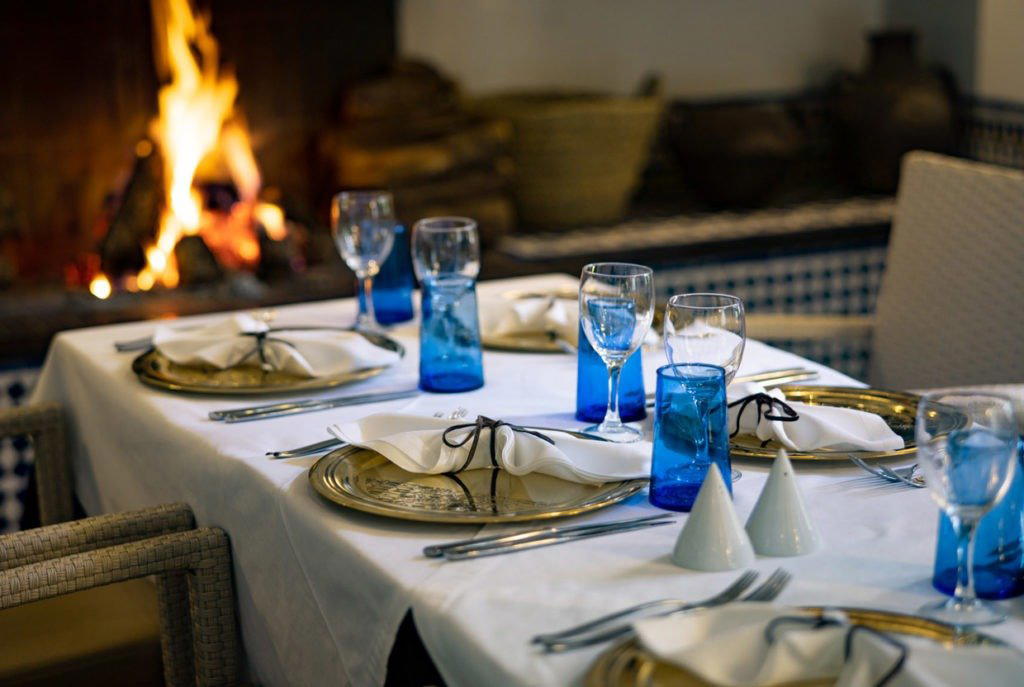
Warm, intimate atmosphere with soft jazz flowing through the property; candlelit courtyard with ornate tilework and fountain; rooftop terrace strewn with leather pouffes offering panoramic medina and Atlas Mountain views under the stars.
Know Before You Go
- Getting there
- 30 Derb El Amer, Zkak Roumane, Fez Medina 30110, Morocco