

Set at 1,650 metres in Morocco's Middle Atlas, Michlifen Resort & Golf earns its Continent Winner status as a Luxury Mountain Hotel by combining Alpine lodge architecture with Moroccan palace craft across 71 rooms. The 3,500-square-metre spa, a championship golf course framed by cedar forest, and interiors built around carved wood and open fires place it in a category that coastal and medina hotels across Morocco simply cannot replicate.
Pearl is the En Primeur Club membership app — saves, bookings, and concierge access live there. Same editors, same standards.
- Address
- Avenue Hassan II - BP n°18، Ifrane
- Phone
- +212 5 35 86 40 00
- Website
- michlifen.com
- Directions
- Get directions
 Saves & bookings on Pearl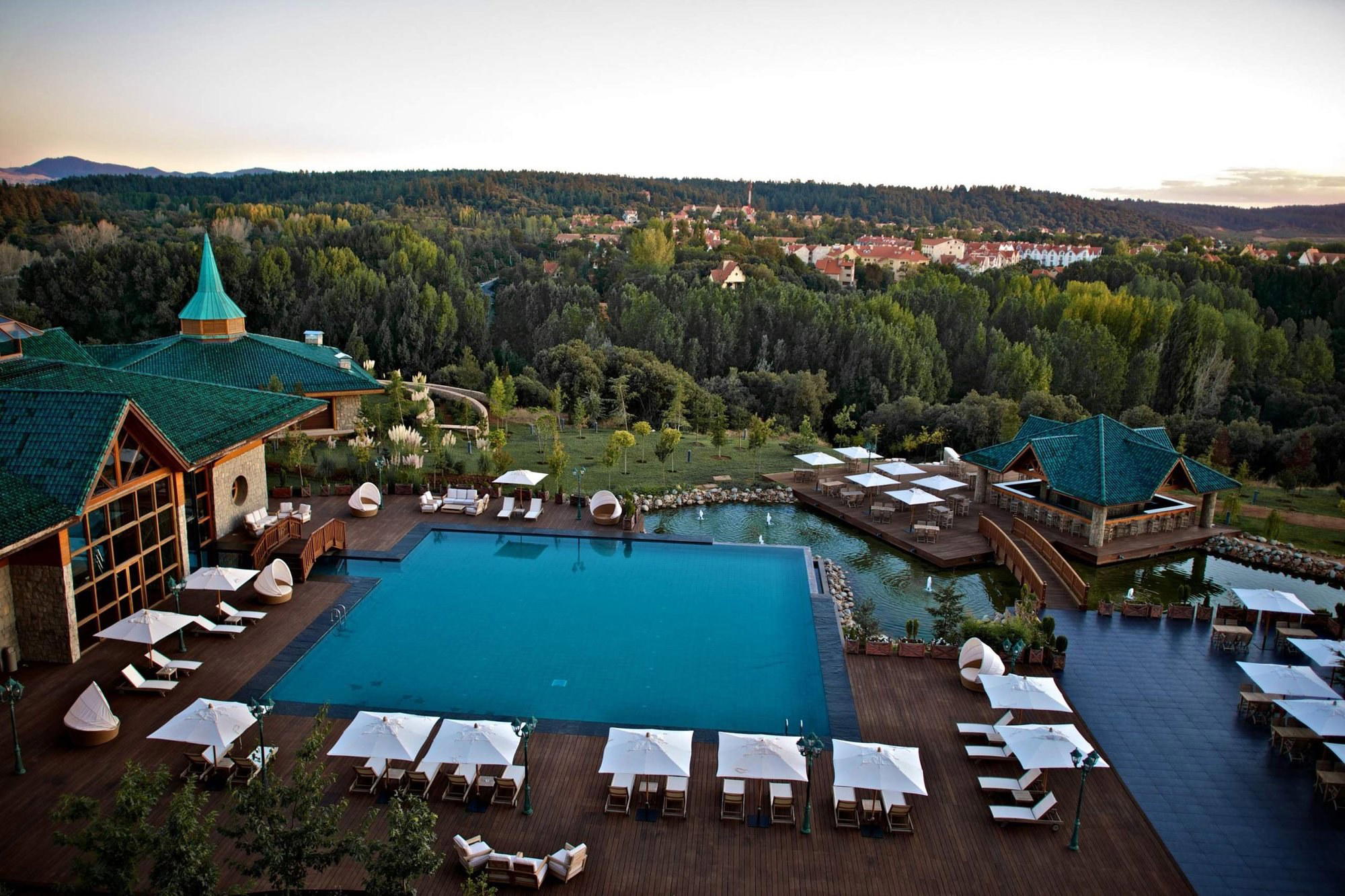
Morocco at a Different Altitude
Most visitors encounter Morocco through its medinas, desert edges, or Atlantic coastline. Ifrane offers a different register entirely: cedar forests, snow-dusted winters, and air that sits several degrees cooler than the plains below. At 1,650 metres above sea level, the town has carried the nickname "Little Switzerland" long enough that it has stopped being a novelty and become a genuine frame of reference. The architecture follows through: steep-pitched roofs, whitewashed facades, European urban planning imposed on North African terrain during the French Protectorate. It is, by any honest accounting, a peculiar place, and Michlifen Resort & Golf leans into that peculiarity rather than smoothing it away.
Among Morocco's premium accommodation options, the property occupies a position that has no direct peer. La Mamounia in Marrakesh and Jnane Tamsna in Marrakech anchor the country's most-visited luxury segment; Dar Ahlam in Ouarzazate and Kasbah Tamadot in Asni operate in the drama of the south and the High Atlas respectively. Michlifen sits apart from all of them — a mountain resort in a country where mountain resorts are genuinely rare, drawing a Continent Winner designation as a Luxury Mountain Hotel from World Luxury Hotel Awards. That award is not a footnote; it signals the competitive set this property plays in, which runs internationally rather than domestically.
Architecture That Has Something to Say
The design conversation at Michlifen begins the moment the building comes into view. The property reads as an Alpine lodge scaled to palatial proportions: steep roof lines, generous eaves, a facade that would not look out of place in the Swiss Alps were it not for the zellige detailing and hand-carved wooden screens that pull the eye back to Morocco. This is not fusion in the shallow sense of placing a tagine on a ski-lodge menu. The structure itself argues for a synthesis, asking what Moroccan palace craft looks like when applied to mountain-lodge typology rather than medina courtyard tradition.
Inside, the logic holds. Timber predominates, from ceiling beams to paneled walls, and the material choices create warmth that stone-and-plaster riads in lower cities cannot match in winter months. Fireplaces appear where the programme demands them, which in a property sitting at this elevation means they are functional rather than decorative. The 71 rooms and suites continue the register: roll-leading baths, carved wood paneling, and proportions that read as generous rather than cramped. The suite inventory at a 71-key property of this standing tends toward configurations that prioritise ceiling height and view orientation over pure square footage, though specific room categories and exact dimensions are best confirmed directly when booking.
Morocco's interior design tradition is as strong as any in the Mediterranean world, with craft lineages in zellige, tadelakt plasterwork, and marquetry woodcarving that have fed into palace and riad architecture for centuries. What Michlifen proposes is a test of whether those traditions translate to a cold-climate programme, and structurally, architecturally, the answer reads as yes. The interiors do not feel like a Marrakech riad that wandered into the mountains; they feel like a building that understood both traditions and made deliberate choices between them. For further exploration of how Moroccan luxury properties handle design identity, compare the approach taken at Hotel Sahrai in Fes or the scale of Fes Marriott Jnan Palace.
What the Property Actually Offers
The 3,500-square-metre spa is the largest single amenity anchor here by footprint, and in the mountain context that size makes sense. Cold-air environments drive guests indoors with purpose rather than reluctance, and a spa of this scale can accommodate hammam programming alongside wet and dry thermal facilities without the circulation problems that afflict smaller urban spa operations. The hammam ritual tradition sits at the centre of Moroccan wellness culture, and at this altitude the transition from cold exterior to heated steam room carries a particular logic. Properties further south or at coastal locations, such as Banyan Tree Tamouda Bay in Fnideq or Hilton Taghazout Bay Beach Resort & Spa, orient their wellness offers around coast and heat. Michlifen's spa proposition is built on entirely different environmental logic.
The golf course adds a dimension that few Moroccan mountain properties can claim. Designed against a backdrop of forested cedar slopes with desert visible in the middle distance on clear days, the course offers a visual context that flatlands courses cannot produce. Golf in Morocco clusters heavily around coastal Agadir and the Marrakech plain; a course at Middle Atlas elevation is a genuinely distinct proposition, and Mazagan Beach & Golf Resort in El Jadida provides the coastal counterpoint for comparison. The elevation also affects playing conditions: ball travel distances, temperature management mid-round, and the view from the driving range all differ materially from sea-level equivalents.
Placing Ifrane in Context
Ifrane sits within reach of Fes, Morocco's oldest imperial city and one of the most architecturally dense medinas in the Islamic world. The drive between the two takes under an hour, which means Michlifen functions plausibly as a base for medina exploration combined with mountain decompression, a pairing that none of the Fes city properties, including Hotel Sahrai in Fez, can offer. Seasonal considerations matter here: the Middle Atlas receives genuine snowfall between December and February, which transforms the property's character entirely and draws a different traveller profile than the green-season visitor arriving between March and October. Both states are worth knowing about before booking.
Morocco's mountain interior has historically been underleveraged as a luxury tourism destination relative to the country's coastal and medina offer. The opening of Michlifen as a luxury mountain resort represents a bet on that segment developing, and the Continent Winner award suggests the international market for high-altitude Moroccan travel exists and is paying attention. For travellers building a Morocco itinerary across multiple property types, the EP Club guide to Moroccan hotels provides wider context, and our full Ifrane restaurants guide covers the town's dining options beyond the resort. Properties such as Dar Maya in Essaouira, La Sultana Oualidia, Rebali Riads in Sidi Kaouki, and Dar al Hossoun in Taroudant fill out the south and coast for those planning multi-stop trips, while Fairmont Tazi Palace Tangier, Fairmont La Marina Rabat Salé, Rabat Marriott Hotel, Hyatt Regency Casablanca, Villa Mabrouka in Al Hoceima, La Fiermontina Ocean in Larache, and Château Roslane cover the northern corridor. For reference beyond Morocco, the mountain lodge typology finds international comparisons in properties such as Aman Venice, Aman New York, and The Fifth Avenue Hotel in New York City, all of which share the design-led, low-key-count positioning that Michlifen operates within.
How Michlifen Resort & Golf Ifrane compares with similar nearby venues.
| Venue | Awards |
|---|---|
| Michlifen Resort & Golf | Michelin 1 Key |
Recognition history
Dated appearances from independent guides and award organizations, with the underlying list record or original source where available.
Michelin 1 Key
Michelin
World Luxury Hotel Awards WLHA Continent Winner
World Luxury Hotel Awards
Continue exploring
More in Ifrane
Hotels in Ifrane
Browse all →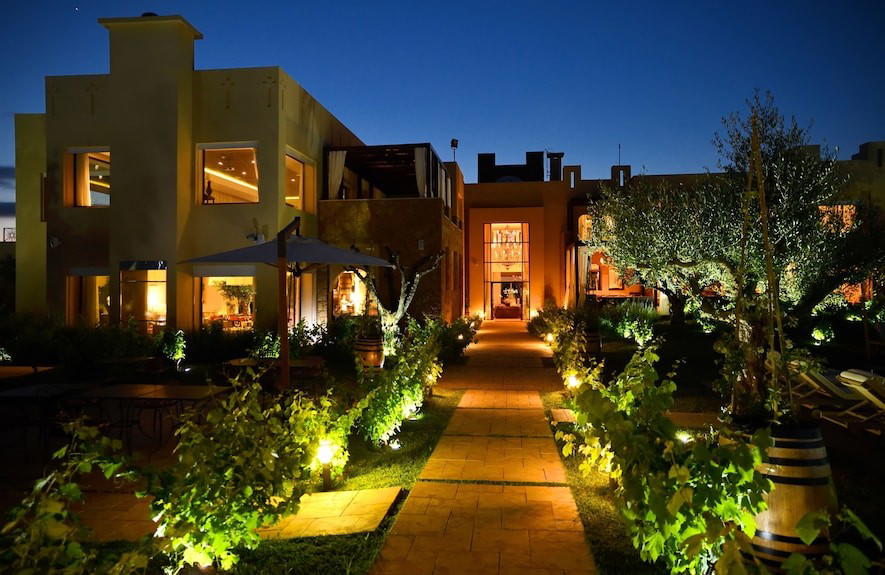
Restaurants in Ifrane
Browse all →
Wineries in Ifrane
Browse all →
At a Glance
- Scenic
- Elegant
- Cozy
- Sophisticated
- Rustic
- Romantic Getaway
- Family Vacation
- Wellness Retreat
- Weekend Escape
- Group Retreat
- Golf Course
- Infinity Pool
- Panoramic View
- Terrace
- Wi Fi
- Pool
- Spa
- Fitness Center
- Room Service
- Concierge
- Business Center
- Valet Parking
- Kids Club
- Golf Course
- Mountain
- Garden
- Wi Fi
- Pool
- Spa
- Fitness Center
- Room Service
- Concierge
- Business Center
- Valet Parking
- Kids Club
- Golf Course
Warm, refined mountain chalet atmosphere with noble materials like marble, wood, and stone, cozy fireplaces, serene lighting, and nature-inspired elegance praised for peaceful, quiet nights.
Know Before You Go
- Getting there
- Avenue Hassan II - BP n°18، Ifrane