
1 Michelin Key
A two-room inn and Italian restaurant in Yamagata's Okitama Valley, Osteria Sincerità operates at a scale that places it in a rare category: a property where the dining room, the guest rooms, and the surrounding agricultural terrain function as a single composed environment. Chef Makoto Harada's housemade pasta and dry-aged Yonezawa beef anchor a menu shaped by mountain altitude and temperature swing. Pricing is on request only.

Pearl is the En Primeur Club membership app — saves, bookings, and concierge access live there. Same editors, same standards.
- Address
- 3005 Akayu, Nanyō, Yamagata 999-2211
- Phone
- +81 238-43-7800
- Website
- osteria-sincerita.com
- Directions
- Get directions
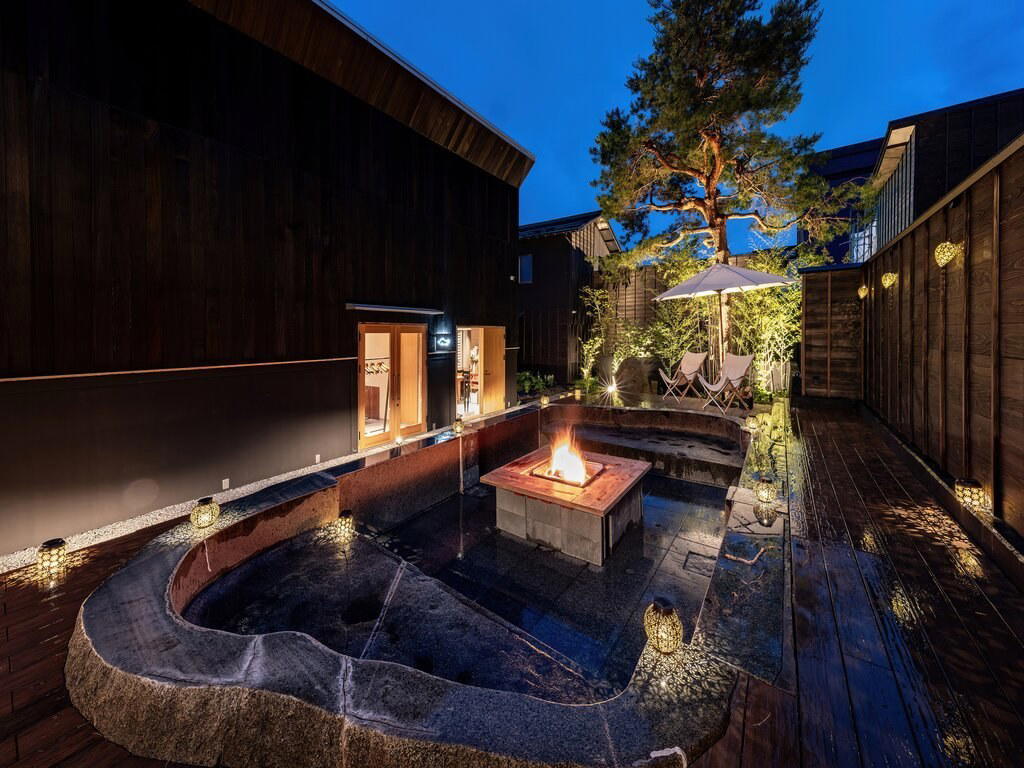
Where the Okitama Valley Sets the Terms
The road into Nanyo's Okitama Valley arrives at a particular kind of quiet. The Ou Mountains hold the basin in on both sides, and the temperature swings that move through the valley floor from season to season are not incidental to what happens at Osteria Sincerita: they are the operating condition. Two rooms, a dining room, and a kitchen — the structure is small enough that it functions almost as a farmhouse with ambition, except the ambition is entirely visible in the quality of what arrives on the plate and what faces the window.
For context on where this property sits within Japan's premium rural accommodation circuit, see our full Nanyo restaurants guide and the Yamagata The Takinami, which occupies a different register of the same region.
The Physical Space as Editorial Argument
Japan's small-inn tradition has always treated architecture as a form of editorial: the building itself makes a claim about what matters. Osteria Sincerita makes its claim through compression and orientation. With only two rooms, both facing the surrounding fields, the property eliminates the buffer of scale. There is no lobby to traverse, no amenity floor, no visual noise that belongs to a hotel operating at volume. The dining room follows the same logic — intentionally composed, which in this context means everything placed with reason and nothing placed for spectacle.
One suite includes a Finnish sauna, a detail that sits with unexpected coherence in a Yamagata valley context. The prefecture has a long relationship with hot-spring culture and thermal recovery, and the sauna extends that logic without importing it from a different design tradition. Both rooms face the fields, which means the agricultural rhythm of the Okitama floor is part of the stay rather than a backdrop glimpsed through a corridor window.
The comparison holds because all three prioritise landscape legibility over amenity accumulation. Where Benesse House in Naoshima uses art as the organising principle and Gora Kadan in Hakone works within established kaiseki and ryokan conventions, Osteria Sincerita introduces a different architectural grammar: the Italian inn form, translated through a Yamagata agricultural context.
The Kitchen and the Valley
Italian cooking in rural Tohoku is a deliberate position, not an anomaly. The logic runs through the ingredients: Yamagata's cold winters and high diurnal temperature variation produce vegetables of pronounced flavour and firm texture, conditions that echo the highland growing regions of northern Italy more than the temperate warmth of central Honshu. Yonezawa beef, one of the prefecture's most regarded agricultural outputs, carries the kind of fat distribution and depth that responds well to dry-aging and direct preparation rather than elaborate sauce work.
Chef Makoto Harada's kitchen centres on housemade pasta, dry-aged heifer cuts from the Yonezawa herd, and seasonal produce determined by what the Okitama floor is producing. Pricing is on request only, which in this category of property signals a structured, probably prix-fixe format rather than à la carte flexibility. The absence of a published menu or open price list is consistent with small-count inns that offer a single sitting or a fixed experience, where the kitchen's direction on any given evening is the menu.
For comparison, properties like Araya Totoan in Kaga and Nishimuraya Honkan in Kinosaki-cho operate within kaiseki frameworks where the local product is similarly foregrounded. Osteria Sincerita holds the same product-first discipline but routes it through an Italian structural vocabulary, pasta as a vehicle for seasonal ingredients, dry-aging as a technique for concentrating flavour rather than masking provenance.
Getting There and Planning the Stay
Osteria Sincerita sits at 3005 Akayu, in the Akayu area of Nanyō, Yamagata Prefecture. The two-and-a-half-hour journey from Tokyo is the relevant planning unit. That distance is short enough for a long weekend but substantial enough to require intention: this is not a property you pass through. The Yamagata Shinkansen from Tokyo to Yonezawa, followed by a local transfer to the Akayu area, is the standard approach, though the prefecture's road network makes a rental car a practical alternative for those arriving from other Tohoku destinations.
With only two rooms, availability is the primary logistical variable. Pricing on request rather than published rate is standard at this capacity level; reaching out directly well in advance, several months is not excessive for peak autumn foliage or winter seasons, is the operating assumption.
Travellers combining Yamagata with broader Tohoku or Tokyo-adjacent itineraries might consider how this stay fits alongside contrasting urban anchors: Bvlgari Hotel Tokyo and HOTEL THE MITSUI KYOTO represent the high-volume luxury pole that makes Osteria Sincerita's compression feel deliberate rather than merely limited. The same contrast applies regionally: Fufu Nikko and Fufu Kawaguchiko occupy the small-luxury mountain category but within more established tourist circuits. Okitama is quieter, less trafficked, and requires more deliberate routing.
For travellers whose Japan itineraries reach further, Amanemu in Mie, Asaba in Izu, Sekitei in Hatsukaichi-shi, and Azumi Setoda in Onomichi all operate in the same discipline of small-count, landscape-anchored accommodation, each in a distinct Japanese geography.
Comparable Spots, Quickly
Comparable venues nearby, for context on price, style, and recognition.
| Venue | Cuisine | Price | Awards | Notes |
|---|---|---|---|---|
| Osteria SinceritaThis venue — the venue you are viewing | Modern auberge annex to historic ryokan | $500–750 | 1 Michelin Key | Not listed |
| Yamagata The Takinami | Renovated 350-year-old historic ryokan blending tradition and modern luxury | Not listed | 1 Michelin Key | Akayu Onsen |
| 倭乃里 (Wanosato) (Wanosato) | Traditional Japanese luxury ryokan with preserved heritage architecture | $500–750 | 1 Michelin Key | Ichinomiya |
| Tsubaki (海石榴) | Traditional Japanese sukiya-style ryokan with contemporary comfort, positioned as a high-end kaiseki dining destination. | Not listed | 5-Star | Oku-Yugawara |
| Hacienda Vison Hotel | Mid-century modern boutique manor house with artist-inspired rooms | $500–750 | 1 Michelin Key | Odaicho |
| Takefue (竹ふえ) | Traditional farmhouse-style ryokan scattered across expansive bamboo forest grounds. | $1,500–2,500 | Michelin Selected | Minamioguni |
Recognition history
Dated appearances from independent guides and award organizations, with the underlying list record or original source where available.
Michelin 1 Key
Michelin
Full recognition history (2 entries)
Michelin 1 Key
Michelin
Continue exploring
More in Nanyo
Hotels in Nanyo
Browse all →
Restaurants in Nanyo
Browse all →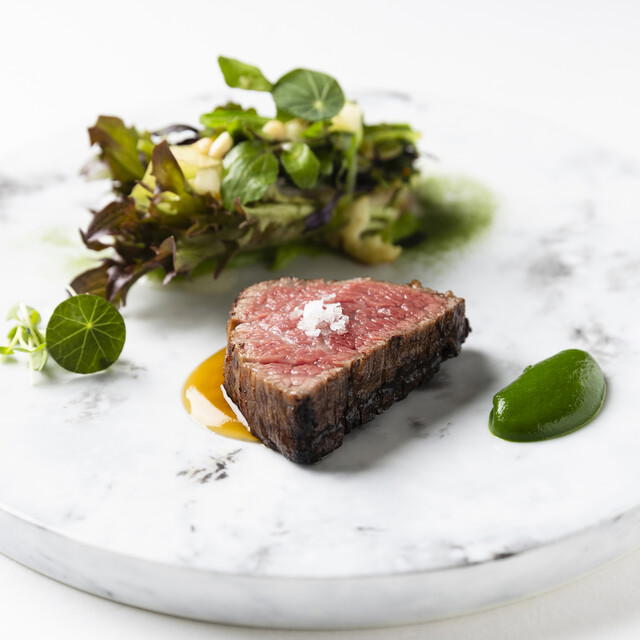
Wineries in Nanyo
Browse all →
Details
- Modern
- Quiet
- Elegant
- Intimate
- Scenic
- Romantic Getaway
- Anniversary
- Wellness Retreat
- Panoramic View
- Private Dining
- Restaurant
- Mountain
- Garden
- Elevator
Intentionally composed dining room in a modern, quiet setting overlooking fields amid clean mountain air.