
Michelin Selected
Miru Amami sits in Tatsugo on Amami Oshima, an island in the Ryukyu Arc that occupies a distinct position between mainland Japan and Okinawa in both geography and culture. The property places guests inside one of Japan's most biologically and culturally specific landscapes, where subtropical forest, coral coastline, and a living textile tradition converge. For travellers calibrating between urban ryokan and true island immersion, this is a different calculation entirely.

Pearl is the En Primeur Club membership app, where members save venues, book tables and use the concierge.
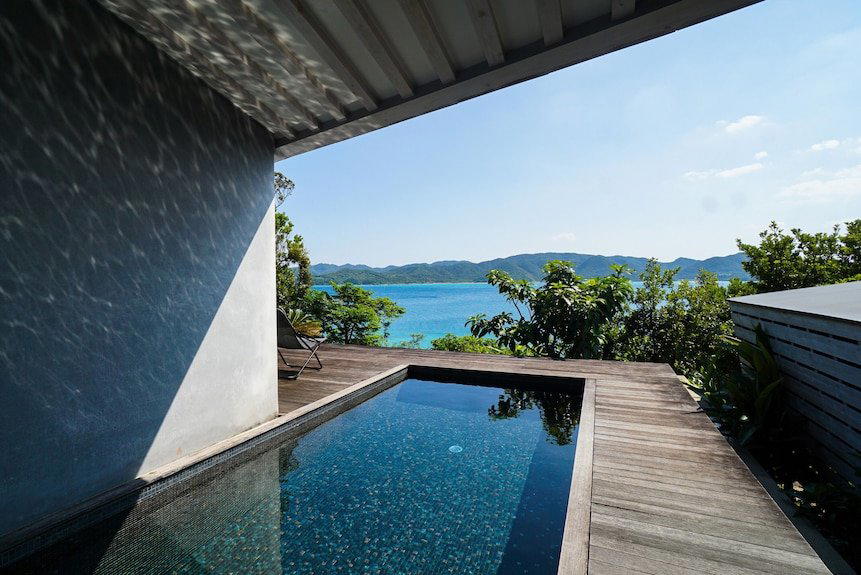
Where the Ryukyu Arc Meets Japanese Hospitality Design
Amami Oshima sits roughly halfway between Kagoshima and Okinawa, administratively part of Kagoshima Prefecture but culturally closer to the Ryukyu world. The island earned UNESCO World Natural Heritage status in 2021, joining Okinawa's Yambaru and Iriomote in a designation that covers subtropical forest systems with some of the highest endemic species density in Japan. Tatsugo, the municipality where Miru Amami is addressed, occupies the northern reaches of the island, positioned away from the administrative centre of Amami City. That location matters: properties in peripheral island municipalities tend to orient toward immersion rather than convenience, and the surrounding environment at Ashitoku is the context in which Miru Amami asks to be read.
The broader shift in Japanese luxury hospitality over the past decade has been a move away from formulaic resort footprints toward what might be called landscape-responsive design: structures that negotiate with their environment rather than impose upon it. Properties like Amanemu in Mie and Benesse House in Naoshima represent different versions of this approach, one through Aman's signature low-density pavilion model, the other through the integration of architecture and contemporary art. Miru Amami operates in this same territory: an island-specific property whose value proposition is inseparable from its physical setting on one of Japan's most ecologically protected landmasses.
Designing for an Island That Resists Simplification
Amami Oshima has a particular challenge for hospitality design. The island is not a beach destination in the conventional Okinawan sense, though it has coastline. It is a forest island, with mangrove inlets, the endemic Amami rabbit, and a subtropical canopy that UNESCO cited specifically for its biodiversity. Any property that takes its setting seriously has to reckon with that complexity. The architectural problem is how to give guests access to that environment without reducing it to a backdrop.
The vocabulary of contemporary Japanese resort architecture in this tier tends toward natural materials, sightline management, and a preference for horizontal planes that let the landscape dominate the vertical field of view. Properties like Zaborin in Kutchan and ENOWA Yufu in Yufu work through variations on this approach, calibrated to Hokkaido forest and Oita hot-spring terrain respectively. On a subtropical island like Amami, the palette shifts: timber, stone, and thatch give way to considerations of humidity, salt air, and cyclone exposure, all of which inflect what materials and structural approaches are appropriate. A property serious about this location would need to answer those questions in its construction choices.
Miru Amami's address in Ashitoku places it in a part of Tatsugo that has direct access to the island's coastal and forested zones. The name itself, Miru, is a Japanese word for a type of sea grape, a marine algae present in Amami and Okinawan waters, and its use signals an intention to ground the property in island-specific ecology rather than generic resort naming. That kind of nomenclatural care is a minor signal, but it is consistent with how the better-positioned island properties in southern Japan tend to signal intent before arrival.
Amami in the Context of Japan's Island Hospitality Tier
Japan's southern island hotel market has expanded considerably since the early 2010s, driven partly by the rise of Okinawa as a premium destination and partly by growing domestic travel appetite for UNESCO-designated environments. Halekulani Okinawa and Jusandi in Ishigaki represent two ends of that market: the former a large-format international brand anchored in the main island's resort corridor, the latter a smaller, design-specific property on an outer island with a very different register. Amami sits outside the Okinawa tourist mainstream, which means properties there compete less on brand recognition and more on the specificity of what they offer. For a certain traveller profile, that is the point.
The island's UNESCO status brought attention but also constraint. Development in and around the designated forest zones is tightly regulated, which limits the kind of expansive resort footprints that characterise some Okinawan properties. Smaller-scale, site-specific design is therefore not only an aesthetic choice on Amami but often a regulatory and environmental given. That aligns Miru Amami with a peer group defined less by brand affiliation and more by approach: properties like Azumi Setoda in Onomichi or Bettei Otozure in Nagato, which situate themselves in ecologically or historically specific places and build their offer around that specificity.
Planning a Stay: What the Island Requires
Reaching Amami Oshima from mainland Japan involves either a direct flight from Kagoshima, Osaka, or Tokyo (Haneda and Itami both have connections), or a ferry from Kagoshima that takes the better part of a day. The flight from Kagoshima runs under an hour; from Tokyo, Amami Airport receives direct flights that place the island within two hours of the capital, though frequency is lower than trunk routes. Tatsugo is north of Amami City, so travellers arriving by air will need ground transport from the airport, which is located near the city. Car hire is the standard approach for any meaningful exploration of the island's interior and coast, given that public transport outside Amami City is sparse.
Seasonality on Amami follows subtropical patterns: the rainy season runs from May into June, with typhoon risk peaking in late summer. The period from October through early spring offers the most consistently accessible conditions, though the forest's character shifts across seasons in ways that reward visits at different points in the year. Travellers with an interest in the island's habu sea snake, endemic birds, or mangrove kayaking should calibrate timing accordingly, as access to some natural areas is condition-dependent.
For those building a broader Japan itinerary around island properties and ryokan culture, Miru Amami pairs logically with properties at different points on the archipelago. The hot-spring ryokan tradition represented by Gora Kadan in Hakone or Asaba in Izu sits at a different register from island immersion, while urban anchors like Bvlgari Hotel Tokyo or HOTEL THE MITSUI KYOTO provide the city counterpoint. See our full Tatsugo restaurants guide for on-island dining options.
| Venue | Cuisine | Price | Awards |
|---|---|---|---|
| Miru AmamiThis venue (the venue you are viewing) | This venue | $200–300 | Michelin Selected |
| Bvlgari Hotel Tokyo | Michelin 3 Key, World's 50 Best | Not listed | 3 Michelin Keys · World's 50 Best #24 |
| Aman Kyoto | Michelin 2 Key, World's 50 Best | Not listed | 2 Michelin Keys · World's 50 Best #74 |
| Aman Tokyo | Michelin 2 Key, World's 50 Best | Not listed | 2 Michelin Keys · World's 50 Best #11 |
| Amanemu | Michelin 3 Key | Not listed | 3 Michelin Keys · La Liste Top Hotels |
| Four Seasons Hotel Tokyo at Otemachi | Michelin 3 Key | Not listed | 3 Michelin Keys · La Liste Top Hotels |
Recognition history
Dated appearances from independent guides and award organizations, with the underlying list record or original source where available.
Michelin Selected
Michelin
Continue exploring
More in Tatsugo
Restaurants in Tatsugo
All restaurants in Tatsugo →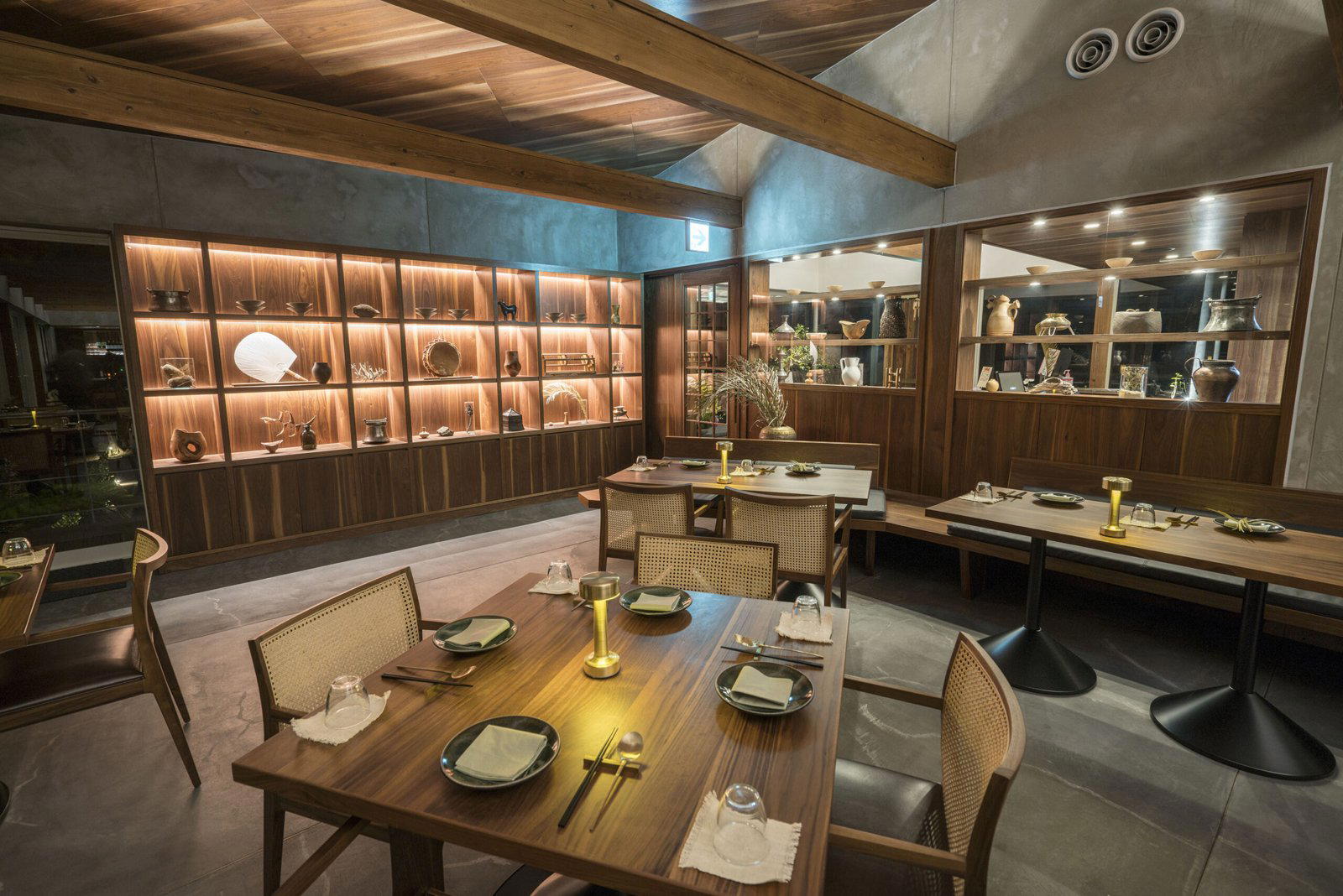
Details
- Quiet
- Scenic
- Elegant
- Intimate
- Romantic Getaway
- Family Vacation
- Wellness Retreat
- Weekend Escape
- Beachfront
- Private Villa
- Panoramic View
- Wi Fi
- Pool
- Spa
- Massage
- Restaurant
- Bicycle Rental
- Concierge
- Beach Access
- Waterfront
- Mountain
- Wheelchair Accessible
Serene and tranquil with natural light flooding through arched windows, spacious clean rooms featuring exposed beams and tatami, enhanced by ocean views and lush surroundings.