Ecocamp Patagonia
EcoCamp Patagonia sits inside Torres del Paine National Park on Estancia Cerro Paine, its geodesic dome structures designed to leave near-zero trace on one of Patagonia's most exposed terrains. The architecture responds directly to the environment: wind-resilient, thermally efficient, and anchored to the Magellanic steppe without permanent foundations. For travellers weighing lodge options across the park, EcoCamp occupies a distinct position in the low-impact, expedition-oriented tier.
Pearl is the En Primeur Club membership app — saves, bookings, and concierge access live there. Same editors, same standards.
- Address
- Estancia Cerro Paine, Torres del Paine, Magallanes y la Antártica Chilena, Chile
- Phone
- +56 2 2923 5974
- Website
- ecocamp.travel
- Directions
- Get directions
 Saves & bookings on Pearl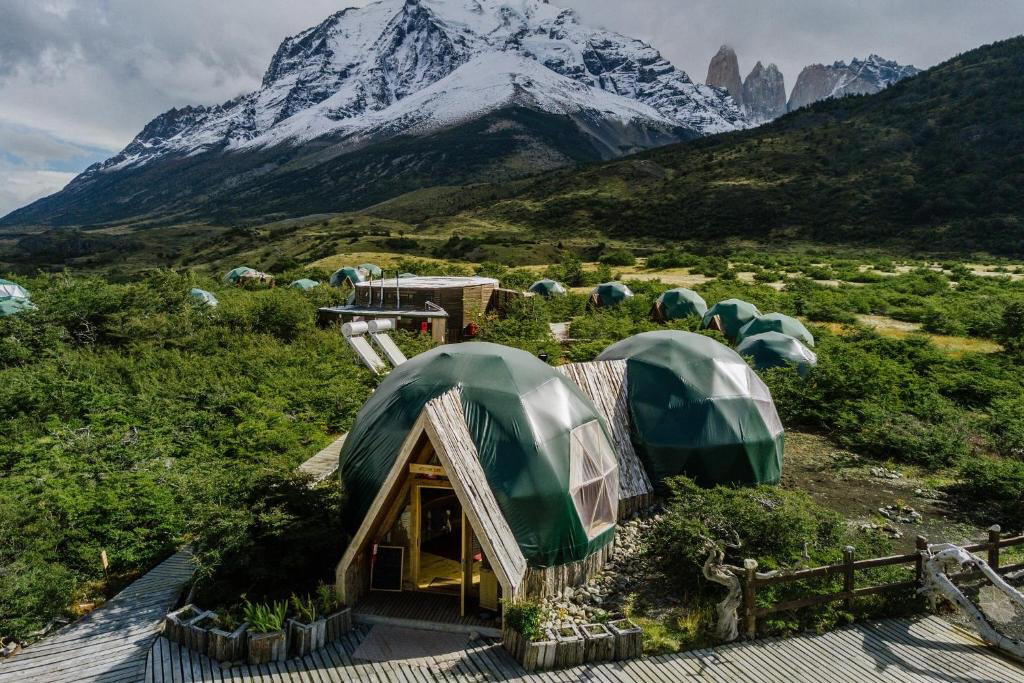
Domes on the Steppe: How EcoCamp Patagonia Solved the Architecture Problem
Arriving at Torres del Paine National Park from Puerto Natales, the road eventually opens onto a landscape where wind crosses without interruption and the light shifts faster than almost anywhere in South America. Building anything permanent here is an act of arrogance; building something that lasts without scarring the ground is a genuinely different proposition. EcoCamp Patagonia is a 30-room hotel on Estancia Cerro Paine in Torres del Paine, Magallanes y la Antártica Chilena, Chile, known for its geodesic dome accommodation.
Geodesic dome architecture is not merely aesthetic at this latitude. The spherical geometry distributes wind load evenly across the surface, reducing structural stress in conditions where sustained gusts regularly exceed 100 kilometres per hour. At EcoCamp, the domes are raised on wooden platforms rather than fixed into the earth, which preserves the soil structure beneath and allows the footprint to be fully removed if the site were ever to return to wilderness. That engineering logic, rather than any decorative intent, is what makes the property coherent. The design follows the terrain's rules rather than imposing new ones.
Inside the Dome Hierarchy
Torres del Paine lodge accommodation generally splits between large hotel-format properties and smaller-scale operations closer to the trekking routes. EcoCamp sits in the latter category, but its internal accommodation tier is worth understanding before booking. The camp runs several distinct dome types, ranging from particularly compact standard domes, shared bathroom facilities, minimal square footage, primarily suited to solo trekkers spending most of their time on trail, up to the Suite Domes, which add a private bathroom, a transparent upper section that functions as a skylight, and enough floor area to make the interior liveable across multiple nights.
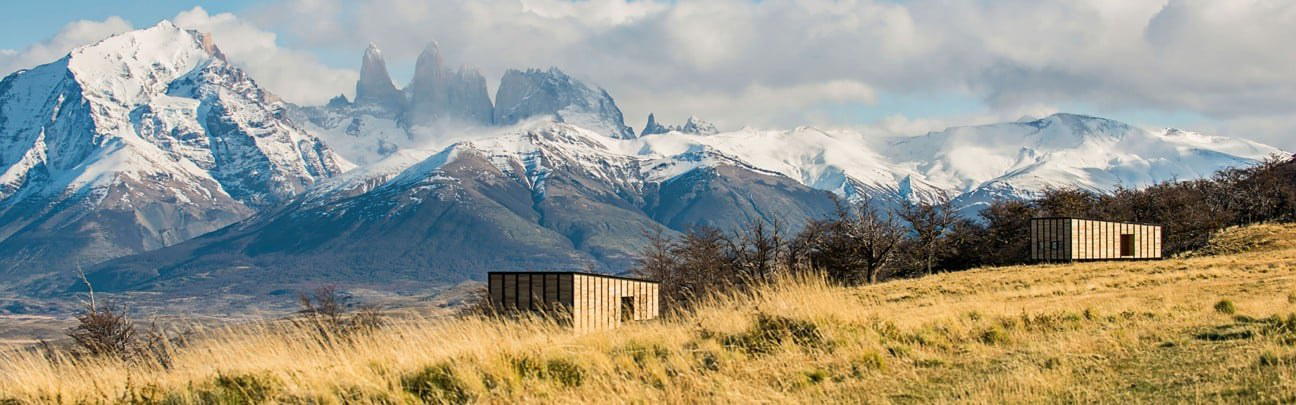
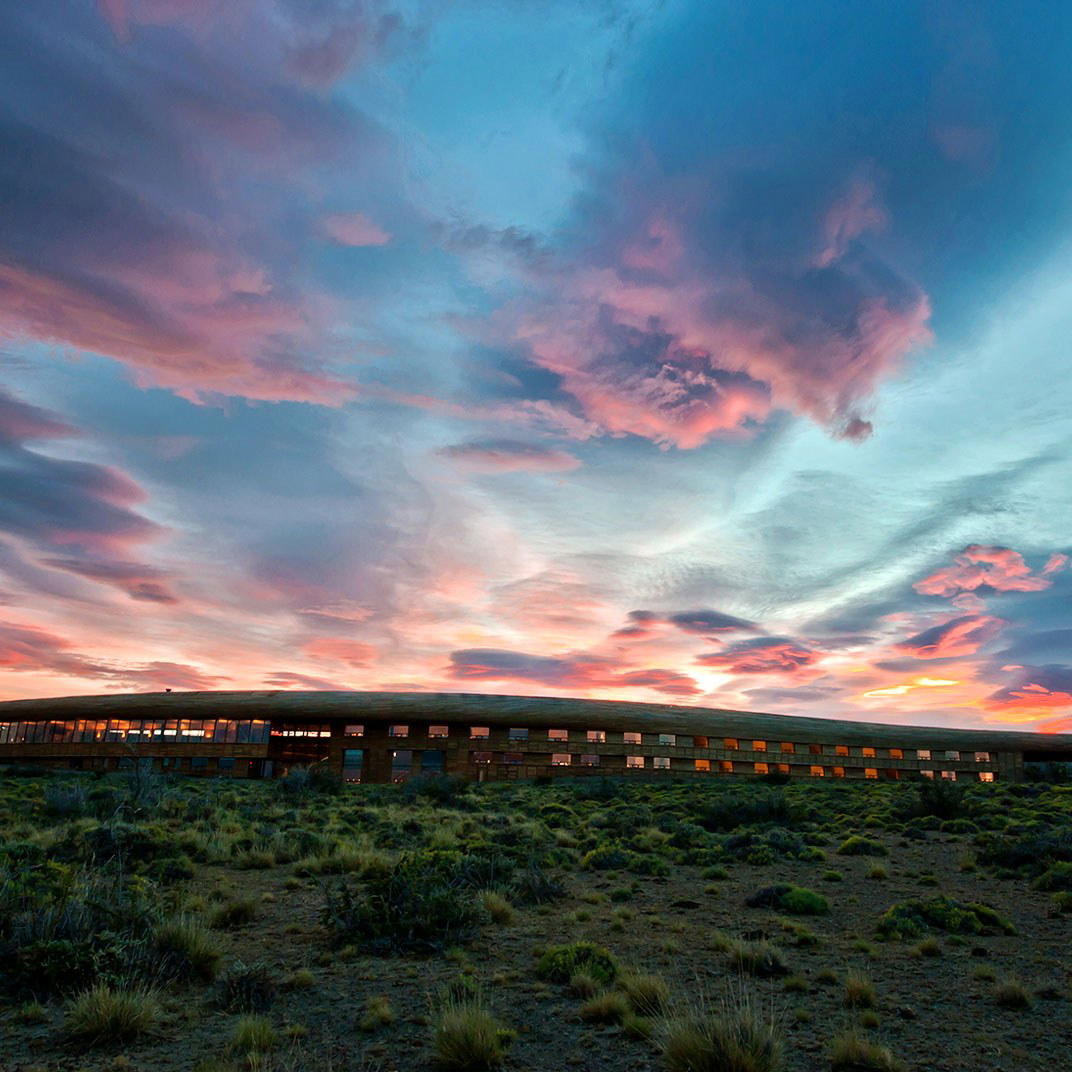
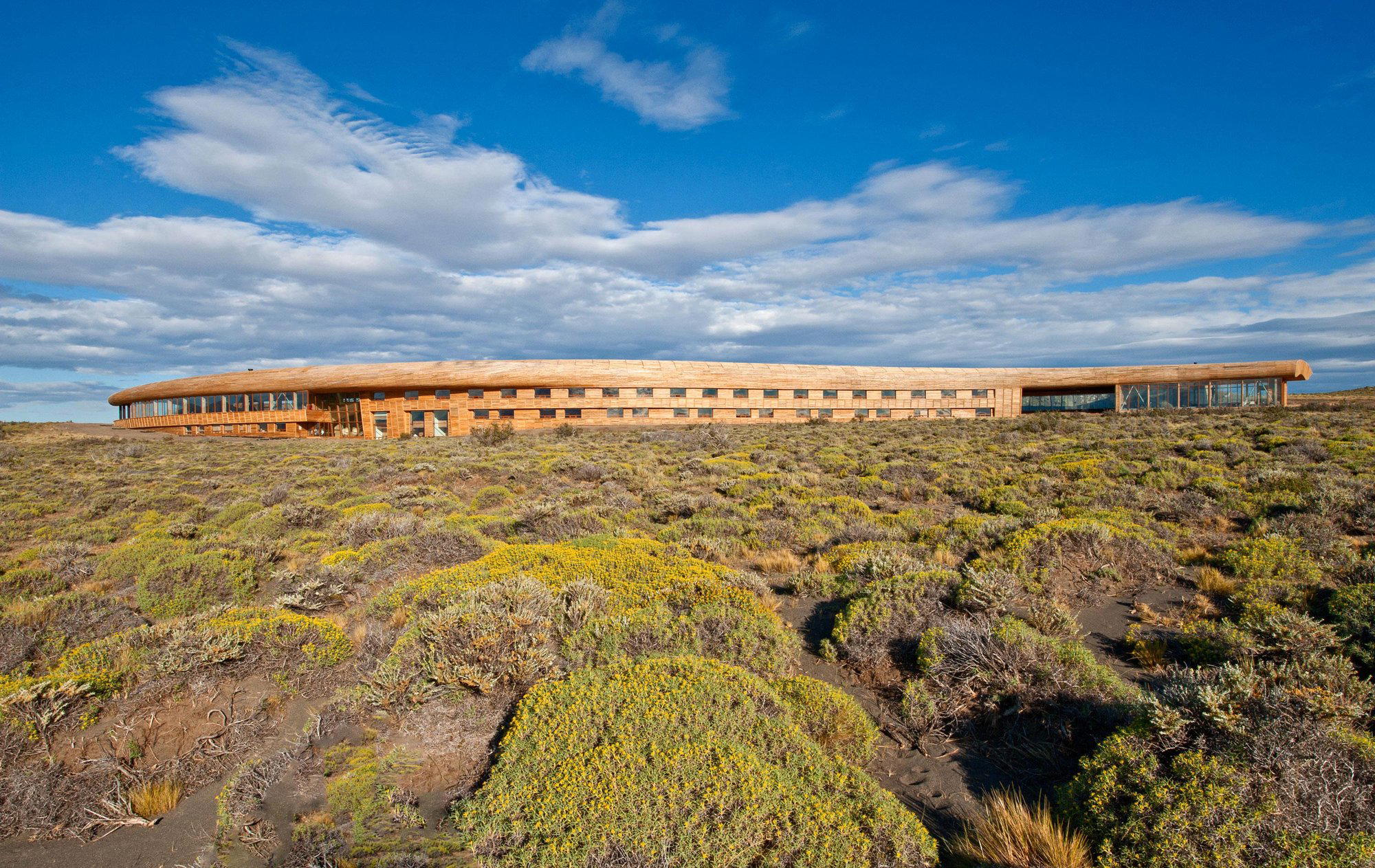
The Suite Dome's partial transparency is the design detail that most changes the experience. In a region where the Southern Cross is visible on clear nights and where dawn arrives with the kind of unfiltered light that only comes at the end of the world, a sleeping space that opens to the sky rather than shutting it out earns its premium. Properties at other price points in the park, including Awasi Patagonia and Tierra Patagonia, offer different relationships with the landscape, Awasi through floor-to-ceiling glass panels, Tierra through its long horizontal silhouette designed by Cazú Zegers, but none use the overhead plane in quite the same way.
The Communal Dome as Social Infrastructure
Where most lodges in the park concentrate communal life in a single dining room, EcoCamp divides its shared spaces across several domes, each purpose-built. The main communal dome houses dining and gathering functions, but the architectural effect of moving between smaller connected structures rather than occupying a single large volume keeps the scale human. After a long day on the W Trek or crossing the John Gardner Pass, the proportions matter. A room that seats forty in a standard rectangular layout feels like an airport lounge after eight hours in wind and rain; a dome that seats twenty in a circular arrangement does not.
That circular configuration is also not accidental. The dome's geometry eliminates corners and privileges the centre, which tends to create a different social dynamic than rooms with a front and a back. Guests arriving from different trekking routes at different hours can reorient around the same shared space without the spatial hierarchy that traditional hotel dining rooms impose. For a camp whose guest list skews toward expedition trekkers rather than passive resort visitors, this matters more than thread counts.
Location Within the Park's Logic
EcoCamp's address on Estancia Cerro Paine places it within reach of the park's primary trekking circuits. The Torres del Paine massif, including the granite towers that give the park its name, is accessible as a day-hike from this position. The camp sits at a distance from Puerto Natales that makes it impractical as a day trip from town, which effectively means it functions as a base camp rather than a peripheral overnight stop.
For context on how EcoCamp fits into the broader Chilean wilderness accommodation picture, it occupies a different market position than properties like REMOTA in Puerto Natales, which sits outside the park and uses the town as its operational hub, or Explora Torres del Paine, which operates at a higher price tier with a different guided programme structure. Las Torres Patagonia Hotel operates closer to a conventional hotel format. EcoCamp's distinctiveness is its commitment to the dome as the unit of architecture and, by extension, its emphasis on low-impact occupation of the site.
Travellers spending time elsewhere in Chile before or after Torres del Paine will find comparable quality in the wilderness lodge tier at andBeyond Vira Vira in Pucon, Puyuhuapi Lodge in Aisén, or Noi Puma Lodge in Cachapoal. For those approaching from Santiago, W Santiago and Debaines Hotel Santiago represent the urban end of the Chilean accommodation spectrum. The full scope of Torres del Paine options is covered in our Torres del Paine guide.
Planning and Booking
EcoCamp's position inside the park means access requires either a self-drive from Puerto Natales or transfer arrangements coordinated through the camp. Booking for peak summer months, December through February, should happen months in advance given the constrained accommodation supply within the park boundary. The dome format means capacity is fixed and cannot be expanded for high-demand periods the way a hotel might open additional floors.
Comparable Venues
Comparable venues nearby, for context on price, style, and recognition.
| Venue | Cuisine | Price | Awards | Notes |
|---|---|---|---|---|
| Ecocamp PatagoniaThis venue — the venue you are viewing | Sustainable geodesic dome glamping inspired by indigenous Kawesqar architecture | $$$$ | Not listed | Not listed |
| Las Torres Patagonia Hotel Torres del Paine | Contemporary Patagonian ranch-style with modern renovations | $$$$ | Not listed | Torres del Paine National Park |
| Tierra Patagonia | Patagonian wilderness lodge | $$$$ | Michelin 3 Key | Torres del Paine National Park |
| Awasi Patagonia | Exclusive all-inclusive lodge with stand-alone private villas in a native forest reserve | $$$$ | Michelin 3 Key | Torres del Paine National Park |
| Puyuhuapi Lodge & Spa | Hotel | $$$$ | Not listed | Puyuhuapi |
| Tierra Patagonia Hotel & Spa | Patagonian-designed luxury wilderness lodge | $$$$ | 5-Star | Torres del Paine National Park |
Continue exploring
More in Torres del Paine
Hotels in Torres del Paine
Browse all →
Restaurants in Torres del Paine
Browse all →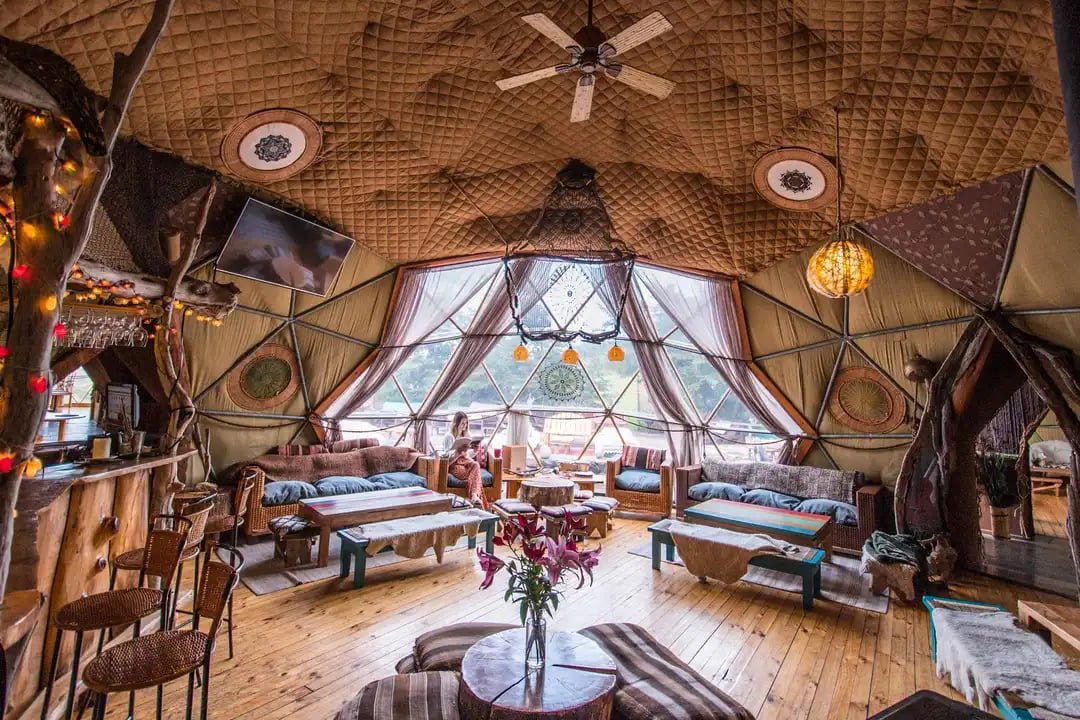
At a Glance
- Rustic
- Scenic
- Cozy
- Intimate
- Romantic Getaway
- Wellness Retreat
- Weekend Escape
- Group Retreat
- Panoramic View
- Terrace
- Wi Fi
- Concierge
- Mountain
- Wi Fi
- Concierge
Cozy and immersive Patagonian wilderness atmosphere with natural textures, wood stoves for warmth, large skylights for stargazing, and subtle solar lighting that blends seamlessly into the rugged steppe.