
Positioned inside Chile's Patagonia National Park, Explora's lodge in Aysén uses local stone, recycled timber, and copper roofing as both structural material and design statement. The kitchen draws from gaucho tradition, anchoring daily-changing menus in fire and regional produce. For travellers heading toward the northern ice fields, this is the operational base that makes the territory accessible without sacrificing comfort.
Pearl is the En Primeur Club membership app — saves, bookings, and concierge access live there. Same editors, same standards.
- Address
- Patagonia National Park, Aysén
- Directions
- Get directions
 Saves & bookings on Pearl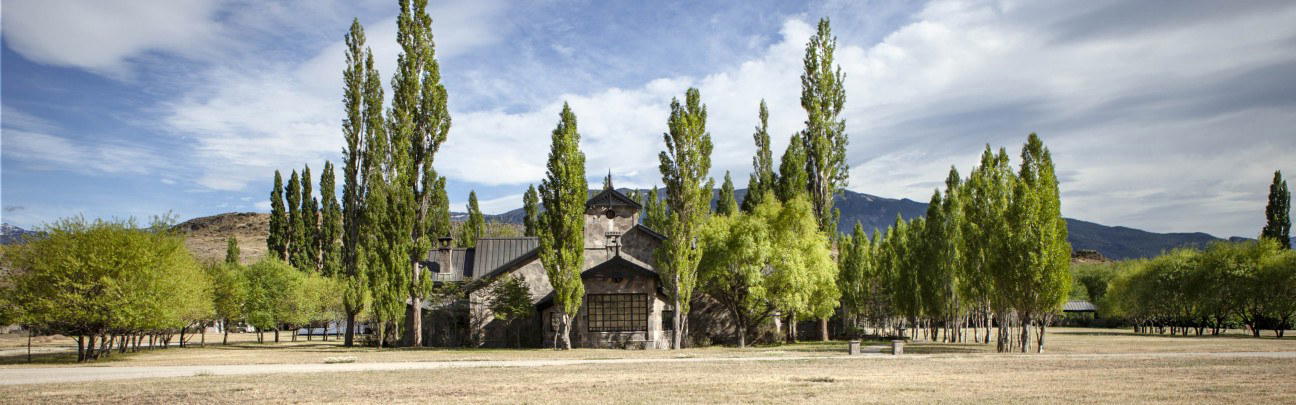
Stone, Copper, and the Logic of Building at the Edge of the Ice Fields
In Chilean Patagonia, the architecture problem is not aesthetic, it is philosophical. What right does a structure have to exist here, in a territory defined by geological scale and meteorological indifference? The lodges that answer this question most convincingly tend to do so through material honesty: no imported marble, no tropical hardwoods shipped south, no surface applied to disguise that the building arrived from somewhere else. The Explora lodge in Patagonia National Park, outside Cochrane, belongs to that approach. Stone quarried locally forms its walls. Recycled timber frames its interiors. Copper, a Chilean material in the deepest industrial and cultural sense, covers the roof. The building reads as an extension of the terrain it occupies rather than a displacement of it.
This material logic matters beyond aesthetics. Patagonia's weather is corrosive and unpredictable. Materials that belong to the region tend to perform better within it, and the copper roof in particular ages into the surrounding palette of lichen-covered rock and wind-dried scrub in a way that synthetic alternatives never could. The project framing signals a broader commitment: the building was not airlifted in and it is not maintained in isolation from its surroundings. That distinction separates a narrow tier of serious expedition-grade properties from the broader category of remote resort accommodation.
For comparison within Explora's own network, Explora Torres del Paine operates in a more established tourist corridor with correspondingly higher visitor volumes. The Patagonia National Park property, positioned near Cochrane in the Aysén region, sits further north along the Carretera Austral and draws a smaller, more expedition-minded cohort. The territory it accesses, the northern ice fields, the river valleys and highland lakes of the Aysén, remains among the least-visited large-scale wilderness areas in South America. It reflects the infrastructural reality of a region where road access remains genuinely limited and visitor numbers are constrained by both logistics and accommodation capacity.
Gaucho Culture as Kitchen Logic
The dining approach at the Cochrane lodge does not import a metropolitan chef's concept into a remote setting. Instead, it draws from the estancia tradition of the surrounding region, the gaucho culture that shaped Patagonian food long before the territory attracted international travellers. Fire is the primary cooking medium, and local produce forms the ingredient base. Menus rotate daily, which in a lodge context signals a genuine engagement with what is available rather than a fixed offering engineered for replicability.
This approach places the kitchen within a broader current in serious remote hospitality: the move away from importing fine-dining conventions toward reading the territory itself as the menu's source material. Properties like andBeyond Vira Vira in Pucón and Awasi Atacama in San Pedro de Atacama operate within a similar framework, the landscape functions as both setting and larder, and the cuisine is anchored in a regional tradition rather than transplanted from somewhere more recognisable. At the Explora Cochrane property, that tradition is gaucho: direct, fire-driven, and shaped by the practicalities of cooking at the edge of a continental ice sheet.
The bar operates as the lodge's social anchor after expeditions. In a setting where guests are likely to return from long days in high, exposed terrain, the function of a gathering space is not incidental, it is structural to the rhythm of a stay. Pisco sour, Chilean wine, and the decompression of shared experience at altitude define the bar's role in a way that no urban cocktail program could replicate.
The Territory and What It Takes to Access It
Patagonia as a destination has split into two distinct tiers. The first, Torres del Paine, Puerto Natales, the W Circuit, has reached international recognition and the accommodation infrastructure to match, with properties like Ecocamp Patagonia and REMOTA in Puerto Natales serving well-organised expedition travel. The second tier, the Aysén region, the Carretera Austral north of Cochrane, the ice fields accessible from this latitude, remains operationally demanding and visitor-light. The Explora lodge in Patagonia National Park occupies this second tier deliberately.
The northern ice fields that the property describes as a few kilometres distant represent a category of geography with few operational access points anywhere in the world. For travellers whose objective is that level of territory, rivers and lakes that appear on maps but carry no tourist infrastructure, valleys without trails, landscapes that resist the choreography of managed wilderness tourism, the lodge functions as the strategic hub it positions itself to be. The intimate atmosphere and private scale are not simply design choices; they reflect the reality that this volume of visitors is all that the territory should absorb.
Travellers approaching from Santiago will typically connect through Balmaceda Airport (the regional hub for Aysén) before transferring overland. The route itself along the Carretera Austral is part of the context: this is not a destination you arrive at incidentally. Comparable design-led properties further north in Chile, Noi Puma Lodge, CasaMolle, Puyuhuapi Lodge and Spa, serve their respective territories with similar commitment to place-specificity, but none are positioned at the edge of the southern ice fields. Among small-scale wilderness lodges, properties with this combination of material integrity and ice-field adjacency are rare. Amangiri in Canyon Point and Aman Venice each demonstrate how serious design-led hospitality adapts to its specific geography; the Explora Cochrane lodge is doing the same thing at Patagonian latitude.
For the broader Chile itinerary, properties worth considering at either end of a journey include W Santiago and Debaines Hotel Santiago as Santiago bases, with Palacio Astoreca in Valparaíso, Vik Chile, Futangue Hotel and Spa, Hotel AWA in Puerto Varas, Mari Mari Natural Reserve Experience, Refugia Chiloé, Hotel Las Majadas, Clos Apalta Residence, Viña Antiyal, and Explora Rapa Nui providing regional depth across the country's diverse terrain.
Comparable Venues
Comparable venues nearby, for context on price, style, and recognition.
| Venue | Cuisine | Price | Awards | Notes |
|---|---|---|---|---|
| Explora Patagonia National ParkThis venue — the venue you are viewing | Sustainable boutique lodge blending into Patagonian wilderness with locally sourced stone and reclaimed wood. | $$$$ | 5-Star | Not listed |
| Tierra Patagonia Hotel & Spa | Patagonian-designed luxury wilderness lodge | $$$$ | 5-Star | Torres del Paine National Park |
| REMOTA | Patagonian-inspired adventure lodge with spacious modern design | $$$$ | 4-Star | Puerto Natales |
| Explora Torres del Paine | Award-winning design integrated into the Patagonian landscape with native wood elements and striking architecture. | $$$$ | 5-Star | Torres del Paine National Park |
| Mari Mari Natural Reserve Experience | Exclusive eco-luxury lodges in a private natural reserve | $$$$ | 5-Star | Los Muermos |
| Hotel Antumalal | Mid-century modernist boutique hotel integrated into natural landscape | $$$$ | 4-Star | Pucon |
Recognition history
Dated appearances from independent guides and award organizations, with the underlying list record or original source where available.
Mr & Mrs Smith Smith Seal of Approval
Mr & Mrs Smith
Virtuoso Luxury Hotel Partner
Virtuoso
Continue exploring
More in Cochrane
Restaurants in Cochrane
Browse all →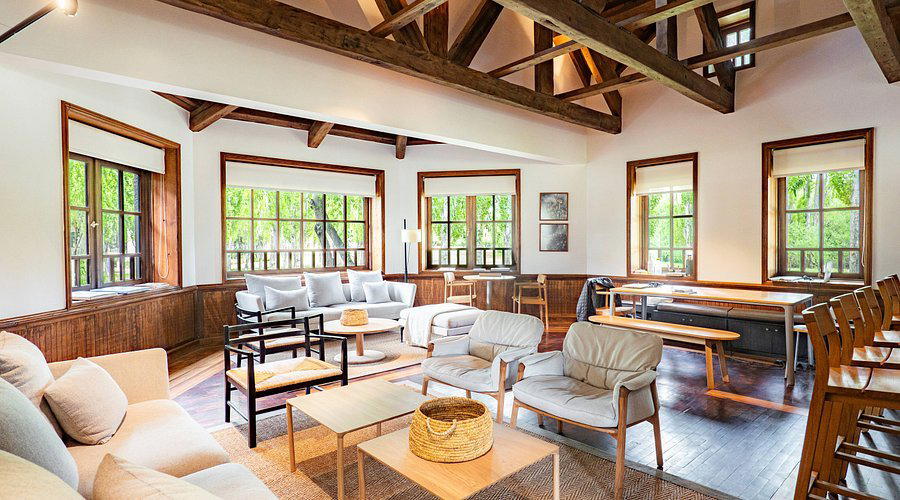
At a Glance
- Quiet
- Scenic
- Rustic
- Intimate
- Elegant
- Romantic Getaway
- Wellness Retreat
- Weekend Escape
- Panoramic View
- Terrace
- Wi Fi
- Spa
- Hot Tub
- Concierge
- Room Service
- Mountain
- Wi Fi
- Spa
- Hot Tub
- Concierge
- Room Service
Peaceful and serene atmosphere with natural light from large windows overlooking mountains, hills, and wildlife, fostering relaxation after outdoor adventures.