Accessible only by boat or floatplane along Patagonian Aysén's Canal Puyuhuapi, this remote thermal lodge occupies a position where fjord, forest, and hot springs converge. The architecture channels the region's German settler vernacular, while the spa complex built over the channel itself has made Puyuhuapi Lodge a reference point among Chile's remote wilderness properties for decades.
 Discover on Pearl
Pearl is the En Primeur Club membership app — saves, bookings, and concierge access live there. Same editors, same standards.
- Address
- Bahia Dorita s/n, Cisnes, Chile
- Phone
- +56 2 2225 6489
- Website
- puyuhuapilodge.com
A Lodge at the End of the Road, Literally
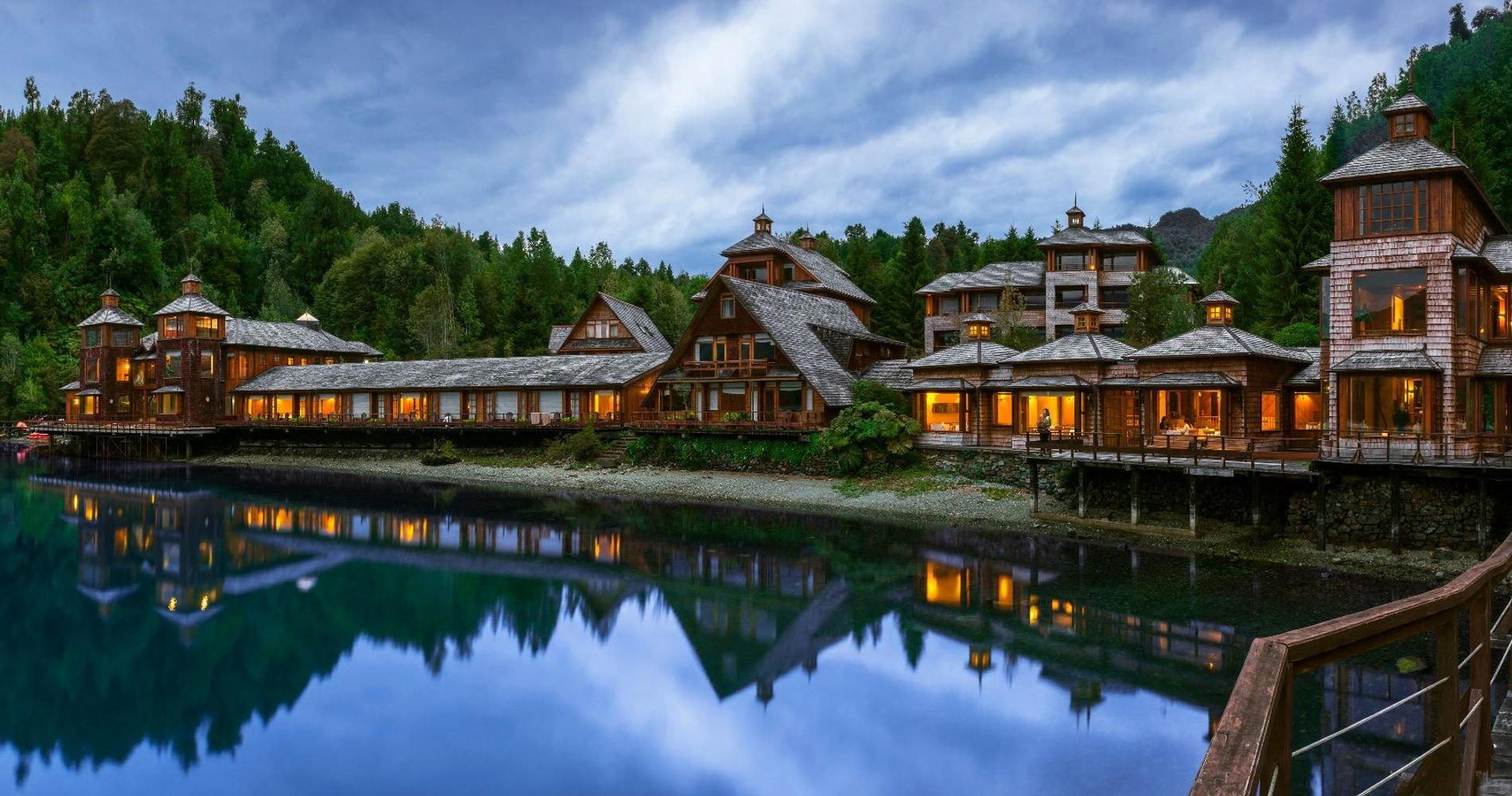
Puyuhuapi Lodge & Spa is a hotel in Cisnes, Chile, with a 4.5 Google rating from 222 reviews. Puyuhuapi Lodge & Spa, on Bahía Dorita in Chile's Aysén region, belongs to that category. The property sits on the eastern shore of Canal Puyuhuapi, a narrow fjord-like channel running south toward the Carretera Austral, and the only way in is by boat transfer from the village of Puyuhuapi or, in certain conditions, by floatplane. That logistical reality does significant editorial work before a guest sets foot on the dock. It is the defining structural fact of the property, and everything from the architecture to the thermal pool placement reads as a response to it.
The Architecture of Isolation
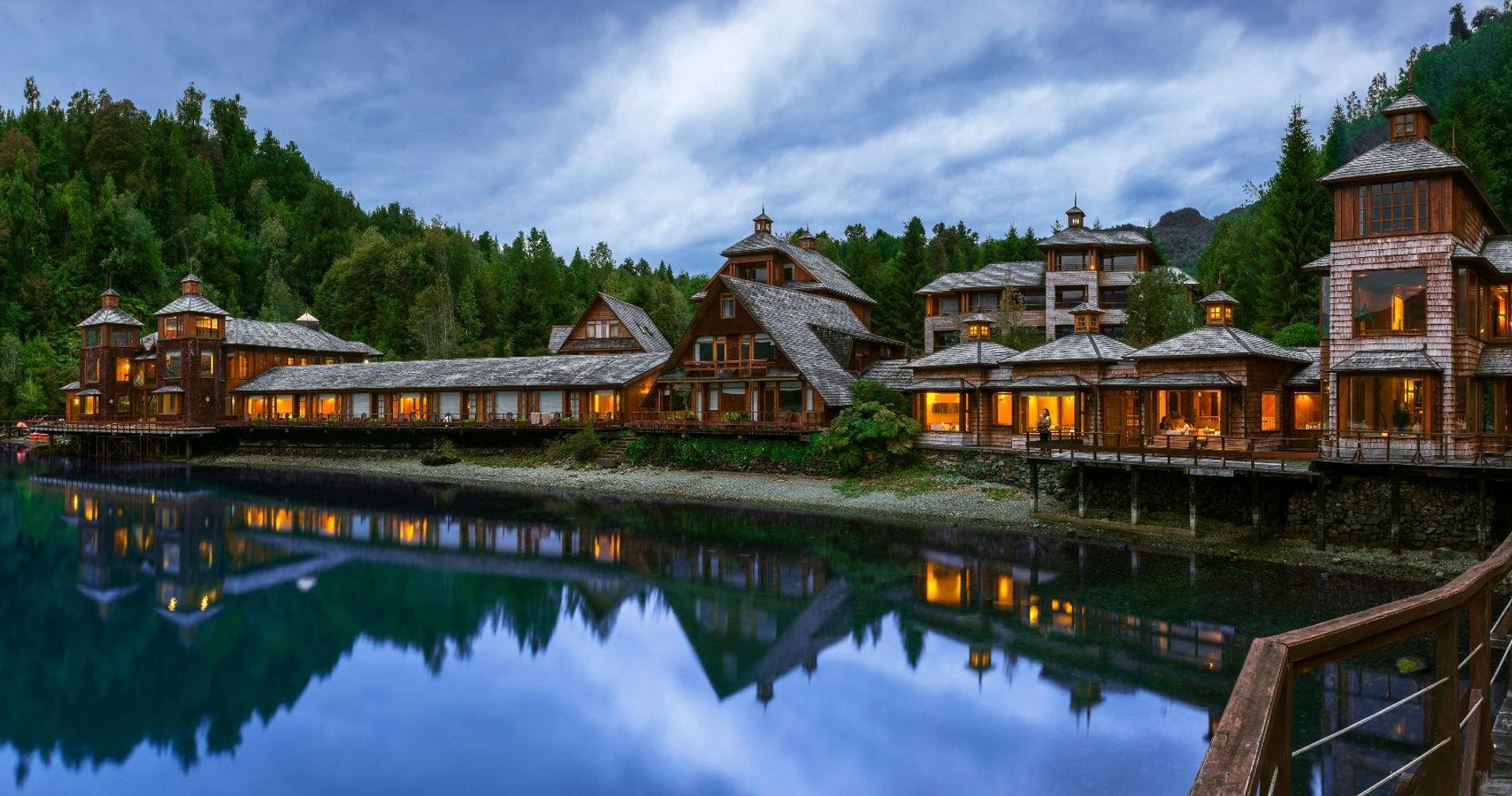
The design language at Puyuhuapi Lodge draws from the German-Croatian settler tradition that shaped the village of Puyuhuapi itself, founded in the 1930s by Sudeten German immigrants who arrived before the road. Steep-pitched roofs, heavy timber framing, and cladding that weathers to grey-brown against the alerce forest, these are not decorative choices imposed from Santiago. They are a direct reading of the vernacular architecture that preceded the lodge and still surrounds it. In Chilean Patagonia, where a number of newer properties use imported contemporary minimalism as a design shorthand, the Puyuhuapi approach registers differently: it looks like it grew from the place rather than landed in it.
The thermal spa complex is the architectural centrepiece. Built on a platform extending over the channel itself, the hot spring pools sit at water level, which means guests in the thermal water are visually at the same elevation as the fjord surface. On overcast days, which in Aysén is most days, the effect is of floating inside the channel's own weather system. This is not a spa that performs wellness theatre; it is a structure in direct physical conversation with its environment. The distinction matters when positioning Puyuhuapi against Patagonian competitors: properties like Ecocamp Patagonia in Torres del Paine or REMOTA in Puerto Natales build identity through landscape engagement, but Puyuhuapi's thermal infrastructure creates a more immediate, bodily relationship with the terrain.
Where Puyuhuapi Sits in Chile's Remote Lodge Tier
Chile's premium remote-property market has developed along two distinct axes over the past two decades. One axis runs through the Explora network, high-capacity, activity-programmed lodges with strong brand recognition among international operators, including Explora Torres del Paine, Explora Patagonia National Park, and Explora Rapa Nui. The other axis is smaller, harder to categorise, and often older: properties where the primary offering is place rather than program. Puyuhuapi Lodge sits firmly on this second axis. Its longevity in the Aysén market gives it a different kind of authority: accumulated local knowledge embedded in the operation.
For comparison across Chile's nature-led luxury tier, andBeyond Vira Vira in Pucón works a similar formula of thermal access and Andean landscape but within a more developed tourism corridor. Futangue Hotel & Spa in Riñinahue addresses a comparable traveller profile in the lake district. Puyuhuapi's differentiating factor is the combination of fjord-channel access and geothermal infrastructure in a region that receives substantially fewer visitors than either of those areas. Aysén remains one of the least-visited regions in South America by international standards, which shapes the character of a stay in ways that programming cannot replicate.
Getting There and Planning the Visit
Aysén is reached via Balmaceda Airport, served from Santiago by LATAM and Sky Airline. From there, the road to Puyuhuapi village follows the Carretera Austral north for roughly 220 kilometres, a drive of four to five hours depending on conditions and ferry crossings. The boat transfer from the village to the lodge takes approximately fifteen minutes across the channel.
Seasonality matters significantly in this part of Patagonia. Rainfall in Aysén is among the highest in South America, the region receives between 2,000 and 4,000 millimetres annually in most of the channel zone, so itinerary planning should treat weather as a structural variable rather than a background condition. The thermal pools function in any weather; outdoor trekking access is more contingent.
For those extending into the Chilean north, Awasi Atacama in San Pedro de Atacama and Noi Puma Lodge in Cachapoal represent contrasting landscape registers on the same country.
The Thermal Logic
Hot spring infrastructure in Chilean Patagonia is rarer than the global spa-resort market might imply. The geothermal conditions that allow for natural thermal pools are geographically specific, and the combination of accessible hot springs with fjord-channel access at the latitude of Aysén is not common. This gives Puyuhuapi's spa complex an environmental specificity that purpose-built wellness facilities elsewhere cannot reproduce. The pools are fed by natural thermal sources rather than heated artificially, which places the experience in a different register from resort spa operations in Santiago or the lake district. For travellers whose itinerary through South America has included internationally branded luxury, the Puyuhuapi proposition is categorically different: the asset is geological and locational, not curatorial.
At a Glance
- Scenic
- Cozy
- Rustic
- Quiet
- Intimate
- Romantic Getaway
- Wellness Retreat
- Weekend Escape
- Panoramic View
- Destination Spa
- Waterfront
- Spa
- Pool
- Indoor Pool
- Outdoor Pool
- Massage
- Sauna
- Hot Spring Bath
- Fitness Center
- Hiking
- Waterfront
- Mountain
Warm and cozy interiors with natural wood and stone, large picture windows offering stunning fjord and forest views, roaring fireplaces, and a serene, relaxing atmosphere.