
Hotel España occupies a Modernista building on Carrer de Sant Pau in Barcelona's Raval, a few minutes' walk from La Boqueria and the Liceu opera house. With 83 rooms and interiors shaped by the movement that defined early twentieth-century Catalonia, it offers a historically grounded base in one of the city's most architecturally layered neighbourhoods. The property sits in the mid-range tier between budget Raval guesthouses and the larger luxury hotels clustered along the Eixample.
Pearl is the En Primeur Club membership app — saves, bookings, and concierge access live there. Same editors, same standards.
- Address
- Carrer de Sant Pau, 9-11, Ciutat Vella, 08001 Barcelona
- Phone
- +34 935 50 00 00
- Website
- od-hotels.com
- Directions
- Get directions
 Saves & bookings on Pearl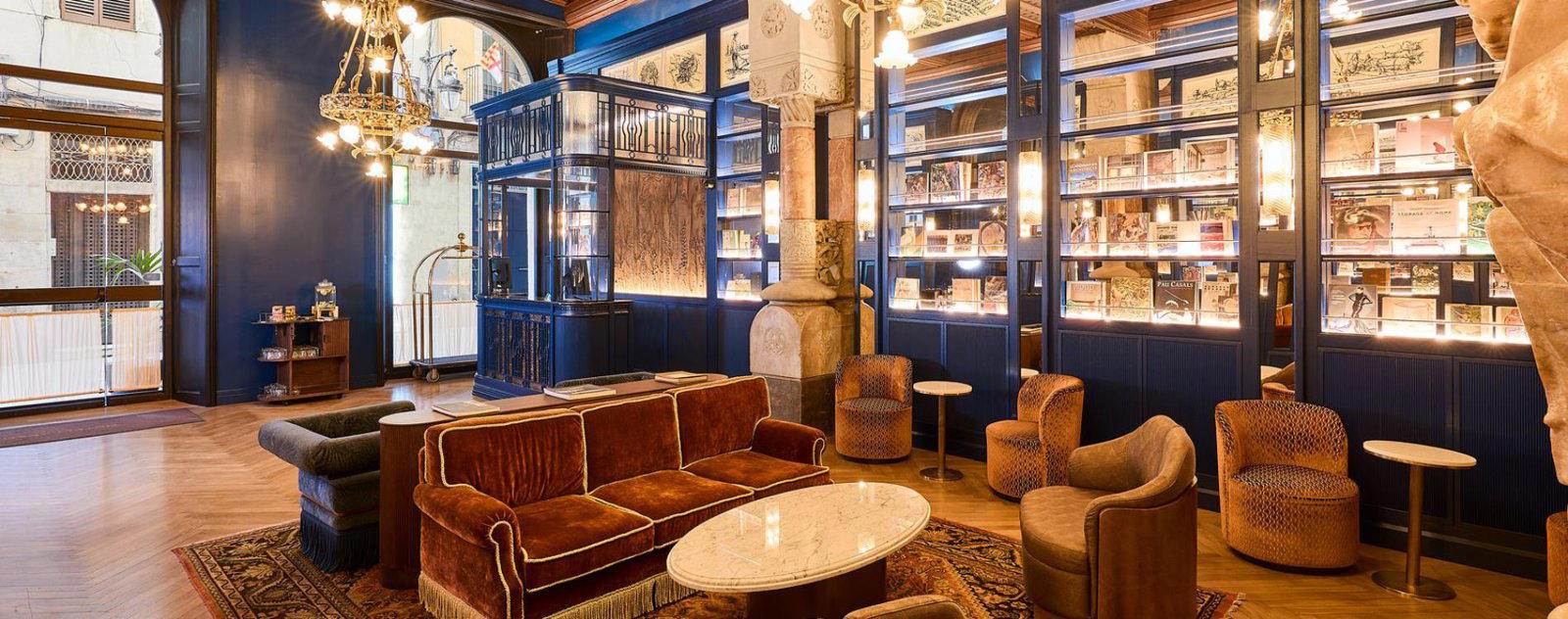
Where Modernisme Lives in the Street, Not the Museum
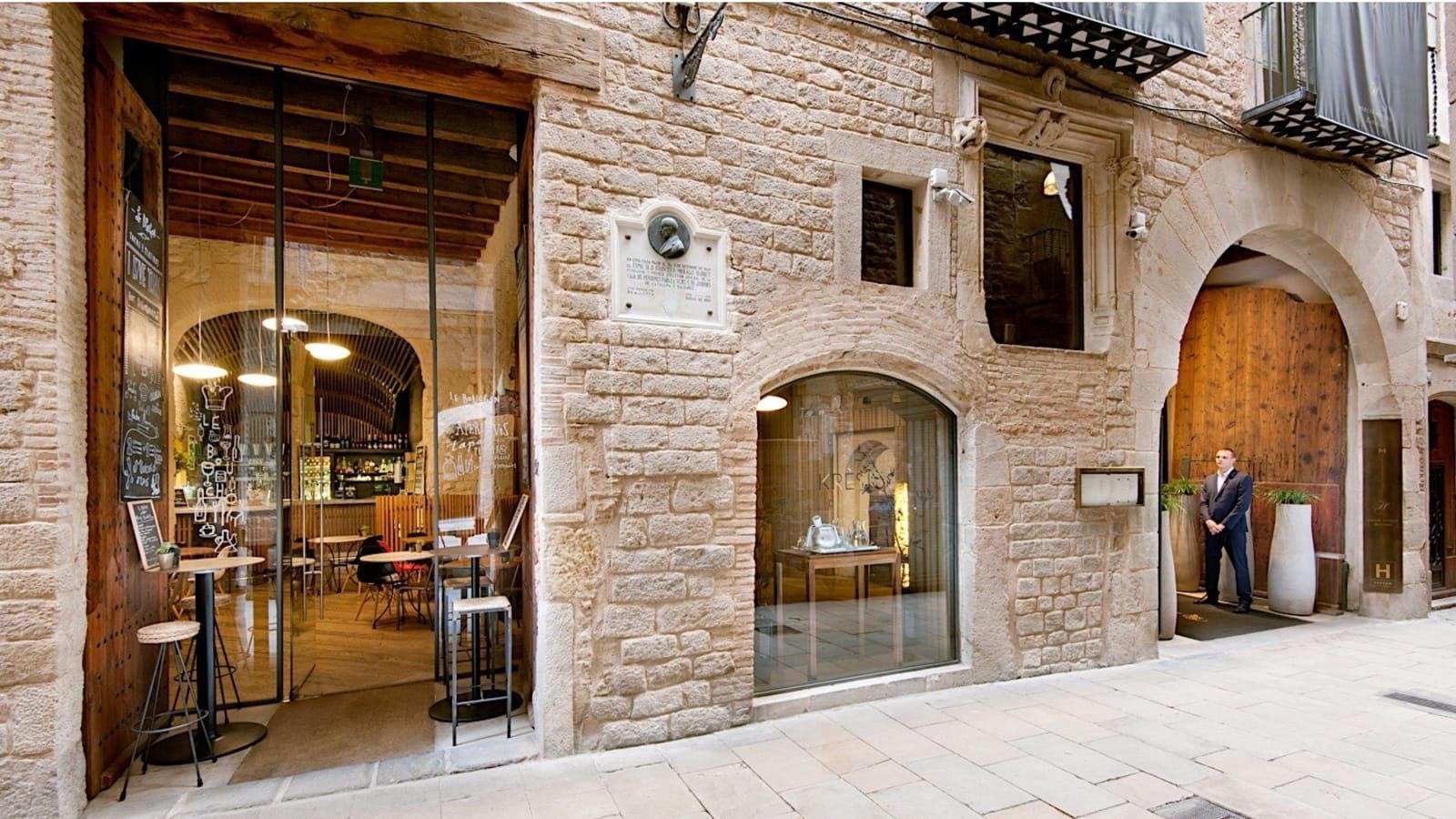
Carrer de Sant Pau runs through the heart of El Raval, a district that Barcelona's late nineteenth-century reformers envisioned as a corridor of civic architecture connecting the Gothic Quarter to the new Eixample grid. The street is still anchored by two of the city's most significant Modernista buildings: the Hospital de Sant Pau to the north and, closer to the Ramblas end, the façade of Hotel España. Arriving on foot from the Liceu metro stop, you pass Palau Güell before the hotel's entrance comes into view, framing the stay in the context that defines this part of the city: dense, layered, and shaped by a single transformative architectural decade.
That context matters when choosing where to base yourself in Barcelona. Properties like Mandarin Oriental Barcelona and Almanac Barcelona occupy the Passeig de Gràcia corridor, where Modernisme is a view from your window rather than the fabric of your room. Hotel España takes the opposite position: the building itself is the credential, and the neighbourhood around it operates at a different register, quieter in some blocks, noisier in others, and consistently more local in character than the tourist-facing Eixample.
The Architecture as a Restorative Argument
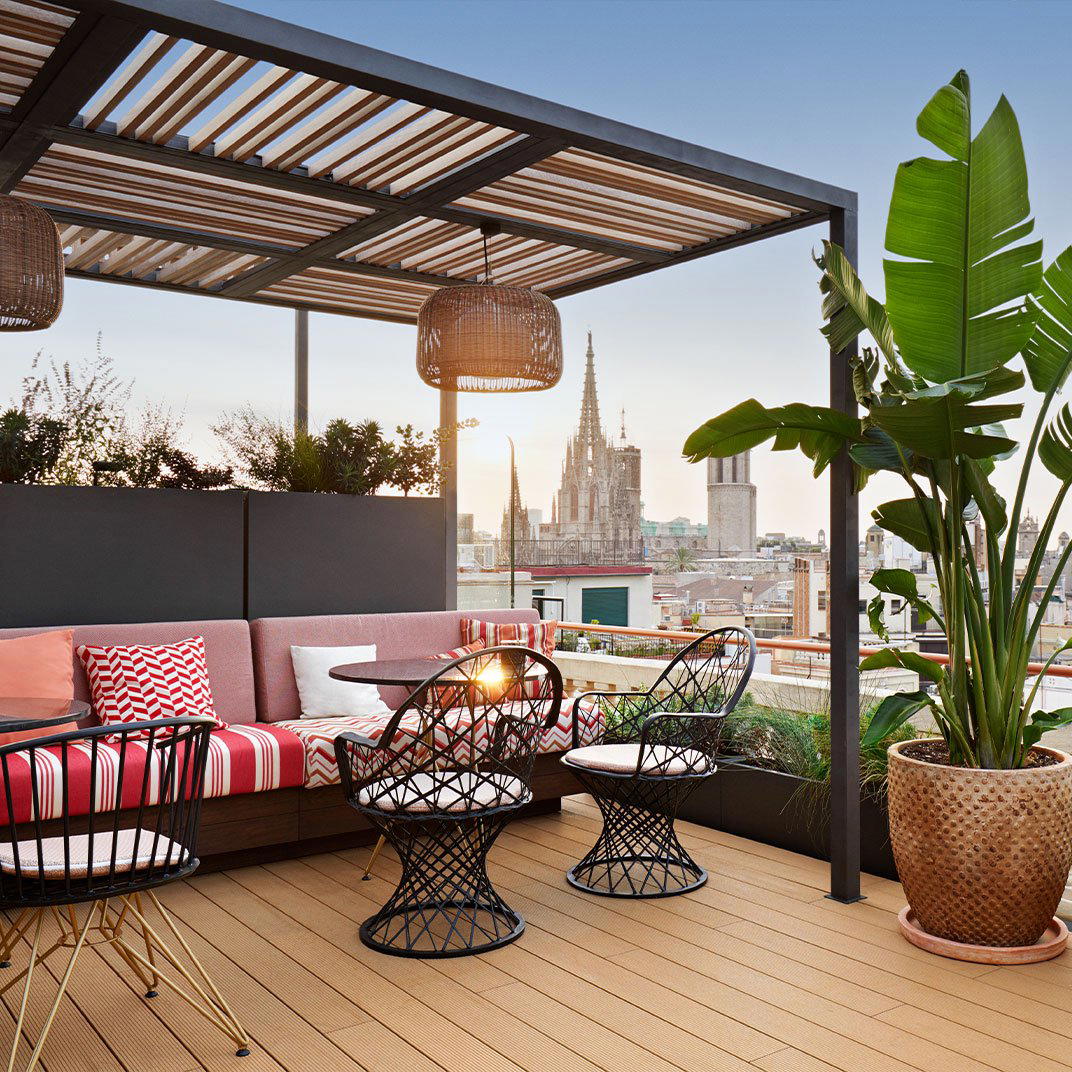
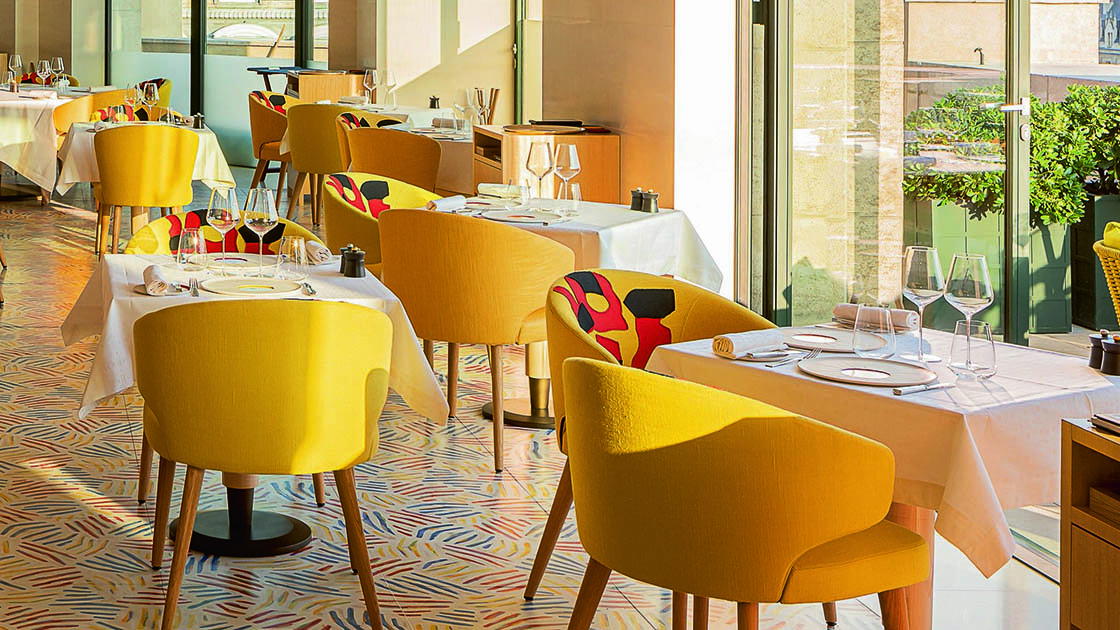
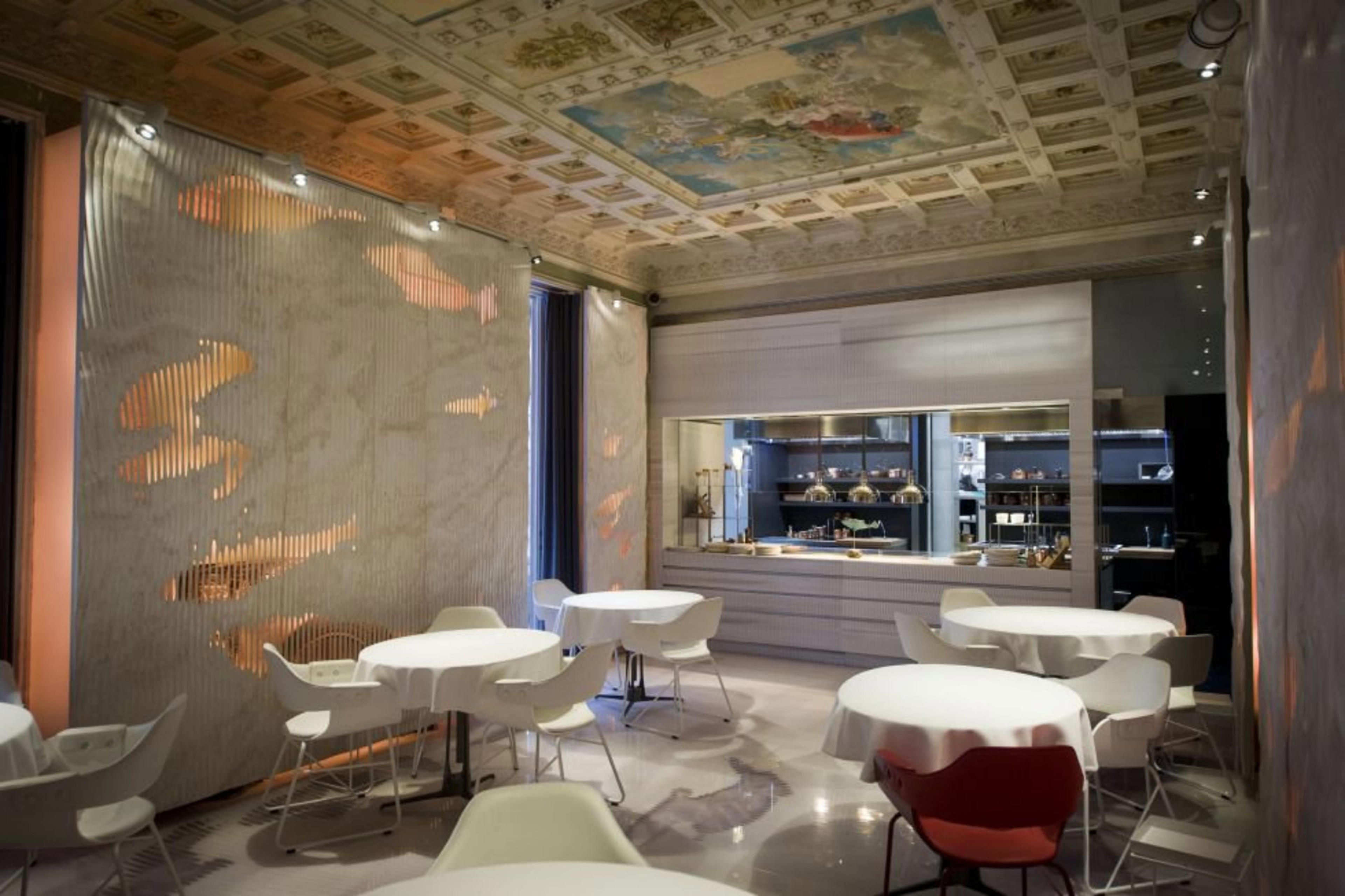
The interior of Hotel España was designed by Lluís Domènech i Montaner, the architect responsible for the Palau de la Música Catalana and the Hospital de Sant Pau, both UNESCO World Heritage Sites. The dining rooms and public spaces date to a 1903 commission that produced among the more intact Modernista interiors still functioning as a hotel in the city. Carved stone, tile work, and decorative ironwork appear not as restoration set pieces but as the actual bones of the building.
For travellers who use hotels as restorative anchors rather than just sleeping addresses, this kind of material continuity carries weight. There is a particular quality to spending time in a space that was designed with the same ambition as a civic monument, where the attention to surface and light was intended to produce a specific psychological effect. Domènech i Montaner's approach, which ran parallel to but distinct from Antoni Gaudí's more biomorphic vocabulary, was more restrained and symmetrical, making the España's interiors easier to inhabit at length than the more theatrical Gaudí commissions nearby.
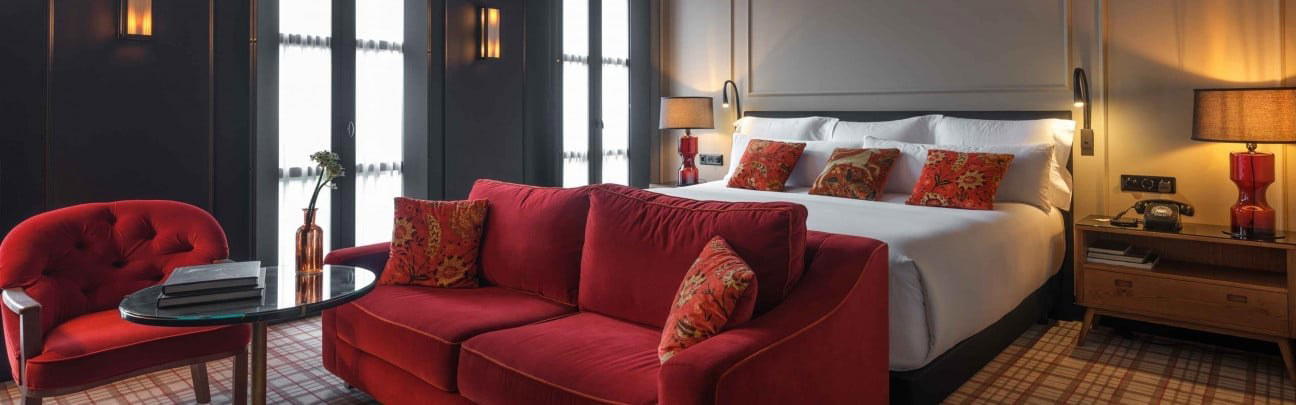
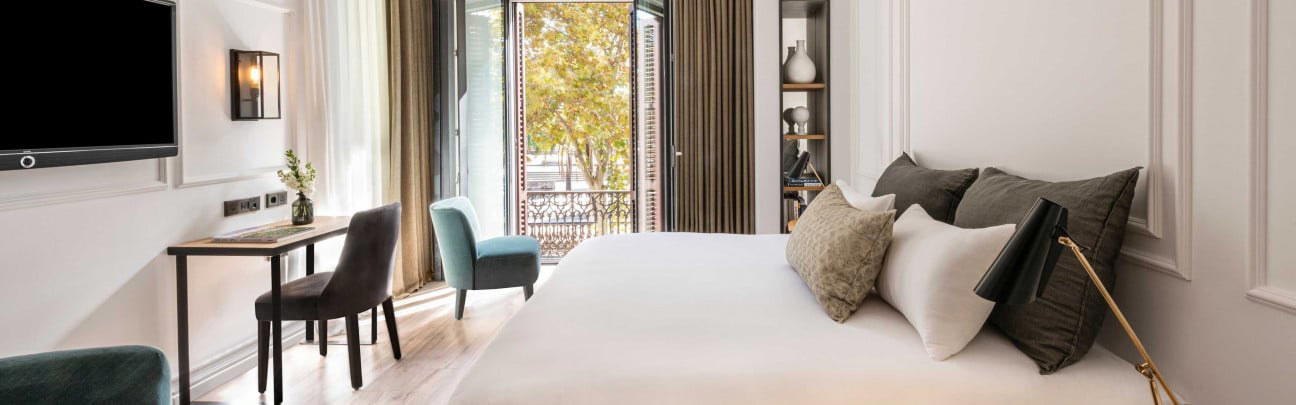
The hotel's 83 rooms sit above these public spaces, placing guests in immediate proximity to one significant part of the building. Barcelona's mid-category hotel market has expanded considerably in recent years, with design-led properties like Hotel Boutique Mirlo and heritage conversions like Mercer Hotel Barcelona competing for travellers who want architecture and character over brand-name amenities. Hotel España occupies its own position in that set: older than most, with a public-interior argument that few properties in the city can match.
El Raval as a Restorative Base
El Raval's rehabilitation over the past two decades has been documented and debated in roughly equal measure. What it has produced, practically speaking, is a neighbourhood with genuine institutional weight: the MACBA contemporary art museum, the CCCB cultural centre, and the Filmoteca de Catalunya all sit within walking distance of the hotel. La Boqueria market is a four-minute walk down the Ramblas, though the more considered approach to provisioning yourself in this part of the city is to explore the smaller food shops on Carrer del Carme and the surrounding streets, where the tourist pressure is lower and the quality is often higher.
For travellers whose approach to wellness involves slowing down rather than programming every hour, Raval offers a particular kind of urban retreat. The neighbourhood has a working-city density that the Gòtic's heavily touristed streets no longer provide, and the proximity to the Eixample means that Passeig de Gràcia, with its concentration of high-end retail and the Gaudí buildings, is accessible on foot in under fifteen minutes. Hotels like Alma Barcelona and Antiga Casa Buenavista offer quieter residential positions in the Eixample if that register is preferable; the hotel's appeal is specifically tied to its location in a district that still has friction and texture.
Placing Hotel España in the Wider Spanish Context
Barcelona's hotel market runs from budget hostels in the Gothic Quarter through to the ABaC Restaurant and Hotel, which occupies the upper bracket with Michelin-starred dining as its primary proposition. The hotel sits neither at the luxury ceiling nor the entry-level floor. It competes most directly on the strength of its building, and in that specific argument, few properties in the city have comparable material to draw from.
Across Spain more broadly, heritage hotel conversions have become among the more active categories in the market. Properties like Atrio Restaurante Hotel in Cáceres and Mercer Hotel Barcelona demonstrate that the category spans a wide range of investment levels and programme depth, from full luxury-restaurant anchors to architecture-led mid-market stays. The hotel's closest comparable set is properties where the building is the differentiator and the surrounding neighbourhood provides the programme, rather than in-house amenities driving the experience.
For travellers considering Spain's broader range of recovery-oriented or architecturally significant stays, the comparison set widens. Abadía Retuerta LeDomaine and Terra Dominicata in Escaladei offer rural retreat formats with wine estate settings; Cap Rocat in Cala Blava and Mas de Torrent Hotel and Spa in Torrent anchor wellness propositions to landscape rather than city. The hotel's proposition is the opposite: it puts you inside a historically significant urban building, in a neighbourhood that rewards slow exploration on foot, within a city where the architectural heritage is dense enough to structure an entire trip around.
Planning a Stay
The hotel is located at Carrer de Sant Pau, 9-11, in Ciutat Vella, Barcelona's old city. The Liceu station on the L3 metro line is the closest stop, placing the hotel within a two-minute walk of the Ramblas without requiring you to stay on them. Barcelona's airport connects to the city centre via the Aerobus service and the L9 metro line, with journey times of roughly thirty to forty minutes depending on route. Demand in Barcelona's mid-category heritage segment runs high from spring through the autumn festival season, so booking well in advance of peak months is advisable.
Travellers building a wider Iberian itinerary around architecturally or culturally significant properties might also consider Hotel Arts Barcelona for a waterfront contrast, Akelarre in San Sebastián for a Basque Country extension, or Mandarin Oriental Ritz Madrid as a Spanish capital counterpart. Further afield, Hotel Can Cera in Palma and La Residencia in Mallorca offer island alternatives that share the hotel's emphasis on historic fabric over contemporary amenity programming.
A Quick Peer Check
Comparable venues nearby, for context on price, style, and recognition.
| Venue | Cuisine | Price | Awards | Notes |
|---|---|---|---|---|
| Hotel EspañaThis venue — the venue you are viewing | Historic modernist property blending Art Nouveau heritage with modern comforts. | $$$ | 4-Star | Not listed |
| Catalonia Passeig de Gracia | Modernist facade with contemporary interiors | $$$ | 4-Star | la Dreta de l'Eixample |
| W Barcelona | Sailboat-shaped well-known beachfront landmark with upscale contemporary luxury. | $$$$ | 4-Star | Port Vell |
| Tembo Barcelona | Contemporary landmark hotel with apartment-style rooms | $$$ | 4-Star | el Besos i el Maresme |
| Yurbban Ramblas | Urban boutique in historic 19th-century building | $$$ | 4-Star | Ciutat Vella |
| Primero Primera | Historic family home transformed into a contemporary boutique hotel that preserves original 1950s architecture while integrating modern comforts and design. | $$$ | 4-Star | Tres Torres |
Recognition history
Dated appearances from independent guides and award organizations, with the underlying list record or original source where available.
Preferred Hotels Member
Preferred Hotels
Continue exploring
More in Barcelona
Hotels in Barcelona
Browse all →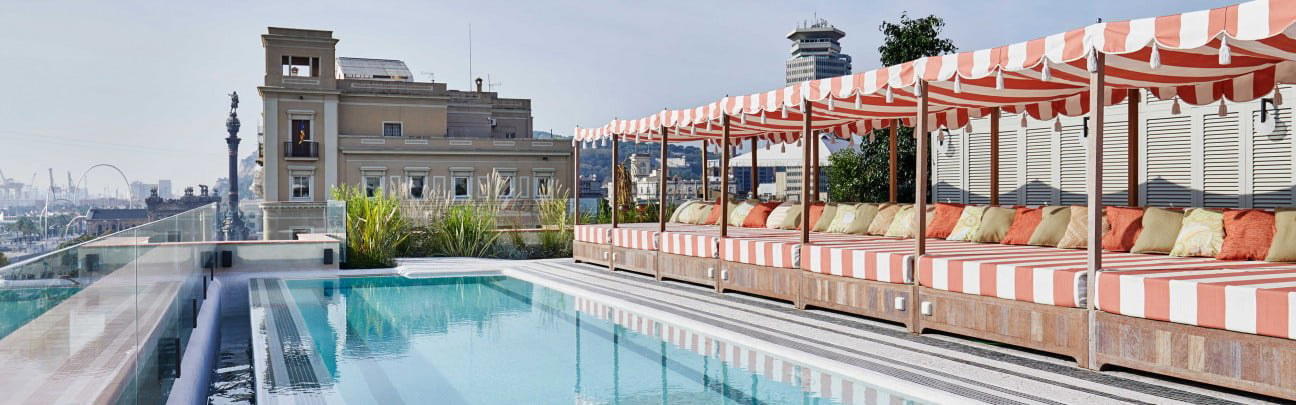
Bars in Barcelona
Browse all →
Restaurants in Barcelona
Browse all →
At a Glance
- Classic
- Elegant
- Well Known
- Romantic Getaway
- Weekend Escape
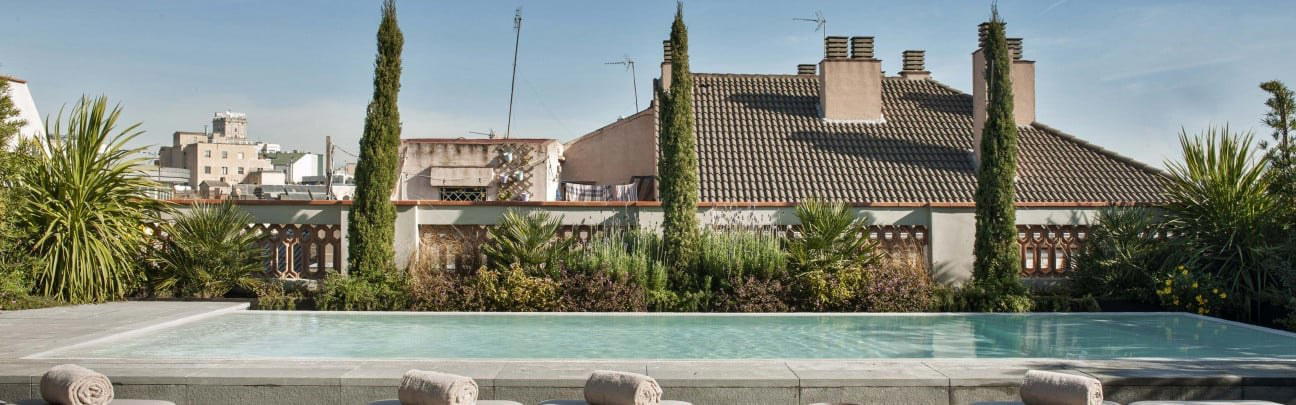
- Rooftop Pool
- Terrace
- Historic Building
- Wi Fi
- Pool
- Restaurant
- Bar
- Room Service
- Concierge
- Business Center
- Street Scene
- Wi Fi
- Pool
- Restaurant
- Bar
- Room Service
- Concierge
- Business Center
Serene fusion of historic Art Nouveau and contemporary design with soundproofed rooms, though some note dim lighting.