

A five-star beachfront tower designed by Ricardo Bofill, W Barcelona occupies the tip of the Barceloneta promontory with direct Mediterranean access and a stacked dining program that runs from 26th-floor Japanese fine dining at NOXE to poolside cocktails at the WET DECK. Among Barcelona's seafront hotel options, few properties match its combination of architectural presence, vertical F&B range, and direct beach positioning.
Pearl is the En Primeur Club membership app — saves, bookings, and concierge access live there. Same editors, same standards.
- Address
- Plaça Rosa Del Vents 1, Final, Pg. de Joan de Borbó, Ciutat Vella, 08039 Barcelona
- Phone
- +34 932 95 28 00
- Website
- marriott.com
- Directions
- Get directions
 Saves & bookings on Pearl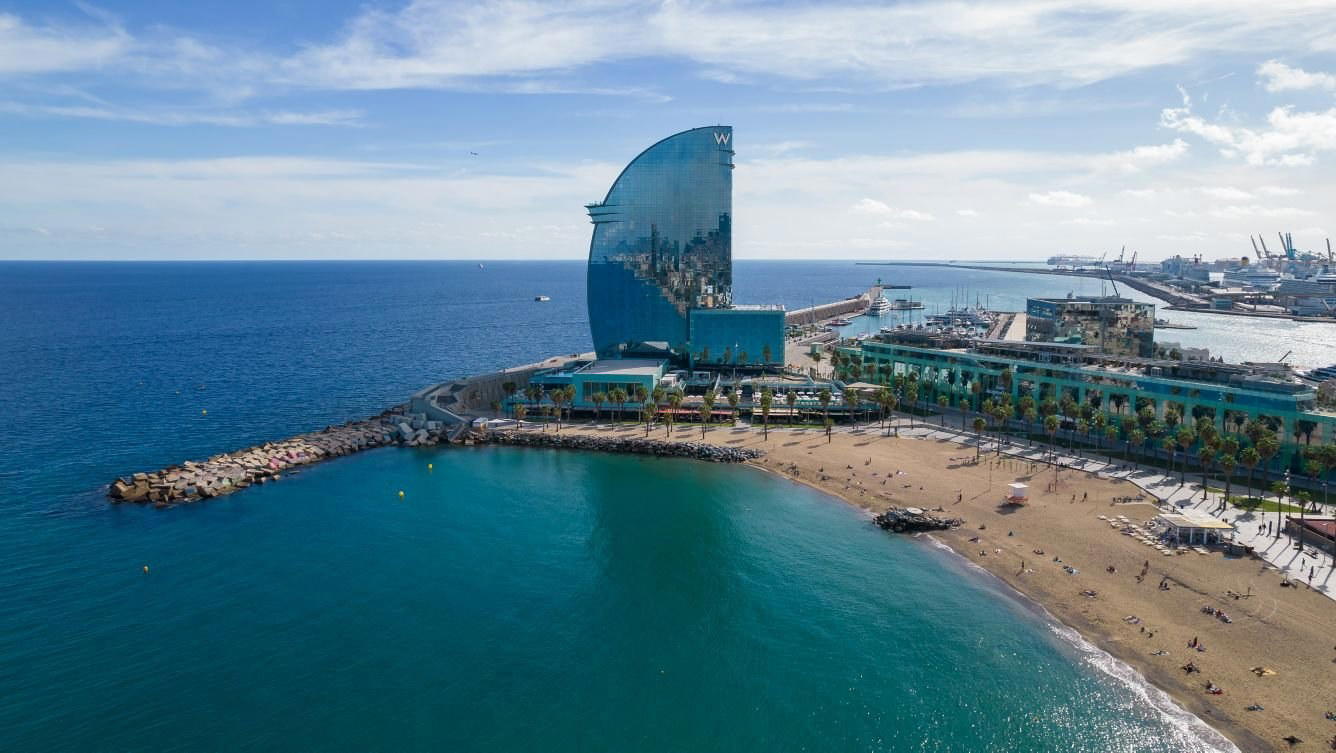
A Tower at the Edge of the City
Barcelona's waterfront has always operated as a dividing line between the dense urban grid of the Eixample and the open Mediterranean beyond. The hotels that work along Barceloneta resolve that tension in different ways: some retreat into the neighbourhood's backstreets, others plant themselves on the sand. W Barcelona takes one direct approach, occupying a purpose-built sail-shaped tower at the tip of the Barceloneta promontory, at Plaça Rosa del Vents 1, where the Passeig de Joan de Borbó meets the sea. From the approach along the boardwalk, the building reads as a statement rather than a backdrop. Designed by the late architect Ricardo Bofill, whose Catalan career spanned social housing and high-end residential development alike, the structure was conceived as urban architecture at coastal scale. That context matters when comparing W Barcelona to other five-star properties in the city. Where the Mandarin Oriental Barcelona positions itself along the Passeig de Gràcia shopping axis and Alma Barcelona works from a quieter residential pocket, W Barcelona's identity is inseparable from its geography.
How a Stay Here Sequences
The structural logic of a stay at W Barcelona follows a vertical progression, which is worth understanding before booking. The property holds 473 guestrooms and suites across its tower floors, but the F&B program is the architecture that most guests move through across a day. Each venue operates at a different register, and the sequence from afternoon to late night has its own rhythm.
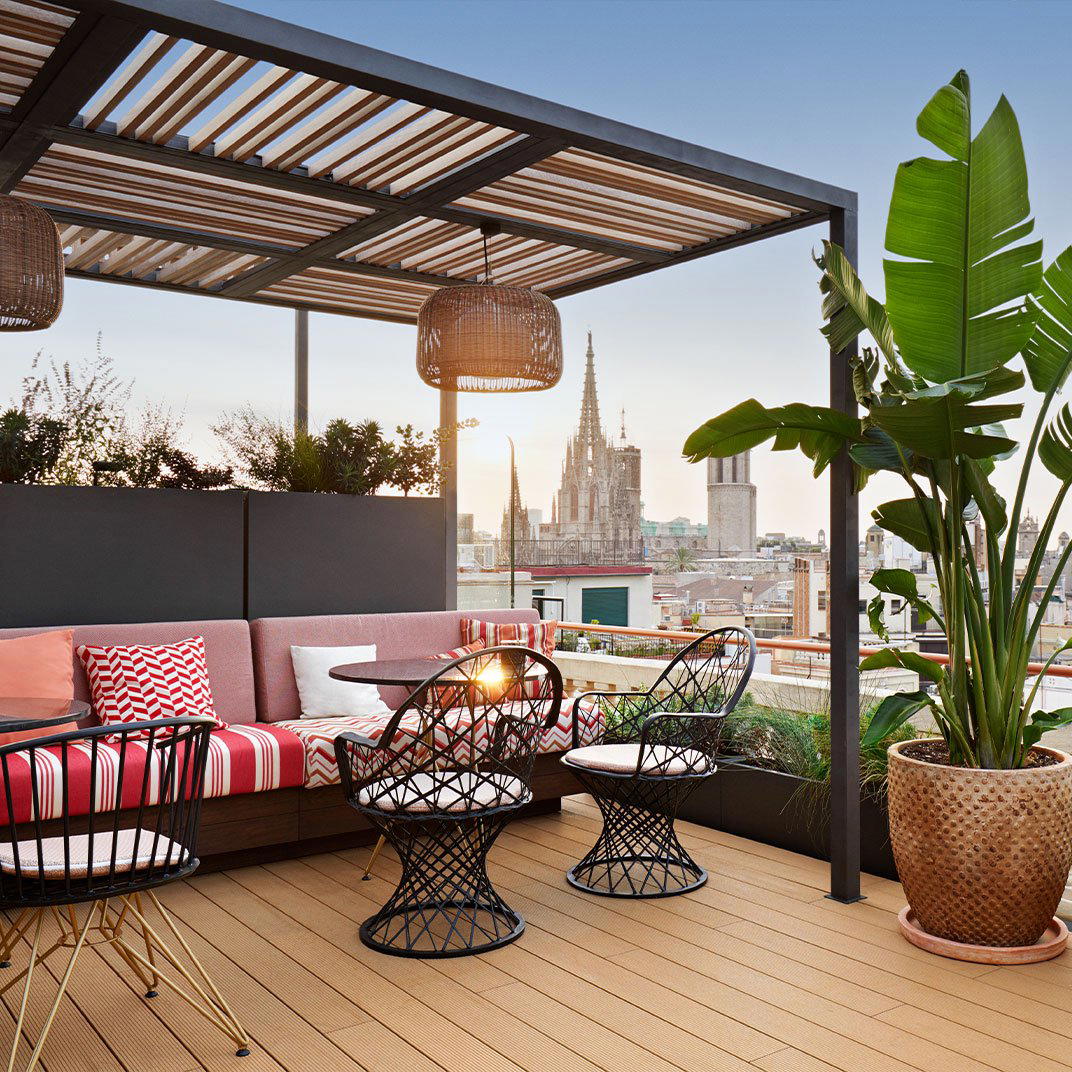
The WET DECK terrace is the natural starting point: poolside cocktails and light bites with a direct sightline over the Mediterranean. This is where the afternoon hours work well, particularly in the warmer months before September, when the adjacent SALT Restaurant & Beach Club adds Mediterranean tapas and shared plates to the waterfront program. SALT closes for the season at the end of September, though it remains available for private events through November, which is worth knowing if you're considering a late-season visit.
As the sun drops, the W LOUNGE in the hotel's Living Room connects directly to the WET DECK and shifts the focus toward mixology. The format here is contemporary cocktail programming rather than destination dining: it serves as a transitional space between the outdoor hours and the evening program above.
Dinner at Altitude: NOXE and COYA
The two main dining destinations sit at different elevations and serve different purposes. COYA, the Peruvian-inflected restaurant, draws on the broader COYA brand playbook: traditional Peruvian ingredients framed through contemporary technique, a format that has found traction in other European capital cities as the cuisine's international profile has grown. In Barcelona, where Mediterranean seafood dominates the fine-dining conversation, a property with a committed Peruvian kitchen occupies a distinct niche. Properties like ABaC Restaurant & Hotel and Almanac Barcelona orient their dining around local and European culinary traditions; COYA represents a different editorial choice by the hotel.
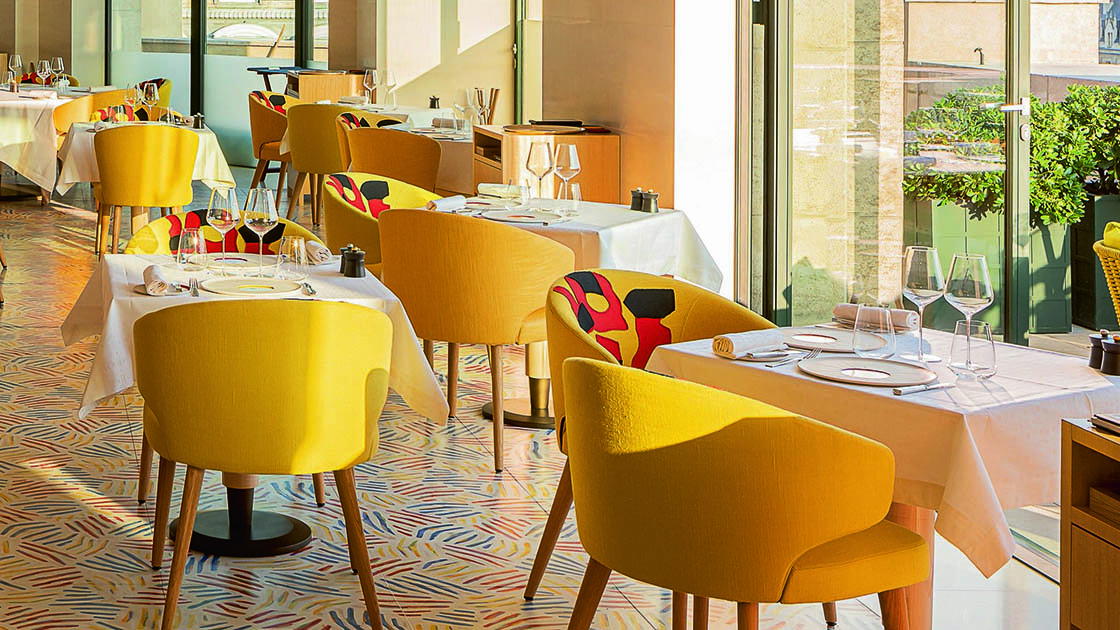
NOXE operates on the 26th floor, making it especially architecturally dramatic among the hotel's dining spaces. The restaurant combines Japanese fine dining with a cocktail bar and nightclub format, a stacking of functions that reflects a specific moment in the Barcelona hospitality market, where operators are blending refined food programming with late-night entertainment in ways that older fine-dining models would have kept separate. At 26 floors above the Barceloneta waterfront, the views extend across the harbour toward Montjuïc and the open sea. The Japanese fine-dining component places NOXE in a tier that competes against a small number of high-end Japanese restaurant projects in the city, rather than against the hotel's immediate neighbours on the seafront.
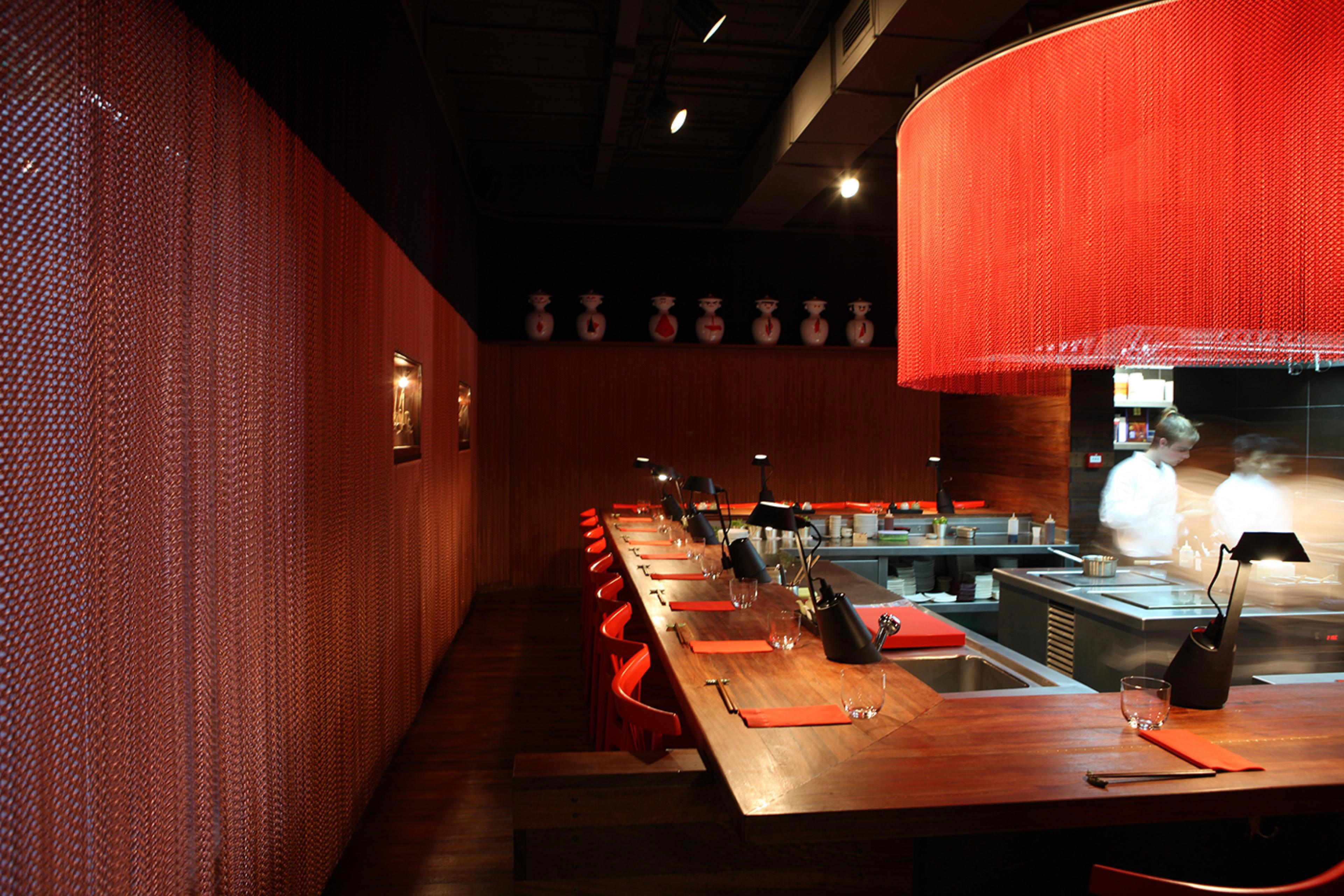
FIRE, the hotel's third restaurant, completes the program with a more social, less formal brief. Described as a venue for socialising alongside real food, it occupies the hotel's mid-register: above casual, below the commitment level of NOXE or COYA.
Where W Barcelona Sits in the Barcelona Hotel Market
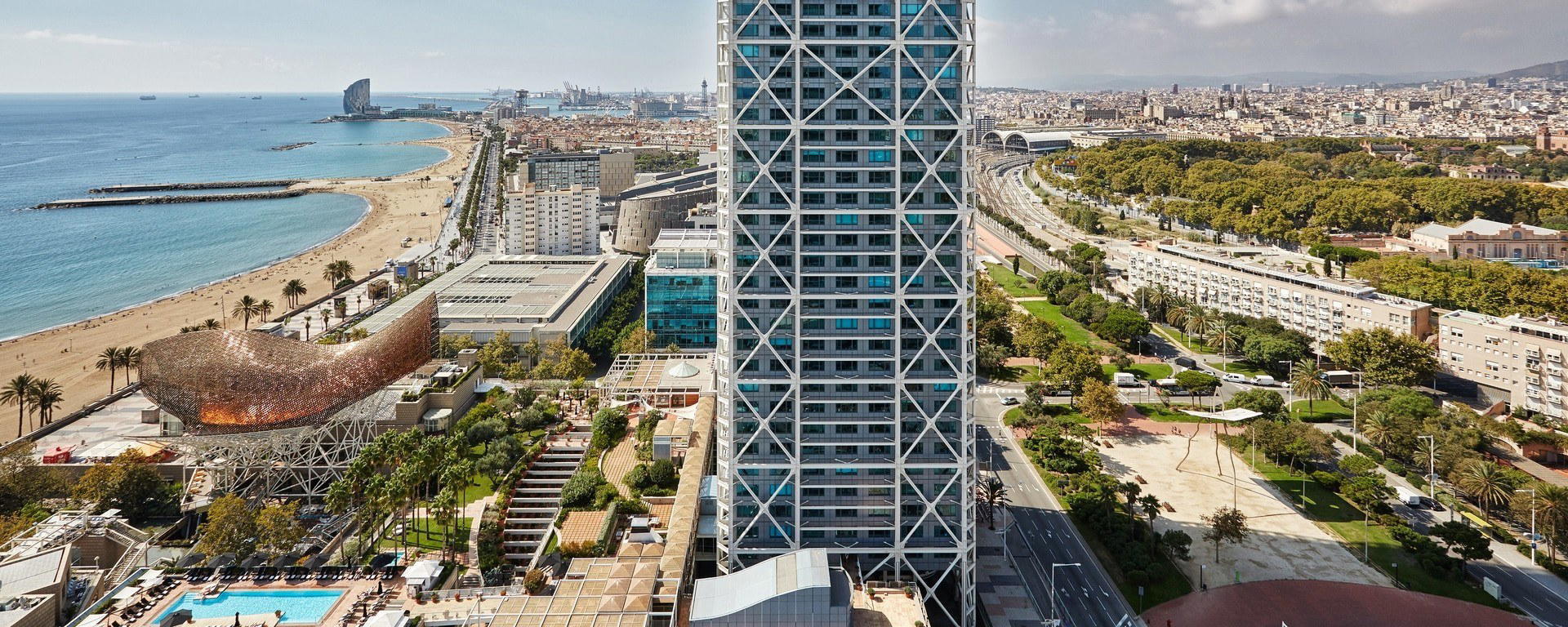
Barcelona's five-star hotel market has fragmented across several distinct positioning clusters. Design-led boutique properties such as Mercer Hotel Barcelona and Antiga Casa Buenavista compete on intimacy and heritage architecture, with low key counts and a strong sense of neighbourhood identity. Hotel Boutique Mirlo represents a similar approach. At the other end of the scale, large-format luxury hotels like Hotel Arts Barcelona compete directly with the hotel on beachfront positioning, scale, and international brand recognition. Both towers occupy the same stretch of Barceloneta coastline, both carry significant F&B programs, and both draw an international guest mix. The distinction between them rests on brand register, design philosophy, and the specific mix of dining and nightlife programming each prioritises.
The hotel's 473-room count puts it in the large-format category, and the property operates accordingly: it is a destination within the destination, with enough programming to spend most of a 24-hour period moving between its venues without leaving the building. For travellers who want a smaller-footprint Barcelona experience, the boutique alternatives in the Eixample or Gothic Quarter will deliver a different kind of city access. For those where the waterfront, the architecture, and the vertical F&B sequence are the point, the hotel is structured to deliver exactly that.
For a broader orientation across Spain's hotel options, the range extends well beyond the coast. Properties like Abadía Retuerta LeDomaine in Teruel, Akelarre in San Sebastián, and Atrio Restaurante Hotel in Cáceres each operate in entirely different registers. On the island side, Cap Rocat in Cala Blava, Hotel Can Cera in Palma, and La Residencia, A Belmond Hotel, Mallorca offer a slower-paced Mediterranean alternative. Wine-focused travellers have their own set of references, including Terra Dominicata in Escaladei and Torre del Marqués Hotel Spa & Winery in Sardoncillo. For comparable scale and positioning in Madrid, Mandarin Oriental Ritz, Madrid is the natural reference point. Further afield, Marbella Club Hotel and Mas de Torrent Hotel & Spa in Torrent offer contrasting takes on Spanish coastal luxury. If you're building a broader Iberian itinerary, Pepe Vieira Restaurant & Hotel in Poio and Casa Beatnik Hotel in A Coruña extend the map into Galicia. For international comparisons in the large-format luxury category, The Fifth Avenue Hotel in New York City, Aman New York, and Aman Venice each represent a different approach to the same question of how a hotel becomes a place in its own right. Our full Barcelona restaurants and hotels guide maps the wider city across all price tiers and neighbourhoods.
Planning a Stay
The property sits directly on the Barceloneta boardwalk, making it walkable from the Gothic Quarter. Rooms across the 473-key tower vary considerably by floor and orientation; higher floors offer open sea views, while lower floors face the boardwalk and marina.
The Essentials
Comparable venues nearby, for context on price, style, and recognition.
| Venue | Price | Notes |
|---|---|---|
| W BarcelonaThis venue — the venue you are viewing | $$$$ | Not listed |
| The ROOF | $$$$ | Sant Pere, Santa Caterina i la Ribera, contemporary urban luxury |
| Hotel Granados 83 | $$$ | l'Antiga Esquerra de l'Eixample, Art-filled boutique with central skylit patio |
| Claris Hotel & Spa GL | $$$$ | la Dreta de l'Eixample, Neoclassical palace with modern luxury renovations |
| Arconte | $$$$ | l'Antiga Esquerra de l'Eixample, Eco-friendly boutique hotel with sustainable installations and contemporary design by GCA Architects featuring a renovated 2024 interior. |
| Hotel España | $$$ | el Raval, Historic modernist property blending Art Nouveau heritage with modern comforts. |
Recognition history
Dated appearances from independent guides and award organizations, with the underlying list record or original source where available.
Virtuoso Luxury Hotel Partner
Virtuoso
Michelin Selected
Michelin
Continue exploring
More in Barcelona
Hotels in Barcelona
Browse all →
Bars in Barcelona
Browse all →
Restaurants in Barcelona
Browse all →
At a Glance
- Modern
- Trendy
- Lively
- Sophisticated
- Well Known
- Romantic Getaway
- Honeymoon
- Weekend Escape
- Beachfront
- Rooftop Pool
- Infinity Pool
- Panoramic View
- Pool
- Spa
- Fitness Center
- Room Service
- Concierge
- Wi Fi
- Beach Access
- Waterfront
- Skyline
- Pool
- Spa
- Fitness Center
- Room Service
- Concierge
- Wi Fi
- Beach Access
Lively and stylish with ocean-themed modern decor, spacious lobby, and lively poolside atmosphere.