Grand Hotel Savoia & Spa

Michelin Selected
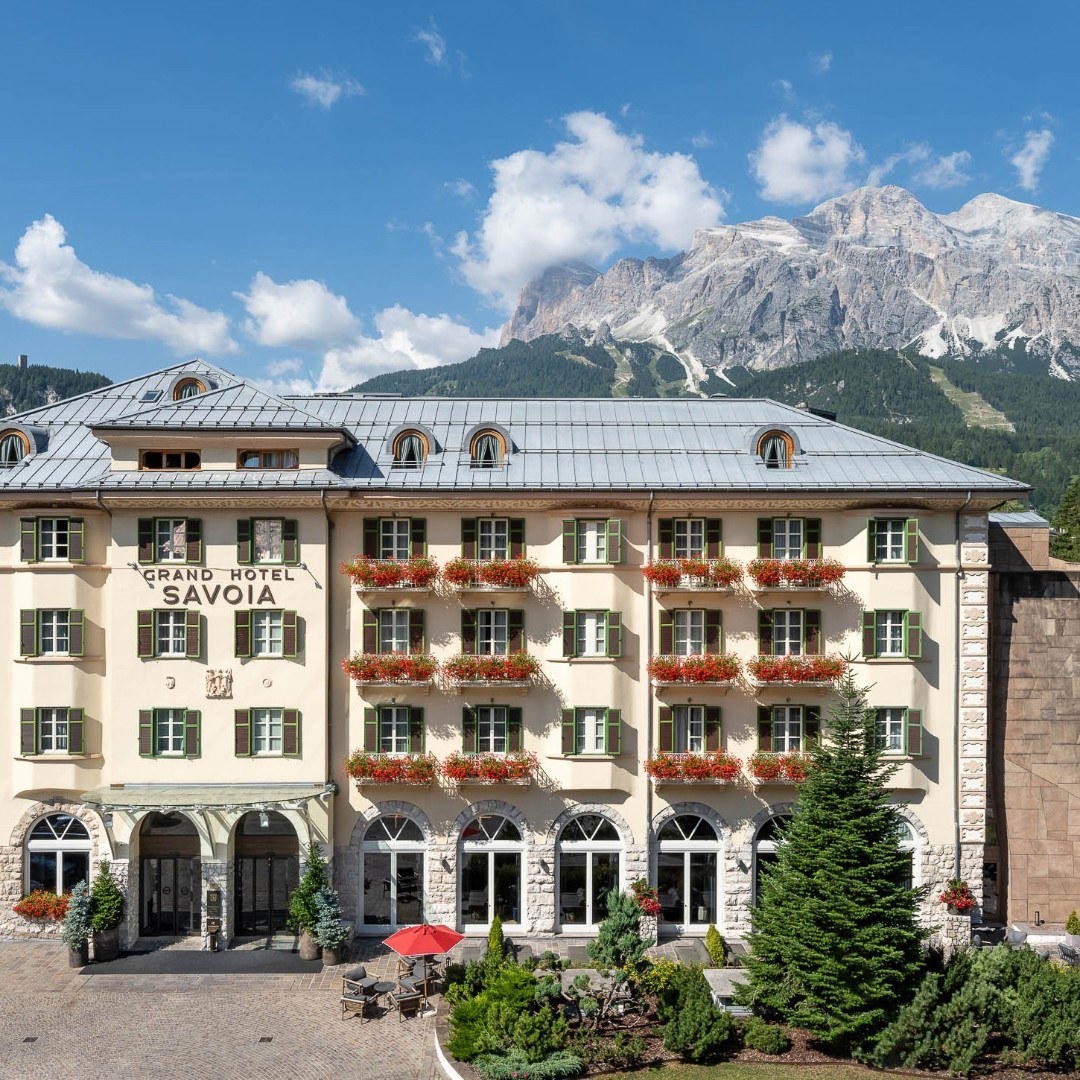
Grand Hotel Savoia & Spa occupies a prominent position on Via Roma in the centre of Cortina d'Ampezzo, carrying Michelin Selected status for 2025. The property sits within the Dolomites' most established resort town, where grand alpine architecture and proximity to the Faloria and Tofana ski areas define the address. It belongs to a tier of Cortina hotels where the physical fabric of the building is as much the draw as the service programme.

Pearl is the En Primeur Club membership app — saves, bookings, and concierge access live there. Same editors, same standards.
- Address
- Via Roma, 62, 32043 Cortina d'Ampezzo BL, Italy
- Phone
- +39 0436 3201
- Website
- radissonhotels.com
- Directions
- Get directions
A Grand Hotel in the Literal Sense
Cortina d'Ampezzo has long operated on a different register from most Italian ski resorts. The town's central artery, the Corso Italia, is flanked by the kind of early twentieth-century architecture that signals a resort with genuine pedigree rather than manufactured alpine charm. Along Via Roma, just off that main corridor, the Grand Hotel Savoia & Spa occupies a building that belongs to this older layer of Cortina — the era when the Dolomites attracted European nobility and the hotel as institution carried social weight that went beyond accommodation. That architectural inheritance is the first thing the property communicates, and it sets the interpretive frame for everything that follows.
Michelin's 2025 hotel selection — the same programme that includes properties like Aman Venice in Venice, Castello di Reschio in Lisciano Niccone, and Borgo Egnazia in Savelletri di Fasano, applies its Michelin Selected designation across a range of price tiers and formats, from design-led countryside conversions to established grand hotels. In Cortina specifically, where the hospitality market is both competitive and seasonally compressed, that signal carries practical weight.
Architecture as Programme
The alpine grand hotel format that the Savoia represents is architecturally specific: high-relief facades, pitched rooflines with wide overhangs, heavy timber balconies scaled to the building rather than to individual rooms, and a public interior that was designed to function as a social gathering point for an extended-stay clientele. This is a different typology from the contemporary mountain lodges proliferating in northern Italian ski resorts, properties like De LEN or Faloria Mountain Spa Resort, which read as architectural objects in the landscape rather than as civic institutions within a town. The Savoia reads as the latter: a building whose presence on Via Roma is integral to the street, not incidental to it.
That distinction matters when choosing where to stay in Cortina. Guests drawn to the intimacy of Casa Guargnè, a smaller, more residential proposition, are selecting a fundamentally different experience from what the Savoia offers. The grand hotel format at its finest delivers scale as amenity: a spa that can absorb demand during poor-weather days, public spaces with enough volume to feel unhurried even when the property is full, and a dining room that functions as a destination rather than a convenience. Those qualities are architecturally baked in, not added through programme.
The Dolomites backdrop amplifies this. Cortina sits in a high valley at roughly 1,200 metres, with the Tofana massif rising sharply to the west and the Faloria group to the east. The visual drama that surrounds the town is one reason grand hotels here can sustain lobby-as-theatre with more conviction than in flatter resort destinations. The framing of the mountains through large fenestration, or from a south-facing terrace, does considerable aesthetic work that the architecture only has to frame rather than manufacture.
Cortina's Position in the Italian Alps
Among Italian mountain resorts, Cortina occupies a specific social and commercial position. It is not a budget ski destination, nor does it compete primarily on terrain variety with resorts in Trentino-Alto Adige or the Aosta Valley. Its draw is partly the skiing, the Dolomiti Superski pass connects it to a substantial network, but substantially the town itself: the shopping on Corso Italia, the dining concentration, and the visual coherence of the architecture. That profile attracts a clientele for whom the hotel is a significant part of the stay, not merely a base for outdoor activity.
This shapes what grand hotels like the Savoia are asked to deliver. The spa, in a resort where bad-weather days are built into the seasonal rhythm, functions as a full alternative programme rather than an add-on. The proximity to the town centre, the Savoia's Via Roma address puts it within walking distance of Cortina's main concentration of restaurants, bars, and boutiques, which is the most practical location in the resort, removes the need for shuttles and keeps the guest experience self-contained. For context on what else the town offers across dining and hospitality, see our full Cortina d'Ampezzo guide.
Italy's alpine north produces a distinct tier of grand hotels that sits alongside, but differently from, the grand hotels of the Italian lakes or the Adriatic coast. Properties like Castel Fragsburg in Merano and Bellevue Hotel & Spa in Cogne operate on a similar axis of alpine architecture and landscape integration, though each resort has its own seasonal rhythm and guest profile. Cortina's particular combination of Dolomite scenery, established social calendar, and town-centre walkability places the Savoia in a specific and defensible niche within that broader Italian mountain hotel category.
Further afield, the Michelin Selected designation connects Savoia to a wider Italian hospitality conversation that includes properties as varied as Four Seasons Hotel Firenze in Florence, Portrait Milano in Milan, Bulgari Hotel Roma in Rome, Passalacqua in Moltrasio, Il Pellicano in Porto Ercole, Rosewood Castiglion Del Bosco in Montalcino, Il Sereno in Torno, Borgo Santandrea on the Amalfi Coast, JK Place Capri in Capri, Il San Pietro di Positano in Positano, Casa Maria Luigia in Modena, Corte della Maestà in Civita di Bagnoregio, and Savoia Excelsior Palace Trieste. That range illustrates how broadly Michelin has cast its hotel selection net, inclusion signals a floor, not a ceiling.
Planning Your Stay
Cortina operates on two compressed seasons: the winter ski window, which runs from December through March, and a shorter summer season in July and August when the Dolomites draw hikers and cyclists. Both windows tighten availability at established properties quickly, and the Savoia's central position on Via Roma makes it among the more sought-after addresses in either period. Booking several months in advance is standard practice for peak weeks. The address at Via Roma 62 is walkable to Cortina's main commercial and dining concentration, which removes any dependency on transfers for guests who plan to use the town as much as the slopes.
For comparative context on how the Savoia sits within the wider European grand hotel category, the seasonal mountain hotel format appears across the Alps in properties like Badrutt's Palace Hotel in St. Moritz and Hôtel de Paris Monte-Carlo in Monte Carlo, or beyond Europe in The Fifth Avenue Hotel in New York City, each a version of the grand hotel format adapted to its own resort or city context.
Questions Guests Ask
- Which room category should I book at Grand Hotel Savoia & Spa?
- The Savoia's Michelin Selected status and alpine grand hotel format suggest that rooms positioned to face the Dolomite peaks will deliver materially more than standard-facing options. In mountain properties of this type, the view orientation is the primary differentiator between room categories, more so than floor level or square footage. If the nightly rate difference between a standard room and a mountain-view category is within your range, the upgrade is the more defensible choice at a property where the surrounding landscape is so dominant a part of the experience.
- What is Grand Hotel Savoia & Spa leading at?
- The Savoia's strongest argument is positional: a grand hotel building of genuine architectural age, on the best-located street in Cortina, carrying Michelin Selected recognition for 2025. For guests who want the established, town-centre Cortina experience, walking to dinner, being within the social fabric of the resort rather than perched above it, the Savoia's format and address align more directly with that ambition than smaller or more peripheral alternatives. Its spa provision also makes it a more complete option for stays that include poor-weather or rest days.
Comparable Venues
Comparable venues nearby, for context on price, style, and recognition.
| Venue | Cuisine | Price | Awards | Notes |
|---|---|---|---|---|
| Grand Hotel Savoia & SpaThis venue — the venue you are viewing | Timeless Alpine heritage with modern luxury renovations | $500–750 | Michelin Selected | Not listed |
| Rosapetra SPA Resort | Contemporary mountain design using authentic natural materials like fir wood and stone. | $200–300 | Michelin Selected · Virtuoso Luxury Hotel Partner | Cortina d'Ampezzo |
| De LEN | Sustainable alpine boutique with sleep-centric design | $300–500 | Michelin Selected · Mr & Mrs Smith Seal of Approval | center |
| Faloria Mountain Spa Resort | Contemporary alpine luxury blending local tradition with modern innovation | $300–500 | Michelin Selected | Zuel di Sopra |
| Ancora Cortina | Historic boutique hotel blending Ampezzana tradition with contemporary design | Not listed | 1 Michelin Key · Mr & Mrs Smith Seal of Approval | Cortina d'Ampezzo Historic Centre |
| Casa Guargnè | Refined boutique retreat reinterpreting 1980s Cortina elegance with contemporary mountain hospitality. | $300–500 | Michelin Selected | Ampezzo basin |
Recognition history
Dated appearances from independent guides and award organizations, with the underlying list record or original source where available.
Michelin Selected
Michelin
Continue exploring
More in Cortina d'Ampezzo
Hotels in Cortina d'Ampezzo
Browse all →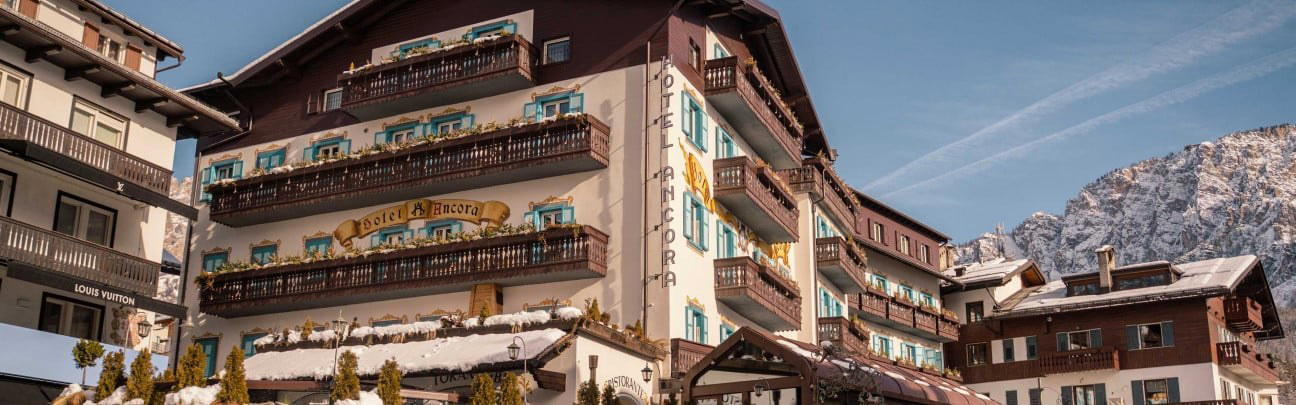
Bars in Cortina d'Ampezzo
Browse all →
Restaurants in Cortina d'Ampezzo
Browse all →
Wineries in Cortina d'Ampezzo
Browse all →
Details
- Elegant
- Classic
- Cozy
- Sophisticated
- Scenic
- Romantic Getaway
- Family Vacation
- Wellness Retreat
- Ski In Ski Out
- Panoramic View
- Spa
- Pool
- Indoor Pool
- Sauna
- Fitness Center
- Room Service
- Concierge
- Restaurant
- Wi Fi
- Valet Parking
- Mountain
- Wheelchair Accessible
- Elevator
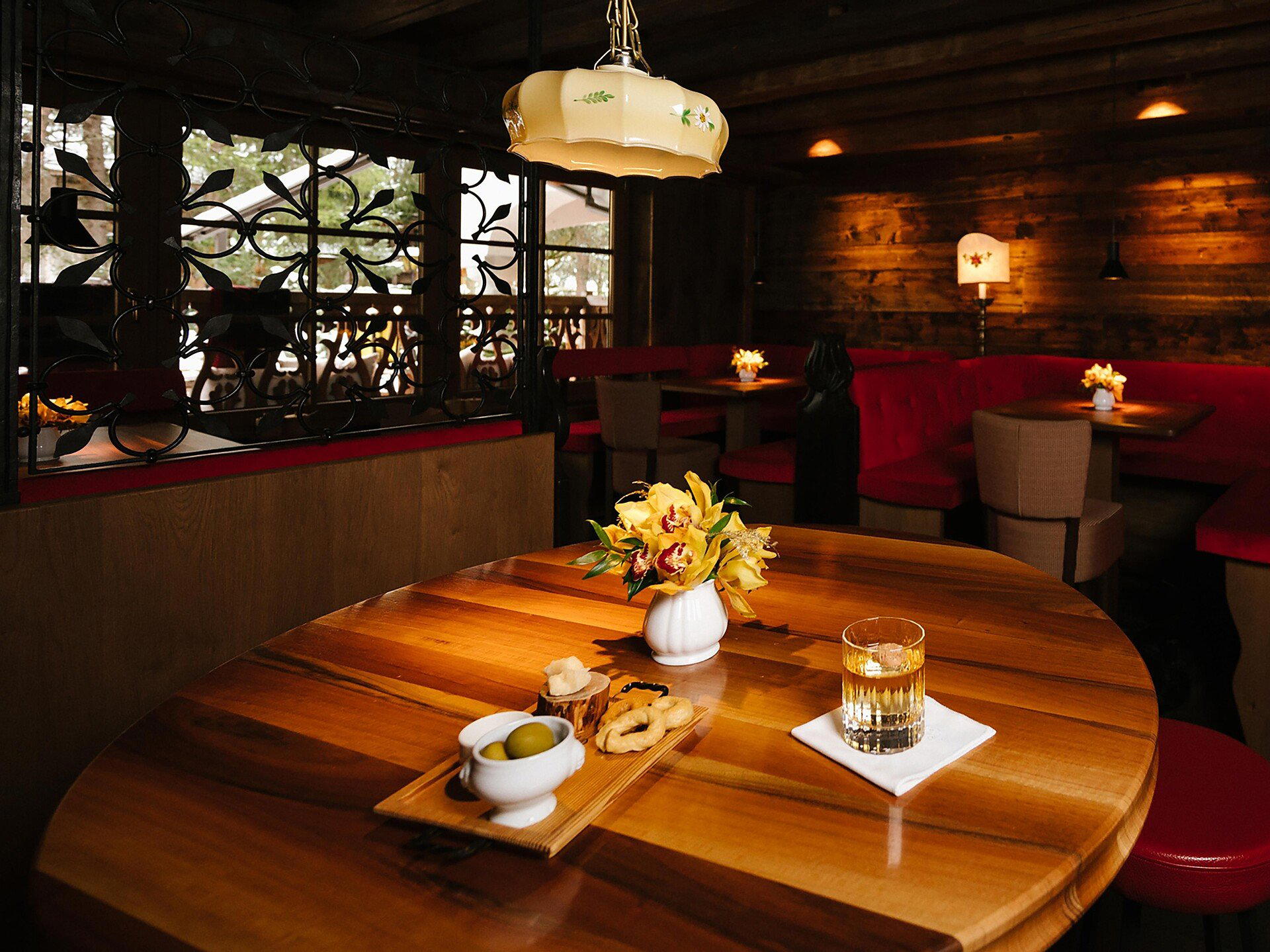
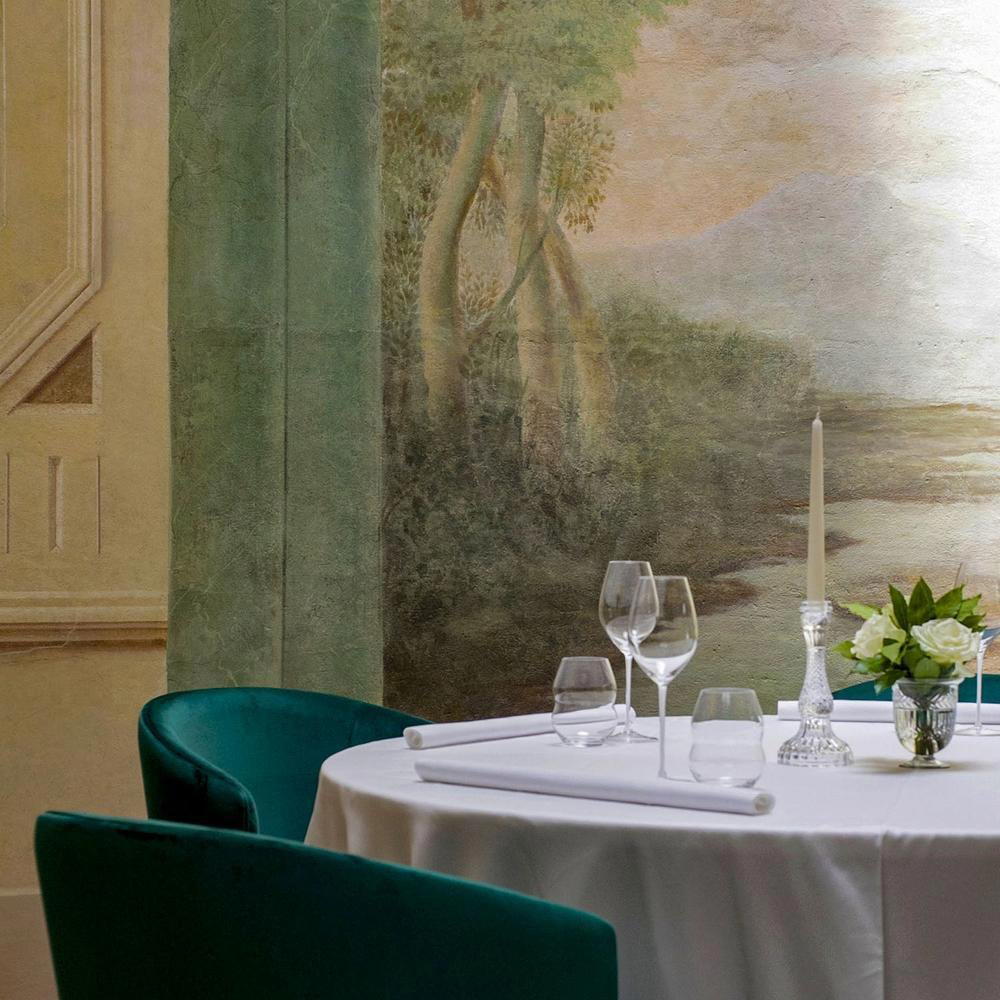
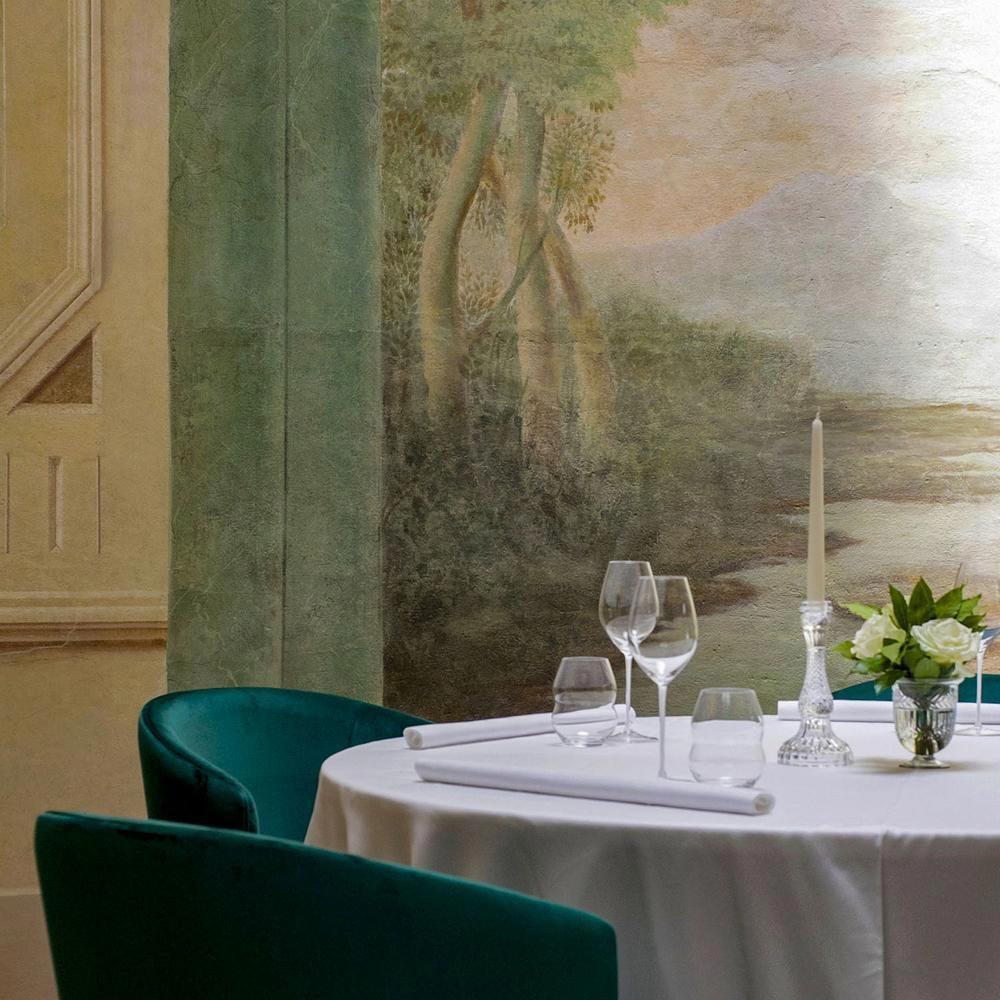
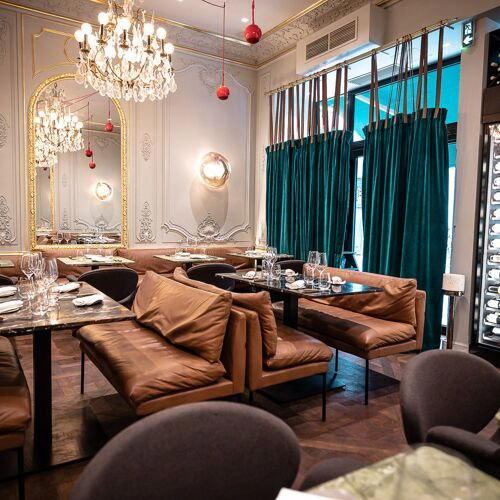
Cozy and elegant mountain retreat blending rustic warmth with luxurious contemporary touches, featuring wood-lined spaces and serene spa lighting.