

3 Michelin Keys · Relais Chateaux Award
Atrio Cáceres occupies a converted medieval palace on Plaza de San Mateo in the heart of Cáceres's UNESCO-listed old city. Michelin Selected in 2025, it represents the highest-stakes position in a small cohort of destination hotel-restaurants that have turned Spain's Extremaduran capital into a serious stop for design-conscious travellers. The address alone tells you this is not a backup option.

Pearl is the En Primeur Club membership app — saves, bookings, and concierge access live there. Same editors, same standards.
- Address
- Pl. San Mateo, 1, Centro-Casco Antiguo, 10003 Cáceres, Spain
- Phone
- +34 927 24 29 28
- Website
- atriocaceres.com
- Directions
- Get directions
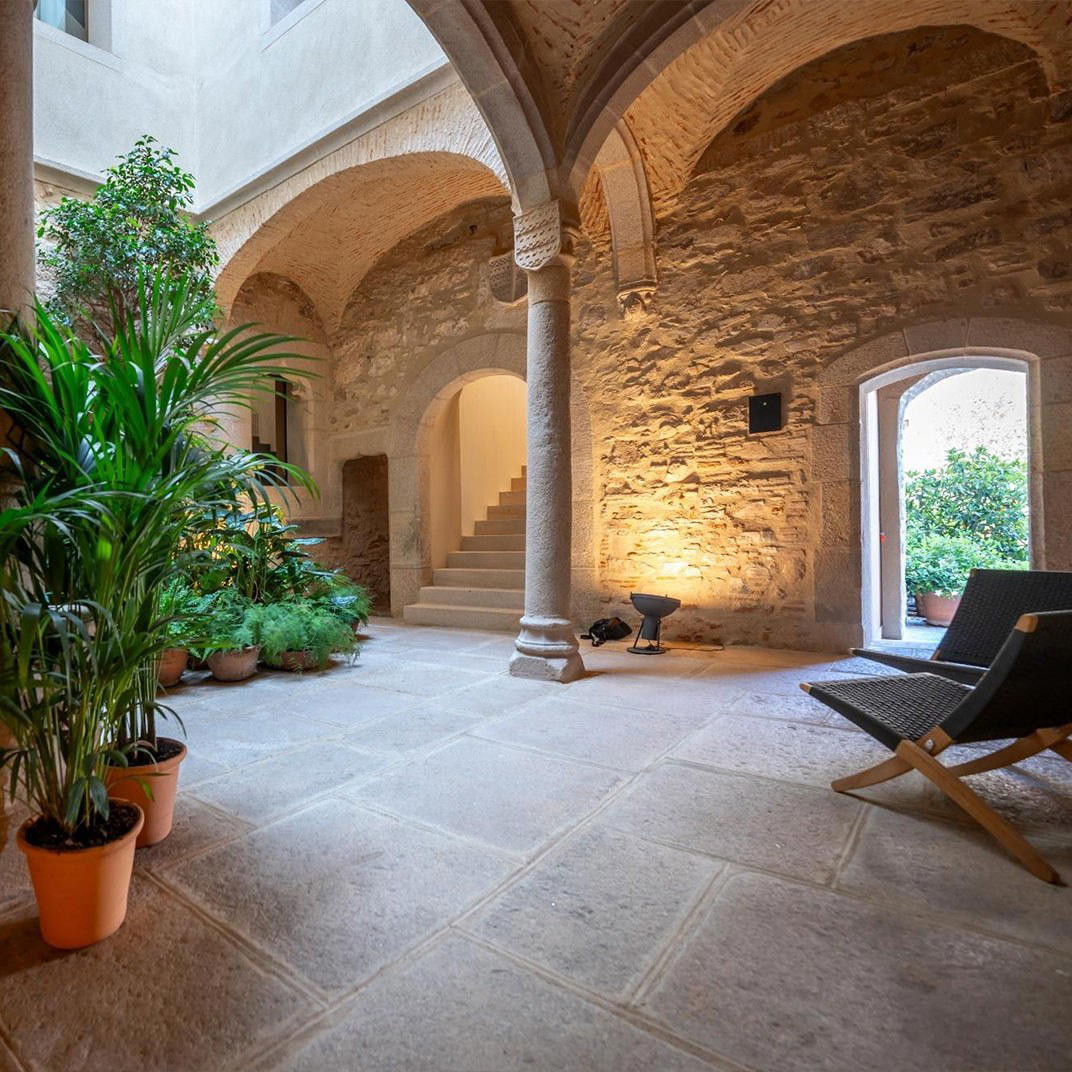
Stone, Glass, and the Weight of the Plaza
The approach to Atrio Restaurante Hotel sets the terms of everything that follows. Plaza de San Mateo is one of the quietest and most architecturally coherent squares in the Cáceres monumental zone, ringed by palaces and Romanesque towers that have not changed materially since the 15th century. Against this backdrop, Atrio does something that very few Iberian properties attempt with conviction: it inserts a contemporary architectural gesture into the medieval fabric without apology and without pastiche.
The building combines the shell of a historic palacio with an interior intervention that reads as emphatically modern. Exposed stone walls meet floor-to-ceiling glass, raw structural elements sit alongside refined finishes, and the spatial hierarchy of the original structure is preserved while the function has been entirely reimagined. This is not renovation in the conservative sense. It is the kind of dialogue between periods that defines a particular strand of European luxury hospitality, one where architectural tension is treated as an asset rather than a problem to be smoothed over.
In Spain, this approach has a small but serious cohort of precedents. Hotel Marqués de Riscal in Elciego, with its Frank Gehry titanium canopy over 19th-century winery buildings, represents the most dramatic version of this argument. Abadía Retuerta LeDomaine and Terra Dominicata in Escaladei work within historic religious structures with more restrained contemporary touches. Atrio sits in a different register: urban rather than rural, the intervention sharper, the location more exposed to the surrounding historical context.
Where Design Meets UNESCO Listing
Cáceres's old city carries a UNESCO World Heritage designation that covers the entire monumental zone, and operating a hotel inside that perimeter comes with spatial and regulatory constraints that shape every design decision. The density of the historic fabric means there is no easy way to expand, no surface car park, no new-build wing. What you see is what the site allows, and Atrio has used that constraint productively. The property is small by the standards of Spain's major-city luxury hotels. Mandarin Oriental Ritz in Madrid or Mandarin Oriental Barcelona operate at a scale that serves volume as well as prestige. Atrio, by contrast, has a limited room count that is structurally determined by the palacio's original footprint, placing it in the same low-key, high-specificity category as Hotel Can Cera in Palma or Hotel Can Ferrereta in Santanyí, properties where the building's history determines the scale of hospitality.
That compression of scale has a direct effect on how the property feels. Corridors are not long. Public spaces are not lobbies designed for spectacle. The sense of privacy is structural rather than performed, which is consistent with what Michelin's hotel selection criteria tend to reward: a coherent identity that reads clearly rather than a broad amenity package. Atrio's appearance in the Michelin Selected Hotels 2025 list places it in the same recognition tier as Spanish properties that have made architectural authenticity a central part of their offer.
The Restaurant as the Other Half of the Argument
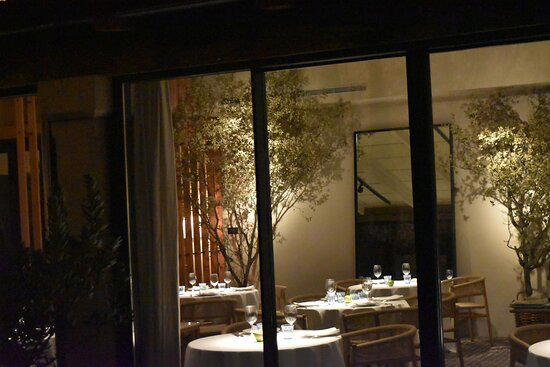
In the hotel-restaurant pairing that Atrio represents, neither side is incidental to the other. The restaurant operates at a level that attracts visits from outside the region, which in a city the size of Cáceres is not a given. Extremadura is not a major culinary destination in the way that the Basque Country or Catalonia are, but it has accumulated the raw material for serious cooking: Ibérico pork from dehesa-raised black pigs, game, wild mushrooms, and a wine culture built around Ribera del Guadiana and Cañamero. A restaurant at this address, carrying Michelin recognition, is positioned to work with that larder at a level the surrounding city cannot easily replicate.
This model, where a restaurant anchors a hotel's identity and draws a clientele that would otherwise not extend their stay, has parallels across Spain. Pepe Vieira in Poio operates on the same principle in Galicia. Akelarre in San Sebastián is the Basque version of the same architecture. The restaurant draws the guest; the hotel gives them a reason to stay overnight rather than drive back. In Cáceres, that overnight calculus has particular force because the city is not on a major rail corridor and reaching it from Madrid requires a commitment that makes staying on-site logical.
Extremadura as a Context for Slow Travel
Hotels like Atrio exist partly because of, and partly in spite of, the cities they occupy. Cáceres draws a specific kind of traveller: one who already knows that the monumental zone is architecturally coherent in a way that few Spanish cities can match, that the crowds are thin compared to Toledo or Salamanca, and that the region's food culture rewards attention. For that traveller, Atrio is not a fallback. It is the anchor of the itinerary.
Properties that have built a similar position in smaller Spanish cities tend to do so by combining architectural conviction with a food program that reflects the region, not just the hotel. Mas de Torrent in Torrent and La Residencia in Mallorca occupy comparable positions in their respective contexts, rural or semi-rural Catalan and Mallorcan settings where the property is the destination rather than an amenity attached to a city. Atrio works differently because Cáceres itself is substantial, but the logic of destination gravity is the same.
For international travellers planning a broader Iberian itinerary, our full Cáceres restaurants guide provides the wider context for what the city offers beyond the hotel's own dining room.
Planning a Stay
Atrio sits at Plaza de San Mateo 1, inside the walled monumental zone, which means the immediate surroundings are pedestrianised and the approach on foot from the parking areas below the old city takes under ten minutes. Cáceres is accessible from Madrid by high-speed rail to Mérida and then a shorter regional connection, though travel times make flying into Madrid and driving a practical alternative for guests coming from outside Spain. The property's small scale means availability at peak periods, particularly around the spring and autumn shoulder seasons when Extremadura's climate is most agreeable, requires advance planning. Given the Michelin Selected distinction and the restaurant's draw, booking both components simultaneously rather than treating them separately is the more reliable approach.
Comparable Michelin-recognised Spanish properties that serve as useful reference points for expectations include Cap Rocat in Cala Blava, Castell Son Claret in Es Capdellà, and La Bobadilla in Villanueva de Tapia. For those extending beyond Spain, Casa Maria Luigia in Modena offers the same hotel-restaurant fusion logic in an Italian regional context.
Quick Comparison
Comparable venues nearby, for context on price, style, and recognition.
| Venue | Cuisine | Price | Awards | Notes |
|---|---|---|---|---|
| Atrio CáceresThis venue — the venue you are viewing | Contemporary architectural refurbishment in historic building | $300–500 | 3 Michelin Keys · Relais Chateaux Award | Not listed |
| Atrio Restaurante Hotel | Contemporary design seamlessly blended with historic stone architecture in the walled old town. | $300–500 | 3 Michelin Keys · Star Wine List | Cáceres Old Town |
| Seaside Grand Hotel Residencia | Low-rise villa-style resort integrated into palm groves with Spanish-colonial elegance. | Not listed | 1 Michelin Key · Leading Hotels of World Member | Maspalomas |
| Metrópolis Madrid | Contemporary luxury design hotel | $200–300 | Conde Nast Hot List Hotels | Gran Vía |
| Gran Marbella Resort & Beach Club | Discreet five-star beachfront retreat showcasing Marbella’s “slow luxury” side with Andalusian resort character. | Not listed | 1 Michelin Key · Michelin Guide New Hotels New Hotel | Estrella del Mar |
| Sir Victor, part of Sircle Collection | Catalan modernist-inspired urban oasis with literary facade homage. | Not listed | Michelin Selected · Design Hotels Member | Eixample |
Recognition history
Dated appearances from independent guides and award organizations, with the underlying list record or original source where available.
Michelin 3 Keys
Michelin
Relais Chateaux Award
Relais Chateaux
Full recognition history (3 entries)
Michelin 3 Keys
Michelin
Continue exploring
More in Cáceres
Hotels in Cáceres
Browse all →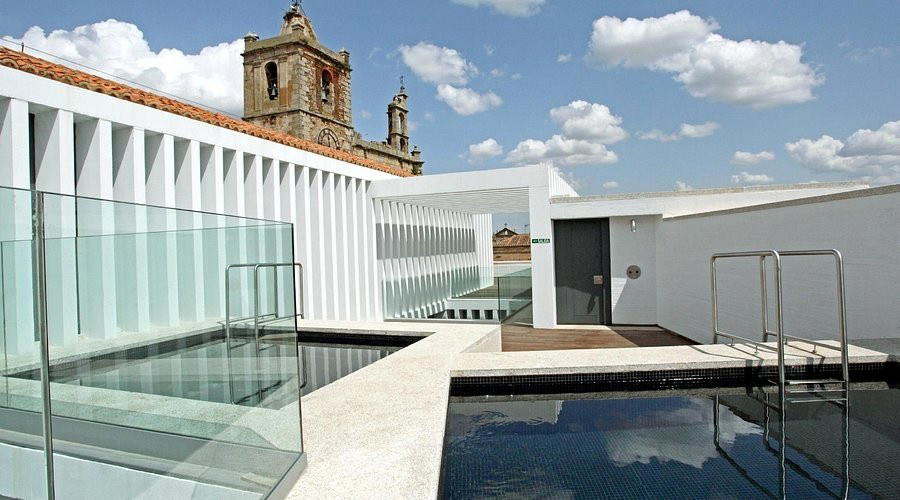
Details
- Elegant
- Modern
- Sophisticated
- Intimate
- Well Known
- Romantic Getaway
- Anniversary
- Rooftop Pool
- Historic Building
- Design Destination
- Wi Fi
- Pool
- Room Service
- Restaurant
- Airport Transfer
- Concierge
- Street Scene
- Wheelchair Accessible
- Elevator
Current opening hours
- Monday
- 1:30–3 PM, 8:30–10 PM
- Tuesday
- 1:30–3 PM, 8:30–10 PM
- Wednesday
- 1:30–3 PM, 8:30–10 PM
- Thursday
- 1:30–3 PM, 8:30–10 PM
- Friday
- 1:30–3 PM, 8:30–10 PM
- Saturday
- 1:30–3 PM, 8:30–10 PM
- Sunday
- 1:30–3 PM, 8:30–10 PM
Hours can change for holidays and private events. Last verified .
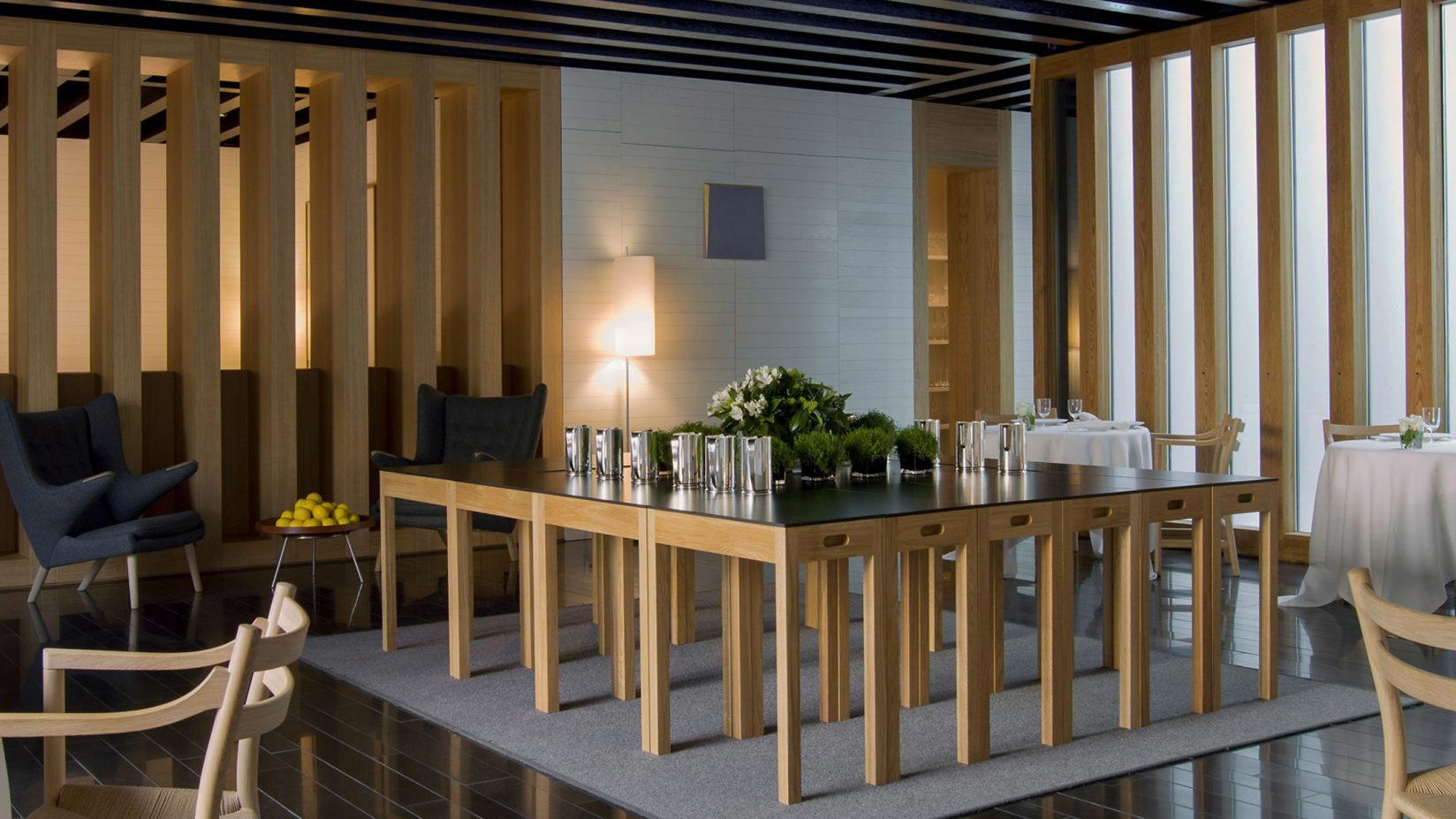
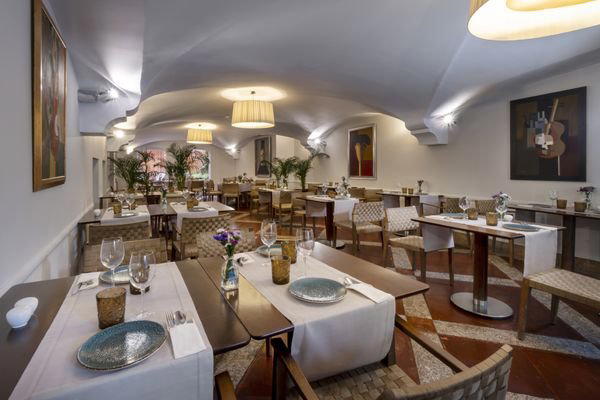
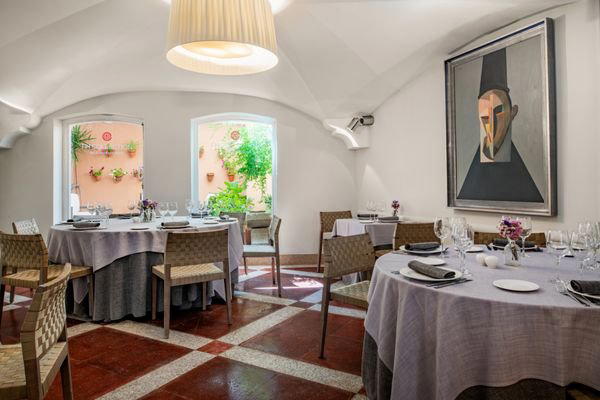
Elegant minimalist interiors blending contemporary design with historic surroundings, offering a serene and sophisticated atmosphere.