← Guides
Decanter's Tuscany vintage archive spans five decades. Bolgheri 2019 and 2016 emerge as the modern benchmarks every collector needs to know.
Decanter's Tuscany vintage archive spans five decades. Bolgheri 2019 and 2016 emerge as the modern benchmarks every collector needs to know.
Bolgheri barely registered on the fine-wine map before Sassicaia earned its own individual DOC, the first single-estate DOC in Italy, in 1994. Three decades later, the coastal strip south of Livorno generates particularly closely tracked vintage reports in the Italian wine calendar.
Decanter's Tuscany vintage archive, which maps harvest quality across five decades and multiple sub-regions, now identifies two modern years as the benchmarks against which everything else is measured: 2016 and 2019.
If you're building a Tuscan cellar, or simply trying to buy intelligently in a market where highly rated Bolgheri allocations disappear faster than they're released, this archive is the closest thing to a reliable compass the region has.
| Vintage | Decanter Rating | Standout Appellation(s) | Key Characteristic | Collector Verdict |
|---|---|---|---|---|
| 1971 | Benchmark | All Tuscan districts | Substantial and long-lived | Historic reference point |
| 1972 | Extremely poor | None | Poor across most of Europe | Avoid |
| 1975 | Good recovery | Brunello, Chianti Classico, Vino Nobile | Recovered ground after weak early decade | Drink if holding |
| 1997 | Excellent | Region-wide | Fruity, well-balanced | Hold, rewards patience |
| 2001 | good | Chianti, Bordeaux-style blends | Powerful reds, great blends | Strong cellar candidate |
| 2002 | Average | White wines | Less concentration and structure | Best whites only |
| 2004 | Outstanding | Brunello di Montalcino | Concentrated, complex, long-lived | Hold, significant aging potential |
| 2007 | good to five-star | Multiple appellations | Borders five-star for some zones | Buy and cellar |
| 2008 | good | Chianti Classico, Brunello | Excellent for late-ripening Sangiovese | Strong for Sangiovese lovers |
| 2016 | Benchmark modern | Bolgheri | Balance, structure, and freshness | Buy en primeur if available |
| 2019 | Benchmark modern | Bolgheri | Closely tracked coastal vintage | Top allocations sell out fast |
A Tuscany vintage report from Decanter is not a single document. It's an accumulating record stretching from the early 1970s to the present, covering Bolgheri, Chianti Classico, Brunello di Montalcino, and Vino Nobile di Montepulciano through the eyes of a rotating panel of expert tasters, among them Michaela Morris, Aldo Fiordelli, Richard Baudains, Stephen Brook, and Monty Waldin. Read chronologically, the archive tells a story of a region learning to understand itself.
The early decades are instructive precisely because of their inconsistency. Decanter's archive records 1971 as a benchmark vintage across all Tuscan districts, producing what it describes as substantial and long-lived wines. Then 1972 arrived, an extremely poor vintage, as it was for most of Europe, followed by 1973, another undistinguished year, though the archive notes some fair Brunello and Vino Nobile di Montepulciano.
The 1975 vintage recovered ground for Brunello, Chianti Classico, and Vino Nobile, but the overall picture of the early 1970s is one of volatility that modern viticulture and winemaking have not entirely eliminated, only better managed.
The 1990s brought a more consistent run of quality. The archive rates 1997 as an excellent vintage with fruity, well-balanced wines across the region, a year that remains a reference point for collectors who bought en primeur and have been patient. Biondi-Santi's 1997 Brunello di Montalcino Riserva is the clearest expression of that consistency: still structured, still tightly wound, still not at its ceiling.
Into the 2000s, the picture becomes more granular: 2001 produced powerful reds yielding good Chianti and what the archive calls great Bordeaux-style blends, while 2002 is recorded as average, with less concentration and structure than better years and the stronger wines being white. The 2004 vintage delivered concentrated wines of complexity and length with significant aging potential, Poggio di Sotto's 2004 Brunello di Montalcino, from old Sangiovese Grosso vines on the southern slopes of Montalcino, is a textbook example: iron-rich earth, dried tobacco, a finish that runs for nearly a minute. Monty Waldin revisited the vintage in a Brunello retrospective asking whether you still have any of those 50 wines in your cellar. If you do, the answer from the archive is: hold them.
By 2007, the archive's language shifts toward something close to enthusiasm. Decanter rates Tuscany 2007 as a good vintage, bordering on five stars for some appellations, a qualifier that matters, because five-star ratings in this archive are not handed out freely. The 2008 vintage earns its own specific commendation: a good year for later-ripening varietals, Sangiovese in particular. For Chianti Classico and Brunello producers, that distinction is not incidental, Sangiovese's late ripening makes it acutely sensitive to autumn conditions, and 2008 delivered. Fontodi's 2008 Flaccianello della Pieve, from a single hilltop vineyard above Panzano, caught that autumn precisely: a wine of uncommon length and precision for the money it fetched at release.
The two vintages that dominate the modern Bolgheri conversation are 2016 and 2019, and the Decanter archive treats them differently enough to suggest they are not interchangeable.
Aldo Fiordelli's report on Bolgheri 2016 poses the question directly in its headline: among the stronger vintages ever? The report covers 35 wines and includes a full vintage assessment alongside value picks, the kind of depth that signals a year worth taking seriously rather than simply noting. The 2016 is praised for balance, structure, and freshness in combination, the sort of vintage profile that ages gracefully and rewards patience. Sassicaia 2016 scored 98 points from Fiordelli: black fruit, graphite, fine-grained tannins laid over a spine of Cabernet Franc-derived acidity that sets it apart from the richer, more immediately satisfying 1997. Ornellaia 2016 sits alongside it at 98 points, winemaker Axel Heinz produced a blend of 54% Cabernet Sauvignon, 22% Merlot, 20% Cabernet Franc, and 4% Petit Verdot, aged 18 months in French barriques, that is already being cited as one of the estate's leading efforts. These are wines built for the cellar. Highly rated 2016 bottlings from the appellation's leading estates are increasingly allocated and difficult to source at release prices, which is itself a signal of how the vintage has been received by the market.
The 2019s show a different aromatic register: ripe black cherry and dark plum on the nose, with graphite and Mediterranean herbs, rosemary, thyme, the scrubby macchia of the Tuscan coast, adding complexity. On the palate, the tannins are velvety rather than structural, and the finish carries that saline minerality that is becoming a signature of the Bolgheri. Sassicaia 2019 scored 99 points from Fiordelli, the highest score the estate has received in recent memory, while Ornellaia 2019 earned 97, described as rich and generous with silky tannins and a long, persistent finish. Masseto 2019, the single-vineyard Merlot from just north of Bolgheri village, scored 98 points: dark plum, crushed violet, and a texture closer to Pomerol than anything else on the Tuscan coast. Fiordelli's five-star rating for the vintage means the floor of quality is high even before you reach a leading estates.
Between those two peaks sits 2018, which Fiordelli's report handles with notable candour. The archive records decisive variability in the 2018 vintage between high-end and emerging producers, a polite way of saying that the year separated the careful from the careless. The headline descriptor, graceful wines suitable for the long haul, applies to the top tier; below that, the picture is less uniform. For collectors, 2018 Bolgheri is a vintage that rewards producer selection rather than appellation-wide buying.
Bolgheri's rise to this level of scrutiny is worth pausing on. Before Sassicaia's individual DOC in 1994, the first of its kind in Italy, the coastal zone was not a serious fine-wine destination. The shift since then has been driven by a handful of estates whose Cabernet Sauvignon and Cabernet Franc-dominant blends proved that Tuscany's maritime climate could produce wines that competed with Bordeaux on structure and longevity. The 2016 and 2019 vintages are the clearest evidence yet that Bolgheri has moved beyond novelty into genuine appellation identity.
| Producer | Wine | Vintage | Appellation | Decanter Score | Character |
|---|---|---|---|---|---|
| Sassicaia (Tenuta San Guido) | Sassicaia | 2019 | Bolgheri Sassicaia DOC | 99 | Black fruit, graphite, saline finish; velvety tannins |
| Ornellaia | Ornellaia | 2016 | Bolgheri Superiore DOC | 98 | Cedar, cassis, mineral; 18 months French oak; structured for the long cellar |
| Sassicaia (Tenuta San Guido) | Sassicaia | 2016 | Bolgheri Sassicaia DOC | 98 | Black fruit, graphite, Cabernet Franc acidity; tightly wound |
| Masseto | Masseto | 2019 | Toscana IGT | 98 | Dark plum, crushed violet, Pomerol-like texture; saline minerality |
| Ornellaia | Ornellaia | 2019 | Bolgheri Superiore DOC | 97 | Rich, generous, silky tannins; long persistent finish |
| Poggio di Sotto | Brunello di Montalcino | 2004 | Brunello di Montalcino DOCG | , | Iron-rich earth, dried tobacco, near-endless finish; old Sangiovese Grosso |
| Fontodi | Flaccianello della Pieve | 2008 | Colli della Toscana Centrale IGT | , | Panzano hilltop Sangiovese; uncommon length and precision |
| Biondi-Santi | Brunello di Montalcino Riserva | 1997 | Brunello di Montalcino DOCG | , | Still structured, tightly wound; not yet at its ceiling |
Inland Tuscany tells a different vintage story. Chianti Classico and Brunello di Montalcino are Sangiovese-driven appellations where altitude, aspect, and harvest timing interact differently than they do on the Bolgheri coast, and the Decanter archive reflects that divergence clearly.
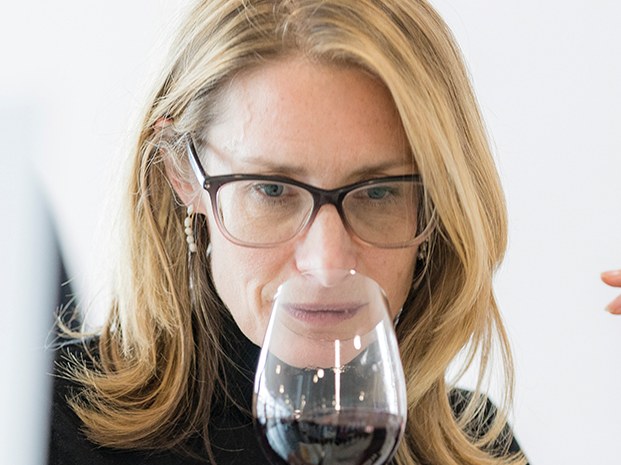
For Chianti Classico, Michaela Morris's comparative tasting of the 2020 and 2019 vintages is instructive. The 2019, she reports, delivers more aroma precision and flavour intensity than the 2020, a distinction that matters when both years are on the market simultaneously and the price differential may not reflect the quality gap. Fontodi's 2019 Chianti Classico Gran Selezione Vigna del Sorbo and Isole e Olena's 2019 Chianti Classico both received strong marks in that comparative exercise: the former all dark cherry and pencil shavings, the latter more floral and lifted, both displaying the cool-night-driven acidity that makes 2019 the stronger cellar choice. Montevertine's 2019 Le Pergole Torte, a Sangiovese Grosso from terraced vineyards in the Radda in Chianti subzone, adds a different dimension: earthy, almost sauvage on the nose, with a structure that needs another three to five years before it gives everything up. New Chianti Classico releases were tasted and rated in 2024, giving collectors current data on how these wines are showing at the point of release. The 2019 emerges as the stronger year for anyone choosing between them.
Brunello di Montalcino has its own rhythm. The archive covers 2004 in a retrospective context, Monty Waldin's piece asks whether you still have those wines, which suggests the 2004s are now at or approaching their drinking windows after two decades of development. Case Basse di Gianfranco Soldera's 2004 Brunello, from a single estate in the Sant'Angelo in Colle subzone, is especially discussed of that year: wild herbs, iron, the kind of tannic architecture that only old Sangiovese Grosso produces. The 2012 vintage receives two separate treatments: Richard Baudains covers the standard release, while Michaela Morris takes on the Riserva 2012, tasting and scoring 55 wines. The depth of coverage signals a year that warranted close attention across both tiers, Poggio di Sotto's 2012 Riserva and Il Marroneto's 2012 Madonna delle Grazie are the names that recur in both reports.
The 2013 Brunello gets a preview from Stephen Brook before its release, followed by a fuller report from Morris, the kind of sequential coverage that allows collectors to track how a vintage develops from barrel to bottle.
And then there is 2017, which Morris reports with a line that will surprise anyone who followed the harvest news at the time: numerous wines demonstrate greater freshness than anticipated. The 2017 growing season across much of central Italy was marked by heat and drought, and the expectation was for extracted, low-acid wines. Biondi-Santi's 2017 Brunello di Montalcino Annata is the clearest counterargument. Franco Biondi-Santi, who died in 2013, had long established the estate's capacity to manage difficult years, and the winemaking team maintained that instinct in 2017, producing a wine with more lift and finesse than the season's reputation implied. That the Brunello 2017s show more freshness than the vintage's reputation suggested is a useful corrective to the habit of writing off difficult years before the wines are in bottle.
Vino Nobile di Montepulciano rounds out the inland picture. Morris's report on the 2018 vintage and the 2017 Riservas finds wines with lovely definition of aromas, vibrancy, and balanced alcohols, a profile that positions Vino Nobile as a reliable alternative to Brunello for collectors who want Sangiovese-based complexity without the Montalcino premium. Poliziano's 2018 Vino Nobile di Montepulciano Asinone, from a single vineyard of Prugnolo Gentile, the local Sangiovese clone, on sandy galestro soils, is the producer to track in this appellation: consistently precise, consistently underpriced relative to its Brunello counterparts.
Using the Decanter archive as a framework, the buying logic for Tuscany becomes clearer than the region's complexity might suggest. The key is matching the vintage's character to your timeline and your appellation.
For Bolgheri, the two modern benchmarks are unambiguous. The 2019 is the five-star vintage, Fiordelli's rating, and it is drinking well now while still having years ahead of it. Sassicaia 2019 at 99 points and Masseto 2019 at 98 are the headline bottles, but the floor of the vintage is high enough that second-label and emerging-estate wines are worth tracking too. The 2016 is the structural vintage, the one for the long cellar, and the one where sourcing at anything close to release price requires either a direct allocation or a well-timed secondary-market purchase. Ornellaia 2016 and Sassicaia 2016, both at 98 points, are the clearest targets. Both years are worth prioritising over the 2018, where the quality gap between producers is wide enough to make appellation-wide buying a risk.
For Chianti Classico, the 2019 vintage is the current benchmark over 2020, with more aroma precision and flavour intensity per Morris's comparative tasting. Fontodi's Vigna del Sorbo, Isole e Olena, and Montevertine's Le Pergole Torte are the producers whose 2019s most clearly demonstrate the vintage's character. The 2024-tasted new releases give collectors a current reference point. For Brunello, the 2004s are at or near their peak and should be opened if you have them, Poggio di Sotto and Case Basse di Gianfranco Soldera are the bottles to prioritise. The 2017s, despite the difficult growing season, show more freshness than the harvest conditions implied, making them worth revisiting if you dismissed them early. Biondi-Santi's 2017 Annata is one persuasive case for that reappraisal.
The archive's historical record also provides a useful corrective to vintage generalisations. The 1971 benchmark and the 1972 disaster sit one year apart, a reminder that Tuscany's climate has always been capable of producing both extremes, and that the warming Mediterranean summers reshaping harvest windows across the region's sub-regions are accelerating a pattern that was always present.
The 2008 vintage's commendation specifically for Sangiovese's late-ripening character is a data point worth keeping: in years where the autumn holds, the inland appellations often outperform the coastal ones. In years where it doesn't, Bolgheri's earlier-ripening Cabernet-dominant blends tend to hold their quality better.
What the five-decade Tuscany vintage report archive ultimately provides is not a simple buy list but a framework for thinking about the region's diversity. Bolgheri 2019 and 2016 are the modern high-water marks on the coast; Brunello 2004 and the underrated 2017 are the inland reference points worth tracking. The archive will keep growing, Chianti Classico's 2024-tasted releases are already in it, and the next benchmark vintage is somewhere in the recent harvests, waiting for Fiordelli or Morris to name it.
Decanter's Tuscany vintage report identifies 2016 and 2019 as the modern benchmarks for Bolgheri, though they are noted as distinct in character rather than interchangeable. The 2016 is praised for balance, structure, and freshness, Sassicaia and Ornellaia both scored 98 points from Aldo Fiordelli, whose report covering 35 wines asks whether it is among the stronger vintages ever. The 2019 earned five stars, with Sassicaia reaching 99 points and Masseto 98.
The Decanter archive stretches from the early 1970s to the present, covering over five decades of harvests across Bolgheri, Chianti Classico, Brunello di Montalcino, and Vino Nobile di Montepulciano. It records 1971 as an early benchmark vintage and tracks quality through to particularly recent releases.
Bolgheri gained significant recognition when Sassicaia earned its own individual DOC in 1994, the first single-estate DOC in Italy. In the three decades since, the coastal strip south of Livorno has become among the more closely tracked areas in the Italian wine calendar.
Decanter's Tuscany vintage archive draws on a rotating panel of expert tasters including Michaela Morris, Aldo Fiordelli, Richard Baudains, Stephen Brook, and Monty Waldin. Fiordelli is specifically credited with the in-depth Bolgheri reports, including the 35-wine 2016 assessment.
Yes, the Decanter archive describes 2004 as delivering concentrated wines of complexity and length with significant aging potential. Poggio di Sotto and Case Basse di Gianfranco Soldera are the estates whose 2004s recur most in retrospective coverage. Monty Waldin's revisit of the vintage is clear: if you still have bottles, hold them.
Get the App
Take the shortlist into the En Primeur Club app for concierge access, saved places, and the next step after discovery.
Get Exclusive AccessMore from the editors