← Guides
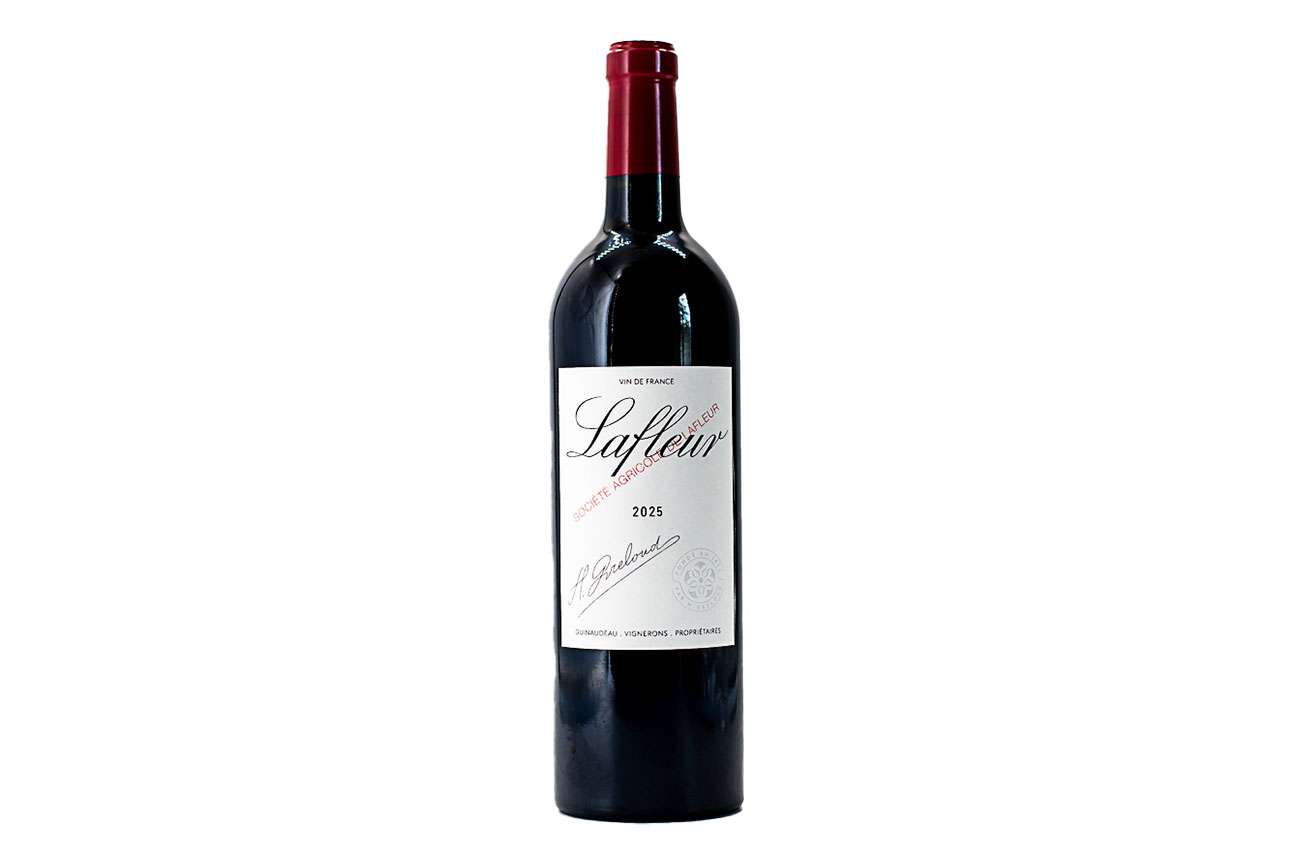
Château Lafleur 2025 debuts as the first Vin de France from the Guinaudeau family, 97pts, reduced allocation, and £1,800 per three bottles.
Château Lafleur 2025 debuts as the first Vin de France from the Guinaudeau family, 97pts, reduced allocation, and £1,800 per three bottles.
On 15 May 2025, Justerini & Brooks listed Château Lafleur 2025 at £1,800 per 3x75cl in bond, and with that single release, one of Bordeaux's most coveted estates stepped off the appellation ladder entirely.
The 2025 is the first Lafleur vintage to carry a 'Vin de France' label rather than a Pomerol designation, and the Guinaudeau family's decision to leave both the Pomerol and Bordeaux appellations makes this not just another en primeur release but a genuinely different kind of bottle.
Decanter's Georgie Hindle rated it 97 points in-barrel, calling it 'a quietly compelling wine.' Justerini & Brooks confirmed that production is 'even smaller than usual in 2025' and that everything is offered subject to their allocation process, meaning the window to secure bottles is narrower than any prior vintage.
For collectors who have tracked this estate across decades, the 2025 is the one release in this campaign where the label change and the scarcity signal are inseparable.
Pomerol carries no official classification, no premier cru hierarchy, no grand cru system. Its prestige is built entirely on producer reputation, and Château Lafleur sits at the summit of that informal ranking alongside Pétrus. So when the Guinaudeau family announced they were withdrawing from the Pomerol appellation, the move raised an obvious question: what does a Lafleur without the Pomerol name on the label actually lose?
The short answer, for buyers who track the estate rather than the appellation, is little. Lafleur's secondary market performance has always been driven by the producer's name and the wine's scarcity, not by the appellation designation itself. The estate's reputation for stable release pricing, even as vintages subsequently soar on the secondary market, is a function of the Guinaudeau family's own discipline, not a Pomerol convention. A 'Vin de France' label strips the geographic anchor from the front label, but it does not change the vineyard, the family, or the winemaking philosophy behind it.
What the Lafleur 2025 Vin de France classification does change is the regulatory freedom available to the Guinaudeaus in the vineyard. Under appellation contrôlée rules, producers are bound by approved grape varieties, maximum yields, and viticultural practices. A Vin de France designation removes those constraints, allowing the family to respond to changing growing conditions, earlier harvests, different varietal blends, irrigation where previously prohibited, without seeking dispensation from the appellation authority. The label change is, in that sense, a practical tool rather than a philosophical statement.
At £1,800 per 3x75cl IB, the 2025 release comes in a shade above the 2024 vintage, which was reported at £3,530 per 6x75cl IB, making the per-bottle equivalent broadly comparable.
Lafleur has a long-standing reputation for holding release prices steady, and that discipline appears intact even as the estate navigates a new label and a challenging fine wine market. The 97-point score from Hindle gives buyers the critical validation they need; the allocation constraint is what will determine who actually secures bottles.
Those without an existing merchant relationship holding Lafleur stock should treat the allocation window as open now and closing fast.
The Guinaudeau family announced last year that they were taking Château Lafleur out of the Pomerol and Bordeaux appellations specifically to gain flexibility in meeting climate change-related challenges in the vineyards. That framing matters. This is not a marketing repositioning or a reaction to critical scores, it is a long-term viticultural strategy from a family that has managed this estate with unusual consistency and patience.

Bordeaux's appellation system was designed for a climate that no longer reliably exists. The canonical blend ratios, the approved varieties, the harvest date conventions, all were calibrated for conditions that have shifted materially over the past two decades. Estates that remain within appellation rules must either seek individual derogations or adapt within increasingly tight constraints. The Guinaudeaus have chosen a third path: exit the system entirely and retain full control over how they respond to what the growing season delivers.
Le Grand Village, the family's other estate, has made the same move.
The 2025 Le Grand Village is also now a Vin de France, offered at £89 per 6x75cl IB and rated 93 points by Hindle, who said: 'I so often think of this as one of Bordeaux's best value wines and it's brilliant in 2025.' The fact that both estates in the Guinaudeau portfolio have shifted simultaneously suggests this is a considered, estate-wide strategy rather than a one-vintage experiment.
Le Grand Village's entry-level pricing, and Hindle's enthusiasm for it, gives collectors a lower-stakes way to track how the family's Vin de France approach develops across vintages. At £89 per 6x75cl IB and 93 points, it is also one of the more direct value propositions in the 2025 campaign.
The broader context is a Bordeaux appellation system under quiet but persistent pressure. Climate change is forcing conversations across the region about permitted varieties, irrigation, and harvest timing that would have been unthinkable twenty years ago. The Guinaudeaus are not alone in feeling constrained, but they are among the first at the summit of the quality pyramid to act on it so decisively. Whether other right-bank estates follow, particularly those whose reputations, like Lafleur's, rest more on producer identity than appellation cachet, is one of the more consequential questions the 2025 campaign has surfaced.
Justerini & Brooks' language around the 2025 release is precise and worth reading carefully. 'Production is even smaller than usual in 2025,' the merchant stated, 'as such, everything is offered subject to our allocation process.' For a wine that was already among the hardest to secure in any given vintage, a further reduction in available bottles compresses an already narrow allocation window. Buyers without an existing relationship with a merchant who holds Lafleur stock will find the 2025 particularly difficult to access, and the label change gives no reason to expect that demand will soften.
The allocation dynamic also intersects with the label change in a way that creates a short-term decision point for collectors. Some buyers, particularly those who purchase Lafleur as part of a Pomerol collection or who rely on appellation designation for insurance or resale purposes, may hesitate.
That hesitation, if it materialises, could briefly ease competition for bottles among committed collectors who track the producer rather than the appellation.
The secondary market will ultimately arbitrate whether the Vin de France label affects long-term price trajectory, but the estate's track record of post-release appreciation gives little reason to expect a structural discount.
Les Pensées 2025, the Lafleur second wine, was rated 95 points by Hindle and offered at £400 per 3x75cl IB. For buyers who cannot secure an allocation of the grand vin, Les Pensées offers a direct entry into the same vintage and the same winemaking philosophy, at a price that, while not modest, is a fraction of the flagship. The 95-point score narrows the quality gap between the two wines in 2025 more than in most vintages, which makes the second wine an unusually strong option this year. If the grand vin allocation closes before you reach the front of the queue, Les Pensées at 95 points is not a consolation prize.
Across the broader 2025 en primeur campaign, the week of 15 May brought several other notable releases. Duhart-Milon 2025 debuted at €48 per bottle ex-négociant, up slightly on 2024 and matching the 2019 release price, after receiving 95 points from Hindle, who described the wine as 'brilliant' this vintage.
Domaine de Chevalier 2025 red was rated 94 to 95 points by Decanter and offered by Farr Vintners at £216 per 6x75cl IB; the merchant described it as 'slightly up on last year but apart from that, the lowest price here since the 2014.' Château La Lagune 2025 came in at €21 per bottle ex-négociant and £259 per 12 bottles IB, rated 94 points, lower than every other campaign since at least the 2008 vintage, according to Liv-ex data.
The 2025 en primeur campaign is unfolding against a fine wine market that has spent the better part of two years under pressure.
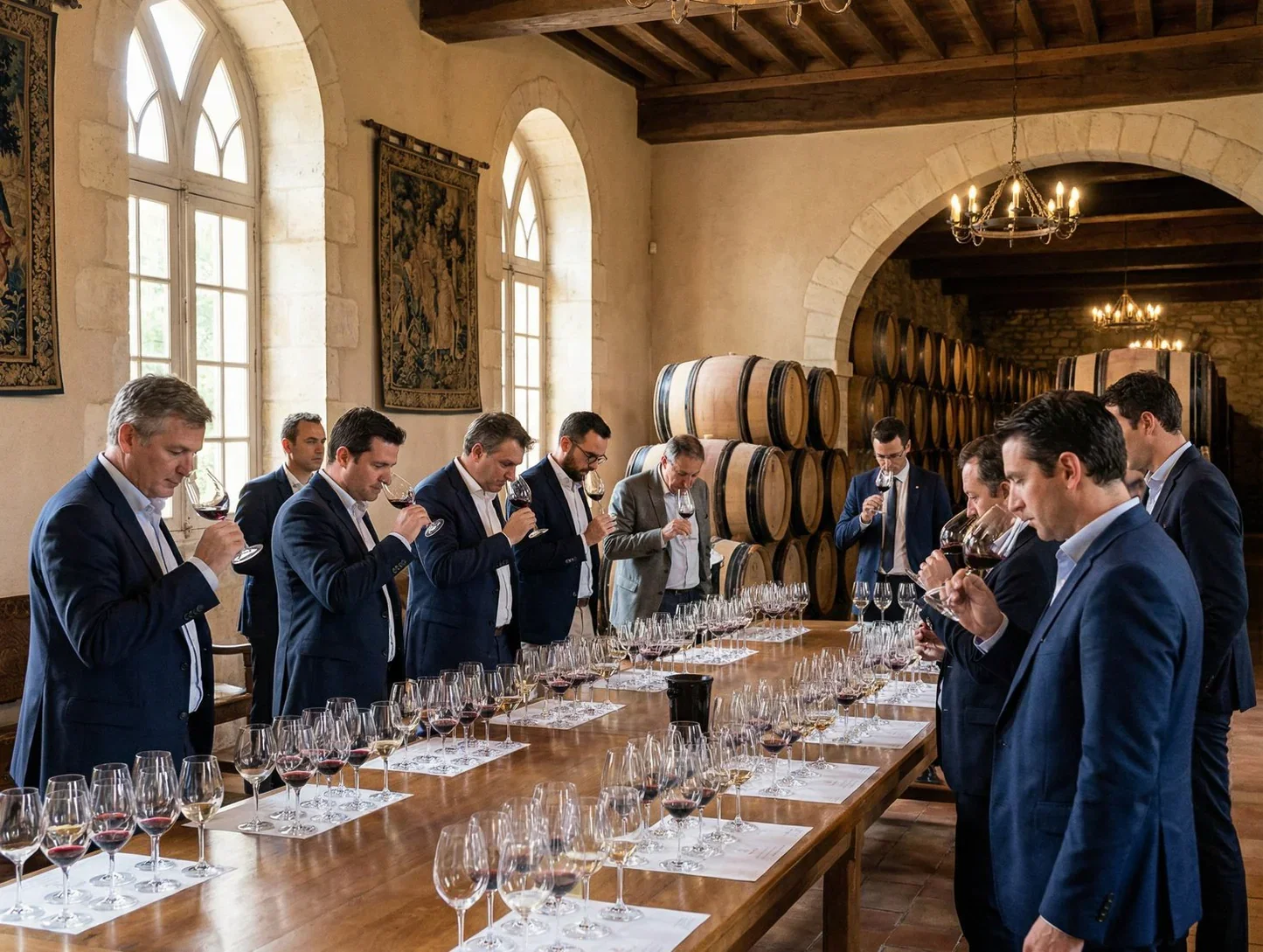
A sustained period of falling prices across the Liv-ex indices has made buyers more selective and merchants more cautious about recommending releases where back-vintages of comparable quality are available for less on the secondary market.
Corney & Barrow's assessment of Duhart-Milon 2025 captures the mood precisely, the merchant said it was 'keen on the quality of Duhart in 2025' but that 'the lower market prices of older equivalent-quality vintages make it a pass, unless you are a die-hard Duhart enthusiast.' Quality alone is no longer sufficient justification for en primeur purchase; the price has to make sense relative to what is already in the market.
Against that backdrop, Lafleur occupies an unusual position. Its allocation is so constrained that the secondary market comparison is almost academic, you cannot buy a back-vintage of Lafleur as a substitute for the current release if you cannot find one to buy. Scarcity insulates the estate from the price-compression dynamic affecting more widely available châteaux. The 2025 vintage, with production 'even smaller than usual,' only tightens that dynamic further.
There have been early highlights in the campaign. Thomas Parker MW at Farr Vintners reported selling a decent volume of Batailley; Miles Davis of Vinum Fine Wines told Decanter that the group sold more Pontet-Canet 2025 than expected; and Will Hargrove, Corney & Barrow's head of fine wine, said the merchant's offers on Ets JP Moueix wines and Mitjavile, including Tertre Roteboeuf, were going down well with customers. Many of the campaign's biggest names held back in the first fortnight, likely watching how the market absorbed early releases before committing to pricing.
The Lafleur 2025 Vin de France is not simply a wine with a new label. It is the opening statement of a long-term strategy by one of Bordeaux's most disciplined families, a deliberate departure from a system they have outgrown, in favour of the freedom to farm and blend as the climate demands. Hindle's 97-point score and the phrase 'quietly compelling' suggest the wine itself has not suffered in the transition. The reduced allocation means that for most buyers, the 2025 will be a wine to track on the secondary market rather than secure at release.
What the coming vintages will reveal is whether the Guinaudeaus use their new regulatory freedom to make measurable changes in the vineyard, different varieties, earlier picking, adjusted blends, and whether those changes are reflected in the wine's character.
The 2025 is the first data point in what may prove to be a multi-decade experiment at the summit of the Bordeaux quality pyramid.
Le Grand Village 2025, at £89 per 6x75cl IB and 93 points, offers a more accessible way to follow that experiment as it develops, and both wines are now in the hands of merchants navigating allocations where demand will comfortably outpace supply. If this is the kind of insider detail you look for in a glass, join the club, we'll keep pouring.
Get the App
Take the shortlist into the En Primeur Club app for concierge access, saved places, and the next step after discovery.
Get Exclusive AccessMore from the editors