← Guides
Axel Heinz launches La Côte Lascombes, a 100% Merlot sold in bottle only, as the Margaux second growth executes its most decisive stylistic break in decades.
Axel Heinz launches La Côte Lascombes, a 100% Merlot sold in bottle only, as the Margaux second growth executes its most decisive stylistic break in decades.
On 21 May, Château Lascombes released its 2023 Grand Vin at £264 per six-bottle case from London merchants, below the current market price of both the 2022 and 2023 vintages. That pricing decision alone signals something deliberate. Pair it with the simultaneous existence of La Côte Lascombes, a 100% Merlot cuvée sold exclusively in bottle and priced at nearly twice the Grand Vin, and the picture sharpens: this is a Margaux second growth in the middle of a credible, documented stylistic reset, not a marketing refresh.
When Gaylon Lawrence Jr acquired Château Lascombes in November 2022, the estate was carrying the weight of a complicated recent history, years of corporate ownership, a style that critics had periodically described as over-extracted, and a market position that had drifted from the plateau-focused identity that earned the estate its 1855 second-growth classification. Lawrence's most consequential early decision was bringing in Axel Heinz as winemaker in 2023.
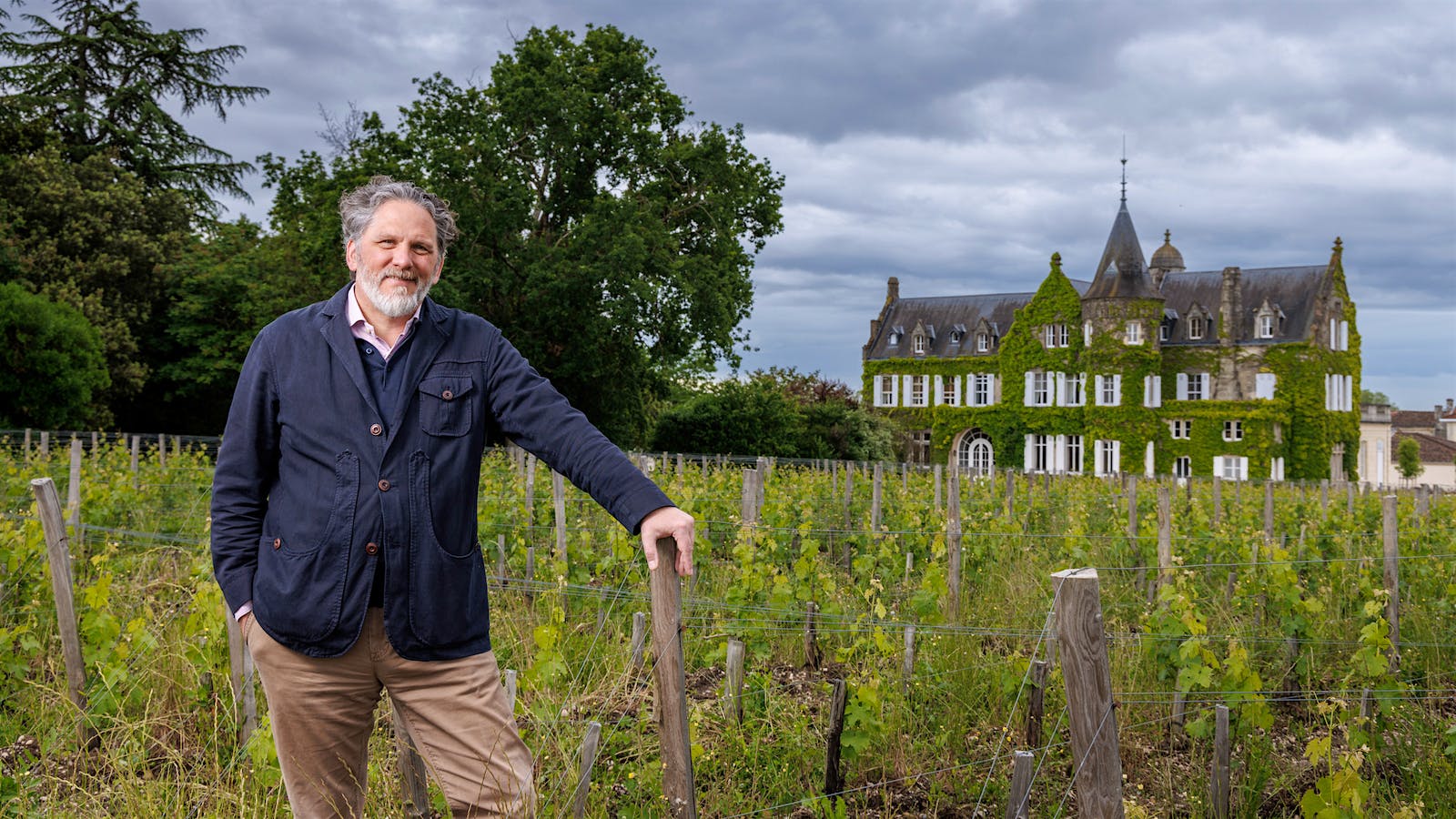
Heinz arrived with a specific kind of credibility. His years at Ornellaia and Masseto, two of Italy's most closely watched estates for terroir-driven winemaking and parcel-level precision, gave him a formation that sits outside the standard Bordeaux technical playbook.
He is not a product of the Médoc system, and that distance appears to be exactly the point. According to the drinks business, Heinz said at the time he joined that he had wanted to "shake things up a bit" and give the estate its own identity.
The changes now visible in both the Grand Vin and the new La Côte cuvée suggest that intention has moved from stated ambition to executed strategy.
Particularly structurally significant change Heinz has made to Château Lascombes under Axel Heinz's direction is in how the Grand Vin is selected. Previously, the estate used a more classical approach: young vines were directed to the second wine, and the final blend was determined largely through tasting-room selection.
That model has been replaced by a terroir-driven allocation, each wine now has a specifically dedicated parcel base rather than a quality-tier cut. The Grand Vin is now drawn from the historic plateau vineyards, the parcels that can be traced back to the estate's footprint at the time of the 1855 classification.
The Chevalier de Lascombes, the second wine, receives the more varied terroir plots. The logic is parcel-first, not barrel-first.
"It's giving each wine its specifically dedicated terroir," Heinz explained to the drinks business. "In the case of Lascombe, it's the heart, one historic part of the estate which is right on the plateau, which corresponds to all areas where we know that we have vineyards as far back as 1855, when Lascombe was classified as a second growth. And all the other areas that are a little bit more varied for the Chevalier de Lascombes."
This is a meaningful structural departure. When a classified Bordeaux estate moves from blend-room selection to terroir-defined allocation, it changes not just the wine but the entire proposition, the Grand Vin becomes a place wine rather than a quality-tier wine. That shift takes years to read in the glass, but it is the kind of foundational change that collectors tracking a turnaround story need to identify early.
La Côte Lascombes is the first new cuvée produced by the estate since the ownership change in 2022, and it breaks from Bordeaux convention in two ways simultaneously: composition and sales channel. It is 100% Merlot, unusual for a Margaux estate, where Cabernet Sauvignon typically anchors the Grand Vin, and it will not be sold en primeur. Every bottle will reach the market already bottled, released later in the commercial season than the Grand Vin.
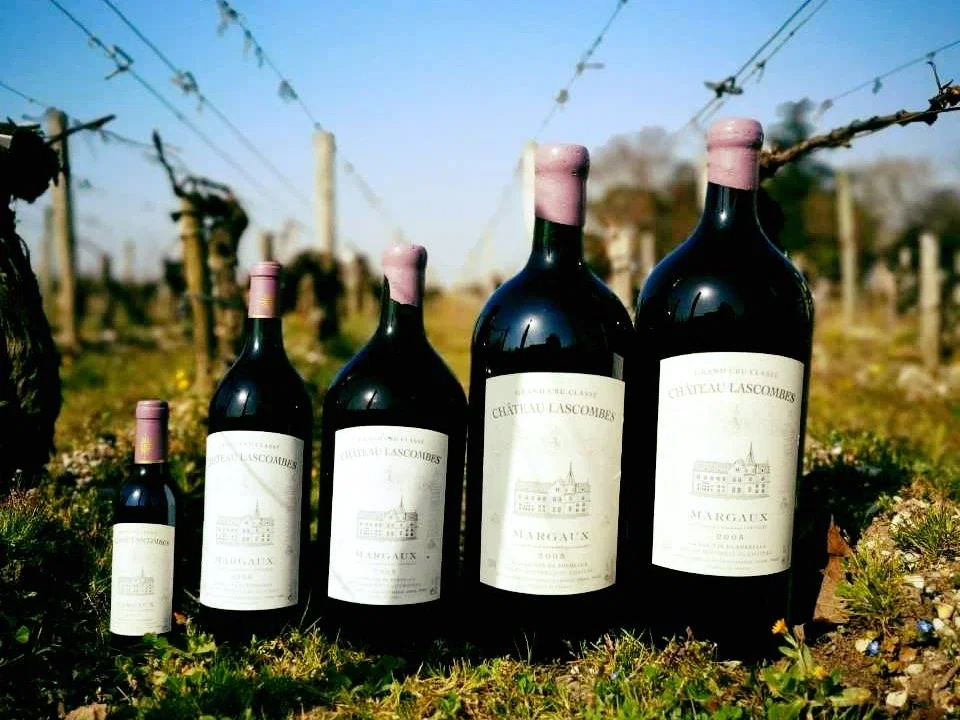
The vineyard itself is specific: 4.5 hectares of four contiguous plots, planted with 60-year-old Merlot vines on blue marl clay over limestone. That soil profile, clay over limestone, is the kind of geology that produces Merlot with structure and tension rather than simple ripeness, and the vine age compounds that.
Sixty-year-old vines in Margaux are not producing high volumes; they are producing concentrated, low-yielding fruit from a root system that has spent decades finding its way through the subsoil. The parcel is, in other words, the argument for why a 100% Merlot from this address deserves to exist as a standalone cuvée rather than disappearing into a blend.
Heinz has been candid about the fact that making a Merlot was not part of his original brief. According to the drinks business, he had no intention of producing a Merlot when he joined Lascombes, the vineyard's character changed his mind. "The La Côte is going to be released later on in the season, and only with already bottled wine," said Axel Heinz.1
The decision to sell La Côte exclusively in bottle, bypassing the en primeur system entirely, is the detail that collectors should sit with. En primeur exists partly as a financing mechanism for châteaux and partly as a price-discovery tool for the market.
Opting out of it for La Côte signals that Heinz and the estate are confident enough in the finished wine to let it speak without the futures market as a buffer. It also means that allocation will be tighter and later, buyers who want La Côte will need to source it from merchants carrying already-bottled stock, not from primeur campaigns.
The inaugural 2022 vintage was first released on La Place last September; subsequent vintages will follow the same bottle-only path.
At nearly twice the price of the Grand Vin, La Côte is not positioned as a companion label. It is a separate proposition, a parcel wine from a specific geology, made by a winemaker whose previous work at Ornellaia and Masseto was built on exactly that kind of single-site thinking.
The 2023 Grand Vin's release price of £264 per six-bottle case, £44 per bottle, from London merchants is the clearest commercial signal yet that the new regime is not trying to trade on legacy pricing. The drinks business confirmed that £264 is below the current market prices of both the 2022 and 2023 vintages. For a Margaux second growth, releasing below secondary market levels is an unusual move. It suggests the estate is prioritising re-engagement with the collector base over short-term margin, and it puts the wine in front of buyers who might otherwise have been priced out of the conversation.
The blend itself has changed in character, even if the varieties remain consistent with Margaux convention. The shift is less about the grape percentages and more about the selection logic described above: the 2023 Grand Vin is the first vintage to be fully assembled from the historic plateau parcels, with the more varied terroir plots now directed to Chevalier de Lascombes. That means the 2023 is, in a meaningful sense, the first vintage to fully express the new terroir-defined model rather than being a transitional blend.
Heinz has been explicit about the break from the previous selection approach. "We are breaking away from that and trying to define which terroir is dedicated to each specific wine, and that will allow also for all of the ones that develop their own personalities," he told the drinks business. The practical implication for the 2023 Grand Vin is that it carries a cleaner identity than its immediate predecessors, a wine made from a defined place rather than assembled from the estate's best barrels regardless of origin.
For collectors building a position in Lascombes, the 2023 release at £264 per six is the entry point to the new chapter. Whether the style in the glass delivers on the philosophy in the vineyard will take time to assess fully, but the structural conditions, parcel-defined selection, a winemaker with a strong track record at comparable estates, pricing below secondary market, are aligned in a way they have not been for some years.
Margaux has seen several ownership-driven stylistic pivots over the past two decades. Château Rauzan-Ségla's transformation under Chanel ownership in the 1990s is one cited example of a second growth credibly reclaiming its classification-level ambition through a combination of vineyard investment and winemaking discipline. Château d'Issan, under the Cruse family, has pursued a quieter but consistent elevation of its terroir identity over a similar period. In both cases, the inflection point for collectors came not at the moment of ownership change but a vintage or two later, when the new philosophy was visible in the bottle.
Lascombes is at that inflection point now. The 2023 Grand Vin is the first vintage assembled entirely under the new terroir-defined selection model. La Côte Lascombes, with its 2022 inaugural vintage, is already in bottle and in the market. The pricing on the Grand Vin is below secondary market levels. And the winemaker overseeing all of it spent his formative years at two estates, Ornellaia and Masseto, where the argument for terroir-driven, parcel-specific winemaking was made and won against real scepticism.
None of this guarantees a trajectory. Margaux is a demanding appellation, and second-growth positioning requires sustained consistency across vintages, not a single well-priced release. But the combination of a documented philosophical shift, a winemaker with the right formation for that shift, and a commercial posture that prioritises re-engagement over premium extraction gives Lascombes a more credible collector case than it has had in some time.
The bottle-only structure of La Côte Lascombes is, in the end, the sharpest signal of all. Estates that are confident in what they are making do not need the en primeur system to validate it. Heinz and Lawrence are betting that the 4.5 hectares of 60-year-old Merlot on blue marl clay will make the argument on its own, and they are willing to let the finished bottle do the talking. For collectors who track Bordeaux closely, that is the kind of quiet confidence that tends to be worth paying attention to before the wider market catches up.
Get the App
Take the shortlist into the En Primeur Club app for concierge access, saved places, and the next step after discovery.
Get Exclusive AccessMore from the editors