Al Covo occupies a quiet campiello in Castello, well away from Venice's tourist circuits, and has maintained a reputation for serious Venetian cooking over several decades. The kitchen draws on the lagoon's seasonal catch, and the dining room offers the kind of unhurried, neighbourhood-specific experience that distinguishes the city's longer-standing trattorie from its more recent arrivals.
 Discover on Pearl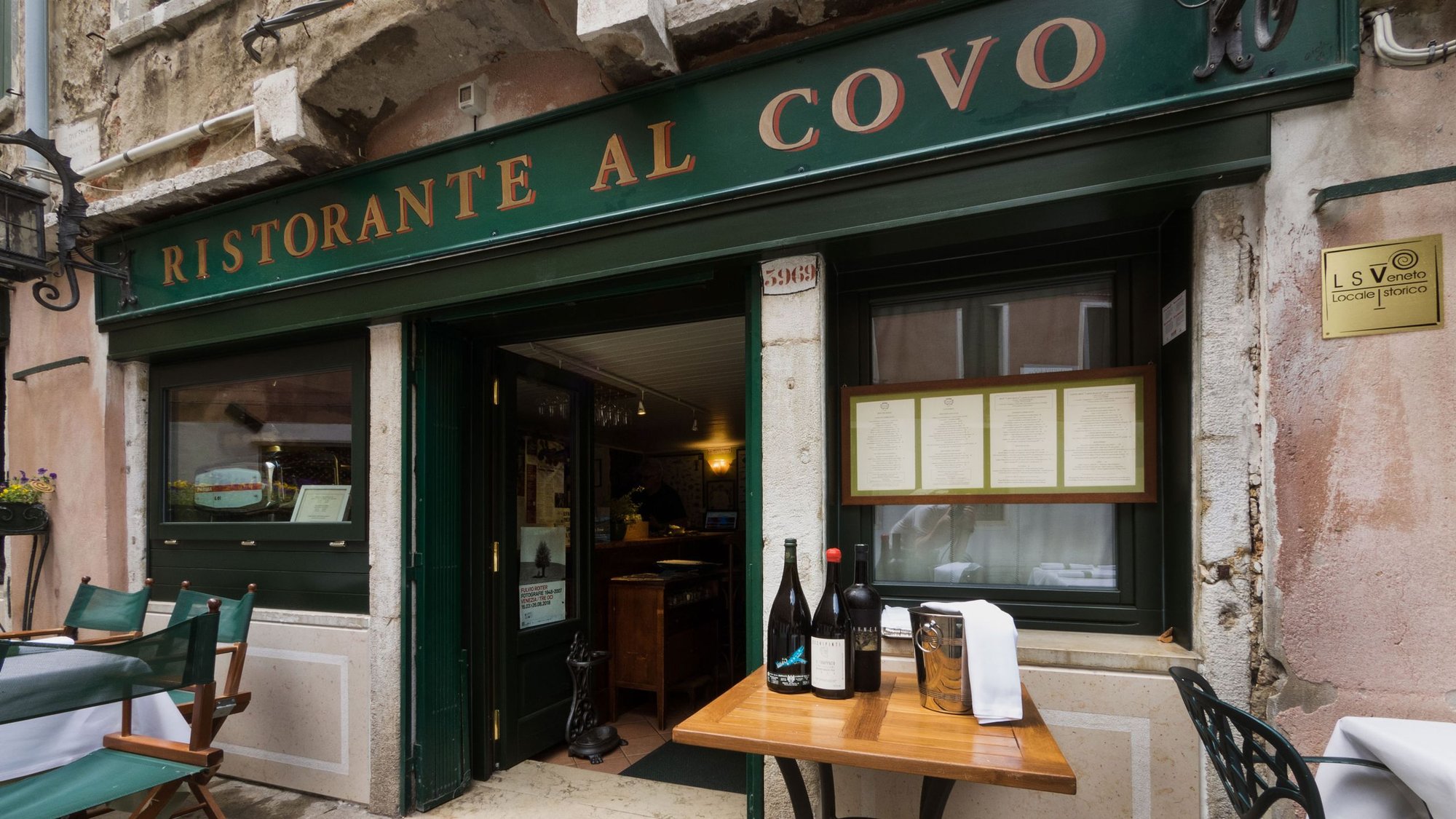
A Castello Address That Earns Its Reputation
Venice's dining scene fractures clearly along geographic lines. The area around San Marco and the Rialto market functions as a high-traffic zone where restaurants price to tourist volume. Castello, by contrast, retains a different tempo: quieter calli, a more local clientele, and a tier of long-established restaurants that have built their reputations without relying on footfall alone. Al Covo operates within that tradition, positioned on a small campiello near the Pescaria — a location that requires intent to find and rewards those who plan ahead. For a broader picture of where this fits in the city's wider dining and drinking geography, see our full Venice restaurants guide.
This part of the city produces a particular kind of dining room: compact, candlelit at the margins, with the ambient noise of the kitchen occasionally audible from the back. These are rooms where the physical surroundings signal something about the kitchen's priorities — restraint, locality, the primacy of what the lagoon offered that week. Al Covo belongs to this cohort, and its longevity in a city where tourist economics regularly displace serious cooking is itself a form of credential.
Venetian Cooking and the Lagoon's Seasonal Logic
The cooking tradition that Al Covo draws from is tightly bounded by geography. Venice's proximity to the Adriatic and the lagoon's own ecosystem produces ingredients that do not travel well and that change meaningfully across the calendar year. Serious Venetian kitchens have always organised themselves around this constraint: what is here, what is ready, and how little intervention it needs. The result is a repertoire built from soft-shell crabs in spring, cuttlefish and its ink in colder months, and the bivalves and small fish that the lagoon yields year-round.
This is a fundamentally different approach to menu construction than the cuisine-as-concept model that has dominated ambitious restaurant openings across Europe over the past decade. Where the latter builds identity around a chef's intellectual framework, the former inherits its identity from a centuries-old relationship between a city and its water. Al Covo works within that inherited framework, which is both a limitation and a source of coherence that newer arrivals cannot replicate simply by choosing it.
The Wine and Drink Programme in Context
Venice's bar and drink culture has evolved in interesting directions over recent years. The traditional bacaro circuit , small standing bars serving cicchetti and ombra, the short pour of local wine , still functions across the city, and venues like Al Mercà near the Rialto represent that format at its most functional. At the other end of the spectrum, hotel bars such as Aman Bar operate as destination programmes with international-level cocktail and spirits lists. The Arts Bar and Al Covino occupy middle ground , the latter known specifically for a serious wine list in a format closer to the bacaro tradition than the hotel bar model.
At a trattoria like Al Covo, the drink programme is subordinate to the food in a way that distinguishes it from venues where cocktails are the primary editorial focus. The wine selection at long-established Venetian restaurants of this type tends to prioritise northeastern Italian producers , Friuli, the Veneto, and the Collio appellation across the border , alongside a working list of natural and low-intervention wines that have become a fixture on serious Italian lists over the past decade. These lists are rarely deep in back-vintage Barolo; they are built around compatibility with fish and seafood, which means lighter reds, skin-contact whites, and local varieties that do not overshadow the plate.
Cocktail programmes are not the primary lens through which Al Covo operates, and conflating it with the city's growing cocktail-forward venues would misread what the room is for. Italy's most compelling bar programmes , Camparino in Galleria in Milan, L'Antiquario in Naples, Gucci Giardino in Florence, and Boeme in Rome , each operate with a distinct technical identity and often with international recognition. Al Covo's relationship to drinks is simpler and more Italian in the traditional sense: wine serves the food, the Veneto is the regional anchor, and the aperitivo glass before dinner is a matter of local custom rather than programme design.
Where Al Covo Sits Among Venice's Longer-Standing Restaurants
The comparison set for a restaurant like Al Covo is not the recent wave of design-forward Venetian openings. It belongs alongside a smaller group of restaurants that have maintained cooking standards and local clientele across multiple decades , places that survived the economic pressures of a city that sees more than twenty million visitors per year, most of them concentrated in a very small geographic area. That kind of durability is not incidental. It requires a degree of pricing discipline, a refusal to expand into tourist-volume formats, and a consistent kitchen identity that does not shift with trend cycles.
Internationally, the trattoria model that Al Covo exemplifies is increasingly understood as one of Italy's most difficult hospitality formats to sustain: low margin, labour-intensive, and dependent on the quality of daily market sourcing rather than a standardised menu that can be executed at scale. Venues that maintain it well are genuinely rarer than their apparent abundance in older guidebooks suggests. For comparison with similarly rooted, place-specific bar and dining programmes elsewhere in the Mediterranean, the approach at Lost & Found in Nicosia offers an instructive parallel in how local ingredient identity can anchor a programme without requiring spectacle.
Planning Your Visit
Castello rewards visitors who arrive with time rather than itineraries. Al Covo's campiello address is not on any vaporetto line's direct path, and reaching it on foot from either the San Marco area or the Rialto takes fifteen minutes at a comfortable pace through quieter streets. Reservations are advisable at any point in the year; Venice's visitor numbers create demand pressure on the better-regarded rooms even outside the peak summer months, and the autumn and winter seasons , when the lagoon's colder-water catches are at their most varied , are the periods when long-established kitchens of this type tend to show leading. Those visiting in October or November will find a city that feels substantively different from its July version, both in terms of atmosphere and in what the kitchen has available to work with. For context on other Venice venues across different formats and price brackets, the full Venice guide maps the relevant options. Further afield, programmes at Alto Rooftop in Cervia and Bar Leather Apron in Honolulu illustrate how rooted, place-specific approaches to drink and food play out in very different geographies.
Frequently Asked Questions
Fast Comparison
A quick context table based on similar venues in our dataset.
Need a Table?
Our members enjoy priority alerts and concierge-led booking support for the world's most difficult bars and lounges.
Get Exclusive Access