Domaine Roland Lavantureux

Domaine Roland Lavantureux sits at the northern edge of Chablis, in the village of Lignorelles, producing Petit Chablis and Chablis from Kimmeridgian limestone soils that define the appellation's mineral signature. The domaine earned a Pearl 2 Star Prestige rating in 2025, placing it among a select tier of small Burgundian producers whose wines read as textbook expressions of their terroir rather than winemaker intervention.
 Discover on Pearl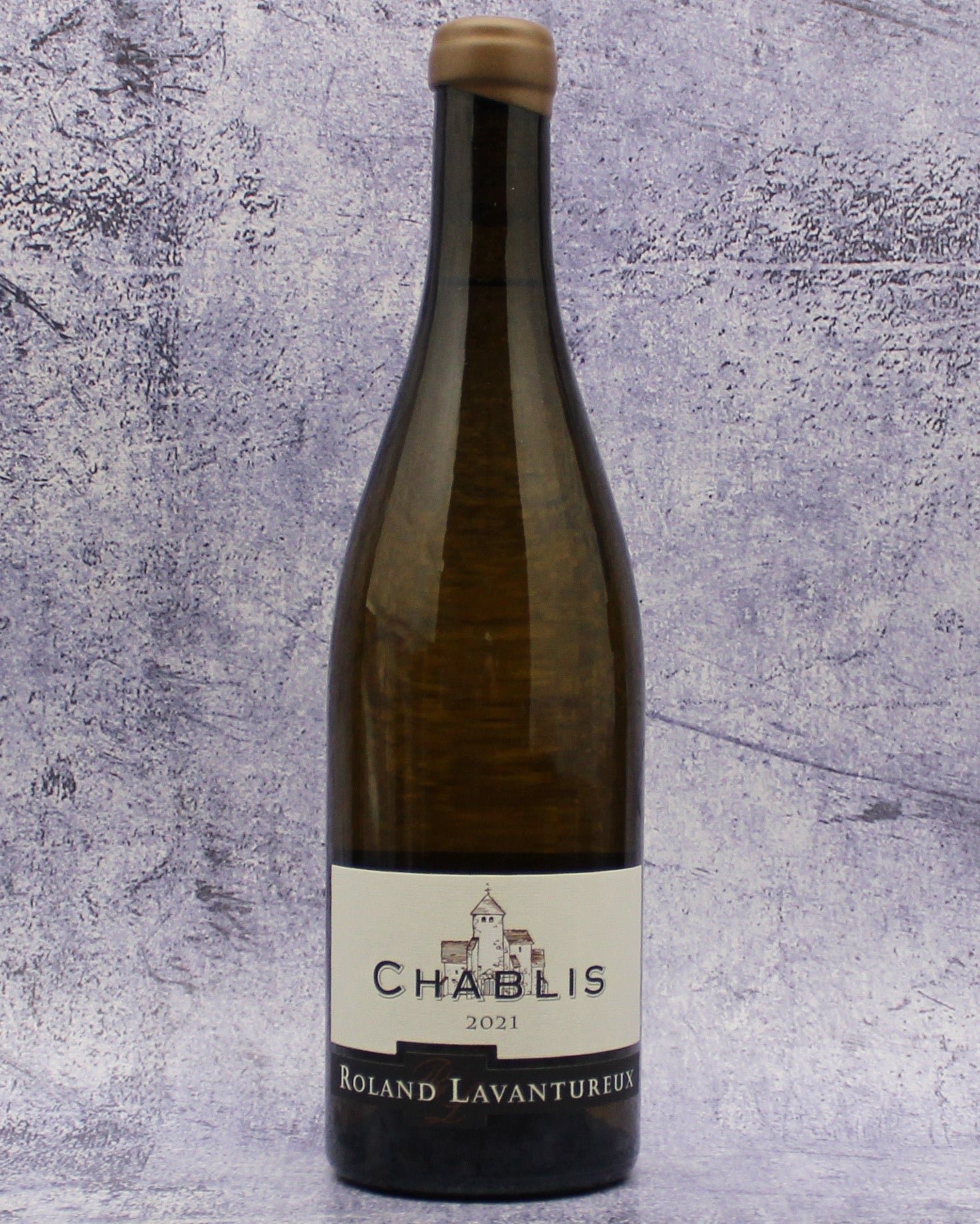
Where the Chalk Speaks Louder Than the Label
The road into Lignorelles from Chablis town runs through a plateau of exposed vine rows and pale, broken stone. There are no grand gates here, no visitor centre with a tasting lounge styled for Instagram. What you find at 4 Rue Saint-Martin is a working agricultural domaine, the kind where the cellar door is literally a cellar door, and the conversation, when it happens, centres on soil composition and harvest dates rather than brand narrative. This is the northern fringe of the Chablis appellation, and the physical environment makes its argument before a single bottle is opened.
Lignorelles sits at the outer reach of the Chablis zone, classified primarily as Petit Chablis territory. That designation carries a reputation problem in some quarters: the name suggests a lesser version, a stepping-stone wine. The geological reality is more complicated. The Kimmeridgian limestone and clay soils that give Chablis its signature flint-and-iodine character do extend into this northern corridor, and producers working these plots carefully can draw from the same deep mineral reservoir that defines the appellation's identity. Domaine Roland Lavantureux is among those producers.
Kimmeridgian Limestone and What It Actually Does to Wine
Chablis sits on one of France's most distinctive geological formations: a band of Upper Jurassic limestone rich in fossilised oyster shells, a species called Exogyra virgula, compressed into the hillside over 150 million years. The result is a soil matrix that drains quickly, stresses the vine into low-yield concentration, and imparts the mineral tension that separates Chablis from all other Chardonnay-growing regions. No amount of winemaking technique fully replicates what this soil delivers to the grape; the characteristic gunflint and saline edge in a well-made Chablis is geological fact, not stylistic choice.
Across the appellation, the most discussed addresses are the seven Grand Cru hillsides that look south over the Serein river from the town itself. Producers at that level, from Raveneau to Dauvissat, consistently command the highest prices and critical attention. Below that, the Premier Cru tier and then Village Chablis account for most of the region's volume. Petit Chablis from producers working Lignorelles and the surrounding plateau represents the appellation's entry point, but entry point for Chablis still means a specific, verifiable expression of terroir that no other French region replicates. That is the context in which Domaine Roland Lavantureux operates, and its 2025 Pearl 2 Star Prestige recognition signals that it operates at the more serious end of its tier.
For comparable depth on how terroir-driven estates elsewhere in France approach their category positioning, the work at Albert Boxler in Niedermorschwihr offers a useful parallel: a family domaine in Alsace earning recognition not through scale but through soil-specific precision. The dynamic differs, but the underlying logic of place-over-label connects them.
Reading the Pearl 2 Star Prestige Rating
The 2025 Pearl 2 Star Prestige award places Domaine Roland Lavantureux in a specific competitive bracket within the EP Club assessment framework. This is not a tier associated with volume production or broad commercial appeal. Prestige-level recognition at this level is reserved for producers whose wines demonstrate consistent appellation typicity alongside quality signals that justify the recognition over time. For a domaine in Lignorelles, earning that rating means the wines are being evaluated against the full Chablis spectrum, not simply graded on a curve for their postcode.
Within the wider range of similarly recognised estates, comparison to Château Bélair-Monange in Saint-Emilion or Château Batailley in Pauillac is instructive in structural terms: these are properties where the terroir context precedes and outweighs the individual vintage in determining long-term reputation. Lavantureux earns its recognition by the same mechanism. For further context on how Bordeaux producers at the Prestige level handle appellation identity, see our profiles of Château Branaire Ducru in St-Julien and Château Cantemerle in Haut-Médoc.
What to Taste and How to Approach It
A Petit Chablis from Lavantureux is leading understood as a precision instrument for a specific drinking window. The wines from this northern plateau are typically leaner and more acid-driven than Village or Premier Cru Chablis, with less textural weight but sharper mineral definition. Where a Grand Cru from the south-facing slopes rewards five to ten years of cellaring, Petit Chablis at this quality level is designed to be consumed within two to four years of harvest, when the fruit is still present and the mineral edge is integrated rather than dominant.
If the domaine's range extends to Village Chablis, as is common for estates working the Lignorelles zone, those wines will show more body and a longer drinking arc. The Kimmeridgian soils accessible at the Village appellation boundary give the wine additional structural complexity, the kind that requires another year or two in bottle to resolve. Neither level is a compromise; they are different arguments made from adjacent soils.
For visitors planning a visit, the Chablis region operates on working-domaine rhythms. Spring and autumn are the productive visiting periods, when cellar appointments can be arranged and producers are not occupied with harvest. Summer sees higher tourist traffic through Chablis town, though Lignorelles itself remains quieter. Appointments at small family estates in the region are typically necessary; walk-in visits are not standard practice in this part of Burgundy, and planning ahead is practical rather than optional.
Lignorelles and the Petit Chablis Question
The village of Lignorelles has been producing wine under the Petit Chablis classification since the appellation boundaries were formalised. The classification has generated periodic debate among producers and critics, some of whom argue that the Kimmeridgian-dominant plots in Lignorelles and neighbouring Villy deserve reclassification to Village level. That argument has not yet moved the regulatory bodies, but it has raised the profile of serious producers in the area. When a domaine here earns a Prestige-level rating, it is partly a vote in that ongoing terroir debate.
Lignorelles also sits within reach of Chablis town, roughly ten kilometres to the south, making it a practical stop on any extended visit to the appellation. Visitors using Chablis town as a base can reach the village in under fifteen minutes by car. The village itself offers limited facilities, so practical planning, accommodation, restaurants, and cellar visit logistics should be organised from Chablis or Auxerre. Our full Lignorelles wineries guide covers the wider producer community in the area, and our guides to Lignorelles restaurants, hotels, bars, and experiences provide the surrounding context for a fuller visit.
For those building a wider regional itinerary, the Chablis appellation connects logically with other serious French estate visits. The work being done at Château Bastor-Lamontagne in Preignac and Château Boyd-Cantenac in Cantenac represents the same tier of Prestige recognition applied to entirely different terroir contexts, which makes cross-regional comparison instructive for any serious wine traveller. Farther afield, Abadía Retuerta in Sardón de Duero demonstrates how estate-level precision translates across national boundaries, while Aberlour in Aberlour and Chartreuse in Voiron illustrate how different categories of production earn recognition through disciplined terroir and tradition-led practice.
Planning Your Visit
Domaine Roland Lavantureux is located at 4 Rue Saint-Martin, 89800 Lignorelles. Phone and website details are not currently listed in our database; prospective visitors are advised to reach out through the local Chablis wine tourism infrastructure or confirm contact details on arrival in the region. Given standard practice for small Burgundian domaines, advance contact to arrange a tasting is the sensible approach. The domaine holds a Pearl 2 Star Prestige rating for 2025, which positions it as one of the more considered stops in this part of the appellation for visitors with a specific interest in how Kimmeridgian terroir expresses itself at the northern edge of Chablis.
Frequently Asked Questions
- What is the atmosphere like at Domaine Roland Lavantureux?
- Lignorelles is a working agricultural village, not a wine tourism hub, so the atmosphere at this domaine reflects that context. There are no formal tasting rooms or visitor facilities in the conventional sense. The experience is producer-direct: arriving at a family property to taste wines in a cellar environment, with conversation centred on the vintage and the vineyard rather than a curated brand experience. The Pearl 2 Star Prestige rating for 2025 confirms this is a serious operation, but seriousness here is expressed through the wine, not through premium hospitality infrastructure.
- What should I taste at Domaine Roland Lavantureux?
- The domaine's wines are drawn from Kimmeridgian limestone soils in the Lignorelles zone, which means Petit Chablis and, potentially, Village Chablis appellation wines. Petit Chablis from a Prestige-rated producer in this area is the most direct argument for what the northern plateau does differently from the town-centred Village wines: sharper acid structure, pronounced mineral edge, and a tighter weight profile. If Village-level wines are available, they will show more textural development and benefit from slightly more time in bottle. The 2025 Prestige recognition is the relevant trust signal for the quality level.
- What should I know about Domaine Roland Lavantureux before I go?
- The domaine is in Lignorelles, approximately ten kilometres north of Chablis town, and has no publicly listed phone or website at present. Visits to small Burgundian estates of this type are almost always by appointment; arriving without one is unlikely to result in a tasting. The village itself has minimal visitor facilities, so accommodation and dining should be arranged in Chablis town or Auxerre before travelling out. The 2025 Pearl 2 Star Prestige rating is the clearest signal of the quality level to expect from the wines.
Peer Set Snapshot
These are the closest comparables we have in our database for quick context.
| Venue | Awards | Notes |
|---|---|---|
| Domaine Roland Lavantureux | Pearl 2 Star Prestige | This venue |
| Château Smith Haut Lafitte | 50 Best Vineyards #5 (2025); Pearl 4 Star Prestige | Fabien Teitgen, Est. 1365, 8,000 cases, Cru Classes de Graves |
| Ruinart | 50 Best Vineyards #8 (2025); Pearl 4 Star Prestige | Frédéric Panaïotis, Est. 1729, 1.7 million bottles, Premier Cru |
| Château d'Yquem | 50 Best Vineyards #9 (2025); Pearl 5 Star Prestige | Sandrine Garbay, 5,000 cases, Premier Cru |
| Château Pape Clement | 50 Best Vineyards #27 (2025); Pearl 4 Star Prestige | Jean-Philippe Fort (consultant), 7,500 cases, Cru Classes de Graves |
| Bollinger | 50 Best Vineyards #15 (2025); Pearl 4 Star Prestige | Gilles Descôtes, Est. 1829, 2.5 million bottles, Premier Cru |
Access the Cellar?
Our members enjoy exclusive access to private tastings and priority allocations from the world's most sought-after producers.
Get Exclusive Access