
Chichibu sits roughly 90 minutes northwest of Tokyo in a mountain-ringed valley that has become one of Japan's most closely watched whisky addresses. Awarded a Pearl 4 Star Prestige rating in 2025, it occupies a small-production, high-allocation tier that places it alongside Japan's most serious craft distillers. The surrounding Saitama Prefecture landscape, marked by limestone geology and sharp seasonal temperature swings, shapes everything poured here.
 Discover on Pearl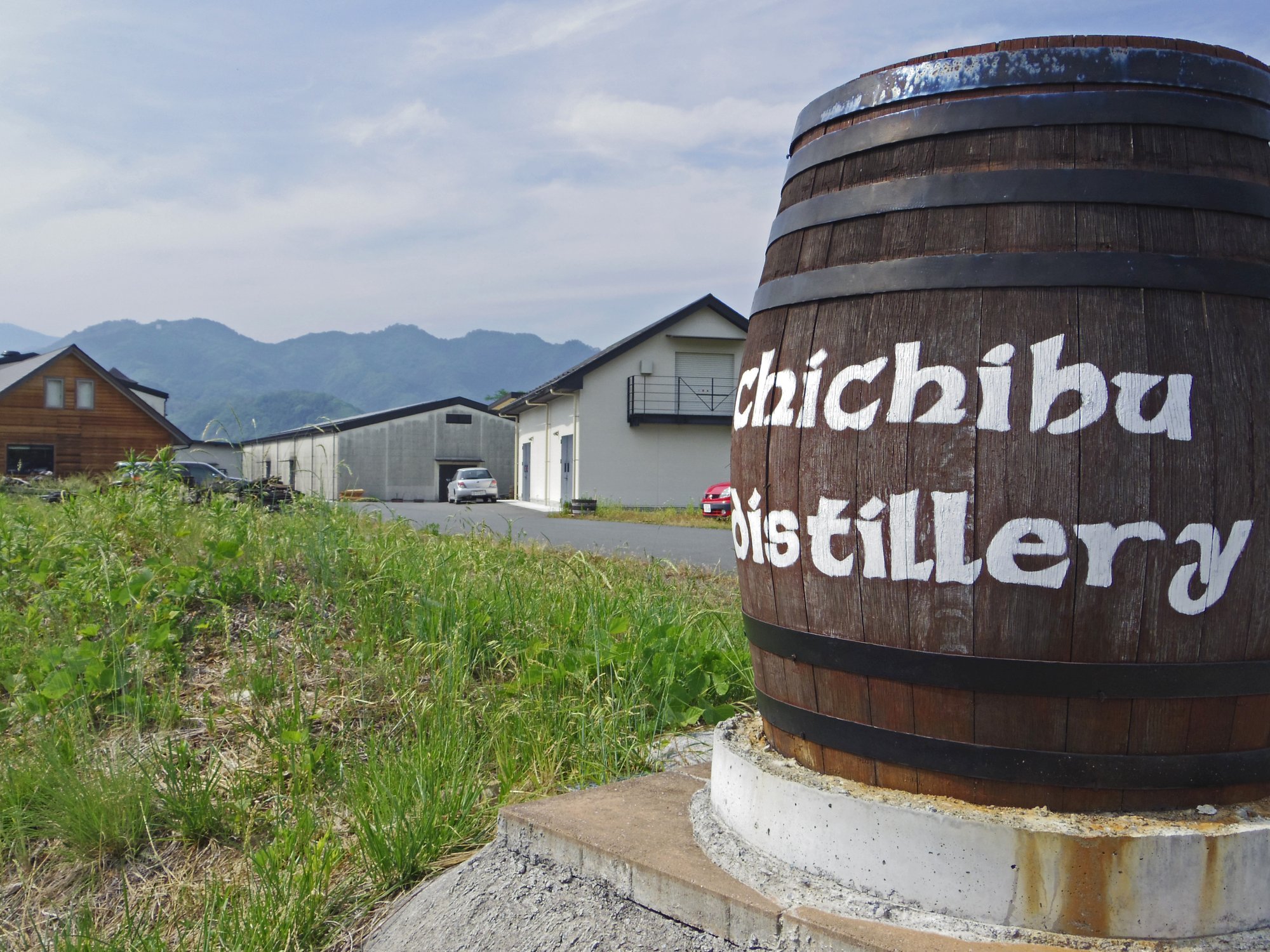
A Valley That Earns Its Attention
The approach to Chichibu sets expectations early. The Arakawa River cuts through a limestone gorge before the town opens into a wider basin, ringed by the Okuchichibu mountains on three sides. The air temperature drops noticeably as the valley closes in, and by October the broadleaf forest running up the slopes turns amber and rust at an intensity rarely seen this close to the Tokyo metropolitan corridor. This is not an industrial spirits address. The physical environment here — cold winters, humid summers, clean river water drawn from snowmelt and mountain springs, and the kind of diurnal temperature variation that accelerates maturation in ways flat lowland climates cannot — is the operating premise, not the backdrop.
Japan's whisky industry has organised itself, broadly, into two tiers: large-group distilleries with long production histories and deep aged-stock reserves, and a newer wave of small-format craft operations producing limited annual volumes at prices that reflect both scarcity and serious intent. Chichibu belongs firmly to the second tier, and within that tier it sits at the upper end. The Pearl 4 Star Prestige recognition awarded in 2025 places it in a peer group with only a handful of Japanese producers , a designation that tracks against verified quality criteria rather than marketing positioning.
What Limestone and Cold Nights Do to Whisky
Terroir arguments in whisky remain contested in ways they no longer are in wine, but Chichibu's geography makes the case more concretely than most. Limestone-dominant geology filters the local water to a soft, low-mineral profile that interacts with copper pot stills differently than the harder water sources common to lowland Japanese production. The result, across Chichibu releases, tends toward a rounder mouthfeel at equivalent ages, with less of the astringent edge that hard-water distillation can leave behind.
More consequential is the temperature range. The Okuchichibu valley experiences winters that drop well below freezing and summers that push into the mid-30s Celsius. Casks breathe and contract at a pace that compresses what might take twelve years in a more stable Scottish climate into six or eight. This is not a shortcut , accelerated maturation at high quality requires precise cask selection and vigilant warehouse management , but it does mean that Chichibu releases can show complexity at ages that would read as undercooked from a Scottish or Irish equivalent. For visitors trying to understand why the whisky here has attracted the kind of secondary-market attention it has, the answer begins with the physical site, not the marketing.
Explore the broader range of Japanese distillery addresses in our full Chichibu wineries guide, or compare the valley's approach against the high-altitude production conditions at Mars Shinshu Distillery in Miyada, where elevation and cold alpine air work a comparable seasonal magic on maturing spirit.
Placing Chichibu in the Japanese Whisky Map
Japanese whisky production is geographically dispersed in ways that matter to the liquid. Yoichi (Nikka) in Yoichi sits on Hokkaido's northern coast, where maritime influence and cold, damp air produce a notably peated, strong spirit that reads more like Scottish Highland whisky than anything else on the Japanese map. Miyagikyo (Nikka) in Sendai occupies a river valley in Miyagi Prefecture, drawing on gentler climate conditions that lend its output a softer, more floral character , a deliberate contrast to Yoichi built into the Nikka blending strategy from the outset.
Fuji Gotemba Distillery in Gotemba operates at altitude on the slopes of Mount Fuji, a site chosen partly for its clean volcanic groundwater and partly for the prestige of the location. Its production scale differs sharply from Chichibu , Fuji Gotemba runs on a volume that allows it to maintain aged stock at a consistency small producers cannot match, while Chichibu's limited annual output means each release is effectively a discrete statement about a particular cask cohort and maturation year.
The point of these comparisons is not hierarchy but vocabulary. Each site in Japan's whisky geography is expressing different variables. Understanding what Chichibu's valley contributes requires understanding what it does not share with its peers. For a parallel exercise in how specific agricultural geography shapes premium liquid output, the wine-focused 98Wines in Yamanashi and Château Mercian Mariko Winery in Nagano Prefecture demonstrate how the Japanese alpine corridor consistently produces site-specific results across categories.
The Town Beyond the Distillery
Chichibu's appeal extends past its whisky address. The town functions as the eastern gateway to the Chichibu-Tama-Kai National Park, and the hiking infrastructure in the surrounding mountains is well-developed by Japanese standards , marked trail networks, mountain huts, and a bus system that connects the town centre to several trailheads. The Chichibu Shrine, dating to a pre-Edo foundation, anchors the historic centre, and the Chichibu Yomatsuri (Night Festival) in December is one of the three great float festivals of Japan by classification under the country's Intangible Cultural Heritage designations.
For food and drink context, our full Chichibu restaurants guide covers the dining scene in detail, and our full Chichibu bars guide maps the drinking options across the town. The accommodation supply suits the town's character: smaller ryokan and mountain lodge formats dominate rather than large international-brand hotels, and staying in-valley rather than day-tripping from Tokyo allows the morning light on the mountains to register at a pace a train schedule does not permit. Our full Chichibu hotels guide covers the options by location and format.
For readers building a broader Japan distillery itinerary, Eigashima (White Oak) in Akashi and Kanosuke in Kagoshima represent the geographic range Japanese craft whisky now spans , from a coastal Hyogo operation with over a century of production history to a newer southern Kyushu distillery working with local barley and shochu-adjacent production knowledge. For international reference points on how single-estate spirits communicate place, Abadía Retuerta in Sardón de Duero and Aberlour in Aberlour offer instructive parallels in how geography becomes a production argument rather than a label claim. Our full Chichibu experiences guide covers the wider visit options in the area.
Planning the Visit
Chichibu sits approximately 90 minutes from Ikebukuro Station in western Tokyo via the Seibu Chichibu Line , a direct connection that removes the logistical friction common to more remote Japanese production sites. Autumn (October through early December) is the most atmospheric season for the valley, and also the period when the Chichibu Night Festival draws visitors in December. Spring cherry blossom season runs through April across the valley floor, and summer hiking in the national park peaks between July and September. Booking accommodation well ahead applies particularly during the Night Festival and the autumn leaf season, when the town's limited room supply fills across all price points. Current visit details, hours, and booking arrangements for the distillery itself are leading confirmed through official channels, as production-site access policies at small Japanese craft distilleries shift with output cycles and touring capacity.
FAQ
- Is Chichibu more low-key or high-energy?
- Low-key, with purpose. The town has none of the commercial density of a major tourist destination, and the whisky address here attracts visitors who have done the research rather than those passing through. The Pearl 4 Star Prestige rating (2025) signals a serious production identity, which tends to self-select for a quieter, more focused visitor profile. Prices for premium releases reflect their allocation status rather than tourist-market positioning.
- What should I taste at Chichibu?
- The distillery's limited annual releases are the primary draw, and they vary by cask type and maturation age. The valley's limestone-filtered water and sharp seasonal temperature range are the recurring terroir arguments across all expressions. Given the Pearl 4 Star Prestige designation and the production volumes involved, availability changes year to year. Cross-reference current release information with specialist Japanese whisky retailers or the distillery directly before visiting.
- What's the main draw of Chichibu?
- The convergence of a specific, well-defined geography and small-format production that allows the site's conditions to register clearly in the spirit. The 2025 Pearl 4 Star Prestige award provides an external quality benchmark. For visitors coming from Tokyo, the 90-minute Seibu line journey also makes Chichibu one of the more accessible serious Japanese whisky addresses without requiring overnight travel from the capital.
- Is Chichibu reservation-only?
- Small Japanese craft distilleries at this quality tier typically operate on a scheduled-visit or reservation basis rather than walk-in touring, and Chichibu follows that pattern. Confirming access arrangements directly through official channels before traveling is advisable. Phone and website details are leading sourced through the distillery's current official communications, as contact information changes and is not reproduced here.
Peer Set Snapshot
These are the closest comparables we have in our database for quick context.
| Venue | Awards | Notes |
|---|---|---|
| Chichibu | Pearl 4 Star Prestige | This venue |
| 98Wines | 50 Best Vineyards #20 (2025); Pearl 2 Star Prestige | |
| Château Mercian Mariko Winery | 50 Best Vineyards #46 (2025); Pearl 2 Star Prestige | |
| Eigashima (White Oak) | Pearl 2 Star Prestige | |
| Fuji Gotemba Distillery | Pearl 3 Star Prestige | |
| Hakushu (Suntory) | Pearl 4 Star Prestige |
Access the Cellar?
Our members enjoy exclusive access to private tastings and priority allocations from the world's most sought-after producers.
Get Exclusive Access