
One of Logroño's oldest operating bodegas, Bodegas Franco-Españolas sits on Calle Cabo Noval and carries more than a century of Rioja winemaking behind its walls. Nine wines earned recognition at the 2025 Decanter awards, including five silvers, alongside a Pearl 2 Star Prestige rating in 2025. That combination of historical continuity and current critical standing places it firmly in Rioja's serious mid-tier.
 Discover on Pearl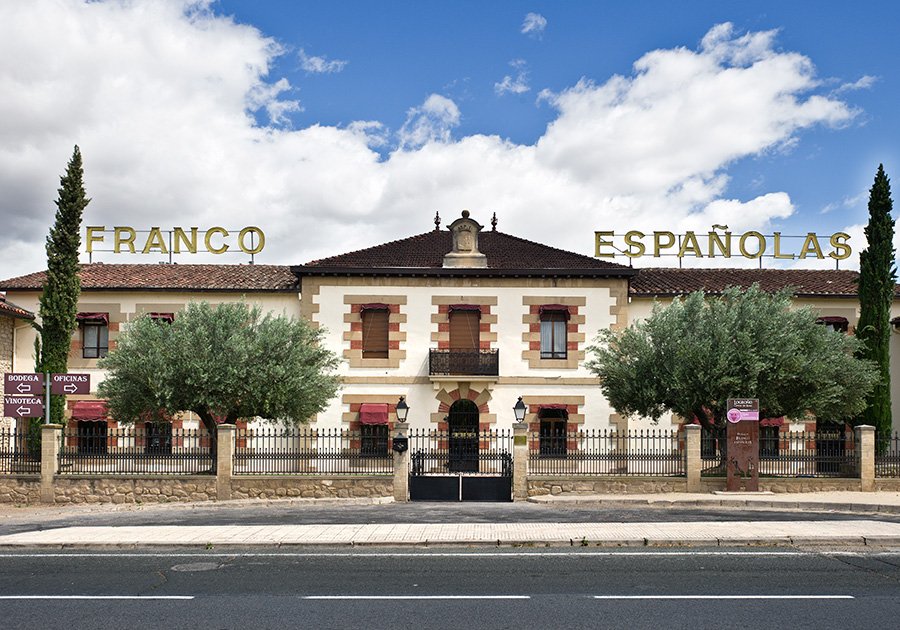
Where the Ebro Shapes the Wine
The Ebro River corridor through Logroño has always done something particular to Rioja Alta and Rioja Alta-adjacent wines. The clay-limestone soils that dominate this stretch of the valley retain moisture through the dry summers and provide the kind of slow-release mineral feed that Tempranillo handles especially well. Bodegas Franco-Españolas, on Calle Cabo Noval in central Logroño, sits close enough to the river that the local microclimate is part of its production logic. What that means in the glass is a house style that tends toward structure over immediate fruit — wines built for the table rather than for the tasting room.
Rioja's winemaking geography is worth understanding before you visit any bodega in the region. The appellation covers three sub-zones: Rioja Alta, Rioja Alavesa, and Rioja Oriental (formerly Rioja Baja). Each delivers a different expression of the same Tempranillo-dominant grammar. Alta and Alavesa produce the wines that have driven Rioja's international reputation, with cooler temperatures and better-draining soils contributing to finer tannin and better acid retention. Logroño sits at the boundary of Alta and Alavesa, which means the bodegas based here draw on blending options from both sub-zones. For Franco-Españolas, that geographic flexibility has historically been a production asset.
What the 2025 Decanter Results Tell You
In the 2025 Decanter World Wine Awards, nine wines from Bodegas Franco-Españolas received medals: five Silver and four Bronze. The Decanter competition runs one of the most methodologically consistent judging processes in the international wine calendar, with regional panels assessing wines blind. Nine medals from a single producer represents a range rather than a single high point, which is its own form of information. It suggests breadth of quality across the portfolio rather than a single flagship that carries the rest.
The highest medal achieved was Silver. In Decanter's current medal structure, Silver requires a score of 90 or above and signals wines that a regional expert panel found to be clearly above category average. That benchmark places Franco-Españolas in a tier that includes serious but accessible Rioja, rather than in the small circle of producers competing for Platinum or Gold. For the visitor or buyer, that calibration matters: these are wines worth knowing, not wines that require a waiting list.
The 2025 Pearl 2 Star Prestige rating adds a second axis of assessment. Pearl ratings evaluate producer-level consistency and reputation across a portfolio rather than individual wine scores, so a 2 Star Prestige designation reflects a judgment about the bodega's track record over time. Taken together with the Decanter medals, the critical picture is of a house operating with consistent quality across its range — a more reliable signal than a single high-scoring bottle.
For context, Logroño's larger commercial bodegas such as Campo Viejo and Marqués de Murrieta operate at different scales and with different international distribution footprints. Franco-Españolas occupies a distinct position in the city's bodega landscape: older than most, smaller in profile than the giants, but with a 2025 awards haul that puts it in the same conversation on quality terms.
Rioja's Competitive Winery Tier
The Spanish wine scene has a well-established hierarchy of prestige, and Rioja sits at its upper levels alongside Ribera del Duero. Within Rioja, the competitive set has fragmented over the past two decades. At the leading sits a small group of allocation-driven producers whose wines trade at collector prices. Below them is a broader tier of respected houses with Michelin-restaurant placement and consistent international press coverage. Franco-Españolas competes in the latter bracket, where craft, consistency, and house style matter more than scarcity.
This mid-tier is also where the most interesting critical reassessment is happening in Spanish wine more broadly. Producers like Abadía Retuerta in Sardón de Duero, Arzuaga Navarro in Quintanilla de Onésimo, and Bodegas Protos in Peñafiel in Ribera del Duero are all operating in comparable quality territory, competing on terroir expression and aging programs rather than on brand celebrity. Bodegas Vivanco in Valle de Mena brings an additional cultural dimension through its wine museum, establishing a different kind of visitor experience in the region. Bodegas Ysios in Laguardia adds Santiago Calatrava's architecture to the equation. Franco-Españolas makes a different case: a central Logroño address, a long founding history, and wines assessed on their own merits by international critics rather than on spectacle or design.
Visiting the Bodega
Bodegas Franco-Españolas is located at Calle Cabo Noval 2 in Logroño's wine district, walkable from the city center. Logroño functions as the regional capital of La Rioja and the natural base for anyone exploring the appellation, with the Calle Laurel tapas corridor and a well-developed hospitality infrastructure that means you can build a serious wine itinerary without renting a car for every excursion. Visiting the bodega directly is the most efficient way to taste across the current portfolio, and Logroño's compact geography makes it easy to pair a visit here with others in the city.
For broader planning, the full Logroño wineries guide maps the city's bodega options against each other and is a practical starting point for structuring a visit. The full Logroño restaurants guide, hotels guide, bars guide, and experiences guide round out the picture for anyone spending two or more nights in the region.
Those traveling with a wider Iberian wine agenda might cross-reference with producers in other regions: Clos Mogador in Gratallops represents Priorat's high-altitude Garnacha tradition at the opposite stylistic end of the Spanish spectrum. For international comparison points, Accendo Cellars in St. Helena and Aberlour in Aberlour occupy similarly serious positions in their respective categories, which helps calibrate expectations for what award-decorated mid-tier production looks like across very different traditions.
Frequently Asked Questions
- What should I taste at Bodegas Franco-Españolas?
- The 2025 Decanter results are the most reliable guide available. Five Silver-medal wines and four Bronze across the portfolio indicate range rather than a single standout, so a tasting across several labels is more informative than singling out one bottle. Rioja's appellation rules tie aging designations (Crianza, Reserva, Gran Reserva) to minimum time in oak and bottle, which gives a structural framework for comparing wines at different price and maturity points. Franco-Españolas' 2 Star Pearl Prestige rating suggests the house performs consistently at the Reserva level and above.
- What is Bodegas Franco-Españolas leading at?
- The 2025 awards record points to consistent range quality rather than a single signature. Nine Decanter medals across five silvers and four bronzes, combined with a Pearl 2 Star Prestige designation, indicate a producer whose middle and upper tiers all meet a defined standard. In Logroño's bodega peer set, that kind of breadth is a more useful signal than one highly publicized label.
- Should I book Bodegas Franco-Españolas in advance?
- For general visits to established Rioja bodegas, advance booking is standard practice, particularly during the autumn harvest season (late September through October) when visitor volumes peak and tour schedules fill quickly. The Logroño Vendimia festival in September draws significant foot traffic to the region's wineries. Outside those windows, spring visits tend to move at a more relaxed pace. The bodega's contact details and current tour availability are leading confirmed directly through the venue, as scheduling can shift with the production calendar.
- What is Bodegas Franco-Españolas a good pick for?
- It is a well-suited choice for visitors who want to engage with a Rioja producer that has both historical continuity and current critical validation. The 2025 Decanter medals and Pearl 2 Star Prestige rating place it above casual tourist-oriented bodegas without reaching the allocation-only tier. Its central Logroño address on Calle Cabo Noval also makes it logistically direct to combine with the city's restaurant and bar scene on the same day.
- How does Bodegas Franco-Españolas' Decanter performance compare to other Rioja producers?
- Earning nine medals at the 2025 Decanter World Wine Awards, with five Silvers (90+ scores) across the portfolio, positions Franco-Españolas in the group of Rioja producers whose wines are recognized by specialist judges rather than simply riding the region's broad commercial profile. That volume of medals across different wines , rather than one high-scoring flagship , indicates a house with production discipline spread across price points. For buyers, it means multiple entry points into the range rather than a single collectible label.
Peer Set Snapshot
These are the closest comparables we have in our database for quick context.
| Venue | Awards | Notes |
|---|---|---|
| Bodegas Franco-Españolas | Pearl 2 Star Prestige | This venue |
| Marqués de Murrieta | 50 Best Vineyards #48 (2025); Pearl 4 Star Prestige | |
| Campo Viejo | Pearl 2 Star Prestige | |
| González Byass (Tío Pepe) | 50 Best Vineyards #21 (2025); Pearl 3 Star Prestige | |
| Abadía Retuerta | 50 Best Vineyards #38 (2025); Pearl 3 Star Prestige | |
| Bodegas de los Herederos del Marqués de Riscal | 50 Best Vineyards #1 (2024); Pearl 4 Star Prestige |
Access the Cellar?
Our members enjoy exclusive access to private tastings and priority allocations from the world's most sought-after producers.
Get Exclusive Access