Albert Boxler

Albert Boxler is a reference-point domaine in Niedermorschwihr, Alsace, holding a Pearl 3 Star Prestige rating for 2025. Situated at 78 Rue des Trois Épis in one of the most geologically varied communes on the Alsatian wine route, Boxler's holdings span Grand Cru and village-level parcels that express the full range of what Alsace's granite, sandstone, and limestone soils can produce across Riesling, Gewurztraminer, and Pinot Gris.
 Discover on Pearl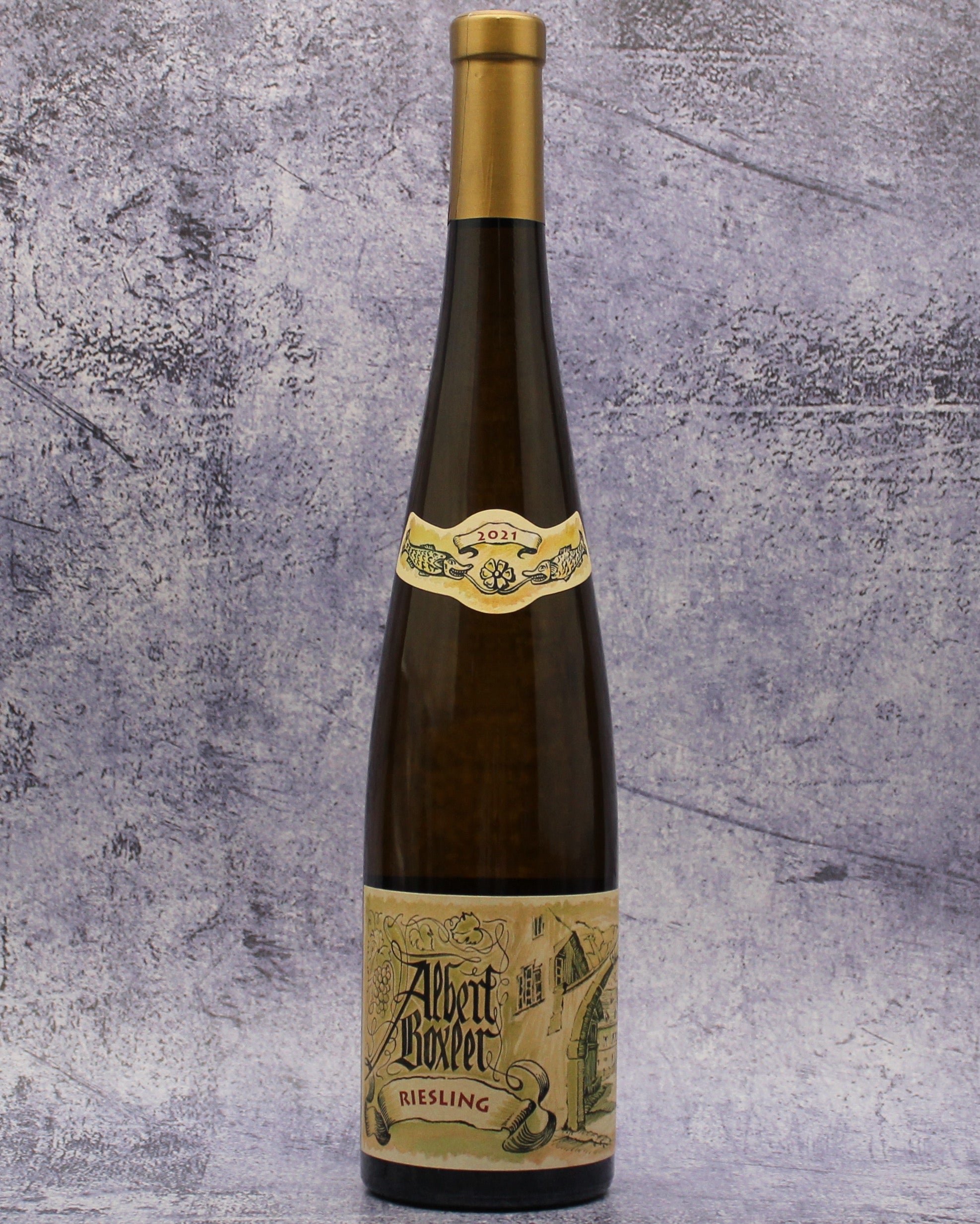
Where Alsace's Geology Does the Talking
The village of Niedermorschwihr sits high on the western flank of the Vosges foothills, where the land tilts toward afternoon sun and the soils shift dramatically within a few hundred metres. In Alsace, that kind of geological compression is almost the point: a region that produces white wines of genuine structural complexity does so because its terroirs are not uniform. They are a collision of granite, gneiss, sandstone, and limestone, each parcel expressing a distinct register of acidity, minerality, and aromatic weight. Albert Boxler, at 78 Rue des Trois Épis in Niedermorschwihr, sits squarely in that tradition — a domaine whose reputation rests not on a single winemaking signature but on the discipline of letting contrasting soils speak separately and legibly. The 2025 Pearl 3 Star Prestige award reflects standing within a competitive reference group of French producers where terroir fidelity and cellar consistency are the primary measures.
The Niedermorschwihr Terroir Argument
To understand what Albert Boxler produces, it helps to understand what Niedermorschwihr offers. The commune sits between Turckheim and Katzenthal, two villages with established Grand Cru reputations, and it shares geological material with both. The Brand Grand Cru — one of Alsace's most discussed granite-based sites , extends toward this part of the foothills, and the characteristic effect of granite on Riesling is well-documented: it produces wines with a pronounced mineral thread, slow aromatic development, and a tension between fruit and stone that rewards extended cellaring. Elsewhere in the Boxler holdings, heavier soils with more clay content shift the profile toward the broader, spiced character that Gewurztraminer and Pinot Gris express most effectively on richer substrates.
The shortlist, unlocked.
Hard-to-book tables, cellar releases, and concierge-planned trips.
Get Exclusive Access →This soil heterogeneity is not incidental. It is the structural argument for why Alsace's leading domaines have historically bottled multiple cuvées from a single grape variety. A Riesling grown on granite and a Riesling grown on clay-limestone are different wines with different trajectories, and treating them as interchangeable would flatten the information the land is providing. Domaines operating in Niedermorschwihr and its immediate neighbours have long understood this, which is why the region's most serious producers release segmented ranges rather than blended regional bottlings. Albert Boxler's positioning within the Pearl 3 Star Prestige tier for 2025 places it among Alsatian producers where that parcel-level discipline is taken as a baseline expectation, not a point of differentiation. For context on how terroir expression functions across other French appellations, see how Château Bélair-Monange in Saint-Emilion handles its limestone and clay plateaux, or how Château de Chamirey in Mercurey works with Côte Chalonnaise soils.
Alsace at the Top Tier: The Competitive Context
Alsace occupies a specific and somewhat contested position in the French fine wine hierarchy. It produces white wines of genuine age-worthiness , Rieslings that develop petrol and mineral complexity over a decade, Gewurztraminers that shift from rose and lychee toward honeyed, waxy depth , yet it has historically received less international collector attention than Burgundy or Bordeaux. That gap has narrowed. Allocation demand for the region's leading Grand Cru bottlings has increased, and domaines with documented terroir-segmented ranges and consistent vertical records have attracted a buyer profile that mirrors what drives demand at reference-point estates elsewhere in France.
The Pearl 3 Star Prestige designation for 2025 places Albert Boxler in company where the expectation is precisely that kind of vertical depth and parcel-level clarity. Comparable positioning across other French regions can be seen at estates like Château Branaire Ducru in St-Julien or Château Batailley in Pauillac, both of which occupy defined tiers within their respective classification systems. Alsace's reference producers operate without a formal classification equivalent, which makes award recognition and allocation patterns the primary signals of tier placement. In that context, Boxler's 2025 rating carries real weight as a positioning indicator.
For producers working in entirely different stylistic registers , sweet wines from Château d'Arche in Sauternes or the Pomerol approach at Château Clinet in Pomerol , the underlying logic of terroir fidelity remains the same benchmark. French fine wine at this tier is assessed on how precisely a producer reads and transmits what their specific land produces in a given year, not on house style imposed over it. See also Château Boyd-Cantenac in Cantenac and Château Cantemerle in Haut-Médoc for further examples of how classification-tier producers across Bordeaux approach that same standard.
What the Grapes Express Here
Alsace's four noble varieties , Riesling, Gewurztraminer, Pinot Gris, and Muscat , each respond to the region's terroirs in distinct and well-understood ways. On the granite soils that characterise parts of the Niedermorschwihr hillsides, Riesling typically produces wines with high natural acidity, restrained fruit on release, and a capacity for long development in bottle. The petrol note that emerges in aged Alsatian Riesling , technically TDN, a compound that forms with bottle age , is most pronounced in wines from these mineralogically lean soils, and it is widely regarded as a marker of quality and aging potential rather than a flaw. Gewurztraminer on richer soils expresses intense aromatic presence, lower acidity, and a texture that can run from dry and structured to late-harvest concentration depending on vintage and harvest timing.
Pinot Gris occupies a middle register: it picks up weight from clay-dominant soils but can retain grip and length on sites with better drainage. At the Grand Cru level, Pinot Gris from Alsace's most serious domaines ages in ways that parallel white Burgundy more than the variety's other expressions elsewhere in Europe. These are not casual bottles , they are wines that require context and patience, and domaines like Albert Boxler are producing them for buyers who understand that.
Planning a Visit to Niedermorschwihr
Niedermorschwihr is a small commune, and the wine route through this stretch of Alsace rewards a slow approach. Colmar, the nearest city of size, sits roughly 10 kilometres to the southeast and functions as the logical base for exploring the central Alsatian wine corridor. The villages between Colmar and Turckheim are reachable by car or bicycle along well-maintained routes that pass through Grand Cru vineyards, and the concentration of serious domaines in a relatively compact area makes this one of the more efficiently structured fine wine touring regions in France. Visit our full Niedermorschwihr restaurants guide for broader context on the commune and its surroundings.
Cellar visits at domaines of this standing typically require advance contact. Given that specific booking details for Albert Boxler are not listed publicly, reaching out directly through the domaine's address at 78 Rue des Trois Épis is the appropriate route. Autumn harvest season , roughly September through October depending on vintage , is when the area sees the most visitor activity, but early spring visits allow access to recently bottled releases before allocation moves. For wine buyers interested in the fuller picture of French premium wine from outside the Bordeaux and Burgundy mainstream, this corridor represents a genuine depth of material. Producers like Château Dauzac in Labarde, Château d'Esclans in Courthézon, and Château Bastor-Lamontagne in Preignac each illustrate how terroir-led thinking plays out across different French regions , useful comparative context before visiting an Alsatian domaine of Boxler's standing. For something entirely outside the French wine frame, Accendo Cellars in St. Helena and Aberlour in Aberlour show how terroir identity operates in Napa Valley and Speyside respectively, while Chartreuse in Voiron offers a different register of French craft production entirely.
Frequently Asked Questions
- How would you describe the overall feel of Albert Boxler?
- Albert Boxler operates in Niedermorschwihr, a small Alsatian village commune with a quiet, agricultural character far removed from the more touristic wine towns along the Route des Vins. The 2025 Pearl 3 Star Prestige award places it firmly in the upper reference tier of Alsatian producers, which means visits and purchases here are serious wine engagements rather than casual drop-ins. If you are arriving from Colmar and working through the region's leading domaines, Boxler fits the unhurried, appointment-led pace that characterises access at this level across French fine wine. There is no list price information available through this record, so approaching the domaine directly for current release pricing is the practical step.
- What's the leading wine to try at Albert Boxler?
- Niedermorschwihr's proximity to the Brand Grand Cru , one of Alsace's granite-based benchmark sites , makes Riesling the most compelling starting point at domaines with holdings in this area. Granite-grown Alsatian Riesling ages toward mineral and petrol complexity in ways that are distinct from any other expression of the variety globally, and the 2025 Pearl 3 Star Prestige recognition signals that Boxler's range is operating at a level where that potential is being realised consistently. Pinot Gris from richer parcels and Gewurztraminer from later-harvested plots represent other important reference points in the Alsatian canon. In the absence of a current published menu or tasting list, the leading approach is to contact the domaine directly about which vintages are currently available and where they sit in their development arc.
Comparable Spots, Quickly
These are the closest comparables we have in our database for quick context.
| Venue | Cuisine | Price | Awards | Notes |
|---|---|---|---|---|
| Albert Boxler | This venue | |||
| Château Bastor-Lamontagne | ||||
| Château Branaire Ducru | ||||
| Château Canon-la-Gaffeliere | ||||
| Château Cantemerle | ||||
| Château Clinet |
Access the Cellar?
Our members enjoy exclusive access to private tastings and priority allocations from the world's most sought-after producers.
Get Exclusive AccessThe shortlist, unlocked.
Hard-to-book tables, cellar releases, and concierge-planned trips.
Get Exclusive Access →