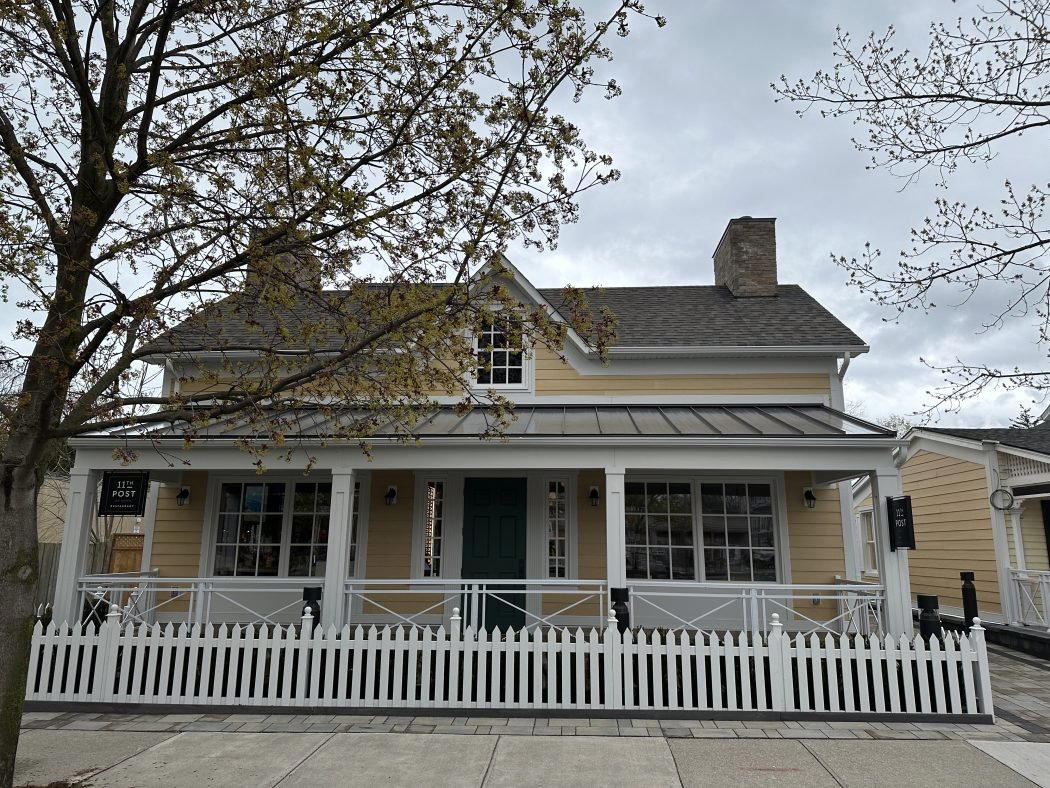
Zezafoun Syrian Cuisine occupies a quieter corner of Toronto's Davisville Village, representing a category of restaurants that rarely surfaces in the city's award circuit but fills a specific gap: Syrian home cooking traditions translated into a sit-down format. Compared to the French-leaning tasting menus that dominate Toronto's premium tier, Zezafoun operates in a different register entirely, where the reference points are Levantine rather than European.
Pearl is the En Primeur Club membership app — saves, bookings, and concierge access live there. Same editors, same standards.
- Address
- 4 Manor Rd E, Toronto, ON M4S 0E6, Canada
- Phone
- +14163227707
- Website
- zezafoun.ca
- Directions
- Get directions
 Saves & bookings on Pearl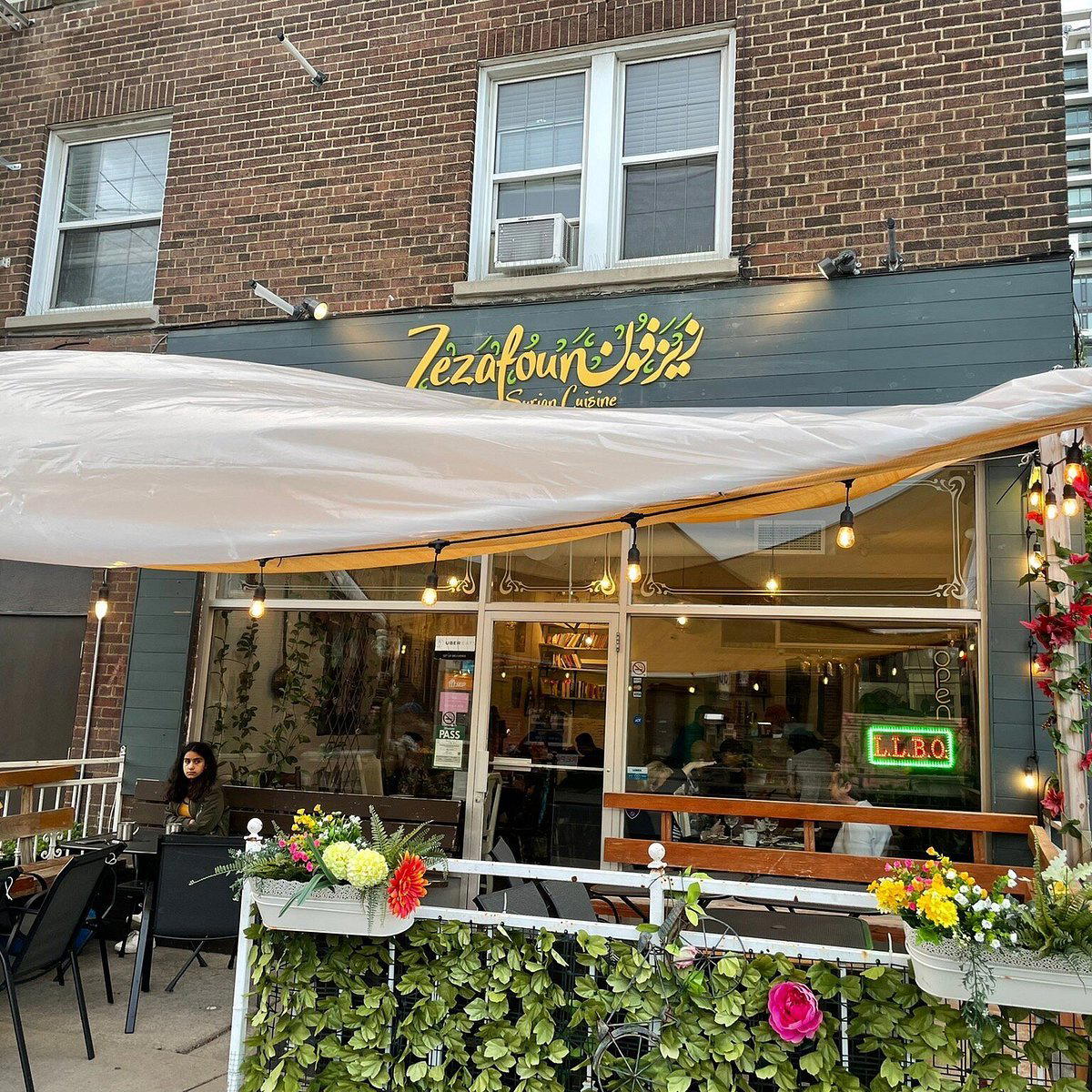
Syrian Cooking in a City Built on European Fine Dining
Toronto's dining conversation often runs heavily toward European frameworks. The tasting-menu counters like Alo (Contemporary) and the kaiseki-influenced rooms like Aburi Hana set a particular kind of benchmark, one measured in courses, restraint, and provenance-forward sourcing. Syrian cuisine operates outside that framework almost entirely. It answers to different traditions: slow-braised lamb shoulders, cracked wheat preparations, pomegranate-laced dressings, and the kind of communal table logic that treats sharing as the default, not the exception. Zezafoun Syrian Cuisine, located at 4 Manor Rd E in Toronto's Davisville Village neighbourhood, represents what happens when that tradition finds a fixed address in a city more accustomed to its cuisines at that tier arriving from Tokyo or Lyon.
Davisville Village as a Setting for Middle Eastern Cooking
The Davisville Village pocket of midtown Toronto is residential in character, a neighbourhood of low-rise apartment buildings and family traffic that sits several social registers below the King West dining corridor. In most major cities, Middle Eastern restaurants of serious quality tend to cluster in immigrant-adjacent neighbourhoods before eventually migrating toward more affluent dining districts as the cuisine gains critical traction. Davisville sits somewhere between those two positions. It is not a destination dining strip, which means Zezafoun draws a primarily local crowd rather than the broader city-wide audience that gravitates toward the high-profile rooms along Ossington or the Entertainment District.
The Lunch-Dinner Divide in Syrian Restaurant Formats
The distinction between daytime and evening service at Syrian restaurants in North America is more pronounced than at, say, a contemporary Italian room like DaNico or Don Alfonso 1890, where the menu architecture remains broadly consistent across both services. Syrian cooking, by contrast, tends to have different social registers built into its formats. Lunch service at establishments of this type is typically faster, lighter in mezze volume, and weighted toward rice-based plates and single-protein dishes. Evening service tends toward the full spread: multiple cold mezze arriving before hot dishes, more bread, and the expectation of a longer table. The value dynamic also shifts. Daytime visits at this category of restaurant tend to offer higher plate-for-plate value than evening sittings, where group ordering pushes the per-head spend upward as more dishes rotate through. For a solo diner or a pair eating at lunch, the mechanics of Syrian menu ordering actually work in the guest's favour in ways that a tasting menu format does not allow.
This daytime accessibility also positions Zezafoun differently from premium Japanese counters elsewhere in Toronto. Sushi Masaki Saito operates on a single-service omakase model where there is no meaningful lunch-dinner split. Syrian cuisine by nature distributes its value differently, and restaurants operating in this tradition tend to be more forgiving of casual, unplanned visits during daytime hours.
What the Cuisine Tradition Signals
Syrian cooking draws from a Levantine base that overlaps with Lebanese, Palestinian, and to a degree Turkish culinary traditions, while carrying specific regional markers. Aleppo pepper appears as a key flavouring agent, distinct in its moderate heat and fruity undertone from the sharper chilies common in North African cooking. Kibbeh preparations, both raw and baked, are central rather than peripheral. The use of pomegranate molasses in dressings and marinades creates a tartness that separates Syrian mezze from the more olive-oil-forward Lebanese equivalent. These are cooking traditions with documented centuries of refinement, and a restaurant like Zezafoun operates as a transmission point for them in a city where the cuisine remains underrepresented relative to its depth. For context, Canada has produced destination-level restaurants built around French-Canadian tradition (Tanière³ in Quebec City), Pacific Northwest sourcing (AnnaLena in Vancouver), and farm-to-table Ontario frameworks (Eigensinn Farm in Singhampton, Restaurant Pearl Morissette in Lincoln). Syrian cuisine at a serious level is a different gap, and restaurants occupying it are doing different editorial work in the city's dining record.
Toronto's Middle Eastern Restaurant Tier
Toronto has a documented Middle Eastern restaurant community, but the Syrian subset within that community is notably smaller than the Lebanese or Iranian contingents. That scarcity gives establishments like Zezafoun a specific role in the city's dining geography that goes beyond neighbourhood convenience. It provides access to a cooking tradition that, in North America, remains in an earlier stage of critical recognition than Japanese or Italian cooking. The trajectory for Lebanese cuisine in cities like New York and London provides a rough model: once a small number of quality-forward establishments attracted critical attention, the cuisine's complexity became easier for general audiences to engage with. Syrian cooking is at an earlier point in that arc in most Canadian cities.
Elsewhere in Canada, the dining conversation currently concentrates on French-Canadian preservation projects like Aux Anciens Canadiens and new-wave bistros like Jérôme Ferrer - Europea in Montreal. Internationally benchmarked fine dining, in cities like New York, is defined by rooms such as Le Bernardin and Atomix. Zezafoun operates at a different price tier and scale than any of these, but its value to the Toronto dining record is not diminished by that distance. The restaurants that preserve and transmit specific regional cooking traditions occupy a category that awards circuits and high-price comparisons do not fully account for. See our full Toronto restaurants guide for broader context on the city's dining range, from neighbourhood-level specialists through to internationally recognised tasting-menu rooms.
Planning Your Visit
Reservations are recommended. Dress: casual. Budget: about $25 per person. Location: 4 Manor Rd E, Toronto, ON M4S 0E6.
Compact Comparison
Comparable venues nearby, for context on price, style, and recognition.
| Venue | Cuisine | Price | Notes |
|---|---|---|---|
| Zezafoun Syrian CuisineThis venue — the venue you are viewing | Not listed | $$ | Not listed |
| Queen of Persia | Humewood, Authentic Persian | $$ | Not listed |
| Levant | Not listed | $$ | Dovercourt-Wallace Emerson-Junction, Levantine Sicilian Pizza Fusion |
| Rayah | Cabbagetown, French-Moroccan | $$ | Not listed |
| Papyrus | Not listed | $$ | Playter Estates-Danforth, Authentic Egyptian |
| Lebanese Garden | Not listed | $ | Harbord Village, Authentic Lebanese & Middle Eastern |
Continue exploring
More in Toronto
Restaurants in Toronto
Browse all →
Bars in Toronto
Browse all →
Hotels in Toronto
Browse all →

At a Glance
- Cozy
- Casual Hangout
- Family
Current opening hours
- Monday
- Closed
- Tuesday
- 5–10 PM
- Wednesday
- 5–10 PM
- Thursday
- 5–10 PM
- Friday
- 11 AM–10 PM
- Saturday
- 11 AM–10 PM
- Sunday
- 11 AM–9 PM
Hours can change for holidays and private events. Last verified .
Warm and welcoming with moderate noise levels, evoking comforting home-cooked meals.