On Calle de Quevedo in Madrid's Centro district, Zerain has long anchored the city's Basque dining tradition, offering the kind of meal that warrants a reservation well in advance of any significant occasion. Its position in a neighbourhood dense with serious restaurants places it in direct conversation with Madrid's broader culture of landmark dining, where the table itself becomes part of the event.
Pearl is the En Primeur Club membership app — saves, bookings, and concierge access live there. Same editors, same standards.
- Address
- C. de Quevedo, 3, Centro, 28014 Madrid, Spain
- Phone
- +34914297909
- Website
- zerain.com.es
- Directions
- Get directions
 Saves & bookings on Pearl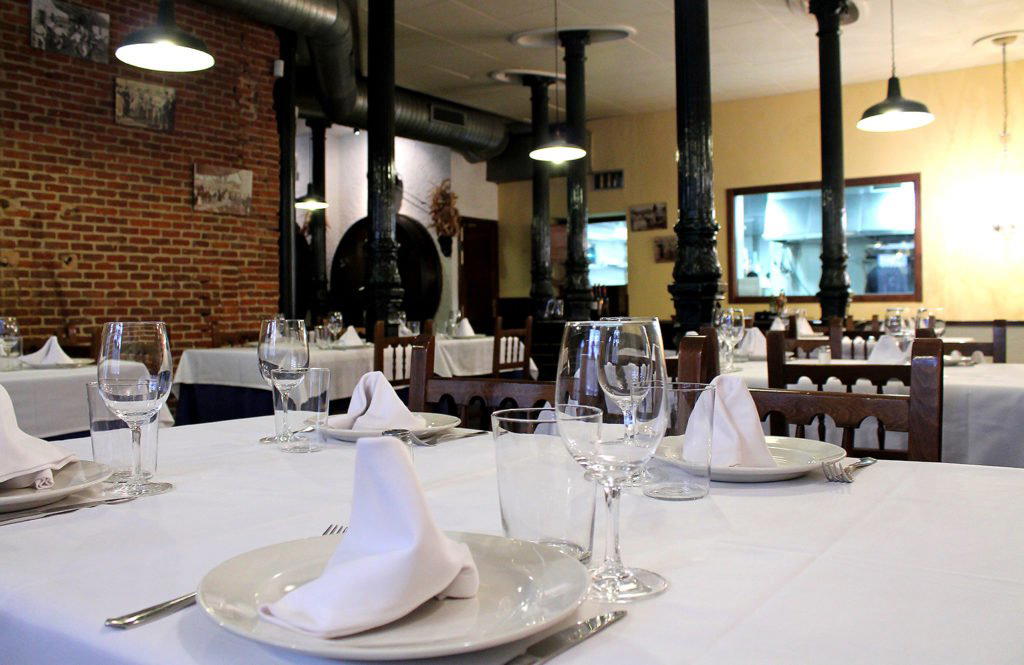
Basque Tradition in the Heart of Madrid
Madrid's relationship with Basque cuisine is longer and more layered than most dining capitals manage with any borrowed tradition. Since the mid-twentieth century, when Basque immigrants and their families began opening asadores and pintxos bars across the city, the cuisine of the north has functioned as something close to a second native dialect in Madrid's dining rooms. Zerain, on Calle de Quevedo in the Centro district, is a Traditional Basque Grill & Cider House in Madrid. The address alone, a few minutes from the literary quarter of the Barrio de las Letras, signals a certain kind of seriousness.
The Occasion-Dining Context
In Madrid, as in most European cities with a strong restaurant culture, there is a clear distinction between places where people eat and places where people mark time. Zerain fits the second category. The Basque asador format, built around high-quality primary ingredients, open-fire or traditional cooking methods, and a wine list oriented toward Rioja and Txakoli, lends itself naturally to milestone meals. A sirloin cooked over charcoal, a whole fish grilled to order, a bottle selected with care: these are the components of a meal that people remember not because of theatrical presentation but because of the clarity of the ingredients themselves.
This positions Zerain in a specific tier of Madrid dining. The city's most discussed restaurants, places like DiverXO, Coque, Deessa, DSTAgE, and Paco Roncero, operate in the creative and progressive register, where tasting menus run long and technique is the primary subject. Zerain occupies a different position: the occasion diner who wants a definitive version of something classical rather than an argument about what food can become. Both are legitimate responses to the question of how to spend money seriously on a meal. They simply answer it differently.
What the Basque Asador Format Means in Practice
The asador tradition is worth understanding on its own terms before arriving at any particular table. In the Basque Country, and in its Madrid outposts, the kitchen's role is closer to that of a careful editor than an author. The proteins are sourced with deliberate attention: aged beef from specific breeds, fish from the Cantabrian coast, vegetables with provenance. The fire or grill does most of the interpretive work. Sauces, if they appear, tend toward the reductive and clean rather than the constructed. This means that quality variation is immediately legible: there is nowhere to hide a mediocre piece of fish behind a complex preparation.
For the occasion diner, this has a practical implication. The meal at Zerain is as much about what is being celebrated as about what is being eaten. The format is slow, sociable, and structured around sharing. A long table, a bottle opened early, an unhurried progression through courses: this is not incidental to the experience but central to why the asador endures as a format for significant meals.
Spain's broader fine-dining tier provides useful comparison. Houses like Arzak in San Sebastián, Martin Berasategui in Lasarte-Oria, and El Celler de Can Roca in Girona represent the apex of Spanish fine dining, where technique and identity are in active dialogue. Further afield, Mugaritz in Errenteria, Azurmendi in Larrabetzu, and Quique Dacosta in Dénia push their respective regional traditions into more experimental territory. Zerain does not compete in that register. Its comparable set is the serious, ingredient-led restaurant where the quality of the primary product is the credential, a category that includes Aponiente in El Puerto de Santa María at one edge and Ricard Camarena in València at another.
Neighbourhood and Setting
Calle de Quevedo sits in the Centro district, close to the boundary between the Barrio de las Letras and the older commercial streets that run south toward Lavapiés. The neighbourhood has changed substantially over the past two decades, adding wine bars, natural wine shops, and new-format restaurants to what was already a dense dining corridor. Zerain's position on this street places it in a part of the city where serious eating is habitual rather than occasional, regulars know the streets by what they can find on them.
For visitors planning around a significant occasion, the Centro district makes getting home after a long lunch or dinner direct. In Madrid's dining culture, long lunches remain the primary occasion-dining format.
Planning Your Visit
Given Zerain's position as a reference point for Basque dining in Madrid and its role as an occasion restaurant, advance planning is the expected approach rather than the exception. For celebrations tied to a specific date, anniversaries, landmark birthdays, professional milestones, booking ahead is the practical standard at Madrid restaurants in this category, particularly for lunch on weekend days. For international visitors aligning a meal with a broader trip itinerary, building the reservation before finalising other plans is the more reliable sequencing.
A Credentials Check
Comparable venues nearby, for context on price, style, and recognition.
| Venue | Cuisine | Price | Notes |
|---|---|---|---|
| ZERAINThis venue — the venue you are viewing | Traditional Basque Grill & Cider House | $$ | Not listed |
| La Pulpería De Victoria | Galician Pulpería | $$ | Sol |
| Il Tavolo Verde | Organic Spanish Cafe | $$ | Recoletos |
| Taberna del Alabardero Madrid | Traditional Basque Spanish Tapas & Fine Dining | $$ | Palacio |
| Café de la Galería | Traditional Spanish with Creative Touches | $$ | Palacio |
| La Ventita del Foodie by AYANTO | Authentic Canarian Tapas & Gourmet Products | $$ | Ibiza |
Continue exploring
More in Madrid
Restaurants in Madrid
Browse all →
Bars in Madrid
Browse all →
Hotels in Madrid
Browse all →


At a Glance
- Rustic
- Classic
- Cozy
- Intimate
- Group Dining
- Date Night
- Family
- Casual Hangout
- Historic Building
- Standalone
- Beer Program
- Local Sourcing
Current opening hours
- Monday
- 1 PM–12 AM
- Tuesday
- 1 PM–12 AM
- Wednesday
- 1 PM–12 AM
- Thursday
- 1 PM–12 AM
- Friday
- 1 PM–12 AM
- Saturday
- 1 PM–12 AM
- Sunday
- 1–4 PM
Hours can change for holidays and private events. Last verified .
Warm and welcoming with rustic charm; two levels featuring high columns, wood and brick walls, and traditional Basque taverna aesthetic with cast iron details creating an old-world, intimate atmosphere.