Star Wine List · Tabelog 100 #82
Our verdict
Sushi Zai occupies the fifth floor of a quiet Hiroo building and operates within a tier of Tokyo sushi counters that treat comprehensiveness as a design principle rather than an afterthought. Ranked #412 in Opinionated About Dining's 2025 Japan list and holding a Tabelog Bronze Award with a score of 3.92, it draws a returning clientele drawn by the format's ambition and the neighbourhood's relative remove from the Ginza circuit.

Pearl is the En Primeur Club membership app, where members save venues, book tables and use the concierge.
The menu
What to order
- Kegani uni
- Unagi kuri maitake
- Buri shabu shabu
If you're going to one sushi counter in Hiroo, make it this one
Tokyo's high-end sushi scene has long polarised around a familiar argument: the counter that does fish and rice with surgical precision versus the counter that builds something closer to a complete meal around that same foundation. For years, the former dominated the upper tier. The latter was harder to find at the level where it mattered. Sushi Zai, on the fifth floor of the Barbizon 86 building in Hiroo, sits squarely in the second camp, and that positioning is precisely what keeps its regulars loyal. The restaurant holds a Tabelog Bronze Award (2025) with a score of 3.92 and ranks #412 on the Opinionated About Dining Japan list for 2025, coordinates that place it inside a cohort of counters taken seriously by the city's most attentive diners, without the waiting-list mythology that surrounds a handful of addresses two rungs higher.
What the regulars already know
The defining characteristic of a restaurant with a committed repeat clientele is rarely the single dish that gets photographed and circulated. It's the structural logic of the meal: the sequencing, the pacing, the sense that the kitchen understands what a complete evening should feel like from entry to exit. At Sushi Zai, the format operates on the premise that a sushi counter can carry the full arc of a dinner without outsourcing its most ambitious moments to a separate kitchen across town.
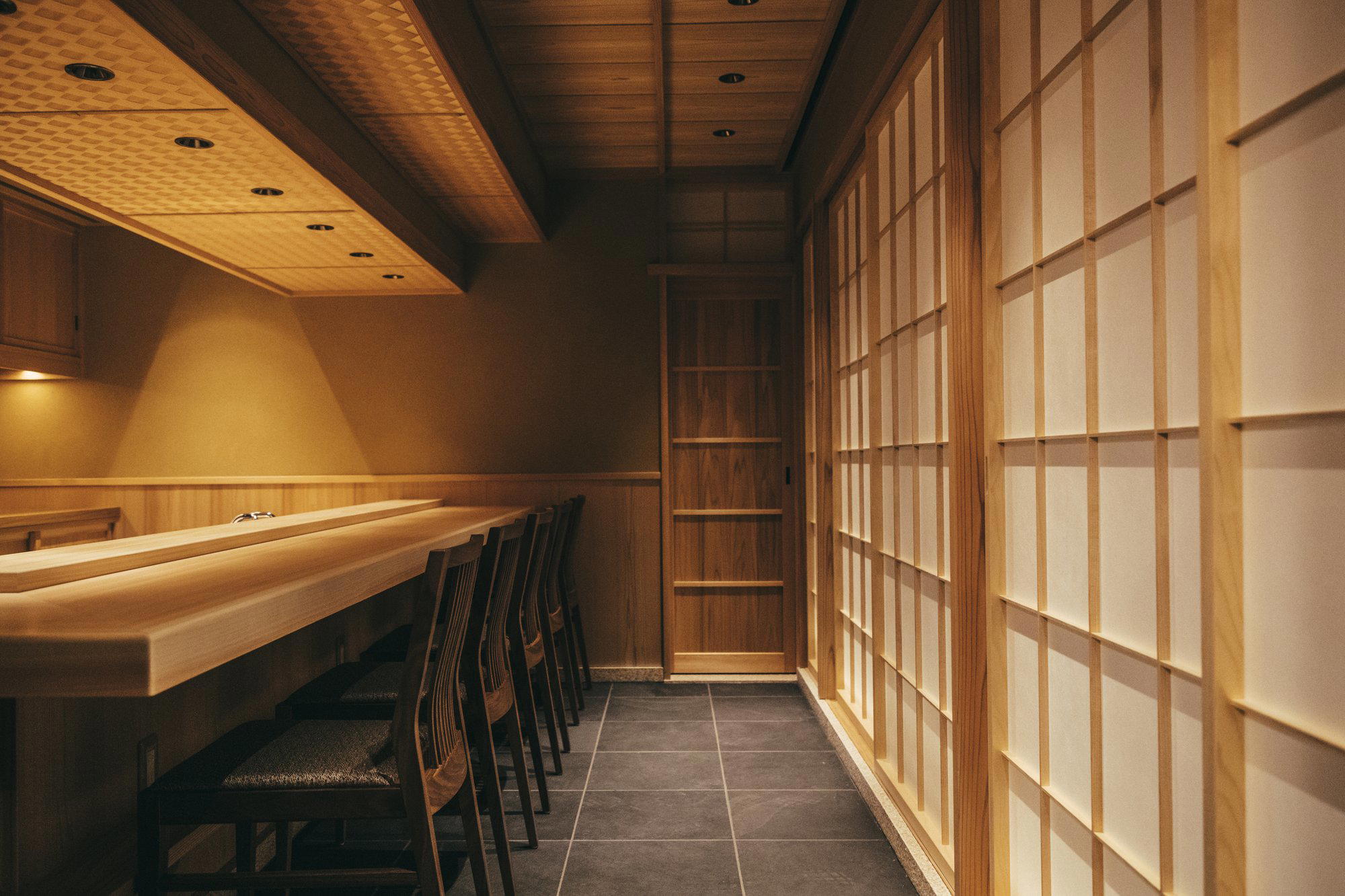
Hiroo as a neighbourhood reinforces this dynamic. It sits far enough from the Ginza sushi corridor to attract a different kind of diner: less interested in the prestige geography, more interested in the actual meal. Embassies and long-term expatriate residents share the streets with Tokyo professionals who treat the area as a working residential district. The dining room of a Hiroo counter doesn't feel like an audition for a travel magazine feature. Regulars at Zai aren't competing for a seat as an act of status. They come because the evening rewards returning familiarity.
Where Zai sits in the Tokyo sushi tier
Tokyo's sushi market has stratified considerably over the past decade. At the leading, a small group of Michelin-starred counters, several tracing direct lineage to a handful of master houses, command booking windows measured in months and price points that require little justification to their clientele. Below that, a second tier of counters holds Tabelog scores in the high 3.8 to 3.95 range and attracts serious repeat visitors who find the top-tier pricing difficult to sustain as a regular habit. Zai sits in this second tier, the Tabelog Bronze Award and 3.92 score are the markers, and prices itself within the reach of someone who wants to eat at this level multiple times a year rather than once as a special occasion.
Across the wider Tokyo dining spectrum, counters with comparable Tabelog positioning but different cuisine categories include RyuGin in kaiseki and L'Effervescence in French, both of which serve a similar diner profile: someone who wants a complete meal at a serious level, not just a technically correct one. More recently opened format-driven addresses like Crony and Sézanne speak to the same broadening of what Tokyo's top-bracket diners expect from an evening out, even if their cuisines differ entirely.
The Hiroo address as context
Fifth-floor restaurant entrances in Tokyo carry a specific signal. They filter out the casual pedestrian entirely. You arrive with a reservation, you take the elevator, and the group you find at the counter has all made the same deliberate choice. That self-selection shapes the room's atmosphere more than any design decision. Hiroo amplifies this. The neighbourhood (Shibuya ward, a ten-minute walk from Roppongi or a short ride from Ebisu station) is not a dining destination in the way that Ginza or Azabu-Juban function. It doesn't generate walk-in traffic from curious tourists. The clientele arrives specifically, and returns specifically.
Operating hours run Monday through Friday, 17:30 to 22:30. There is no weekend service, which is itself a statement about the intended audience. The counter is built for people with Tokyo working weeks, not for weekend visitors flying in for a single meal. That calendar structure is one of the reasons the regular-diner dynamic is so pronounced here.
Planning your visit
Reservations at Zai can be approached via Tabelog, where the restaurant is listed. Hours are Monday through Friday, 17:30 to 22:30 only, with no weekend service. The address is Barbizon 86, 5F, 5-3-13 Hiroo, Shibuya, Tokyo. Hiroo Station on the Hibiya Line is the most direct access point. Given the Tabelog Bronze status and 3.92 score, booking ahead rather than attempting same-week access is advisable, particularly mid-week when the regular clientele fills the room.
For broader Tokyo planning, the EP Club guides cover the full range: restaurants, hotels, bars, wineries, and experiences.
If your trip extends beyond Tokyo, the same format-serious dining sensibility appears in a handful of other Japanese cities worth considering: HAJIME in Osaka, Gion Sasaki in Kyoto, akordu in Nara, Goh in Fukuoka, 1000 in Yokohama, and 6 in Okinawa each serve as useful reference points across the archipelago. For international comparison, counters and tasting formats that a Zai regular might find themselves evaluating in a different city, Le Bernardin in New York and Atomix in New York operate at a comparable seriousness of intent in entirely different culinary frameworks.
Quick reference: Zai, Barbizon 86 5F, 5-3-13 Hiroo, Shibuya, Tokyo. Mon–Fri 17:30–22:30. Tabelog Bronze 2025, score 3.92. OAD Japan #412 (2025).
Frequently asked questions
Is Zai good for families?
Zai operates as a dedicated omakase sushi counter on the fifth floor of Barbizon 86 in Hiroo, open weekday evenings only (17:30–22:30). That format, a single sitting focused on a multi-course progression, is better suited to adults with a specific interest in sushi than to families with children. There is no weekend service.
What's the vibe at Zai?
A fifth-floor address in Hiroo sets the tone before you sit down: no foot traffic, no walk-ins. The counter format, recognised by Opinionated About Dining (ranked #412 in Japan, 2025) and awarded Tabelog Bronze with a score of 3.92, points to a room built around focus and repetition rather than spectacle. Expect a quiet, counter-driven environment oriented toward the food.
Is Zai award-winning?
Zai has received recognition including: It wasn’t always easy to have a complete gastronomic experience at a sushi restaurant until remarkable Sushi Zai opened its doors in the Hiroo area. While most high-end sushi destinations offer just a...; Opinionated About Dining Top Restau….
What's the signature dish at Zai?
For current course details, Tabelog (score 3.92, Bronze 2025) is the most reliable source to check ahead of booking.
What days is Zai closed?
Hours at Zai: Mon, Tue, Wed, Thu, Fri 17:30 - 22:30.
What's Zai's location?
Zai is located at Japan, 〒150-0012 Tokyo, Shibuya, Hiroo, 5 Chome−3−13 Barbizon86 5F, Tokyo.
A Tight Comparison
| Venue | Cuisine | Price | Awards | Notes |
|---|---|---|---|---|
| ZaiThis venue (the venue you are viewing) | Modern Edomae Sushi Omakase | $200–300 | Star Wine List · Tabelog 100 #82 | Not listed |
| Harutaka | Edo-Style Omakase Sushi | $200–300 | 3 Michelin Stars · World's 50 Best #76 | Sushi |
| RyuGin | Modern Kaiseki | $500+ | 3 Michelin Stars · World's 50 Best #41 | Kaiseki, Japanese |
| L'Effervescence | Modern French with Japanese Influences | $200–300 | 3 Michelin Stars · World's 50 Best #69 | French |
| HOMMAGE | Modern French with Japanese Influences | $150–200 | 2 Michelin Stars · World's 50 Best #78 | Innovtive French, French |
| MAZ | Innovative Peruvian-Japanese Fusion | $150–200 | 2 Michelin Stars · World's 50 Best #28 | Innovative |
Recognition history
Dated appearances from independent guides and award organizations, with the underlying list record or original source where available.
Star Wine List
Star Wine List
Opinionated About Dining Top Restaurants in Japan Recommended
Opinionated About Dining
Tabelog 100 #82 · No. 82
Tabelog · Tabelog 100 - Sushi - TOKYO - 2025
Full recognition history (5 entries)
Opinionated About Dining Top Restaurants in Japan Ranked #412
Opinionated About Dining
Tabelog Bronze
Tabelog