Our verdict
An Azabu-Juban counter that has climbed the Opinionated About Dining Japan rankings three consecutive years, from Highly Recommended in 2023 to #333 in 2024 and #365 in 2025, Sushi Shinsuke operates in the quieter, neighbourhood-rooted tier of Tokyo omakase. Chef Shinsuke Mizutani runs an evening-only program, Tuesday through Sunday, in Minato's residential sushi corridor.

Pearl is the En Primeur Club membership app, where members save venues, book tables and use the concierge.
Azabu-Juban and the Neighbourhood Omakase Tradition
Tokyo's sushi geography is more stratified than its Michelin star count alone suggests. The highest-profile counters, those occupying Ginza tower floors or bookable only through hotel concierges, represent one tier. Below them, and in many ways more telling about the city's actual dining culture, sits a second cohort: neighbourhood omakase rooms in residential wards, where the chef cooks for a small repeat clientele, the room has no press team, and recognition arrives slowly through word-of-mouth and specialist ranking platforms. Azabu-Juban, in Minato, belongs to that second world. The neighbourhood has long supported serious counter dining without the showcase pressure of Ginza, and Sushi Shinsuke fits that pattern precisely.
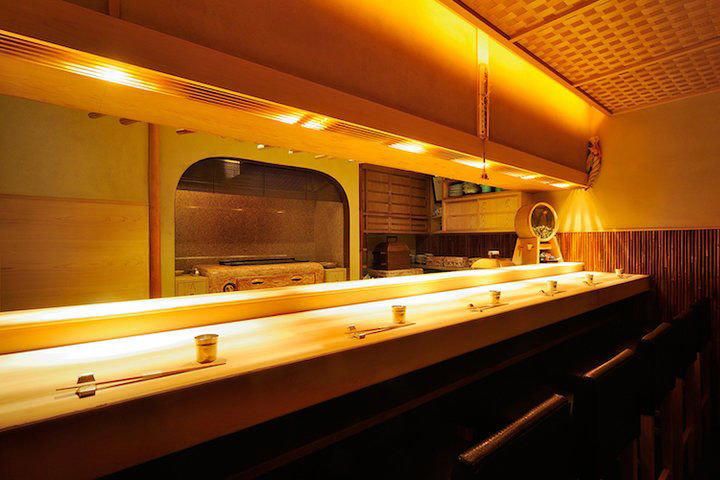
Chef Shinsuke Mizutani runs an evening-only program from a ground-floor room at 2-19-7 Azabujuban, operating Tuesday through Sunday from 5pm to 11pm. There is no lunch service, no walk-in culture, and no listed phone number in public directories, all of which points to a format built for regulars and introduced guests rather than casual tourist traffic. That structure is itself a signal: in Tokyo's omakase hierarchy, the most appointment-driven counters tend to be among the most consistent.
Three Years of OAD Recognition, and What the Trajectory Means
Opinionated About Dining, the crowd-sourced ranking platform weighted toward frequent high-end diners rather than guidebook inspectors, has tracked Sushi Shinsuke across three consecutive cycles. The venue received a Highly Recommended designation in 2023, climbed to #333 among Leading Restaurants in Japan in 2024, and ranked at #365 in 2025. The 2025 number is lower than 2024's, but the aggregate picture is still one of sustained recognition inside a field that includes hundreds of serious sushi counters across Japan. Appearing three consecutive times on OAD Japan is a more meaningful signal than a single-year placement, since the platform's methodology rewards consistency of experience over time.
For comparison, the Azabu-Juban and broader Minato neighbourhood also hosts counters like Hiroo Ishizaka, while Ginza's most closely watched omakase rooms include Harutaka, Sukiyabashi Jiro Roppongiten, and Sushi Kanesaka. Those rooms operate at the apex of Tokyo's sushi market by price and media attention. Sushi Shinsuke positions itself differently, not as an aspirational spectacle counter but as a neighbourhood room earning specialist recognition on its own terms. Edomae Sushi Hanabusa follows a comparable neighbourhood-rooted approach.
Edomae Sushi: The Tradition Behind the Counter
Any serious omakase counter in Tokyo operates in the long shadow of Edomae technique, the approach to sushi that developed in Edo-period Tokyo and remains the dominant culinary grammar of the form. Edomae style is defined by specific preparation methods applied to local seafood: curing with kombu, marinating in vinegar, aging fish under pressure, brushing nigiri with nikiri soy rather than presenting it with a side dish of sauce. The rice is seasoned with red vinegar in many traditional rooms, giving it a distinctive amber hue and sharper flavour than white-vinegar alternatives. These are not decorative conventions; they are a working system for managing texture, flavour development, and timing at the counter.
What distinguishes serious Edomae counters from more contemporary or hybrid sushi formats is the relationship between technique and restraint. The chef's decisions about sourcing, aging, temperature, and sequencing carry the entire experience. There is no dashi-heavy sauce to compensate for underripe fish, no architectural garnish to suggest novelty. The counter format concentrates those decisions: the itamae works in direct view, piece by piece, and the room's quiet, often no background music in traditional rooms, keeps the focus entirely on what is placed in front of the guest.
Beyond Tokyo's sushi rooms, the same principle of technique-as-restraint appears across Japan's finest tables, from kaiseki counters like Gion Sasaki in Kyoto to the produce-forward precision of HAJIME in Osaka. The format differs, but the underlying discipline is recognisable. Outside Japan, Sushi Shikon in Hong Kong and Shoukouwa in Singapore have transplanted Edomae conventions into international settings, though the sourcing environment differs materially from what Tokyo counters access.
The Evening-Only Format and How to Approach It
Sushi Shinsuke runs a single daily session, Tuesday through Sunday, with the kitchen opening at 5pm and the last seating window extending to 11pm. Monday is closed. The absence of a lunch service is consistent with the counter-omakase model at this tier: morning and afternoon are preparation time, and the evening sitting is where the day's sourcing and mise en place converge into a single seated experience. Tokyo's Tsukiji outer market closed to wholesale trade in 2018, with the main tuna auctions and wholesale operations relocating to Toyosu, and counters at this level source through established wholesale relationships rather than retail visits. The resulting fish quality, temperature management, and aging protocol are what separate omakase rooms in this OAD band from more casual sushi formats.
Booking operates through private channels rather than public reservation platforms, consistent with a room that relies on return guests and referral introductions. Guests unfamiliar with Tokyo's omakase booking ecosystem often find it useful to approach through hotel concierges at properties with established relationships with counter sushi rooms, or through dining agents who specialise in the format. The room is a short walk from Azabu-Juban Station on the Namboku and Oedo lines, making it direct to reach from central Tokyo without relying on taxis.
Visitors planning a broader Tokyo dining program will find context in our full Tokyo restaurants guide, and those pairing dining with accommodation or evening programs can consult our Tokyo hotels guide, Tokyo bars guide, and Tokyo experiences guide. For those extending beyond the capital, the quality tier that Sushi Shinsuke represents has regional counterparts in venues like Goh in Fukuoka, akordu in Nara, 1000 in Yokohama, and 6 in Okinawa. For those interested in the broader Japanese wine and fermentation scene, our Tokyo wineries guide covers that category in depth.
Planning Your Visit
Sushi Shinsuke is an evening-only counter in Azabu-Juban, Minato, open Tuesday through Sunday from 5pm to 11pm. Reservations are handled through private channels; approach via hotel concierge or a Tokyo dining specialist for first-time access. The nearest station is Azabu-Juban on the Namboku and Oedo lines.
At a glance: Azabu-Juban omakase counter, Tuesday–Sunday, 5–11pm, closed Monday. OAD Leading Restaurants in Japan ranked #365 (2025), #333 (2024), Highly Recommended (2023).
What Do Regulars Order at Sushi Shinsuke?
Q: What do regulars order at Sushi Shinsuke?
The format is omakase, the chef sequences the meal, and guests do not select individual pieces. At a counter earning sustained OAD recognition in the traditional Edomae mode, the sequencing typically moves from lighter white fish through richer cuts, with aged preparations and vinegared fish demonstrating the kitchen's technical range. Regulars at rooms like this tend to note particular attention to rice temperature and vinegar balance, the markers that separate a well-maintained omakase program from a formulaic one.
Frequently asked questions
What days is Sushi Shinsuke closed?
Hours at Sushi Shinsuke: Hours: Monday Closed Tuesday 5–11 pm Wednesday 5–11 pm Thursday 5–11 pm Friday 5–11 pm Saturday 5–11 pm Sunday 5–11 pm.
Where is Sushi Shinsuke located?
Sushi Shinsuke is located at Japan, 〒106-0045 Tokyo, Minato City, Azabujuban, 2 Chome−19−7 綱代マンション 102, Tokyo.
What distinctions does Sushi Shinsuke have?
Sushi Shinsuke has received recognition including: Opinionated About Dining Top Restaurants in Japan Ranked #365 (2025); Opinionated About Dining Top Restaurants in Japan Ranked #333 (2024); Opinionated About Dining Top Restaurants in Japan Highly Recommended (2023).
What do regulars order at Sushi Shinsuke?
Sushi Shinsuke operates as a traditional omakase counter, meaning the chef, Shinsuke Mizutani, determines the progression of the meal rather than guests selecting from a menu. The format follows Edomae technique, so expect seasoned and cured nigiri built around seasonal seafood, structured across a set sequence. The counter's steady climb through OAD's Japan rankings, from Highly Recommended in 2023 to #333 in 2024 and #365 in 2025, reflects consistent execution of that house-led format rather than any à la carte flexibility.
What cuisine category does Sushi Shinsuke fall under?
Category Peers
A compact comparison to help you place this venue among nearby peers.
| Venue | Cuisine | Price | Awards | Notes |
|---|---|---|---|---|
| Sushi ShinsukeThis venue (the venue you are viewing) | Edomae Sushi Omakase | $200–300 | Not listed | Not listed |
| Harutaka | Edo-Style Omakase Sushi | $200–300 | 3 Michelin Stars · World's 50 Best #76 | Sushi |
| RyuGin | Modern Kaiseki | $500+ | 3 Michelin Stars · World's 50 Best #41 | Kaiseki, Japanese |
| L'Effervescence | Modern French with Japanese Influences | $200–300 | 3 Michelin Stars · World's 50 Best #69 | French |
| HOMMAGE | Modern French with Japanese Influences | $150–200 | 2 Michelin Stars · World's 50 Best #78 | Innovtive French, French |
| MAZ | Innovative Peruvian-Japanese Fusion | $150–200 | 2 Michelin Stars · World's 50 Best #28 | Innovative |
Recognition history
Dated appearances from independent guides and award organizations, with the underlying list record or original source where available.
Opinionated About Dining Top Restaurants in Japan Recommended
Opinionated About Dining
Full recognition history (4 entries)
Opinionated About Dining Top Restaurants in Japan Ranked #365
Opinionated About Dining
Opinionated About Dining Top Restaurants in Japan Ranked #333
Opinionated About Dining
Opinionated About Dining Top Restaurants in Japan Highly Recommended
Opinionated About Dining