
Yoshitaka in Osaka's Higashishinsaibashi district holds back-to-back Michelin Plates (2024, 2025) for oden treated with the precision of kaiseki. Kombu dashi is the thread connecting every bowl, with toppings served one piece at a time and a finishing course of dashi ramen or peppered rice.
Pearl is the En Primeur Club membership app — saves, bookings, and concierge access live there. Same editors, same standards.
- Address
- Japan, 〒542-0083 Osaka, Chuo Ward, Higashishinsaibashi, 2 Chome−8−5 2階
- Phone
- +81 6-6210-3845
- Website
- yoshitaka-osaka.jp
- Directions
- Get directions
 Saves & bookings on Pearl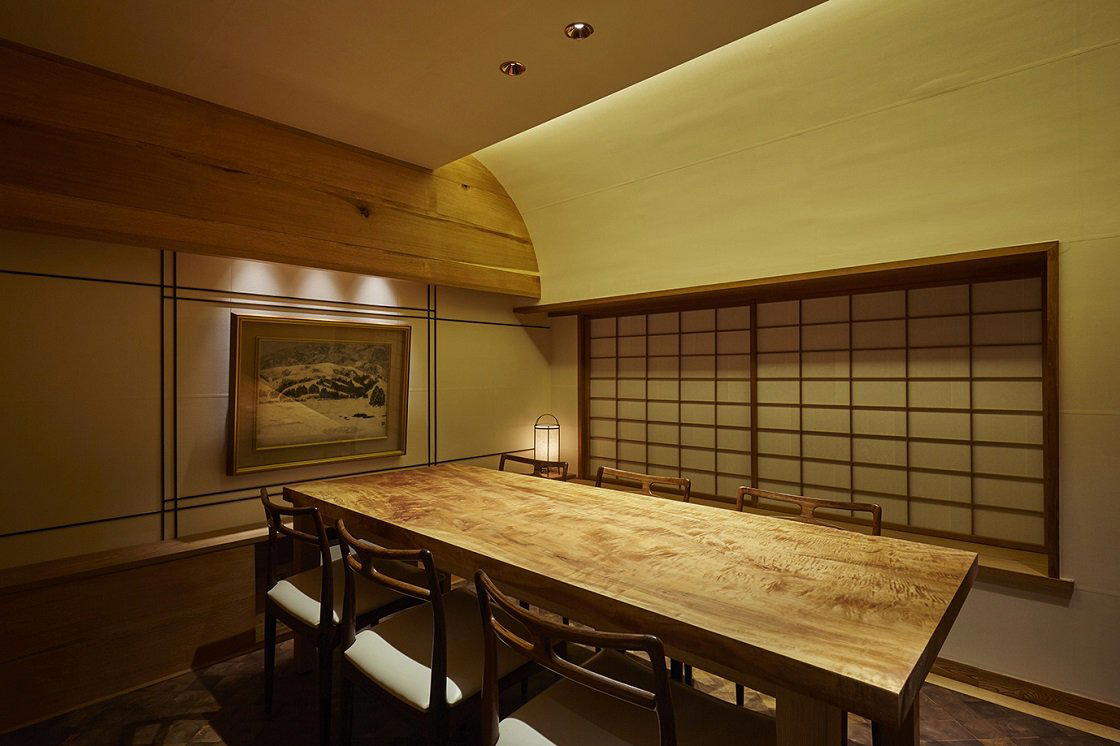
Osaka's Dashi Culture and Why It Matters Here
Since the Edo period, Osaka has occupied a specific position in Japan's food supply chain: it was the city where kombu merchants from Hokkaido unloaded their cargo before it moved inland. That history is not merely decorative. The accumulation of premium kombu in Osaka's warehouses over centuries shaped a cooking culture in which dashi, the foundational broth extracted from dried kelp, bonito, and other aromatics, became the primary measure of a kitchen's quality. In Tokyo, soy-forward seasoning dominated; in Osaka, the question was always about the depth of the stock beneath it. Oden, the slow-simmered dish of ingredients cooked low and long in that stock, is where this tradition is most directly legible.
Yoshitaka, on the second floor of a building in Higashishinsaibashi, Chuo Ward, operates inside that dashi lineage. Holding Michelin Plate recognition in 2024 and 2025, it represents the more considered end of an Osaka oden spectrum that runs from standing street stalls to quiet, counter-format rooms where the bowl is treated with something closer to kaiseki discipline.
Oden as a Simmered Discipline
Oden is often misread by visitors as a casual, low-effort format, convenience store trays have contributed to that perception. The tradition it comes from is more demanding. At the kaiseki level, every component in the simmering pot requires its own timing, preparation, and dashi calibration. Tofu behaves differently from daikon; konnyaku requires different handling than a soft-boiled egg. Managing a pot of eight or ten components to simultaneous readiness, while maintaining a dashi that deepens without clouding, is a technically specific skill.
At Yoshitaka, the approach draws directly on kaiseki methods, oden fashioned in the manner of a simmered course within a formal Japanese meal rather than as a standalone street dish. The framing changes everything about how toppings and garnishes function. Dried kombu shavings over tofu, ground sesame over a soft-boiled egg: these are not afterthoughts but finishing elements that shift texture and flavour the way a seasoning sauce would function in a more elaborate preparation. Items are served one piece at a time, which is a pacing decision with practical consequences. It allows the kitchen to calibrate temperature and garnish for each piece individually, and it gives the diner time to read the broth as it evolves across the meal rather than encountering everything at once.
The use of different serving vessels for each piece is a further signal of the kitchen's reference points. Ceramic selection in Japanese fine dining is not decorative, it carries cultural weight tied to tea ceremony aesthetics and the idea that the container shapes how a dish is experienced. That Yoshitaka applies this logic to oden, a format not traditionally associated with such considerations, says something about the register it operates in.
The Closing Courses: Ramen and Peppered Rice
A meal at Yoshitaka ends with one of two options: ramen seasoned with the dashi that has been running through the meal, or peppered rice drawn from Edo-period cooking conventions. Both choices make the same editorial point about the kitchen's approach. The dashi ramen is a logical accumulation, the broth has spent the preceding courses absorbing the flavour of each simmered ingredient, and serving it as a final soup puts that complexity on direct display. The peppered rice, referencing Edo culinary tradition, connects the meal to a parallel historical thread without abandoning the Osaka dashi framework.
Either finish positions Yoshitaka's meal as a complete arc rather than a sequence of unrelated dishes, which is precisely how kaiseki structures its own progression.
Where Yoshitaka Sits in Osaka's Restaurant Tier
Osaka's Michelin-recognised dining covers a wide range of price points and formats. At the upper end of the price tier, restaurants like HAJIME (French, Innovative) and La Cime (French) operate at ¥¥¥¥ and draw on European fine-dining conventions. At ¥¥¥, the same price band as Yoshitaka, the more natural comparable set includes Kashiwaya Osaka Senriyama (Japanese) and Taian (Kaiseki, Japanese), both of which operate within Japanese formal dining traditions at a comparable spend level. Yoshitaka's Michelin Plate recognition in consecutive years places it in the recognised tier of that band, though it operates in a more focused format than multi-course kaiseki rooms.
For those cross-referencing oden specialists across the Kansai region, Fuyacho 103 in Kyoto and Oito in Kyoto offer points of comparison. Within a broader Japan context, the EP Club covers formal Japanese dining at Harutaka in Tokyo, Gion Sasaki in Kyoto, akordu in Nara, Goh in Fukuoka, 1000 in Yokohama, and 6 in Okinawa.
Within the Higashishinsaibashi area, Man-u is also worth noting as another local reference point.
Planning Your Visit
Yoshitaka is located at 2 Chome-8-5 Higashishinsaibashi, Chuo Ward, Osaka, on the second floor. The ¥¥¥ price positioning puts the meal at a level where advance planning makes sense, Michelin-recognised rooms in this bracket, particularly those with a focused format and limited covers implied by the counter-style service, tend to fill ahead. Booking in advance, particularly for weekend evenings, is the direct approach for a room of this type.
Side-by-Side Snapshot
Comparable venues nearby, for context on price, style, and recognition.
| Venue | Cuisine | Price | Awards | Notes |
|---|---|---|---|---|
| YoshitakaThis venue — the venue you are viewing | Japanese | $$$ | Michelin Plate | Not listed |
| Le progrès | French-Japanese Fusion | $$$ | Michelin Plate | Kita |
| Shokudo Uchino | Modern Japanese Omakase | $$$ | Michelin Plate | Kita |
| Kitashinchi Kushikatsu Bon | Michelin Kushikatsu Omakase | $$$ | Michelin Plate | Kita |
| tamanegi | Piemonte-inspired Italian Fine Dining | $$$ | Michelin Plate | Nishi |
| UPSTAIRZ | Modern French with Japanese Influences | $$$ | Michelin Plate | Kita |
Recognition history
Dated appearances from independent guides and award organizations, with the underlying list record or original source where available.
Michelin Plate
Michelin
Michelin Plate
Michelin
Michelin Plate
Michelin
Continue exploring
More in Osaka
Restaurants in Osaka
Browse all →




Bars in Osaka
Browse all →


Hotels in Osaka
Browse all →




Wineries in Osaka
Browse all →
At a Glance
- Intimate
- Quiet
- Cozy
- Sophisticated
- Date Night
- Solo
- Special Occasion
- Business Dinner
- Chefs Counter
- Standalone
- Local Sourcing
Current opening hours
- Monday
- Closed
- Tuesday
- 6–11 PM
- Wednesday
- 6–11 PM
- Thursday
- 6–11 PM
- Friday
- 6–11 PM
- Saturday
- 6–11 PM
- Sunday
- 6–11 PM
Hours can change for holidays and private events. Last verified .
A small, tucked-away counter space with a calm, intimate atmosphere suited to leisurely, quietly attentive dining.