Yoshimoto Shokuhin

Yoshimoto Shokuhin belongs to Kagawa’s serious udon culture rather than the destination-dining circuit: low-priced, early-day, noodle-led, and grounded in Sanuki habits. Its Tabelog 100 Udon Kagawa 2024 selection places it among the prefecture’s recognized udon addresses, with a format that rewards travelers who understand the appeal of simple wheat noodles served without ceremony.
Pearl is the En Primeur Club membership app — saves, bookings, and concierge access live there. Same editors, same standards.
- Address
- 608 Sanbonmatsu, Higashikagawa, Kagawa 769-2601, Japan
- Phone
- +81 879-25-1027
- Website
- sanukiudon-yoshimoto.com
 Saves & bookings on Pearl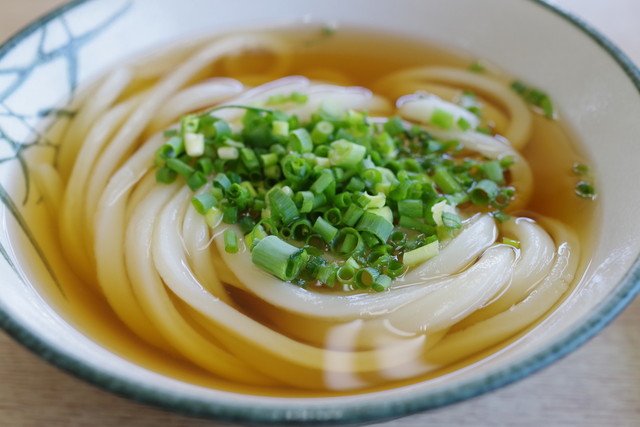
Approaching a house-style udon shop in Sanbonmatsu changes the rhythm of eating in Kagawa. The cues are modest: a local street, daytime hours, the expectation of turnover rather than lingering, and the quiet confidence of a place built around wheat noodles rather than a long menu. This is the part of Japan where udon is not a side dish or a comfort-food afterthought; it is a daily staple with its own hierarchies, regional loyalties, and sharp local opinions.
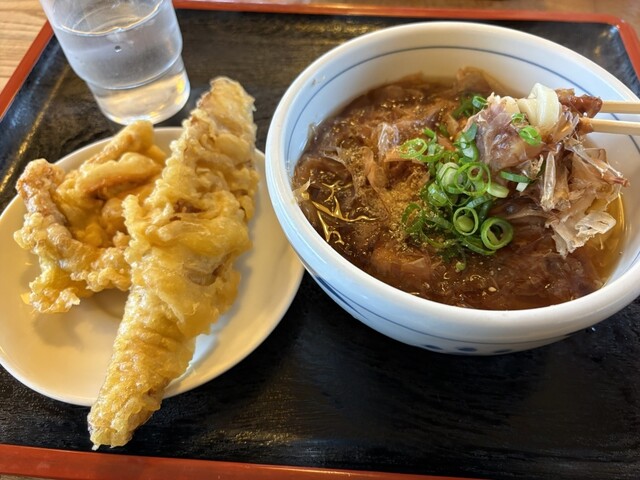
Yoshimoto Shokuhin sits inside that culture. Its recognition on the Tabelog 100 Udon Kagawa 2024 list matters because Kagawa is the competitive arena for Sanuki udon, not a peripheral market. A selection here is not a generic popularity marker; it places the shop in a prefecture where noodle texture, broth balance, counter speed, and value are judged with unusual fluency. The listed categories are udon and curry udon, which already says much about the scope: this is a focused noodle address, not a broad Japanese restaurant trying to cover every appetite.
Sanuki udon judged in its own province
Kagawa’s udon identity rests on wheat, water, salt, and technique, with the noodle carrying much of the argument. Compared with Tokyo’s restaurant culture, where scarcity and chef biography often dominate the conversation, Sanuki udon is more democratic and more exacting. Shops can be inexpensive and casual while still attracting serious attention, because the standard is set by texture and local repetition rather than luxury signals.
That context is useful for reading Yoshimoto Shokuhin correctly. The price band sits below JPY 999, a level that would be incidental in many dining cities but is central to how Kagawa udon functions. Value here is not a compromise; it is part of the form. The comparison with Muguruma, another Higashikagawa address in the same low-price bracket, reinforces how local udon shops compete on everyday credibility rather than occasion spending. In the wider Kagawa field, names such as Mendokoro Mahalo and Teuchi Udon Gennai occupy a higher JPY 1,000 to JPY 1,999 bracket, while Maruike Seimenjo remains in the sub-JPY 999 tier. Those differences are small in absolute terms, but in udon country they mark differences in format, portioning, and expectation.
The ingredient angle begins with wheat noodles, but it does not end there. Sanuki udon depends on the directness of its base components: dough strength, cooking precision, and a broth or curry style that does not bury the noodle. Curry udon, when listed alongside plain udon categories, points to a shop that can serve the region’s benchmark noodle in a more forceful, sauce-led register without leaving the udon tradition. The important point is restraint of scope. A narrow category range lets the kitchen concentrate on the variables that locals notice first.
Recognition without luxury theatre
Yoshimoto Shokuhin’s Tabelog score of 3.76 and its Tabelog 100 Udon Kagawa 2024 selection are meaningful because they sit within a category where the meal is short, affordable, and technically exposed. There is little room for décor, wine service, or narrative to compensate for weak noodles. The evaluation happens quickly, often in daylight, and often against years of local repetition.
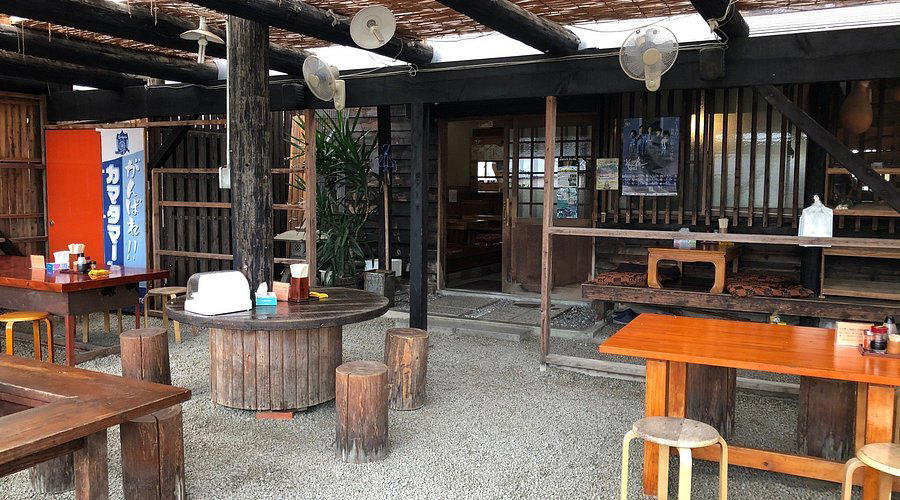
That makes the experience closer to a regional food benchmark than a conventional restaurant booking. Reservations are unavailable, take-out is listed, children are welcome, and the room is identified as a house restaurant. Those details place it firmly in the everyday-food category, but not in a casual-to-ignore category. In Kagawa, a simple udon shop can be a more revealing stop than an expensive dinner, because it shows what the prefecture expects from a bowl sold at ordinary prices.
Higashikagawa also matters. The city sits away from the international shorthand of Kyoto dining rooms and Tokyo counters, so the appeal is not glamour by association. For travelers building a food-led route through eastern Kagawa, this kind of stop gives structure to the day: udon early, movement between small cities, and a clearer sense of how regional cooking survives through repetition. For broader planning, Our full Higashikagawa restaurants guide is the relevant companion; lodging, drinking, wine, and cultural planning sit separately in Our full Higashikagawa hotels guide, Our full Higashikagawa bars guide, Our full Higashikagawa wineries guide, and Our full Higashikagawa experiences guide.
How to place it in a Japan food itinerary
The decision is not whether the restaurant offers a grand meal. It does not need to. The better question is whether a traveler wants to understand Kagawa through the food the prefecture measures closely. On that basis, the case is strong: recognized udon, narrow categories, accessible pricing, and a daytime format that fits naturally into a regional route.
It also helps recalibrate expectations for Japan’s dining range. A trip can move from beef sukiyaki in Kamakura at -Grilled beef Sukiyaki- KAMAKURA TANUKIAN 鎌倉 たぬき庵 in Kamakura to izakaya-style seafood and charcoal cooking at . 鮪と炭火焼き うお炭 秋葉原店 in Tokyo, café culture at .cafe in Osaka, contemporary dining at.know in Kumamoto, Vietnamese cooking at (Shoku) Vietnam in Kawasaki, curry specialization at [Curry Senmon Ten] Maruyama Kyoju. in Sapporo, Kyoto dining at [ki:] in Kyoto, beef-focused cooking at #肉といえば松田 奈良本店 in Kashihara, casual Americana at 1/3 HAMBURGER FACTORY in Kanazawa, and urban dining at 1000 in Yokohama. Outside Japan, the contrast extends to sake-bar dining at Jōdo Saké Bar in Los Angeles and rice-ball specialization at Onigiri Time in Pasadena. Against that range, Kagawa udon offers a different lesson: a regional staple can carry as much editorial weight as a formal dinner when the local standard is this exacting.
The recommendation is therefore specific. Come for udon as craft, not for ceremony. Treat the low price as part of the cultural signal, not evidence of a lesser meal. In a prefecture where noodle shops form a serious map of taste, the restaurant earns attention because it belongs to the local grammar rather than performing for visitors.
Comparison Snapshot
Comparable venues by cuisine and price in the same metro.
| Venue | Cuisine | Price | Notes |
|---|---|---|---|
| Yoshimoto ShokuhinThis venue — the venue you are viewing | Traditional Sanuki udon noodle shop | $ | Not listed |
| Muguruma | Traditional Sanuki Udon | $ | Higashikagawa |
| Gyoza Hohei (ぎょうざ 歩兵) | Japanese Gyoza Specialist | $ | Gion |
| Uogashi Nihon-ichi (魚がし日本一) | Standing Sushi Bar | $ | Shibuya |
| つけめん 頑者 新横浜ラーメン博物館店 | Tsukemen (Dipping Ramen) | $ | Shin-Yokohama |
| Sukesama (ぎょうざ処 亮昌) | Kyoto Gyoza Specialist | $ | Gion |
Recognition history
Dated appearances from independent guides and award organizations, with the underlying list record or original source where available.
Tabelog 100 #10 · No. 10
Tabelog · Tabelog 100 - Udon - KAGAWA - 2024
Continue exploring
More in Higashikagawa
Restaurants in Higashikagawa
Browse all →
Hotels in Higashikagawa
Browse all →
At a Glance
- Rustic
- Classic
- Cozy
- Solo
- Casual Hangout
- Family
- Group Dining
- After Work
- Standalone
- Historic Building
- Local Sourcing
Current opening hours
- Monday
- 8 AM–2 PM
- Tuesday
- 8 AM–2 PM
- Wednesday
- 8 AM–2 PM
- Thursday
- 8 AM–2 PM
- Friday
- 8 AM–2 PM
- Saturday
- 8 AM–2 PM
- Sunday
- Closed
Hours can change for holidays and private events. Last verified .