Muguruma

Muguruma belongs to Kagawa’s serious Sanuki udon circuit, where low-cost bowls, quick service, and wheat-noodle texture carry more weight than ceremony. Its 2024 selection in Tabelog’s Kagawa Udon 100 places it among the prefecture’s recognized udon addresses, with a casual house-restaurant format suited to solo diners, families, and noodle-focused detours through Higashikagawa.
Pearl is the En Primeur Club membership app — saves, bookings, and concierge access live there. Same editors, same standards.
- Address
- 6-1 Minato, Higashikagawa, Kagawa 769-2701, Japan
- Phone
- +81 879-25-2051
- Website
- udon.ne.jp
- Directions
- Get directions
 Saves & bookings on Pearl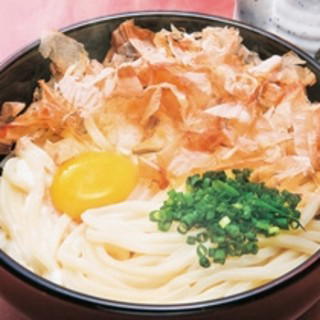
Approaching a Kagawa udon shop is rarely theatrical. The cues are practical: a modest building, cars turning off the road, a room built for turnover rather than lingering, and the quiet pressure of arriving before the day’s noodles run out. In Higashikagawa, that rhythm matters. Sanuki udon is not a luxury category dressed down for effect; it is a regional staple judged by texture, speed, broth discipline, and the everyday economy of a bowl.
Muguruma sits inside that tradition rather than outside it. The draw is not a chef’s biography or a tasting-menu conceit, but the stricter grammar of Kagawa udon: wheat noodles as the main argument, condiments and broth as support, and a format that makes sense for local regulars as much as travelers crossing the eastern side of the prefecture. Its selection for Tabelog’s Kagawa Udon 100 in 2024 gives the shop a public credential in a category where recognition is unusually competitive because the prefecture is dense with specialists.
Sanuki udon here is about wheat, timing, and restraint
Kagawa’s udon culture rewards shops that keep the food close to its source. The region’s identity is tied to wheat noodles, not elaborate plating, and the better comparisons are often between noodle texture, broth clarity, and the tempo of service rather than between luxury signals. In that context, a sub-JPY 999 lunch bracket carries editorial meaning: it keeps the experience in the realm of everyday Sanuki eating rather than turning it into a destination priced for visitors alone.
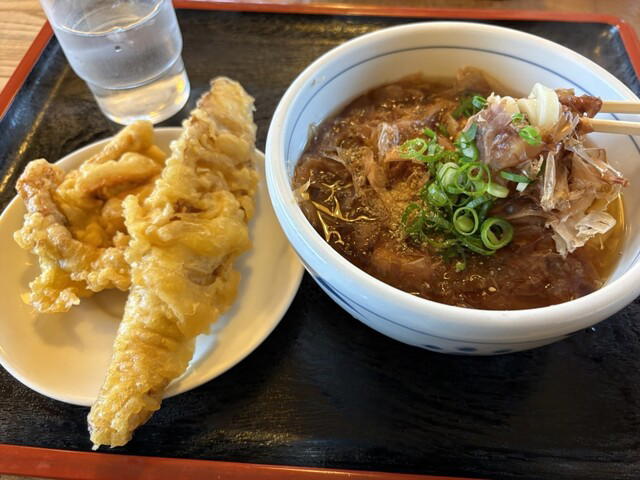
The ingredient angle begins with the noodle itself. Sanuki udon is defined by chew, elasticity, and the way a simple bowl can reveal small differences in flour handling, boiling, rinsing, and serving temperature. Those details are not decorative. They decide whether the meal feels alive or merely filling. Muguruma’s recognition in the 2024 Kagawa udon list places it in a field where that technical judgment is the point, and where a shop can be taken seriously without a long menu narrative.
Higashikagawa also changes the reading of the meal. This is not central Takamatsu, where udon tourism is easier to stack into a dense half-day route. Eastern Kagawa asks for more intention, and the payoff is a less urban version of the same food culture: house-style rooms, parking-led access, and a clientele mix that can include solo diners, friends, and families without changing the basic format. For another Higashikagawa udon comparison in the same low-price bracket, Yoshimoto Shokuhin helps show how narrow the local price band can be while still leaving room for meaningful differences in execution.
A casual room with serious regional credentials
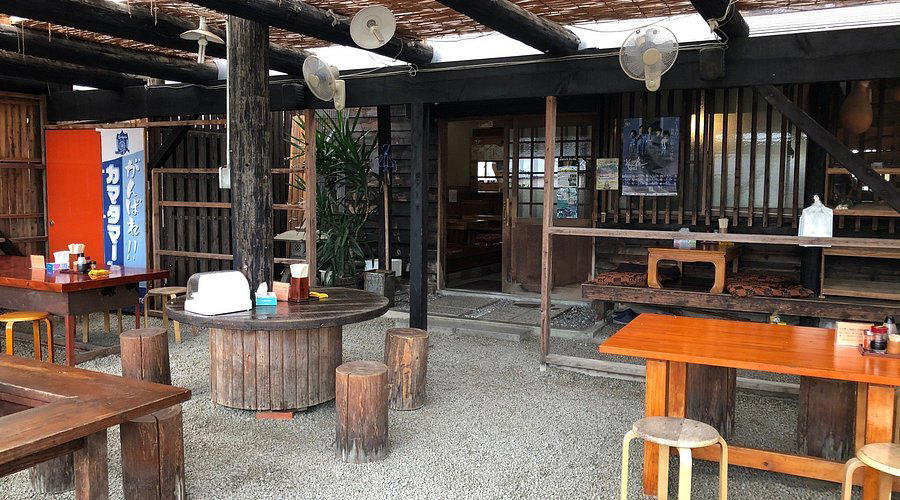
The room is listed with 30 seats and counter seating, which tells experienced Japan travelers how to read the meal: efficient, casual, and built around the bowl rather than a long stay. Private rooms and private use are not part of the format. Children are welcome, and the occasion profile fits family meals, solo eating, and small groups. That combination is typical of strong regional noodle shops, where the room has to work for locals before it can work for culinary travelers.
The 2024 Tabelog Kagawa Udon 100 selection is the main trust signal. It does not turn the shop into fine dining, and it should not be read that way. It signals that, within a prefecture unusually demanding about udon, Muguruma has enough standing to sit among recognized specialists. That distinction matters more than a broader national restaurant ranking would, because Sanuki udon is a category where local density sharpens the standard.
Payment and access also keep the experience grounded. The shop is cash-only across cards, electronic money, and QR payments, with parking listed for 20 cars. Those details point to a rural-prefecture dining pattern that differs from major-city restaurant planning. The logistics are part of the culture: arrive with cash, treat the meal as lunch-led, and assume the strongest udon shops operate on the day’s production rather than on late-service abundance.
How to place it within a Higashikagawa food day
For travelers building a food-focused route through eastern Kagawa, Muguruma works well as a noodle anchor rather than a full afternoon plan. The category is concise by design. A good Sanuki udon stop should leave enough appetite and time for another local address, a coastal drive, or a move back toward Takamatsu. The mistake is to impose big-city restaurant expectations on a form that works because it is brief, affordable, and exacting.
Among comparison venues, the contrast is instructive. Out-of-metro udon addresses such as Maruike Seimenjo sit in the same sub-JPY 999 bracket, while places like Mendokoro Mahalo and Teuchi Udon Gennai occupy a slightly higher JPY 1,000 to JPY 1,999 range. Chinese Suiyo belongs to an entirely different spending tier. Muguruma’s place is therefore clear: it belongs to the low-cost, specialist noodle lane, where recognition depends on execution rather than extras.
Readers planning beyond a single bowl can use our full Higashikagawa restaurants guide for the local dining map, then widen the trip through our full Higashikagawa hotels guide, our full Higashikagawa bars guide, our full Higashikagawa wineries guide, and our full Higashikagawa experiences guide. For broader Japan and overseas dining context, EP Club also covers -Grilled beef Sukiyaki- KAMAKURA TANUKIAN 鎌倉 たぬき庵 in Kamakura, . 鮪と炭火焼き うお炭 秋葉原店 in Tokyo, .cafe in Osaka.know in Kumamoto, (Shoku) Vietnam in Kawasaki, [Curry Senmon Ten] Maruyama Kyoju. in Sapporo, [ki:] in Kyoto, #肉といえば松田 奈良本店 in Kashihara, 1/3 HAMBURGER FACTORY in Kanazawa, 1000 in Yokohama, Jōdo Saké Bar in Los Angeles, and Onigiri Time in Pasadena.
The editorial case is simple: this is a Kagawa udon stop for travelers who care about regional food systems more than restaurant theater. The value sits in the noodle craft, the local price logic, and the fact that a small Higashikagawa shop appears in a prefecture-level udon selection. Treat it as part of the Sanuki udon map, not as a formal restaurant appointment.
In Context: Similar Options
Comparable venues by cuisine and price in the same metro.
| Venue | Cuisine | Price | Notes |
|---|---|---|---|
| Muguruma | Traditional Sanuki Udon | $ | Higashikagawa |
| Yoshimoto Shokuhin | Traditional Sanuki udon noodle shop | $ | Higashikagawa |
| Marusho Gyoza | Traditional Japanese Gyoza Specialist | $ | Daito City |
| Human beings everybody noodles (人類みな麺類) | Traditional Shoyu Ramen | $ | Nishinakajima, Yodogawa-ku |
| 中華そば 速水 | 和歌山ラーメン | $ | 緑ヶ丘 |
| Azuma | Traditional Kagawa Udon | $ | Takamatsu |
Recognition history
Dated appearances from independent guides and award organizations, with the underlying list record or original source where available.
Tabelog 100 #64 · No. 64
Tabelog · Tabelog 100 - Udon - KAGAWA - 2024
Continue exploring
More in Higashikagawa
Restaurants in Higashikagawa
Browse all →
Bars in Higashikagawa
Browse all →


At a Glance
- Classic
- Cozy
- Solo
- Family
- Casual Hangout
- Group Dining
- Standalone
- Historic Building
- Local Sourcing
Current opening hours
- Monday
- Closed
- Tuesday
- Closed
- Wednesday
- Closed
- Thursday
- 11 AM–1:30 PM
- Friday
- 11 AM–1:30 PM
- Saturday
- 11 AM–1:30 PM
- Sunday
- 11 AM–1:30 PM
Hours can change for holidays and private events. Last verified .
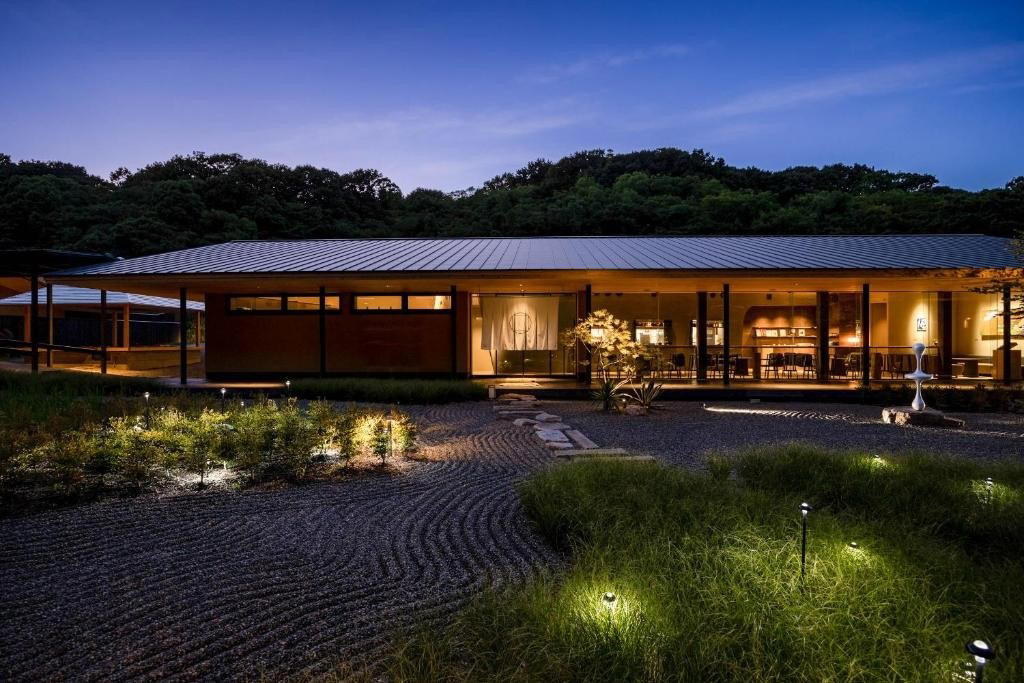
Homey, no-frills udon shop attached to a noodle workshop, with a direct, family-oriented feel that highlights its long history and focus on craftsmanship rather than design.