
Furukawa Udon belongs to Takamatsu’s practical, craft-led Sanuki udon culture: quick, low-friction, noodle-focused, and serious without ceremony. Its 2024 Tabelog 100 Udon Kagawa selection places it among the prefecture’s closely watched udon addresses, with wheat noodles and curry udon anchoring the appeal rather than tasting-menu theatre.
Pearl is the En Primeur Club membership app — saves, bookings, and concierge access live there. Same editors, same standards.
- Address
- Japan, 〒760-0080 Kagawa, Takamatsu, Kitacho, 5016−1
- Phone
- +81 87-867-0994
- Website
- instagram.com
- Directions
- Get directions
 Saves & bookings on Pearl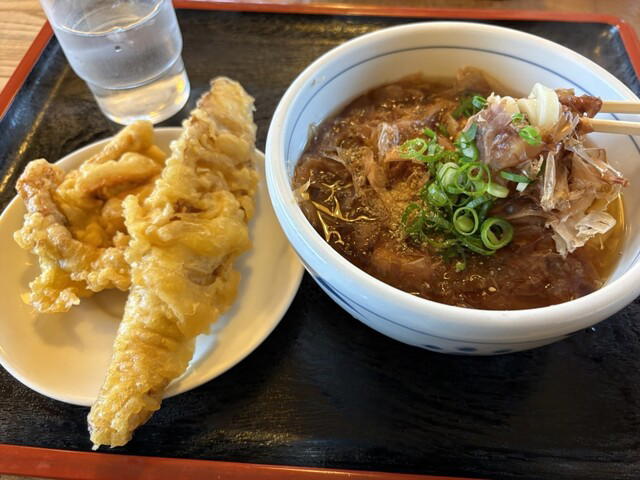
Approaching a proper Sanuki udon shop in Takamatsu, the mood is rarely hushed. The signal is movement: people arriving with a purpose, counter seats turning, steam in the room, and the steady rhythm of a kitchen built around noodles rather than ceremony. Furukawa Udon fits that register. It is not a luxury dining room trying to translate udon into fine-dining language; it belongs to the everyday Kagawa tradition where texture, broth, speed, and price discipline carry the argument.
That matters in Takamatsu because udon here is not a casual sideline. Kagawa’s Sanuki udon culture is defined by wheat noodles with a firm bite, direct service formats, and shops that are judged by repeatability as much as by flair. In that context, Furukawa Udon’s selection for Tabelog 100 Udon Kagawa 2024 is a useful signal: this is a local noodle house operating inside a crowded prefectural category, not a restaurant gaining attention because the city lacks competition.
Sanuki udon without ceremony, judged by texture and pace
The sharper way to understand the meal is through format. Takamatsu udon shops compress the restaurant experience into a few essential decisions: noodle style, broth or sauce direction, temperature, and add-ons. The room, the ordering rhythm, and the short visit are part of the cuisine. A long meal would miss the point. The pleasure comes from how quickly a bowl can express craft when the kitchen has no need to explain itself.
Furukawa Udon sits in the same low-price udon bracket as several comparison addresses in and around Takamatsu, including Sanuki Udon Kobo Ai Style, Honkaku Teuchi Udon Menmusubi, Noguchi Noodle Shop, and Yume Kabou Takara Kasugachou honten. Mensho Kusugami occupies a slightly higher listed spend band, which makes the comparison useful: much of the city’s serious noodle culture remains inexpensive by national dining standards, but small differences in format, noodle handling, and house style shape where regulars return.
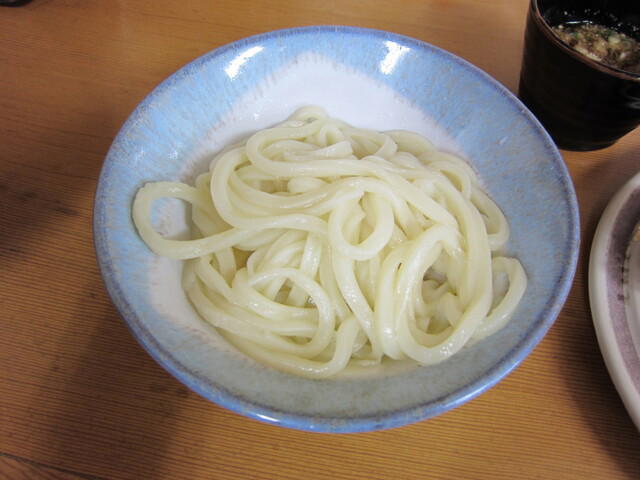
The category listing is direct: udon and curry udon. That second category is worth noting because curry udon in Japan sits at the meeting point between noodle shop comfort and yoshoku-adjacent richness. In Kagawa, where the noodle itself is under heavy scrutiny, curry udon cannot rely only on sauce. The bowl has to respect the chew and structure of Sanuki udon, or the whole thing becomes a curry dish with noodles attached. This is where a specialist shop earns attention: by keeping the noodle central even when the broth or sauce grows heavier.
For visitors building a Takamatsu eating itinerary, the restaurant makes more sense as part of a daytime noodle crawl than as a single destination meal. Pair it editorially with other city staples such as Azuma, Chikusei Honten, and Furusato Udon to see how the same regional language changes from shop to shop. The comparison is not about grandeur. It is about the subtle discipline of a cuisine that has been stripped down until flaws have nowhere to hide.
A local room built for regular eating, not destination theatre
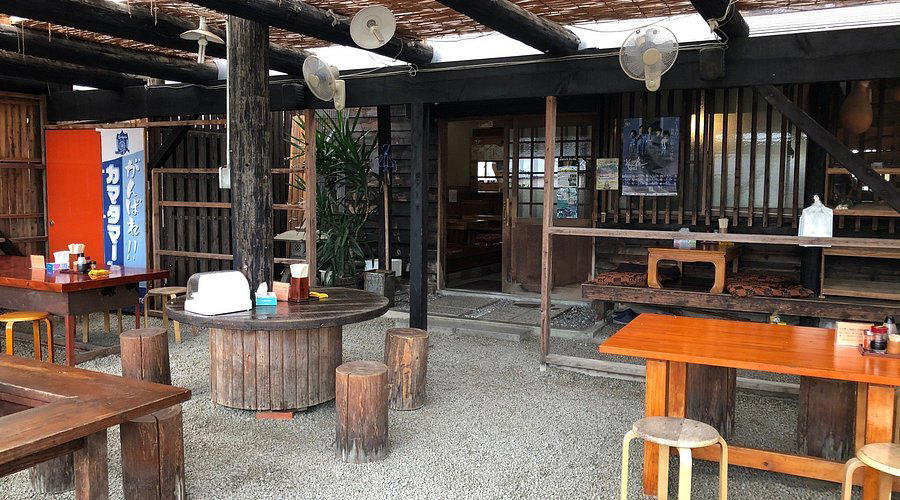
The physical character matters because Sanuki udon is inseparable from use. Counter seating, family-friendly occasions, take-out service, and a non-smoking room all point to a shop designed for ordinary repetition. That does not make it less serious. In Kagawa, the everyday setting is often where the scrutiny is highest: locals know the difference between noodles that hold their shape and noodles that merely fill a bowl.
There is also a useful contrast with broader Japanese dining itineraries. A traveller moving between regional specialties might place Takamatsu udon beside okonomiyaki at Fumiya Okonomiyaki Honten or Western-leaning city dining at Grill a Table. Those comparisons clarify what udon does differently. It reduces the meal to repetition and muscle memory. The kitchen is judged not by the number of components on the plate, but by the handling of wheat, water, heat, and timing.
The restaurant’s 45-seat scale reinforces that practical identity. This is neither an eight-seat counter built around scarcity nor a banquet restaurant built around occasion. It occupies the middle ground that defines much of regional Japanese eating: accessible, focused, and better understood by watching how quickly the room cycles than by searching for decorative cues. The 2024 Tabelog recognition gives external validation, but the deeper signal is how comfortably the shop fits Takamatsu’s noodle economy.
How to place it in a Takamatsu food day
The smartest use of the restaurant is as a benchmark stop for Sanuki udon texture and local rhythm. It is a better fit for travellers who want to understand Kagawa through daily food systems than for those seeking a chef-led narrative. There is no need to force a grand story onto the meal. The story is the region’s confidence that a bowl of noodles can carry enough structure, comfort, and local identity on its own.
For broader planning, Our full Takamatsu restaurants guide gives the clearest frame for where udon fits among the city’s dining options. Travellers extending the trip can also use Our full Takamatsu hotels guide, Our full Takamatsu bars guide, Our full Takamatsu wineries guide, and Our full Takamatsu experiences guide to build the rest of the day around the city rather than around a single bowl.
Readers comparing regional Japanese formats beyond Kagawa can look outward to -Grilled beef Sukiyaki- KAMAKURA TANUKIAN 鎌倉 たぬき庵 in Kamakura. 鮪と炭火焼き うお炭 秋葉原店 in Tokyo.cafe in Osaka.know in Kumamoto, (Shoku) Vietnam in Kawasaki, [Curry Senmon Ten] Maruyama Kyoju. in Sapporo, Jōdo Saké Bar in Los Angeles, and Onigiri Time in Pasadena. The restaurant’s lesson is narrower and more valuable: in Takamatsu, seriousness often arrives in a plain bowl, at speed, with no need for spectacle.
In Context: Similar Options
Nearby venues at a similar price tier for orientation.
| Venue | Cuisine | Price | Notes |
|---|---|---|---|
| Furukawa Udon | Sanuki Udon | $ | Takamatsu |
| Sanuki Udon Kobo Ai Style | Sanuki udon noodle shop | $ | Takamatsu |
| Fumiya Okonomiyaki Honten | Okonomiyaki (Japanese savory pancakes) | $ | Takamatsu |
| Matsushita Seimensho | Sanuki Udon | $ | Takamatsu |
| Matsubara | Japanese Udon Noodle Bar | $ | Takamatsu |
| Honkaku Teuchi Moriya | Sanuki Udon | $ | Takamatsu |
Recognition history
Dated appearances from independent guides and award organizations, with the underlying list record or original source where available.
Tabelog 100 #23 · No. 23
Tabelog · Tabelog 100 - Udon - KAGAWA - 2024
Continue exploring
More in Takamatsu
Restaurants in Takamatsu
Browse all →
Bars in Takamatsu
Browse all →
At a Glance
- Classic
- Cozy
- Solo
- Family
- Casual Hangout
- Standalone
Current opening hours
- Monday
- 10 AM–3 PM
- Tuesday
- 10 AM–3 PM
- Wednesday
- 10 AM–3 PM
- Thursday
- 10 AM–3 PM
- Friday
- 10 AM–3 PM
- Saturday
- 10 AM–3 PM
- Sunday
- Closed
Hours can change for holidays and private events. Last verified .
Warm, nostalgic, and old-school, with a Showa-era feel that reviewers describe as hearty and authentic.