
1 Michelin Star
Our verdict
A Michelin-starred Sichuan concept in Guangzhou's Yuexiu District, Yong operates from a heritage building on Yanjiang Middle Road under the supervision of celebrity chef Lan Guijun. Fixed-price menus blend classical Sichuan technique with deliberate Cantonese inflections — house-made pickles, five-colour noodles, lobster pairings — producing a cross-regional dialogue that earns its place among Guangzhou's serious dining options.

Pearl is the En Primeur Club membership app — saves, bookings, and concierge access live there. Same editors, same standards.
- Address
- Xianjian Business Building, 3楼259 Yanjiang Middle Rd, 259, Yuexiu District, Guangzhou, Guangdong Province, China, 510110
- Directions
- Get directions
The menu
What to order
- House-made pickles
- Five-colour noodles
- Lobster pairings
A Heritage Shell for a Cross-Regional Argument
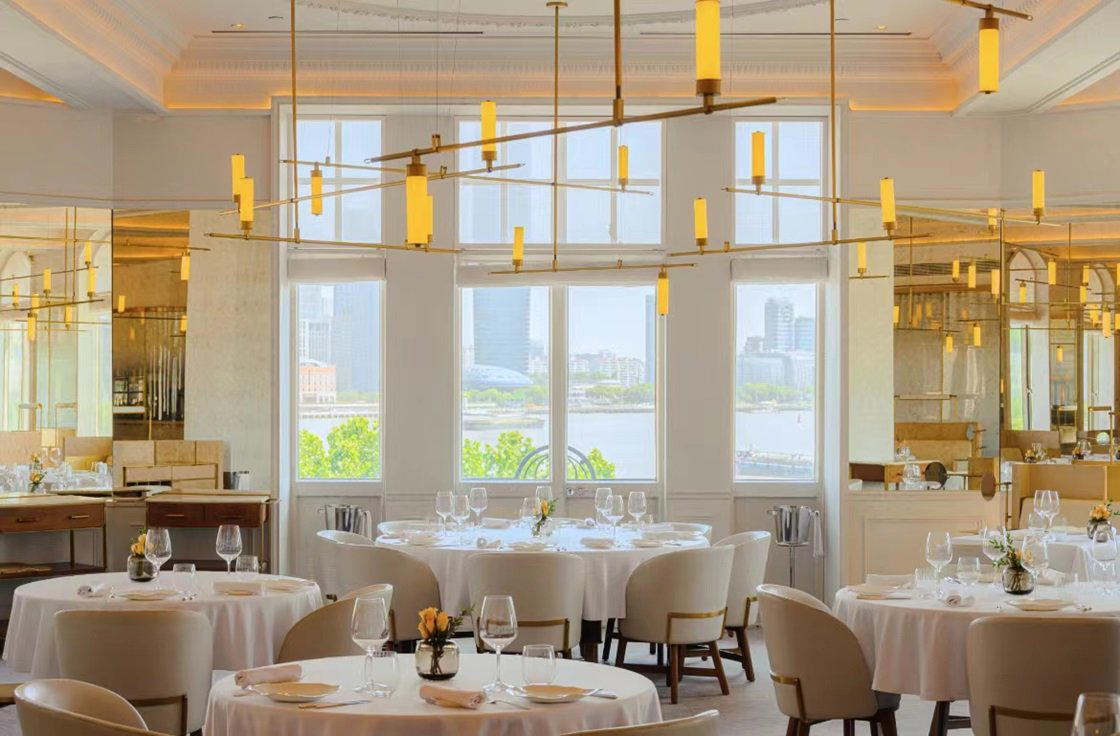
Guangzhou does not typically position itself as Sichuan territory. The city's culinary identity is Cantonese to its core: precise, restrained, ingredient-forward. So when a Sichuan-focused concept earns a Michelin star in Yuexiu District, the more interesting question is not whether the food is good, but what it says about how Guangzhou's serious dining scene is evolving. Yong, occupying the third floor of the Xianjian Business Building on Yanjiang Middle Road, sits inside that evolution — a space that frames Sichuan cooking through a Cantonese lens rather than presenting it as a transplant.
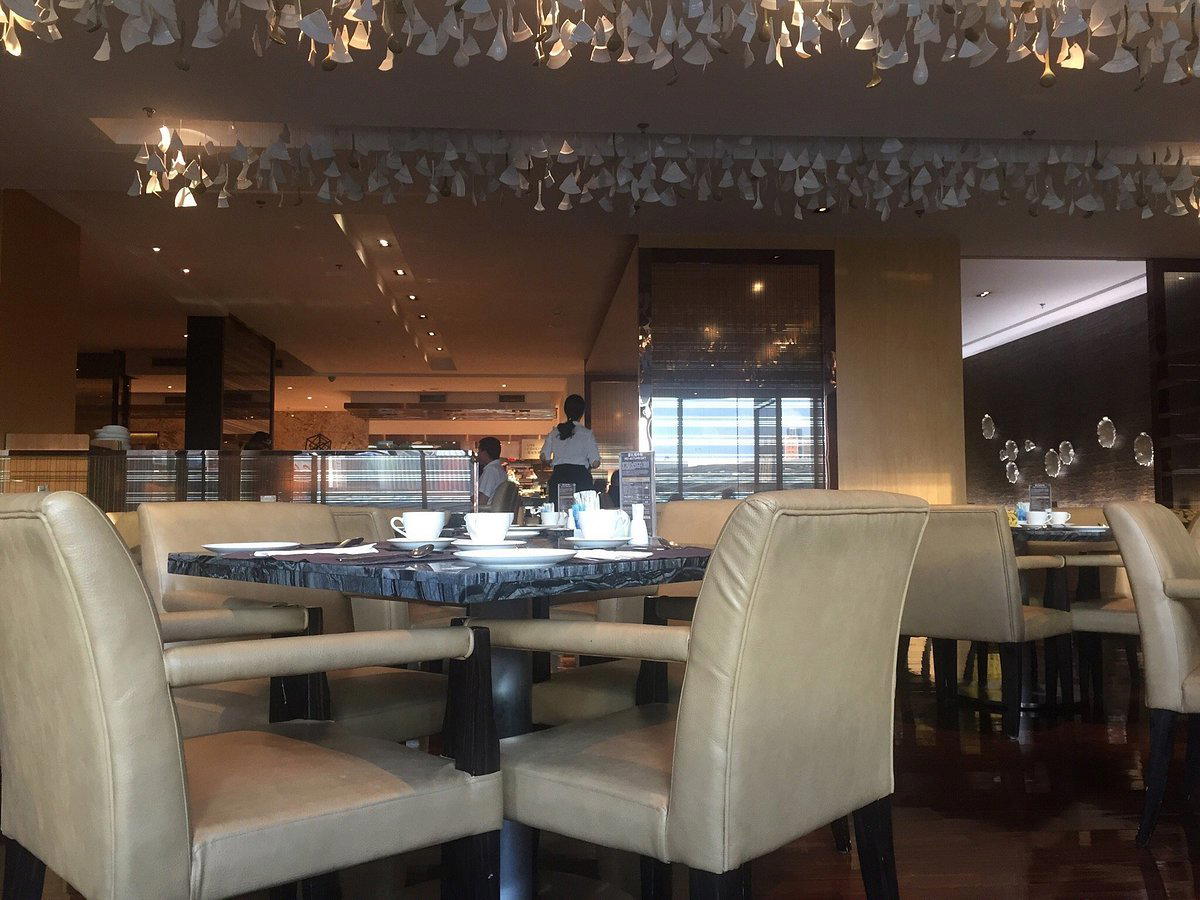
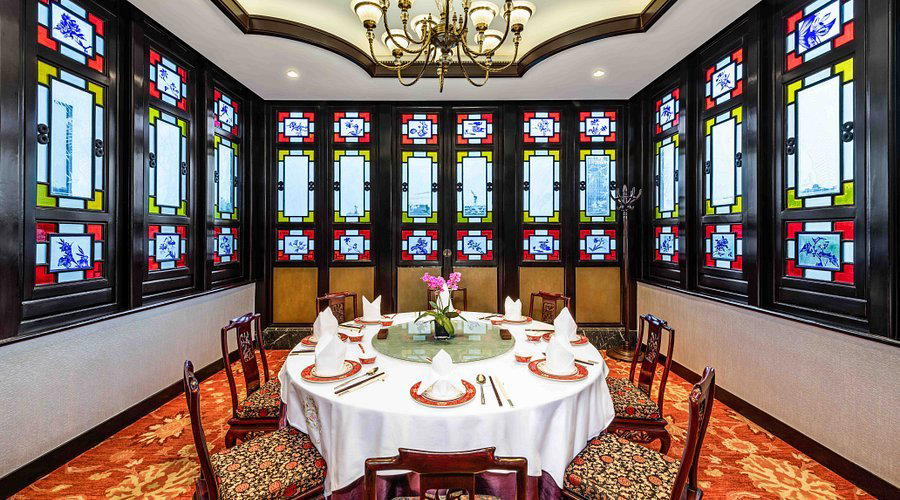
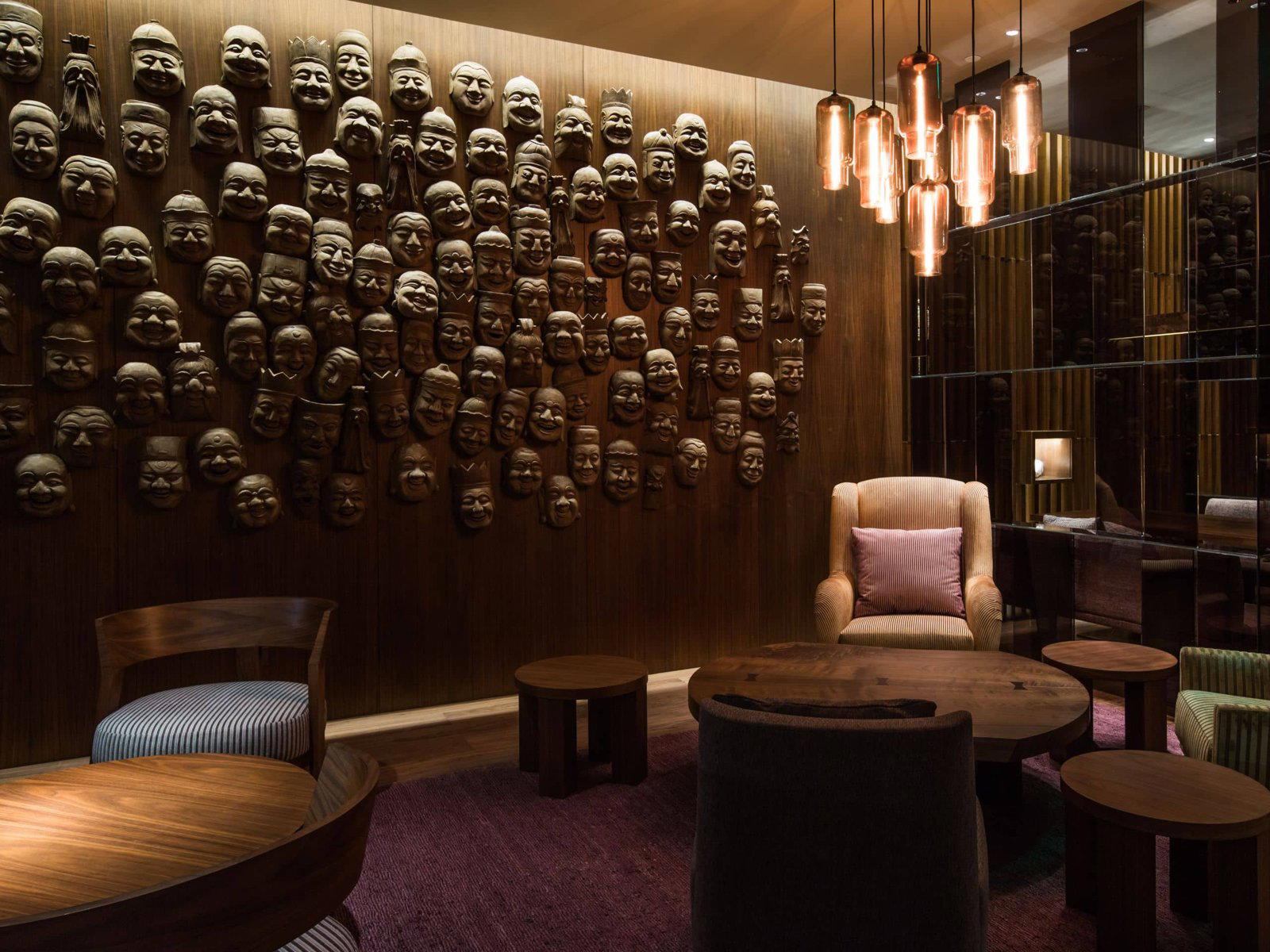
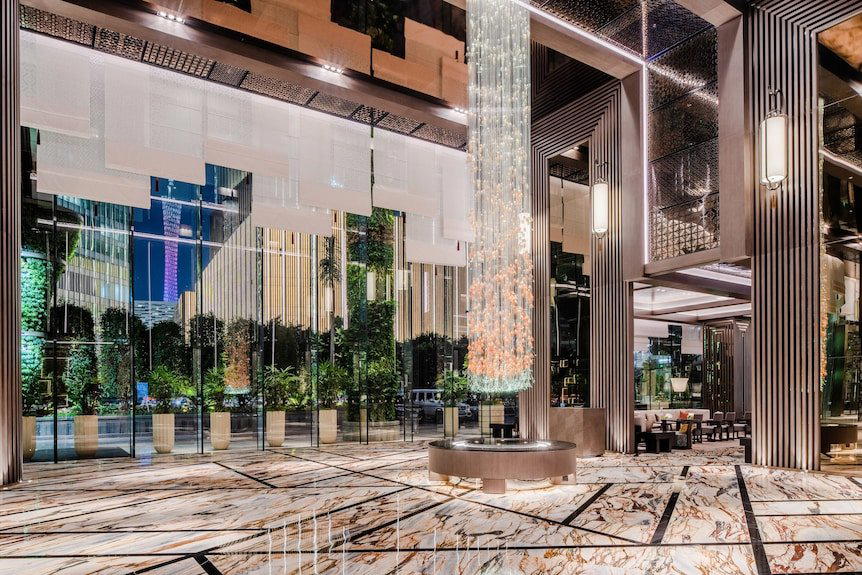
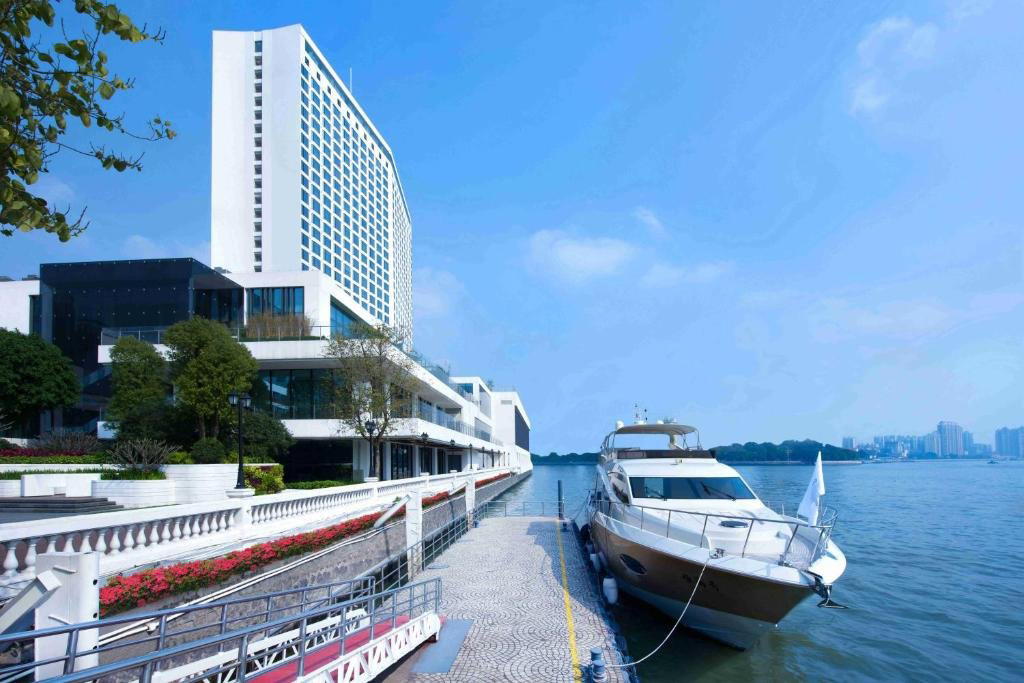
The building itself is heritage-listed, and that context matters before you even consider the menu. Yanjiang Middle Road runs along the northern bank of the Pearl River, a stretch where Republican-era architecture and modern commercial development coexist with varying degrees of tension. Arriving at Yong means passing through that layered streetscape before stepping into a room where the structural character of the original building has been retained as a deliberate design choice. In cities where premium dining spaces default to neutral minimalism, a heritage interior carries editorial weight: it signals a commitment to place, and in this case, it creates a visual counterpoint to the fiery culinary tradition being served inside.
The Room as Context
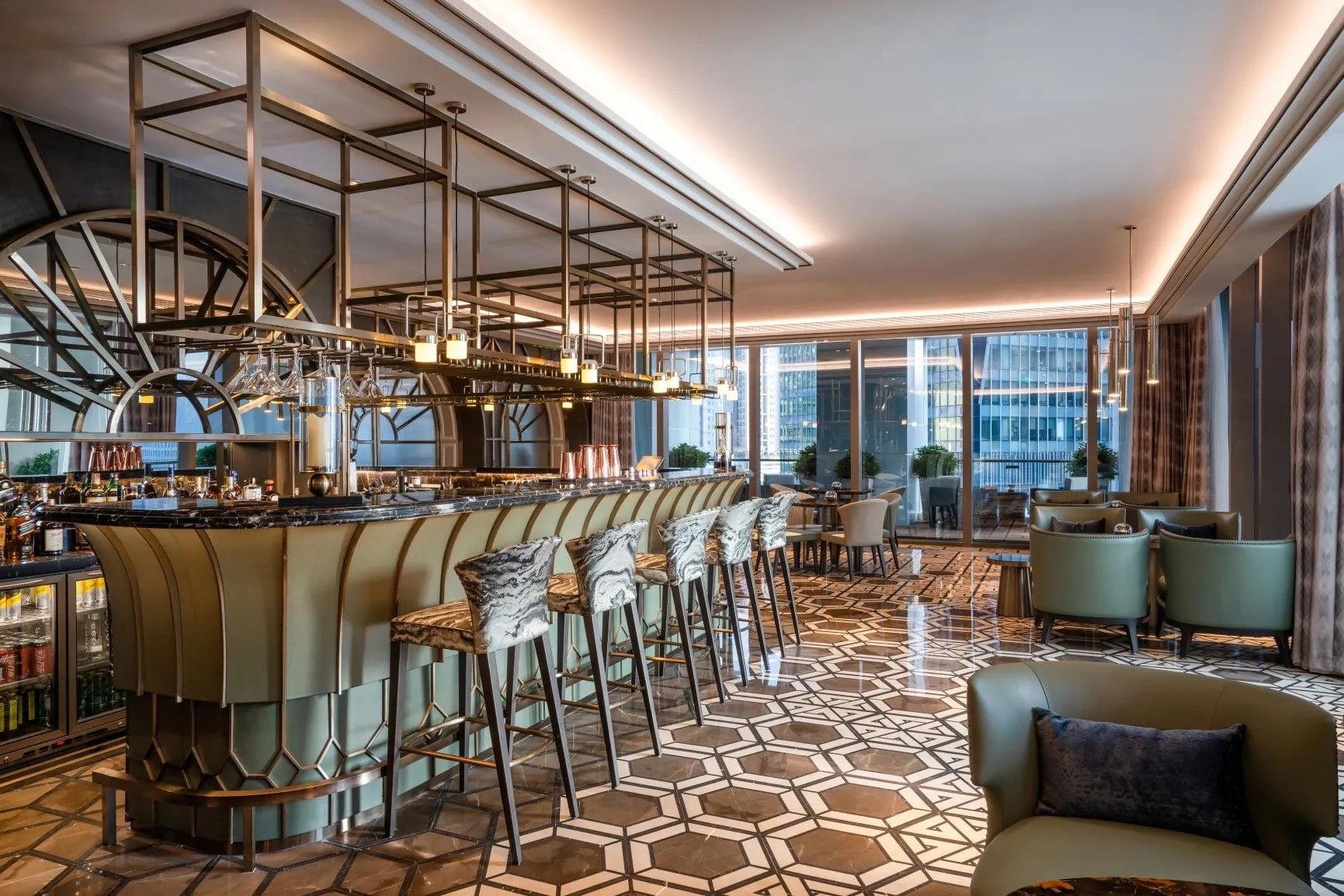
The third-floor position is worth noting. Rooftop and refined restaurant concepts across East Asia have increasingly used height as a compositional tool — the view as part of the meal's architecture. At Yong, the elevation above street level on a Pearl River-adjacent road suggests some degree of that visual register, though the specific interior arrangement positions the room as a formal dining environment rather than a casual perch. Fixed-price menus and a booking requirement signal that the physical space is set up for deliberate, seated occasions rather than drop-in traffic. The design choice to operate within a heritage frame, rather than gut-renovating into something anonymous, places Yong in a niche cohort of Guangzhou dining rooms where the container carries meaning.
This matters because Sichuan cooking, in its conventional form, does not typically demand this kind of spatial treatment. The cuisine's popular register is communal and informal, hotpot halls, street-facing noodle counters, loud mala rooms. Presenting it inside a heritage building with fixed-price structure and advance booking is a deliberate repositioning, one that Yong shares with a small group of Chengdu-based Sichuan fine-dining rooms. Yu Zhi Lan in Chengdu and Fang Xiang Jing in Chengdu both operate in a similar refined register for Sichuan cuisine, though those venues address a Chengdu audience for whom the cuisine is native. Yong makes the same formal argument in a city where the default palate runs in a different direction entirely.
What the Menu Is Actually Doing
The 2025 Michelin one-star citation describes Yong's menu as multifaceted Sichuan, with quality ingredients and deft execution, standard Michelin language that nonetheless points to something specific. The cited dishes include five-colour noodles with lobster and chilli chicken feet. These are not approximations or simplified versions of Sichuan classics; they are small plates that demonstrate technical range across very different textural and flavour registers. Lobster applied to a noodle format associated with vegetable-dye complexity is an ingredient upgrade that reads as deliberate refinement. Chilli chicken feet, done with precision rather than brute heat, show the kitchen's confidence with the cuisine's more confrontational elements.
The more distinctive editorial point sits with the house-made pickles. Salted lemon pickles applied to Sichuan preparations are a Cantonese inflection, the kind of cross-regional detail that does not happen accidentally. It represents a conscious choice to acknowledge the dining room's geography: you are eating Sichuan food in a Cantonese city, and the kitchen has chosen to make that tension productive rather than ignore it. This is a different approach from Guangzhou's Cantonese fine-dining rooms, such as Jiang by Chef Fei or Imperial Treasure Fine Chinese Cuisine, which work within a single regional tradition rather than staging a dialogue between two.
Chef Lan Guijun, who supervises the concept, carries significant public recognition in China's restaurant culture. The supervision model, where a named celebrity chef oversees a concept rather than executing service nightly, is common at this tier of Chinese dining, and it shifts some critical attention toward the kitchen team's daily execution. The Michelin recognition suggests that execution holds.
Where Yong Sits in Guangzhou's Dining Geography
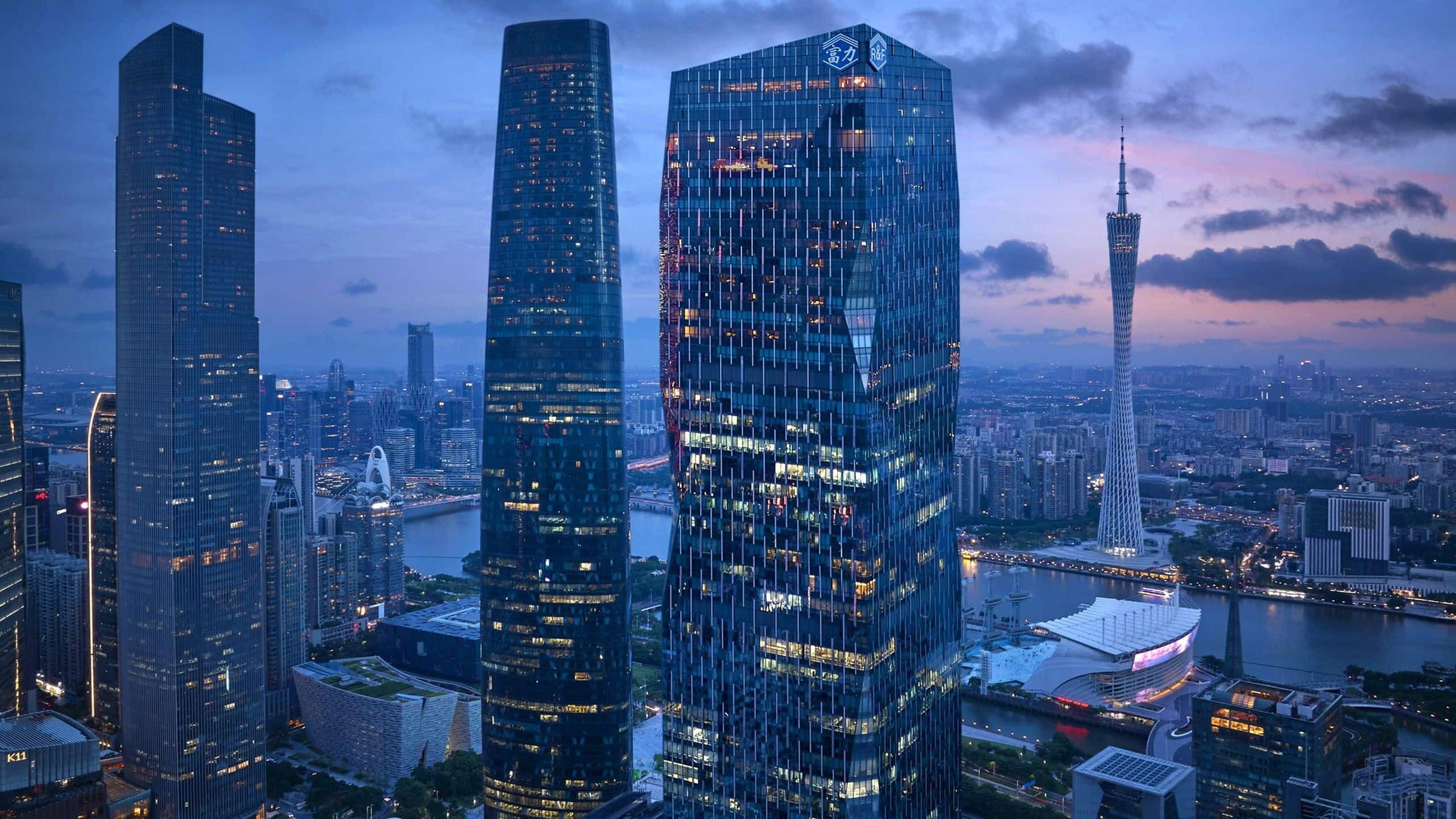
Yuexiu District occupies an older, more historically layered part of Guangzhou than the newer commercial zones. The Yanjiang Middle Road address places Yong in a riverside corridor that functions as both a transit route and an architectural record of the city's twentieth-century development. This is not the same dining geography as Tianhe's corporate restaurant clusters or Haizhu's newer food streets. The choice to operate here rather than in a purpose-built contemporary development connects Yong spatially to the heritage-building decision and reinforces the overall positioning.
Within Guangzhou's Michelin-starred landscape, the cuisine mix has historically skewed heavily Cantonese. A starred Sichuan concept in Yuexiu is a minority position in that peer group. Comparison venues at the ¥¥¥¥ tier in the city include concepts from very different culinary traditions, modern European, contemporary French, Cantonese fine dining, which means Yong is not competing within a crowded Sichuan cohort locally. It occupies a relatively uncrowded bracket. For readers cross-referencing Guangzhou alongside other Chinese cities, Sichuan fine dining at this price and formality level is more represented in Chengdu: see also Xin Rong Ji in Chengdu for a comparable level of regional cuisine seriousness, though in a different tradition.
Other Guangzhou options worth mapping against Yong for planning purposes include Song and Ease (Yuexiu) for context on the broader Yuexiu dining scene, and Xing Fu Yi Zhan for a different register of dining in the city. For broader regional reference across southern China and nearby markets, Chef Tam's Seasons in Macau and Dai Yuet Heen in Nanjing operate in adjacent high-end Chinese dining territory.
For those building a broader China itinerary around serious Chinese cooking, 102 House in Shanghai, Ru Yuan in Hangzhou, and Xin Rong Ji in Beijing offer reference points at equivalent seriousness levels across different cities and regional traditions.
EP Club's full city guides cover the wider picture: our full Guangzhou restaurants guide, our full Guangzhou hotels guide, our full Guangzhou bars guide, our full Guangzhou wineries guide, and our full Guangzhou experiences guide.
Know Before You Go
- Address: 3/F, Xianjian Business Building, 259 Yanjiang Middle Road, Yuexiu District, Guangzhou
- Cuisine: Sichuan (with Cantonese inflections)
- Price tier: ¥¥¥¥ (fixed-price menus only)
- Awards: Michelin One Star (2025)
- Booking: Advance reservation required
- Format: Fixed-price menus; small plates format
- Chef supervision: Lan Guijun
Frequently asked questions
Does Yong work for a family meal?
Yong operates on fixed-price menus with advance booking required, which places it in the occasion-dining bracket rather than a casual family setting. The format suits a celebratory dinner or a deliberate food-focused gathering more than a relaxed group meal. That said, the Michelin citation notes thoughtful service, which tends to accommodate considered requests. At the ¥¥¥¥ price point, it warrants treating as a planned event.
How would you describe the vibe at Yong?
Formal without being stiff. The third-floor position in a heritage building on Yanjiang Middle Road, Yuexiu District gives the room a sense of place that newer purpose-built restaurant spaces in Guangzhou rarely achieve. The fixed-price format and 2025 Michelin one-star recognition signal a kitchen that takes the meal seriously, and the service is noted by Michelin reviewers as thoughtful rather than performative.
What kind of recognition has Yong received?
Yong has received recognition including: Michelin 1 Star (2025); In a heritage building, this dining concept supervised by celebrity chef Lan Guijun hits the spot every time thanks to its multifaceted Sichuanese menu, quality ingredients, deft execution and thoughtful service. The….
What's the best thing to order at Yong?
Individual ordering is not the format here — Yong runs fixed-price menus only. The Michelin citation specifically calls out the five-colour noodles with lobster and chilli chicken feet as highlights of the small-plates line-up, citing their delicacy. House-made pickles, including salted lemon, are noted as the vehicle through which the kitchen introduces Cantonese technique into an otherwise Sichuan framework.
Where the Accolades Land
| Venue | Cuisine | Price | Awards | Notes |
|---|---|---|---|---|
| YongThis venue — the venue you are viewing | Modern Sichuan Fine Dining | Not listed | 1 Michelin Star | Not listed |
| Imperial Treasure Fine Chinese Cuisine | Contemporary Franco-Japanese Fine Dining | $150–200 | 1 Michelin Star | Cantonese |
| Taian Table | Contemporary Franco-Japanese Fine Dining | $150–200 | 1 Michelin Star | Modern European, European Contemporary |
| Chōwa | Contemporary Franco-Japanese Fine Dining | $150–200 | 1 Michelin Star | Innovative |
| Imperial Treasure Fine Teochew Cuisine | Contemporary Franco-Japanese Fine Dining | $150–200 | 1 Michelin Star | Chao Zhou |
| Rêver | Contemporary Franco-Japanese Fine Dining | $150–200 | 1 Michelin Star | French Contemporary |
Recognition history
Dated appearances from independent guides and award organizations, with the underlying list record or original source where available.
Michelin 1 Star
Michelin
Full recognition history (2 entries)
Michelin 1 Star
Michelin
Continue exploring
More in Guangzhou
Restaurants in Guangzhou
Browse all →
Bars in Guangzhou
Browse all →
Details
- Elegant
- Sophisticated
- Quiet
- Modern
- Special Occasion
- Business Dinner
- Date Night
- Hotel Restaurant
- Sustainable Seafood
- Prix Fixe
- Set Menu
Smart, elegant and measured, with a quiet fine-dining atmosphere focused on deliberate, conscious eating.